|

The 3 Things You Must Learn to Write Killer Stories: Feb 20 @ BYU

Mark your calendars!!

The free, 2009 Life, the Universe, and Everything symposium at BYU will run Thursday – Saturday, February 19 – 21.

The speical guests are Tracy & Laura Hickman (Dragonlance authors) and James C. Christensen (yes, the amazing fantasy artist). But there will be more than a dozen other authors there, including: L.E. Modesitt, Brandon Mull, James Dashner, Brandon Sanderson, David Farland, Mette Ivie Harrison, Eric James Stone, Howard Tayler, and a number of others.
 
Here’s what I’ll be doing:

  1. Panel: The Principles of Suspense. Fri, Feb 20, 1:00 PM – 2:00 PM
  2. Workshop: The 3 Things You Must Learn to Write Killer Stories. Fri, Feb 20, 6:00 PM – 8:00 PM
  3. Panel: Myth and Mythology in SF&F. Sat, Feb 21, 1:00 PM – 2:00 PM
  4. Reading: from the forthcoming novel and a few of my other published works, Sat, Feb 21, 3:00 PM – 4:00 PM

If you want to write fiction, you’ll want to attend the workshop. And if you’ve attended the workshop before, know that I’ve made some significant updates to the workshop content for 2009. I’m always learning, and so each time I teach this I’m able to provide more insight.

You’ll also want to carefully review the whole schedule. There are tons of panels with professional authors on them that are going to be both useful and interesting to writers.

My workshop focuses on three incredibly important things.  In the beginning, I didn’t know these key things, and that ignorance stymied all my writing efforts for years. Once I learned them, the way was opened. There was still a lot of work involved. But these principles increased my output of quality material 1000% (literally). The principles allowed me to write the story that got me my current three-book contract from Tor.

I’ve taught it now more than a dozen times to all sorts of fiction writers and they’re telling me they’re finding it very useful. You’re going to love this stuff, and I always enjoy sharing what I’ve learned with other writers. The three things are:

  1. What a story really is. We’re not talking narrative taxonomy, although that’s included. It’s focused on the story effect upon the reader. And why this is one of the most important things you need to understand when writing fiction.
  2. Parts & principles. Key principles of character, problem, plot, setting, and text as they relate to #1.
  3. The creative process. The simple but powerful principles of how to get ideas. How to develop them into story. Why writer’s block is a gift and how to use it to produce MORE. Plus a number of other creative principles I wished I’d known.

It’s a highly interactive workshop. Again, the whole symposium, including the workshop, is free. I don’t know another place where you can learn from so many professionals for such a great price.

Hope to see you there!!

Share

Similar Posts

  • Who Will Play in The eBook Supply Chain?

    I was reading this Konrath post by Barry Eisler on the “Attack of the self-publishing memes” in which he argues that there isn’t an inherent conflict of interest for agents to also help authors epub their books. This got me thinking about the steps (tasks) in the current supply chain, who was going to provide them, and where the biggest value lay.

    Here’s the process right now as I understand it from manuscript to reader. The numbers are only task identifiers and don’t represent sequential order in every case, although I did try to sort them that way.

    PAPER CHANNEL TASKS THROUGH BRICK & MORTAR OUTLETS

    SELL MANUSCRIPT TO PUBLISHER
    1. Promote manuscript to editor at publisher
    2. Negotiate contract with publisher

    EDIT MANUSCRIPT
    3. Story edit manuscript
    4. Revise for story edits
    5. Copy edit manuscript
    6. Revise for copy edits

    PREPARE BOOK
    7. Create cover design and art (a marketing/advertising function)
    8. Obtain ISBN
    9. Typeset book
    10. Print book

    MARKET BOOK TO WHOLESALERS, RETAILERS, AND LIBRARIES
    11. Establish book selling hierarchy (lead book, second lead, etc.)
    12. Obtain reviews from trade publications, newspapers, websites, authors, etc.
    13. Create sales catalog and other sales documents
    14. Contact book buyers and promote books (calls, visits, conferences, etc.)
    15. Take orders

    DISTRIBUTE BOOK
    16. Ship to retail outlets and wholesalers
    17. Warehouse book
    18. Process reader purchases & returns

    PROMOTE BOOK TO TARGET AUDIENCE
    19. Publicity, including free copies
    20. Advertising
    21. Co-op display purchases

    SELF-PUB EBOOK AND POD PAPER CHANNEL TASKS

    EDIT MANUSCRIPT
    1. Story edit manuscript
    2. Revise for story edits
    3. Copy edit manuscript
    4. Revise for copy edits

    PREPARE BOOK
    5. Create cover design and art (which you could lump under marketing)
    6. Obtain ISBN
    7. Format book for ereaders and POD services (CreateSpace etc.)

    DISTRIBUTE BOOK
    8. Upload book to retail and library outlets
    9. Warehouse the bytes
    10. Process reader purchases & returns

    MARKET BOOK TO LIBRARIES AND TARGET AUDIENCE
    11. Obtaining reviews from trade publications, newspapers, websites, authors, etc.
    12. Publicity, including free copies
    13. Advertising, including website display etc.

    AUDIO BOOK CHANNEL TASKS
    There are actually two channels here–physical audio books (CDs) and downloads (Audible, etc.).

    I would assume the physical audio would follow the marketing, distributing, and promoting aspects of the paper channel tasks and add in the audio production tasks. Downloadable audio would follow the marketing of the ebooks and add in the audio production tasks.

    THOUGHTS
    I’m sure I’m missing some key steps somewhere. Somebody please supply them if you see gaps.

    As for the future, here’s what I see. The paper channel tasks aren’t going to change much. Nor do I think the people performing the various tasks will either. For example, I just don’t think POD machines are going to catch on in stores and wipe out distributors. They may take out printers (#10) of trade and mass market paperbacks. But I haven’t seen a POD machine that can do hardbacks. Maybe the PODs will move to the retail outlets. But I don’t think so. Somebody disabuse me of the notion.

    However, I do think there will be some interesting developments in the ebook/POD channel.

    Right now a lot of authors are spending time performing tasks 6, 7, and 8. Some literary agencies are wanting to charge 15% forever for those steps with maybe a little cover design. But tasks 6-8 are the tasks that require the least amount of skill and will soon be automated.

    Formatting for ebooks now is like coding html was for webpages 10 years ago–people in the code spending hours tweaking crap. Right now it takes you about a day to learn how to format a novel for the various ebook readers. Once you know how to do it, you’ll spend a day, maybe two, formatting your novel and uploading it. Or you can pay someone else to do it–any responsible teenager will do.

    But within the next year I predict an application coming (if it’s not already here) that will hook into Word and other programs that will make the labor obsolete. Creating a Kindle document will be like creating a PDF document in Word today—you just click Save.

    Uploading could be automated as well across various sites with some application. But it’s fairly easy now.

    So for which tasks are these ebook distributors wanting to charge 15% forever? Obtaining an ISBN?

    I don’t even think they even do that.

    Amazon and the other ebook retailers have a lock on 9 & 10. It would be incredibly hard to dislodge those gorillas. So I think the place where literary agencies and others who want to play in the indie ebook/POD supply chain are going to flourish is in the other tasks that require the most skills–editing, cover art, and marketing, which I’ve marked in blue.

    Authors interested in the indie ebook/POD channel are going to want service providers who can deliver great editing, cover art, and marketing. They’re going to want folks who can help them sell into traditional domestic and foreign paper distribution channels. They’re going to want folks who can help them sell rights to other buyers–audio, film, etc.  And they’re going to want help with their contracts.

    If I were an agency, graphic artist, editor, intellectual rights lawyer, or some other entrepreneur trying to serve indie ebook/POD authors, that’s where I’d spend my time.

    Dystel & Goodrich literary agency recently announced they would do something like this . . . almost.

    Over the past months and years we’ve come to the realization that e-publishing is yet another area in which we can be of service to our clients as literary agents. From authors who want to have their work available once the physical edition has gone out of print and the rights have reverted, to those whose books we believe in and feel passionately about but couldn’t sell—oftentimes, after approaching 20 or more houses—we realized that part of our job as agents in this new publishing milieu is to facilitate these works being made available as e-books and through POD and other editions.

    Right now, you’re thinking, oh, DGLM is going to be another of those agencies that has decided to become an e-publisher and charge clients whose books they can’t sell 50% of their income for the privilege of uploading their work. Some of you may be mumbling, “Uh…that’s a conflict of interest.” We get it and we understand how that can be the perception. However, we have no intention of becoming e-publishers. As we said above, we have too much respect for the work that publishers do and too much respect for the work we ourselves do to muddy the waters in such a way.

    Again, what we are going to do is to facilitate e-publishing for those of our clients who decide that they want to go this route, after consultation and strategizing about whether they should try traditional publishing first or perhaps simply set aside the current book and move on to the next. We will charge a 15% commission for our services in helping them project manage everything from choosing a cover artist to working with a copyeditor to uploading their work. We will continue to negotiate all agreements that may ensue as a result of e-publishing, try to place subsidiary rights where applicable, collect monies and review statements to make sure the author is being paid. In short, we will continue to be agents and do the myriad things that agents do.

    Our intention is to keep on trying to find books we think we can sell to traditional publishing houses, to negotiate the best deal (always), and to give our authors as many options as we can. Because we will continue to be commission-based, we will not be automatically pushing authors into e-publishing. Again, we want to give our authors options and empower them to do what they set out to do all along: have their work read by the largest possible audience

    However, from what I understand they’re not offering to perform the necessary tasks for 15% forever, only the project management of the tasks. Which means the author will still be paying for the editing and cover art and marketing.

    15% forever for project management (a list of to-do’s in this case) and a service provider contact list? Where the author still pays for the editing, cover design and art, and marketing?

    Ummmmm, no.

    Others like D&G will pop up. But the ones that indie authors will eventually go to will be those that deliver on the high-skill tasks for reasonable rates.  Those will be the ones playing in the ebook supply chain of the future.

    Many authors will contract the tasks separately themselves.  But a lot of authors won’t want to do that. They’ll want a one-stop-shop. Or one that does most of it. Some of those one-stop-shops will charge an upfront fee and will probably accept anyone who can pay. Others will make most of their money on a % of the sales to readers and libraries, footing the initial costs of the tasks, and will only work with clients they think will pay out, which if you think about it isn’t really an idie (self-pub) model at all. That’s the space traditional publishers play in right now.

    But in the ebook/POD world distribution is no longer a key barrier to entry for new competitors. And so I expect to see a whole bunch of new publishers coming to play in that space. Those that select, edit, and market well will flourish.

    Meanwhile, I don’t think most of us authors care which road we take and who we play with. Well, as long as they play nice and don’t poop in the sandbox. We just want to get our stories in to the hands of massive numbers of delighted readers.

    Share
  • Curse Update: Line Edits are Done!

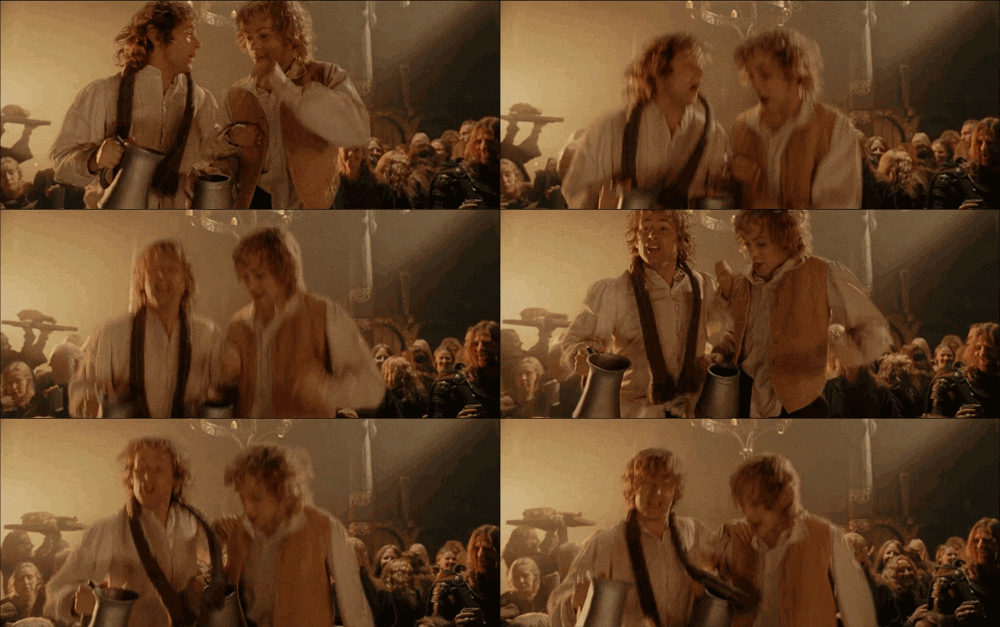
    MerryAndPippenDancing

    Yes, it’s goofy GIF worthy. It’s time to party.

    Holy cow.

    HOLY COW!

    The beast is finally finished. Now I send it to my copy editor to brush a bit off here, comb a few strands of hair back, and shine a few buttons there.

    It is done.

    This means release is weeks away.

    I will be announcing an early bird sale to those who have signed up for the Good Stuff Notification. If you want to be sure to get in on that sale, sign up at the top of the left sidebar.

    Share
  • Work hard for 45 minutes, then take a break

    My first semester in college I earned a GPA of, ta dum, 0.68.  How do you earn such amazing grades? Well, I’ll tell you: the super secret strategy is to get an F in everything except ballroom dance. In that you get an A.

    I couldn’t squeeze any juice out of my textbooks, but I sure could fox trot.

    And I wasn’t partying. Dope and beer bongs were never for me. I wasn’t skipping class. I was lugging this huge valise around with every textbook I had. I think it weighed something like forty pounds. I was stitting in classes looking studious and taking notes. Well, except for physics which started early. 7:30 a.m. if I recall. What kind of a nut job takes a class at 7:30 a.m.? I did. I tried really hard to stay awake. I know I saw the professor shoot a gorilla with a tennis ball once. But the rest of the time I was in la la land catching z’s.

    A 0.68, and I was in the honors program.

    Obviously, I didn’t know how to go about learning. I’m glad the university didn’t give up on me. They put me on probation and told me I had to take a class on studying. A class on how to take the reponsibility for learning into my own tentacles. A class that shared techniques that actually helped.

    One of the techniques was taking breaks. You were to work hard for 30 or 45 or 50 minutes and then take a break. Why? Well, because studies had shown that someone who, for example, was going to study for two hours could learn more by taking a ten or fifteen minute break in the middle than someone who worked the whole two hours.   Spending more time on studying actually meant you learned less.

    I’ve found this method applies to more than just reading textbooks.  It also applies to writing. My practice is to set a time for 45-50 minutes. My goal is to write as hard and fast during that period as I can. To be totally focused on the task at hand. And then, when the timer dings, to literally get up out of my chair, walk about, and take a break. Then come back at the top of the next hour and start another 45 minute session.

    But I’m not the only one doing this. A lot of folks use this method. Author Annie Bellet writes about her use of it in The Quest for Productivity and shares some of the reasons why it helps her. Read what she says there. If you haven’t done a 45/15 or 48/12 session, give it a go. See if you don’t actually get more done in less time.

    Oh, btw, as for my grades, not only did I NOT drop out (or get kicked out) and become a hobo living in a trailer by the river, I ended up getting a 3.8 in my masters of accounting program. I think it’s safe to say I figured that school thing out. 🙂

    Share
  • |

    Ira Glass on Story and Surprise

    I found this a fascinating talk. It’s Ira Glass who is the executive producer of the This American Life radio program from Chicago Public Radio. It’s a show that merges true stories (and some short fiction) of everyday people, surprise, humor, and meaning. There’s a structure to the types of stories that they produce. It’s not a new thing. It’s used all the time in a venue many of us are familiar with. Maybe you’ll identify that venue immediately. If not, it doesn’t matter. Watch and listen. This is a fascinating talk and it highlights just how much humor, curiosity, and insight depend on surprise.

    Ira Glass at Gel 2007 from Gel Conference on Vimeo.

    Share
  • Servant of a Dark God Tour & Release Updates

    I will be doing a book tour this Fall. Many of the events will be with David Farland (Runelords) and Larry Correia (Monster Hunters International). Here’s the list so far. I will be making updates as we get closer.

    Trade Show: Friday & Saturday, September 25-26, Denver, CO

    Mountains & Plains Independent Booksellers Association Trade Show at the Crowne Plaza Hotel, Denver International Airport More

    Book Signing & Panel Discussion: Saturday, October 10, Salt Lake City, UT

    Sugarhouse Barnes & Noble, will include panel and multiple  SF/Fantasy authors.

    Official Book Release Day: Tuesday, October 13, North America & UK

    Yea!

    In truth it’s not a firm, fast day. The books will begin shipping from the warehouses in late September, so your bookstore may have the books a bit earlier.

    Book Signing: Thursday, October 15, Seattle, WA

    University Books, Seattle, WA
    4326 University Way N.E.
    Seattle, WA 98105
    206.634.3400

    Book Signing: Friday, October 16, Redmond, WA

    Borders, Redmond, WA
    Redmond Town Center
    16549 N.E. 74th St.
    Redmond, WA, 98052
    425.869.1907 (Near Microsoft Campus)

    Book Signing: Saturday, October 17, Beaverton, OR

    Powell’s Books, Beaverton, OR
    3415 SW Cedar Hills Blvd.
    Beaverton, OR 97005
    503.228.4651

    X96 radio and book giveaways: Monday – Saturday, October 19-24, Utah and streaming online

    Starting on Monday, October 19th and running all week long, X96 will be doing book giveaways of Servant of a Dark God. Listen to the morning Radio From Hell program (Gina, Bill, & Kerry), Kerry Jackson’s Geek Show, and Todd Nuke ‘Ems afternoon shows.

    Book Signing: Thursday, October 22, Logan, UT

    Logan Borders, 6-8pm
    435-787-0678

    Book Signing: Friday, October 23, Orem, UT

    Orem Barnes and Noble, 4-6pm

    Book Signing: Saturday, October 24, Layton, UT

    Layton Barnes & Noble, 12-2pm

    Book Signing: Saturday, October 24, West Jordan, UT

    West Jordan Barnes & Noble, 3-5pm

    Book Signing: Thursday, October 29, Mountain View, CA

    Books Inc., Mountain View, CA
    301 Castro St.
    Mountain View, CA 94041
    650.428.1234

    Book Signing: Friday, October 30, Fairfield or Half-Moon Bay, CA

    Bay Book Company in Half-Moon Bay

    Or

    Barnes & Noble, Fairfield, CA
    1600 Gateway Boulevard
    Fairfield, CA 94533
    707.435.0484

     We’ll also be hooking up with editors at World Fantasy in San Jose.

    Book Signing: Thursday, November 12, San Diego, CA

    Mysterious Galaxy, San Diego, CA
    7051 Clairemont Mesa Blvd.
    Suite #302
    San Diego, CA 92111
    858.268.4747

    Book Signing: Friday, November 13, Torrance, CA

    Borders
    3700 Torrance Blvd
    Torrance, CA 90503
    Phone: 310.540.7000

    Book Signing: Saturday, November 14, Los Angeles, CA area

    Locations TBD

    Book Signings & Possible School Visits: Thursday – Saturday, November 19 –  21, Phoenix-Mesa, AZ area

    Locations TBD

    Book Signings & Possible School Visits: Thursday – Saturday, December 3-5, Denver, CO area

    Locations TBD (this one is still iffy with my schedule)

    Share
  • Resist the SERVANT marshmellow

    Folks, please resist the SERVANT marshmellow.

    Me and my big mouth. I unwisely let it slip in a comment thread that I had Servant up on Amazon (it’s up early because I need at least 24 hours to make sure my purchase gets the ratings going and to make sure everything looks right). And some of you have gone out to purchase it, for which I love you, BUT I should have made clear that we’re still in the proof check phase. That means we’re carefully going over the beta version of the trade paper book and catching the errors you only see when it’s in book form (next time I’ll do the trade paper first and then the ebook). You might not notice the things we’re catching and will be happy with the proof version. But I hate thinking you’re getting anything but the best.

    If you’ve already purchased and don’t care, fine. If you do, Amazon has a liberal return policy. For the rest of you: DON’T EAT THE MARSHMELLOW. Give us just a few days. Make sure you’ve signed up for the new book release notification on the left. I’ll let you know when everything is ready to go AND on sale 🙂

    Happy holidays!

    Share

4 Comments

  1. I attended John’s workshop last year at LTUE. Honestly, it was one of the better, more applicable sessions of the three days. I’ll be there again, this year.

    By the way, how did you measure the quality of your output to determine that it was 1000% better?

  2. Good question. The % figure was for quality production, not just quality, and it was actually about 3,000% in production and 2,000% in stuff that sold.

    Pre-insight production: Many attempts, but only 1 story in 5 years. 10,000 words. It won a 1st prize in the WOTF, but it was only 1 story.

    Post-insight production: 2 novels, 3 novelettes, & 3 short stories in 3 years. About 430,000 words. Sold 2 of the novelettes, 1 of the shorts, and 1 of the novels (plus two more from the outline). I expect after some revision, that I will sell another of the novelettes and a short.

    That’s how I got the number. I’d say it was a significant change 🙂

  3. So, basically you measure quality based on sales. The assumption is that quality work sells. That’s what I was thinking yesterday on my way home from work, “The likelihood of your book selling is greatly increased if it doesn’t suck.”

    Of course, one has to wonder how much quality work goes unsold, for whatever reason. I imagine there are many reasons.

  4. That’s true. However, I don’t know that quality always translates into more sales. I recently posted about product popularity and an interesting research study. According to that study quality only accounted for 50% of the results. The rest was random. So I’m sure there’s a lot of stuff out there that could find an audience but still goes unsold.

Comments are closed.