|

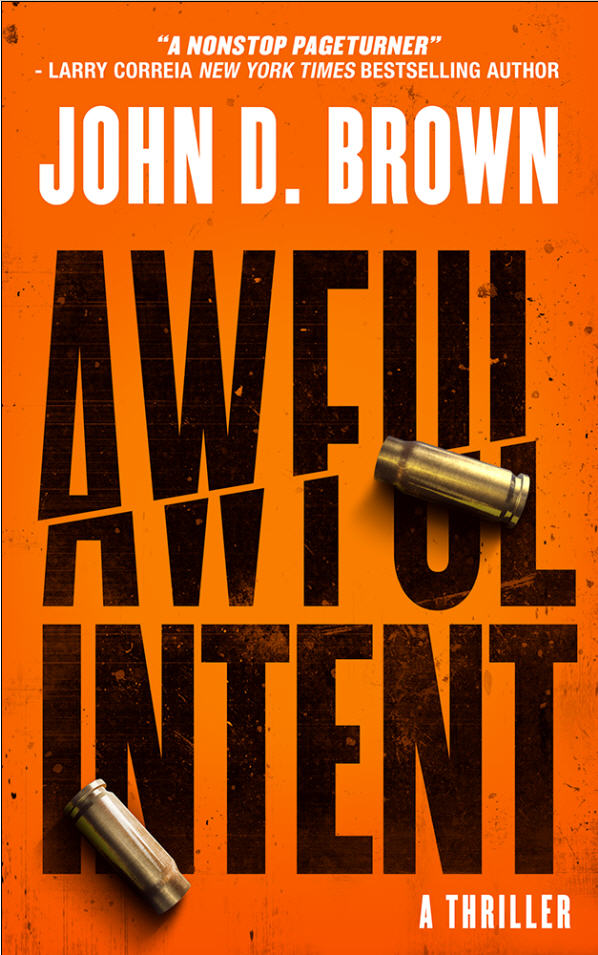
Awful Intent Update: The power of having the electric ladies read to you

Everyone says you cannot copyedit your own work.

You’re an idiot if you try.

Because you’re mind auto-corrects eorrs, and fills in missing punctuation or words like “of” “the” and “a”.  And often doesn’t care or know the house rules for capitalization. Etc.

(Did you catch all the errors in that paragraph?)

Except the brains of copy editors play this trick as well. That’s why some read the manuscript backward and others use arcane WordText code to suss out issues. And some change the font face. And some make multiple passes over a section, looking for dialogue issues the first time through, capitalization the next, and something else the third time. And despite all their work, you still find errors in the text.

I’m not saying editors aren’t any good. I’m just saying that our brains, for the most part, don’t care about the details. They just care about the communication, and they’re very good at ignoring the rubbish. And when it’s just the brain and the eye working together, the brain makes sense of the text, even when something’s wrong or missing.

So one trick to force the brain to see what’s actually on the page is to read your text out loud to yourself. It’s an excellent practice, except a human brain is still involved, and it sometimes still plays tricks. And sometimes we get lazy and start to read too quickly, and the next thing you know we’re subvocalizing and whipping along, missing all sorts of stuff.

So what can you do?

Well, a few book releases ago, I stumbled onto something. I invited an electric lady to help. And she was dynamite. (You can invite a man if you prefer the sound of those voices.)

I’m talking about inviting your computer to read aloud every word of your manuscript to you. And highlight the words as it goes.

I can tell you I’m never going back. These ladies have simply helped me see too many errors that were invisible to me and my beta readers who had editorial chops.

I use WordTalk, a free plugin for Microsoft Word for this kind of reading. The University of Edinburgh created it to help kids learn how to read. It allows you to select from the text-to-speech voices you have on your computer, set the reading rate, and it highlights the word it’s reading so you immediately see where the error is.

I set it at a slightly faster reading speed so my mind cannot wander during the reading and use the quick keys so I can start and stop and make my edits easily. And I always, always, always have my electric friend re-read any fixes I make because I can’t tell you how many times I’ve adjusted a sentence or paragraph and introduced more errors that I didn’t see, even though they were staring me in the face.

I must admit that the electric ladies can’t do everything. Having them read to you cannot help you spot errors you don’t know are errors in the first place. If you don’t know, for example, the conventions for capitalization of personal titles or the conventions for numbers (is it a “.44mm” gun or “forty-four millimeter”?) If you don’t have your own house rules for the many areas where you have a choice like in an epic fantasy (do you use “Dreadman” or “dreadman”?) If you don’t know any of that, you’ll blithely skip over a host of errors and only see the issues you know like the misuses of “rise” and “raise” or “lie” and “lay.”

So you have to learn the conventions or find someone who does (an editor). Or both.

Also, doing this type of reading will not help you see if what you’ve written is actually translating the scene in your head clearly and vividly to the page for someone new to your story. Only a fresh set of eyes can tell you where your story isn’t clear, believable, or interesting (at least to that one reader).

But for helping you spot the issues you do know, I haven’t found anything better. Give it a try.

Oh, and the update on Awful Intent–Zira and I are almost finished with the copy edit! Which means the release is only days away.

Share

Similar Posts

  • Advance Praise for Servant of a Dark God

    My editor just emailed me another endorsement from one of the folks we sent the manuscript to. I’m so excited! This one’s from Kage Baker.

    I’m a total stranger to three of the four that have responded so far. It continually amazes me how generous the pros in this genre are with both their time and praise.

    Here’s the last one.

    “A classic heroic saga, dealing with the bedrock issues of good and evil and identity. These are classic themes because they matter; and Brown makes them matter both to his young protagonist and the reader. It promises to continue for quite a distance, and I hope it does.”

    —Kage Baker, author of House of the Stag and The Company series.

    Here are the previous ones.

    “Thoroughly engrossing from the first page to the last! John Brown shows himself to be a writer with remarkable depth and power. I haven’t seen a debut novel this good in years!”

    —David Farland, New York Times best-selling author of Runelords and Ravenspell series

    “In Servant of a Dark God, John Brown has created a complex and intricate world, filled with all the permutations of human good and evil, as well as evil that goes beyond the human, where neither heroes nor villains are quite what they seem at first, and where the cost of virtue is high indeed, yet where, in the end, the tenacity of such virtue is what is required to triumph.”

    —L. E. Modesitt, Jr., award-winning author of the Recluce Saga

    “A complex, powerful story of a youth trying to learn who he is and what he is, with no allies he can trust in a world stalked by a monster. A book that copies nothing I have read before and which goes its own way brilliantly.”

    —David Drake, author of the popular Hammer’s Slammers and Lord of Isles series

    Wow. I think I want to read this book!

    Share
  • Villainous Heroes

    If we root against villains based on moral judgments, then how is it possible to root for heroes who are not just bad boys but down right criminal, e.g. hitmen, mobsters, thieves?

    It’s a wonderful question that has a simple and revealing explanation.  We root for these bad guys because they’re really good.

    What?!

    When talking about bad heroes, what we often do is:

    1. Take them out of their context.
    2. Focus on one or two negative traits, not the person as a whole.
    3. Abstract them and miss what’s happening in real time as we process the story. We only have so much working memory and usually can only think about what’s being presented versus what we think about when we’re out of the story. What’s being presented in the story is mostly the threats to these heroes, not the consequences of their evil deeds. And if the consequences are show, it’s always modified by context (#1 and #2 above).
    4. Confuse fascination with rooting.

    When we actually look at what’s happening with the hero in the context of the story, what we find is that rooting is still based on moral judgments of who is good/right and who is not. We root for people we think are in the right (given their context) or are getting, undeservedly, the short end of the stick; we root against people who we think are in the wrong.

    Here are some examples.

    DISNEY’S ALADDIN

    Thief. This one’s easy, I grant it. But it’s illustrative. I never once didn’t root for the boy. But I also never saw him as a true bad boy. He was nice. He shared the bread he stole with kids less fortunate. The guards were mean brutes. Jaffar was wicked and threatened the sultan and Jasmine who were good and innocent. was in a situation that provided some leeway for his behavior (alone, penniless).

    1. Context. He’s fighting a much greater evil, someone we are rooting against.
    2. Whole Person. He is a thief, but he’s also kind. Given his whole person, he falls on the side of good.
    3. Processing. As we process the story we’re never shown awful consequnces of his theiving. Mostly just the good and courageous things he does. And the threats to his welfare.

    THE ITALIAN JOB

    Thieves.

    1. Context. The movie starts with a heist and then a betrayal and murders by a traitor. Yes they’re theives, but we wittness a greater evil. The people they fight against are worse than they are.
    2. Whole person. Except for the thieving, he’s a likeable guy.
    3. Processing. We see few negative consequences of their actions to others, but we are constantly being presented with threats to them by guys who are committing greater crimes.
    4. Fascination. I was incredibly interested in the scam–the plans, tech, everything.

    THE PROFESSIONAL

    Mob Hit Man

    1. Context. He’s protecting a girl from other hit men. He’s fighting a bigger evil. He’s also taken advantage of by his boss.
    2. Whole Person. He’s a hitman, but more time is spent on his kindness.
    3. Processing. We see very little of the effect his hits have on others. Instead we are presented with threats to the girl and him.

    DIRTY HARRY

    Murdering vigilante

    1. Context. He’s stopping guys who are doing terrible things.
    3. Processing. We don’t focus on negative consequences of his vigilantism, but the threats from these really bad guys.

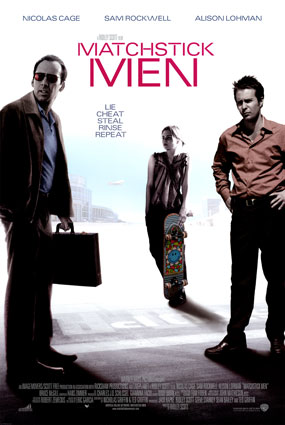
    MATCHSTICK MEN

    Scammers of the elderly

    From IMDB “Roy’s private life, however, is not so successful. An obsessive-compulsive agoraphobe with no personal relationships to call his own, Roy is barely hanging on to his wits, and when his idiosyncrasies begin to threaten his criminal productivity he’s forced to seek the help of a psychoanalyst just to keep him in working order. While Roy is looking for a quick fix, his therapy begets more than he bargained for: the revelation that he has a teenage daughter–a child whose existence he suspected but never dared confirm. What’s more troubling, 14-year-old Angela wants to meet the father she never knew. At first, Angela’s appearance disrupts her neurotic father’s carefully ordered routine. Soon, however, with his own unique spin on parenthood, Roy begins to enjoy a relationship he never dreamed of having with his daughter.”

    1. Context. Much of the time is spent his on his loneliness and issues with his estranged daughter.
    2. Whole person. He steals, but we never see huge suffering from it. We see all the other issues he deals and have sympathy for him.
    3. Processing. We’re focused on the threats to him, not the consequences of his one negative trait.
    4. Fascination. I was fascinated by the scam and this pulled me along through the first.

    CONCLUSION

    What happened in all these stories as I experienced them was that the story carefully managed my view of the hero. He was always on the better side of the antagonists. He was always more good than bad, even if only by a little. And the story focused my attention most of the time on the bad/threats/consequences flowing from the antagonists, not the bad from the hero’s deeds.

    What this shows is that you could write a story about a villain and make him the hero. In some instances it might be exceedingly difficult. For example, I think Hitler would be a hard sell as a hero, someone we’d root for. But the Neo-Nazis prove it’s not too hard a sell for some people. 

    I don’t think recognizing the fact that we can make “bad” people sympathetic means authors are “simply being clever” or “pushing buttons.” After all, to write well you must believe and care about what you’re writing about. YOU have to believe it. Nor do I think it undercuts the notion that we root for people based on a moral stance. It just recognizes the fact that moral judgments, in fact, the vast majority of appraisals of situations, happen quickly with the facts at hand, which are the ones in our working memories. The ones the authors are controlling.

    Share
  • Smith’s grocery and Curse update

    SERVANT has been spotted in the Orem, Pleasant Grove, Salt Lake City, and West Jordan Smith’s stores. It appears we’re still running, folks. Fingers crossed. Please post a comment if you see it in your local Smith’s.

    As for CURSE OF A DARK GOD, I’m moving along. I’m such a slow writer. But I had to yank about 50-70k words from draft 2. Just yank them right out and start over. I’ll give a full report when I’m done, but I’m very excited about this new version. Sugar is becoming a fell-maiden. Talen is becoming more heroic. And I’m just having a great time.

    Share
  • Writing Update: 25,000 words of battle and still going

    Curse of a Dark God ends with a big, BIG battle. I’ve been working on it for a number of weeks now. It contains some large revelations, a lot of action, movement back and forth between four points of view, and the need for a number of people to act heroically. When I finished writing today it was 25,573 words long and I still have one more chapter to go. I don’t think I’ve written any single action sequence this long. To put this in perspective, a normal adult novel is 90,000-110,000 words long. Young adult novels average 50,000 – 70,000 words. This one sequence is a quarter to half the size of many other novels! It’s been quite a task, but I’m happy to have the end in sight. I really think readers are going to enjoy it.

    I do have a little bit of other good news that I’m excited to share, but I’ll have to wait until papers are signed.

    Happiness!

    Share

One Comment

Comments are closed.