
Similar Posts
Good Stuff! The Highwayman by Alfred Noyes
Alfred Noyes (1880-1958) wrote poetry that thundered and sang. It’s the kind of stuff that begs to be read aloud. And I want to share with you one of my favorites–“The Highwayman.” I love it for the sound, the story, and the awesome images (note all the color).
All you need to know is that back in the 1600s and 1700s, a highwayman was a robber, often on horseback, who held up travelers. And that when it mentions “priming,” it’s talking about the charge of powder used to ignite a musket.
For maximum pleasure, let me suggest you start Loreena McKennitt’s killer ballad version I’ve embedded at the end, then scroll back up and read along as she sings.
THE HIGHWAYMAN
By Alfred NoyesThe wind was a torrent of darkness among the gusty trees.
The moon was a ghostly galleon tossed upon cloudy seas.
The road was a ribbon of moonlight over the purple moor,
And the highwayman came riding—
Riding—riding—
The highwayman came riding, up to the old inn-door.He’d a French cocked-hat on his forehead, a bunch of lace at his chin,
A coat of the claret velvet, and breeches of brown doe-skin.
They fitted with never a wrinkle. His boots were up to the thigh.
And he rode with a jewelled twinkle,
His pistol butts a-twinkle,
His rapier hilt a-twinkle, under the jewelled sky.Over the cobbles he clattered and clashed in the dark inn-yard.
He tapped with his whip on the shutters, but all was locked and barred.
He whistled a tune to the window, and who should be waiting there
But the landlord’s black-eyed daughter,
Bess, the landlord’s daughter,
Plaiting a dark red love-knot into her long black hair.And dark in the dark old inn-yard a stable-wicket creaked
Where Tim the ostler listened. His face was white and peaked.
His eyes were hollows of madness, his hair like mouldy hay,
But he loved the landlord’s daughter,
The landlord’s red-lipped daughter.
Dumb as a dog he listened, and he heard the robber say—“One kiss, my bonny sweetheart, I’m after a prize to-night,
But I shall be back with the yellow gold before the morning light;
Yet, if they press me sharply, and harry me through the day,
Then look for me by moonlight,
Watch for me by moonlight,
I’ll come to thee by moonlight, though hell should bar the way.”He rose upright in the stirrups. He scarce could reach her hand,
But she loosened her hair in the casement. His face burnt like a brand
As the black cascade of perfume came tumbling over his breast;
And he kissed its waves in the moonlight,
(O, sweet black waves in the moonlight!)
Then he tugged at his rein in the moonlight, and galloped away to the west.He did not come in the dawning. He did not come at noon;
And out of the tawny sunset, before the rise of the moon,
When the road was a gypsy’s ribbon, looping the purple moor,
A red-coat troop came marching—
Marching—marching—
King George’s men came marching, up to the old inn-door.They said no word to the landlord. They drank his ale instead.
But they gagged his daughter, and bound her, to the foot of her narrow bed.
Two of them knelt at her casement, with muskets at their side!
There was death at every window;
And hell at one dark window;
For Bess could see, through her casement, the road that he would ride.They had tied her up to attention, with many a sniggering jest.
They had bound a musket beside her, with the muzzle beneath her breast!
“Now, keep good watch!” and they kissed her. She heard the doomed man say—
Look for me by moonlight;
Watch for me by moonlight;
I’ll come to thee by moonlight, though hell should bar the way!She twisted her hands behind her; but all the knots held good!
She writhed her hands till her fingers were wet with sweat or blood!
They stretched and strained in the darkness, and the hours crawled by like years
Till, now, on the stroke of midnight,
Cold, on the stroke of midnight,
The tip of one finger touched it! The trigger at least was hers!The tip of one finger touched it. She strove no more for the rest.
Up, she stood up to attention, with the muzzle beneath her breast.
She would not risk their hearing; she would not strive again;
For the road lay bare in the moonlight;
Blank and bare in the moonlight;
And the blood of her veins, in the moonlight, throbbed to her love’s refrain.Tlot-tlot; tlot-tlot! Had they heard it? The horsehoofs ringing clear;
Tlot-tlot; tlot-tlot, in the distance? Were they deaf that they did not hear?
Down the ribbon of moonlight, over the brow of the hill,
The highwayman came riding—
Riding—riding—
The red coats looked to their priming! She stood up, straight and still.Tlot-tlot, in the frosty silence! Tlot-tlot, in the echoing night!
Nearer he came and nearer. Her face was like a light.
Her eyes grew wide for a moment; she drew one last deep breath,
Then her finger moved in the moonlight,
Her musket shattered the moonlight,
Shattered her breast in the moonlight and warned him—with her death.He turned. He spurred to the west; he did not know who stood
Bowed, with her head o’er the musket, drenched with her own blood!
Not till the dawn he heard it, and his face grew grey to hear
How Bess, the landlord’s daughter,
The landlord’s black-eyed daughter,
Had watched for her love in the moonlight, and died in the darkness there.Back, he spurred like a madman, shouting a curse to the sky,
With the white road smoking behind him and his rapier brandished high.
Blood red were his spurs in the golden noon; wine-red was his velvet coat;
When they shot him down on the highway,
Down like a dog on the highway,
And he lay in his blood on the highway, with a bunch of lace at his throat.. . .
And still of a winter’s night, they say, when the wind is in the trees,
When the moon is a ghostly galleon tossed upon cloudy seas,
When the road is a ribbon of moonlight over the purple moor,
A highwayman comes riding—
Riding—riding—
A highwayman comes riding, up to the old inn-door.Over the cobbles he clatters and clangs in the dark inn-yard.
He taps with his whip on the shutters, but all is locked and barred.
He whistles a tune to the window, and who should be waiting there
But the landlord’s black-eyed daughter,
Bess, the landlord’s daughter,
Plaiting a dark red love-knot into her long black hair.The Power of Habit by Charles Duhigg
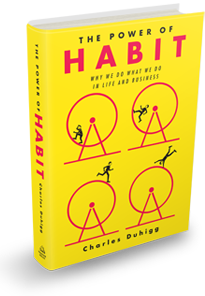 Have you ever gotten into the car to go to destination A and a few turns later realized you’re going to destination B and have to turn around?
If so, you’ve experienced the power of habit.
Have you ever told yourself you will NOT eat the cookies sitting out on the counter and two minutes later pick one up and eat it? Or perhaps it was the cigarette. Or the drink.
Habit.
Did you know that the genius behind the methods of Tony Dungy–the only coach in the NFL history to reach the play-offs ten years in a row and the one who turned a troubled Colts team around and three years later took them to win the Super Bowl in 2007–was to teach his players to be faster than everyone else. But they wouldn’t be faster because they would focus on increasing their physical speed. They would be faster because they would learn habits that would make their moves instinct. When his strategy worked, Dungy’s players could move with a speed that was impossible to overcome.
According to some research, more than 40% of the actions we perform each day are not actual decisions, but habits. And habits that we didn’t always consciously choose to start. We have sleeping habits, shopping habits, exercise habits, eating habits. Habits at work, at home, at school. Habits of the mind.
Companies have a huge interest in changing our shopping habits. Coaches have an interest in changing the habits we use when we play. Teachers have an interest in the habits of their classroom. Families and communities have habitual ways of interacting. We all have personal habits we’d like to adopt and others we’d like to give away. But unless you know what you’re doing, habits can be extremely intransigent and slippery things.
The good news is that a lot of research has been done in the last few decades, and we now know how habits work. When we arm ourselves with this knowledge, we’ll have a much better chance of changing. Luckily for us, we don’t have to track all that information down. In The Power of Habit: Why We Do What We Do In Life and Business, Charles Duhigg draws on hundreds of academic studies, interviews with more than three hundred scientists and executives, and research conducted at dozens of companies in his book and distills all this knowledge to its essence.
The title might sound boring, but Duhigg follows the style of Malcom Gladwell (Outliers, Blink, The Tipping Point), and the Heath brothers (Made to Stick), and has written a book that I couldn’t put down. For example, I couldn’t stop reading about coach Tony Dungy, or Target as it predicts who is pregnant and how far along they are, or the scientists who couldn’t figure out why Alcoholics Anonymous works, or how bad organizational habits led to thirty-one people being burned alive in London’s King’s Cross subway stop. I couldn’t stop reading about why Rosa Parks, not the first African American to refuse to give up her bus seat, could pivot the civil rights movement. I couldn’t stop reading the stories of individuals losing bad habits, others picking up good ones, and others who lost their minds but not their habits. Duhigg uses these and many other examples and studies to illustrate the key principles underlying how habits work. In the appendix, he gives us a guide for examining and forming our own habits.
I personally know the power of changing habits of the mind (which I’ve already written about). And teeth. A few years ago, I flossed once a week. It was such a pain. Now it’s a habit that I almost crave each night. I look back at how I made those changes and see it all laid out in Duhigg’s book. Can I actually change my habit of going to bed late? Stay tuned.
If you’re interested in forming the habits of a class, team, company, or family; if you want to change some of your own habits; if you’re interested in knowing why we do what we do and enjoy the style of Malcom Gladwell and Dan and Chip Heath, then I think you’ll love this book. Let me suggest you watch the video below. Then go to http://charlesduhigg.com/the-power-of-habit/ and click on the “Additional Resources” to watch and read more. Then just get the dang book.
Gladwell, Dish Cloths, and Higher Technology for Tuna
The Tipping Point by Malcolm Gladwell
 After reading Made to Stick, I decided to read the book that inspired it—The Tipping Point: How Little Things Can Make a Big Difference by Malcolm Gladwell. I’d read Blink and Outliers by the same author and found both fascinating. I’m happy to report The Tipping Point is just as good. In it, Gladwell examines what conditions cause ideas, behaviors, messages, and products to spread like outbreaks of infectious disease.
In the book he shares a number of situations and studies, including the sudden drop in crime in New York city in the 1990’s (which started by attacking graffiti in the subway), the dramatic popularity of the Blue’s Clues TV program with pre-schoolers, Paul Revere’s success in rousing the citizens along his route (versus the almost total failure of the other guy who rode that night), the resurgence of Hush Puppies shoes, syphilis in Baltimore, Columbia Record’s amazingly effective golden box ad campaign, and a dozen other outbreaks. From all of these, he extrapolates three rules of social epidemics—The Law of the Few, The Stickiness Factor, and The Power of Context.
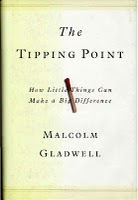 The arguments Gladwell presents are thought-provoking and powerful, but what makes him such a treat to read is how he writes. Like the best science writers (in fact, I think he IS one of the best), he tells great stories with interesting characters. He puts the reader on the edge of the seat with mystery, insight, and humor. He makes things that could be incredibly complex seem like first grade math. It’s as if he’s standing right there with you chatting about the subject. Moreover, he does all this from page one.
Here’s what I mean. I left the book out on the kitchen table one night after reading a few chapters. The next morning Super Wife came down to quickly eat breakfast and get herself to a meeting. She made the mistake of opening the book to glance at the first page. Twenty-five minutes later she came up for air and realized she was going to be late and dashed out the door. The writing is pure mind control. And I loved every minute of it.
If you’re at all interested in advertising or how fads and movements start, if you want to affect the behavior of customers or local teens, if you just like to read how things work, I think you’ll love this book.
Sunflower Dish Cloths
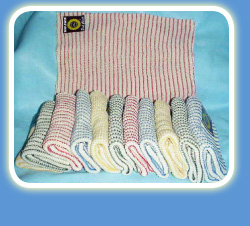 I used to suffer along with subpar dish cloths. There were the dish cloths with mesh on one side that were so small you had to rinse them after every wiping stroke. There were the hand cloths made of terri that belonged in a bathroom but were repurposed and were far too big. Then were the cloths that had some slippery crap in the thread that refused to soak up water. And there were the crocheted things that I think we should have put out of their misery when we first got them. Folks suggested we go to sponges. So we did sponges and had similar results.
Oh, woe, woe, woe.
Then a kind and loving friend gave us a set of mystery cloths that were incredible. They were large enough that we didn’t need to rinse with every wipe. They had this fantastic weave that was open, yet absorbent, and dried quickly. And the weave had enough of a texture that you could use it to scrub. We received those back in 1999. They lasted us for years and gave us much kitchen cleaning joy. But, alas, like all of mortality, those brave cloths finally began to give up the ghost.
My problem was that I didn’t know who had made those cloths and where I could get more. We looked all over and couldn’t find them. And then, at this year’s Garden City Raspberry Days craft fair, we saw them nestled amidst all the kitsch! We bought as many as we could afford, and went our way rejoicing, fully expecting these to last us until we have grandchildren. Maybe we’ll pass them down as priceless heirlooms. Maybe some day they’ll be featured on Antique Roadshow. Maybe they’ll be resurrected with us and become the official dish cloth of the Millennium when the world is renewed (it could happen).
If you’re sick and tired of sponges and crappy dish cloths, let me suggest you pick up some Sunflower Dish Cloths made by Sangamon Mill. You can order them in bulk at http://www.sangamonmill.com/ , or in smaller quantities online from places like Amazon.
Everiholder’s Veggie & Tuna Press & Strainer
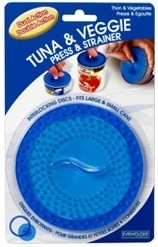 Do you eat tuna? If so, you know the biggest pain is draining the can. But you don’t have to suffer along any longer using the lid, which doesn’t do a good job at all anyway. There’s a better solution, which Super Wife discovered. It’s called the Tuna and Veggies Press and Strainer by Evriholder: http://www.evriholder.com/Tuna-Veggie-Press.asp. With this little blue piece of higher technology you easily and quickly press all the juices away, and nothing slips out the sides. We love our. You can order it online, although Super Wife found it at our local evil empire Wal-Mart store.
That’s it for now. In the next review, I’m going to reveal two killer recipes over which all who partake will salivate and drool—Chocolate Éclair Cake and Dill Potato Salad.
The average American reads 17 books per year
Americans and Reading
The Pew Research Center has just published their findings on reading in America. It’s called “The Rise of E-reading“. There’s a LOT of fascinating information in the report. Here’s a taste:
- Americans 18 and older read on average 17 books each year. 19% say they don’t read any books at all. Only 5% say they read more than 50.
- Fewer Americans are reading books now than in 1978.
- 64% of respondents said they find the books they read from recommendations from family members, friends, or co-workers.
- The average reader of e-books read 24 books (the mean number) in the past 12 months; the average non-e-book consumer read an average of 15.
Building an Audience
I also want to recommend this week’s post by Kris Rusch on Audience. She has a number of interesting things to say about the dream of being a best seller and building an audience. The money quote comes as she refers to a post by Tracy Hickman:
“The point here is that you do not have to feel as though you are in competition with the entire world. You don’t NEED the entire world to be a successful writer. What you need is an audience—just enough of an audience, mind you—who reads your words, is changed by them and wants to come back for more.”
An audience. More importantly, an audience that reads and “is changed by” your words. Not an audience who loves them, not even an audience who likes them. An audience who is changed by them, and because of that experience, “wants to come back for more.”
Simple. Important. Usually forgotten.
She talks about lots more. Read the whole thing.
My thoughts?
First, there’s no need for authors or readers to worry about wading through “crap.”
According to Pew, readers only read 15 or 24 books a year on average. That’s not a lot of books.
More importantly, it takes about 3 seconds to get a lead for a good book. You hear something from a friend or family member, you look at the USA Today best sellers list, you browse a few books at a store or online, you read a blog and suddenly you’ve found a book.
Readers fill up their book reading slots much more quickly than they can ever empty them. That’s why we all have years of reading in our queues.
It doesn’t matter that there are millions of other books out there, a good majority of which might have been written by monkeys. There’s no need for authors to worry that readers will have to wade through a mountain of crap to find a good book. They don’t need to because they have leads for good books coming out their ears.
Second, people purchase books that friends, family, and co-workers love.
Which means that when you deliver a great experience to one person, it’s going to ripple out. It’s probably not going to be linear. It’s probably going to ripple out like viruses do into different population pockets. Or seeds do into different environments. It will run through one pocket, make a jump to one or more others, or it may not jump at all. Some pockets are big, some are small.
The way to keep a virus going is to release it in a lot of places where it’s likely to thrive or in places that a lot of people travel through. And as Kris points out, writing is all about repeat business–making sure you have a stream of good product (something I hope to rectify with my own writing this year).
Bottom line: the best way to build your writing business is to simply write the best book you can, and keep them coming.
Third, the market is BIG.
If you read Rusch’s and Hickman’s articles, you’ll see that even the mega sellers only reach a fraction of those who read. This is reinforced by the statement made by Thomas McCormack, former CEO of St. Martin’s that you can read here. So just because 100,000 people read one book doesn’t mean 100,000 others won’t read mine.
Moreover, e-books and online shopping are broadening distribution. Brick and mortar stores only have so many slots for books. Every 8-12 weeks they rotate the old books out (like 12 weeks is old) and replace them with the new ones, unless, of course, your book is selling very well and gets “modeled” at the store. The point is: when you only display a few books at a time, those books will get bigger sales numbers. This happens because there isn’t anything else to purchase.
But you don’t have that limitation with e-books and online shopping. Nothing rotates out of the store. Sure, things rotate on and off the best seller lists. But the books are always there. With an ever growing selection, there won’t be as many mega sellers. Publishers Weekly discusses this trend in their 2011 Facts & Figures articles, which list best-seller numbers (make sure you click through to the Trade Paperback article as well). The same thing has happened with TV station viewership with the explosion of channels, DVDs, and online streaming. Same thing happened with music.
What this means is each author has a better chance of getting his or her books to those who will love them. We’ll still have best-sellers. But we’ll also have a lot more medium sellers as well. And that’s great for authors everywhere.
“Clockwork Chickadee” by Mary Robinette Kowal
Mary Robinette Kowal is a professional puppeteer and a dang good story teller. I ran across her “Clockwork Chickadee” this last summer and forgot to blog about it. Then she won the Campbell Award. And I thought to blog it again. Now it’s November and you see what it means to run on “Brown time.” But however belated my review, this story is marvelous. The images have stuck in my mind since that first reading. And the chickadee, well, let me share the beginning with you.
The clockwork chickadee was not as pretty as the nightingale. But she did not mind. She pecked the floor when she was wound, looking for invisible bugs. And when she was not wound, she cocked her head and glared at the sparrow, whom she loathed with every tooth on every gear in her pressed-tin body.
The sparrow could fly.
He took no pains to conceal his contempt for those who could not.
I am an impatient reader: if the story doesn’t grab me within the first few lines, I usually pass. I’m trying very hard not to be so demanding and extend this to two pages (no, I do not have the fortitude some readers do to extend this to twenty, forty, or sixty pages). But sometimes I slip back into my old ways. However, with Clockwork Chickadee I didn’t need to remember to be patient. I just read and read and read some more.
For those who care about story, you’ll notice it doesn’t run on the normal fuel of sympathy and suspense. This is a curiosity story. And Kowal does it so well.
Here’s the text version. But if you have no time to read, that’s no problem. Listen to the audio version right now or download it to your iPod or MP3 player and listen while you’re out and about.
Enjoy!
Good Stuff! Mike Loades on Swords and Bows
Mike Loades is an expert on medieval fighting. He brings energy and, not just bookish learning, but insights from hands-on use. I loved the five-part Weapons That Made Britain television series for which he was the host and chief consultant. And so I looked to see if there was anything else he’d done. I found he’d written two books, which I am so happy to have read.
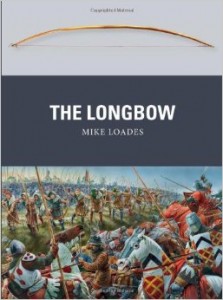
The Longbow is not just a book about the longbow. It’s about its construction and how it impacted the development of armor, and types of armor, and the wood used for the bow, and how to make arrows, and what the various points were for, and how people trained, and then cared for the bows, and how it was used in war. And, again, the insights are not just bookish ones. He’s walked the battlefields. He’s used bows for years. He’s performed tests with them. It is a 80-page book that carries a monstrous bang for the buck and one of the best purchases I’ve made for my library. I loved it.
Of course, after that experience, I had to get his Swords & Swordsmen. This book is almost 500 pages long, and I was rapt reading each page of it. Instead of focusing on one version of this weapon, Loades discusses exemplars of various types of swords through time, starting with the sword of Tutankhamun in Egypt all the way through the swords of J.E.B. Stuart and G.A. Custer in the American Civil War. There are 15 chapters all discussing different eras and swords that provide a mountain of insight. The love Loades has for and the practical experience he has with the topic shines through on every page. Just as with The Longbow, you’ll learn about use, construction, the interplay with armor, and much more. Heck, I got the ideas for at least three novels reading this book. I loved it as much as I loved the first.
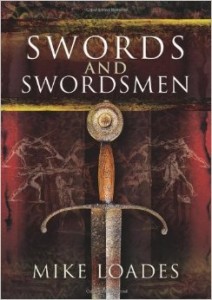
If you enjoy military history and arms and armor, you will love these books. Guaranteed.
While you’re waiting for them to arrive in the mail, treat yourself to five hours of fascinating video below.
Weapons That Made Britain E01 – The Sword
Weapons That Made Britain E02 – The Longbow
Weapons That Made Britain E03 – The Lance

2 Comments
Comments are closed.
Just finished Awful Intent, loved every word Bloody Brilliant
Honored to hear that, Ian.