How do you know when to start drafting?

This week’s Writing Excuses was an interesting topic. I’ve had similar questions from folks as I give my workshop on writing fiction. Here are some additions to the excellent comments made by our fearless Three.

Can you plan for a single draft?

In my experience and those of other published writers I know, wanting to start to draft only when you’re ready to begin writing THE draft that will take you clear to the end is only going to land you into a bog of dither.

Here’s why. It’s almost impossible to know if this attempt at the hill is going to work until you make the attempt at the hill. Much of the story creation, even for those who do a lot of the creation in summary/outline form first, still takes place in the drafting. And you never know if something you create while drafting is going to throw a monkey wrench into the whole thing.

Nobody I know who does a lot of development in the outline/summary form (and I’m one of those) has ever written a satisfactory novel without having to continually modify the original outline or abandon it altogether. David Farland tells a story of getting to the ending of one novel, the ENDING, and only then seeing a new ending that was going to be so much better than the one he planned. Which meant he needed a different beginning. Which meant a rewrite. And so he started the whole freaking story over.

Writing is like blazing a trail

Writing a novel is like seeing a far off destination that you’ve never been to before and to which there are no roads. You’ve got to make a trail to that destination. So when you set out you may be able to see a path for a mile or so, you may even have tried to get an overview of the terrain, but you must reconcile yourself to the fact that you are going to run into an impassable bog, or a cliff, or killer bees–you’re going to have dead-ends and backtracks.

No matter what you do, it’s gonna happen. It’s just part of the nature of blazing trails. Even if you scout out possible routes, some of those routes are just not going to work when the wagon train finally gets there.

This isn’t to say we must all become draft-only writers. There is HUGE value to some of us in having a starting line-up or knowing the ending or having the bare bones of the plot or having done a good deal of world building. For myself, I’ve learned I never get very far down any path if I don’t have a number of strong ideas for all the parts of story–character, setting, problem, and plot. But I only learned that by setting off time and time again and each time immediately having to stop. And new writers will never learn what they need, as was said, until they just start.

So if the reality is that every author is going to have hiccups and course changes along the way, then it’s far more important and useful and efficient, not to wait for the perfect moment to draft, and draft the story only once, but to just start drafting.

But how much pre-draft work is too much?

Okay, for those of you who want a specific number, let me help you. A new writer recently posted a question wondering if she migh have world-builders disease. Here was my response.

—

Ms. X, one way to approach your diagnosis is to determine how many books per year you want to write. Because world-builders disease is only a malady in certain circumstances.

If you don’t care about output and simply enjoy building worlds, then maybe you’re like Tolkien. He started The Book of Lost Tales in 1917 and didn’t finish THE HOBBIT until 1937 (20 years). He didn’t finish LOTR until 1949 (another 12 years). In this is your situation, then you are hale and hearty and have many years of enjoyment ahead of you.

If you DO care about output and want to write one book per year, then I’d suggest you get some drafting treatment immediately. Here’s why: you now have only 26 weeks to finish.

But wait: take out 4 weeks for vacation, sickness, relatives, and mosquito infestations. You now have 22 weeks.

Assume you get 2 good hours of writing 6 days a week for 12 hours a week. Assume further that you can get a conservative 500 words of finished product per hour, or 1,000 words in 2 hours. (Sure you may be able to write faster than that in any given session, but when you go back and fiddle with it the next day and the next, you have to accout for that.)

At this rate it will take you 17 weeks to finish a 100,000 word novel. And that’s only if you keep your story furnace hot with consistent hours each day.

But wait: that’s only a FIRST draft. You now need to let it sit a bit. Reread it. Send it out to readers. Then REVISE. You only have 5 weeks to do that!

Of course, your inputs to the equation might differ. But if your goal is a book a year, you need to get cracking. Most of your development will come as you write. It’s exciting and lovely. Don’t miss it. Get your starting line up written out in the next three days and then take the plunge.

Share

Similar Posts

  • How much does author Jim C. Hines make?

    Dear But-All-Writers-Are-Rich,

    Jim C. Hines is a hard working midlist author with a couple of fun series out. Hines reveals what he makes in his post 2011 Writing Income. More importantly he reveals what he’s been making for a few years. For more information on advances etc., please peruse my page on Writing Business Facts & Figures.

    Sincerely,

    The Man

    Share
  • LTUE 2016 presentation materials

    I promised you I’d post my materials. Here they are.

    Succeeding as a Storyteller 2016-02-13 HANDOUT

    Vivid and Clear 2016-02-11

    What Comes Next 2016-02-12 PRINT

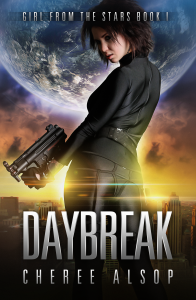
    Also, at the end of my and LL Muir’s presentation of Succeeding as a Writer, I offered some of my books, the ones I authored, for free in the back. I would like to ask whoever accidentally got caught up in the mad rush (it was like Black Friday) and took my copy of Cheree Alsop’s Daybreak: Girl from the Stars Book 1 to please mail it to me. It looks like this:

    Daybreak-Amazon-Kindle-196x300

    It is dedicated to “Mrs. Brown’s Class” and was a present for her. You may mail it to John D. Brown, PO Box 157, Laketown, UT 84038.

    Share
  • How many copies do average authors sell?

    I posted earlier about the sales number for best-selling authors. What about the average author?

    Here’s Patrick Nielsen Hayden, an editor at Tor Books, in an interview on io9.com about the future effects of e-text on publishing:

    io9: Does it make a difference to you if an author has an online reputation? Does that go into your decisions to acquire books?

    PNH: Obviously it makes a difference if an author has a public online profile of some sort, even just down to the level of having a moderately popular blog. Most books sell 5, 10, or 15 thousand copies. Most are midlist books. With those people, even a modest online presence can make a difference in sales.

    The whole interview is interesting. In fact, he says something that I think is important to note about what today’s novelists and, to a lesser degree, short story writers are actually providing:

    One thing I’m sure of is that we’re [Tor Books] going to be in linear immersive narratives that produce the reading trance. We won’t be moving towards a “choose your own adventure” thing. People will do those things, but those are different art forms. There’s something about immersive text that you can read in order – it’s persisted through many technological changes. This fiction stuff works pretty well. It’s been around a long time

    I think he’s right. The EXPERIENCE you get in the reader’s trance, similar to the one you get in a movie, is a strong experience. The media used to convey that experience doesn’t really matter as long as it makes it easy to get into the trance.

    Check out the whole interview.

    Share
  • Excellent advice from author Larry Correia

    Larry just wrote a great post about Writing Gun Stuff. Down at the bottom, he says this:

    I’m not one of those people who gets hung up on “rules of writing”. . .  If it is awesome, and your readers like it, write it. [emphasis added]

    Amen to that. And if you’re going to write about characters with guns, read the rest of the of the post.

    Share
  • How Inequity and Deservingness Propel Readers Through Story

    Inequity and deservingness are two of the main factors that keep readers reading. If we want to write killer stories, we need to know how they affect readers. A few years ago I wrote an essay on this and thought it probably too technical for most folks’ taste. But I passed it on to a recent attendee of the killer workshop and he found it helpful. In fact, when he watched Pride & Prejudice shortly after reading the essay, he saw how these factors dramatically affected his rooting interest. So I’m thinking others will find it useful as well. 

    In order to understand it you must first read George Saunders’ short story “The Bohemians.” You’ll find it here in The New Yorker, January 19, 2004. It would probably be rated PG for some profanity.

    Now if the story doesn’t pull you in, stop reading. Because the essay probably won’t make any sense to you. You’ll only be able to understand it if the story works for you. But if it does, then ask yourself what the main character’s problem was and what drew your interest? Then read my essay, “How Inequity Evokes Reader Interest.”

    Please note “The Bohemians” does present a character with a problem, and the story cycle applies, but not in the straight-forward manner it does with most stories. BTW, if you’ve ever read Patrick Rothfuss’s excellent Name of the Wind, you’ll see inequity is what shapes the story there as well. If you haven’t read it, I recommend you give it a go.

    I’ll be interested to see your responses to Saunders’ story, my essay, and/or Rothfuss’s novel.

    Share