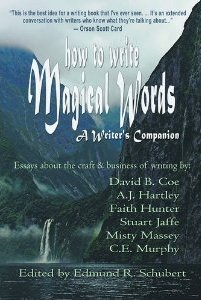
No. I’m Fine by Howard and Sandra Tayler

Robison_Wells____Green_Hills_Photography_0-201x300Sometimes it’s the small things that make the most difference.

Like sharing an issue you might be dealing with.

I was once at a writer’s retreat at a home above the Sundance ski resort. I’d be asked to present to some of the other writers there. Robison Wells, who writes awesome YA,  was also presenting. He talked about marketing and plot, but the presentation that was probably most memorable was the one he gave on the obsessive compulsive disorder he deals with.

He started off by telling us folks really didn’t know what they were talking about when they talked about obsessive compulsive disorder. He described it this way. He said he and his wife were sitting on the couch watching TV one evening. She said she was craving some ice cream, orangesicles, I think. He replied that he was craving banging his head into the wall. She anticipated some delicious ice cream. He anticipated some delicious head whacking. He then pointed at the wall behind all of us and said that it would feel so good to bang his head on the corner of the wall behind us. Needless to say, he had our attention.

He went on to explain more about this condition and mental illness in general and urged us, when we wrote about it, to get it right. To be accurate. To not turn such conditions into happy-happy super powers, nor to make them into things to be feared.

By the way, Robison had a fine little dog with him. Not some yapper to carry about in a purse, but a nice little companion. I keep wanting to call her Abby, but I know that’s not its name. We learned that his dog was trained to watch him and remind him to take his meds. It appeared that Robison would sometimes rationalize away doing that.

Robison isn’t crazy. We didn’t have a dangerous wild man among us. He’s just a guy who has to deal with some kinks in his hoses.

HowardTayler2So what happened next? Well, nothing. We had a great retreat and went home. But the story doesn’t end there. See, if an issue is taboo, it becomes very difficult to deal with it. As an individual, a couple, a family, a community. In fact, hiding something like this only creates more problems. For example, if Robison ever says he’s going out to pick up some hammers, we  now know that we probably ought to have someone go with him (grin). So Robison not only wanted to educate us, he also wanted to help bring mental illness out of the dark. And he’s talked about this issue in a number of different places.

Howard Tayler, the cartoonist, heard him talk about the self-harm once. He saw the good being open did and decided to write a bit about some things he has to deal with. Howard’s got a tricky bit of depression he has to manage. Sandra, Howard’s wife, decided to add to it what it was like being married to someone with such an issue.

Now, I didn’t know the Taylers had written anything up until last week at Comic Con. During the event a woman talked to me. In our conversation she indicated that she’d been wrangling with some mental crap, but that Howard’s comments about his had helped her. We continued with our discussion, and she left. On Friday evening after the expo for the Salt Lake City Comic Con had closed, I walked around the event floor, chatting with some folks I hadn’t had time to visit during the event. I stopped at Howard’s booth and said hello to him and Sandra. They were busy, and I didn’t stay long, but as I went to walk away, I thought I should pass on what the woman had said. So I did. I didn’t know what comments she was talking about. All I knew was that Howard had helped her. And I wanted to make sure he knew it.
SandraTaylerWe talked some more as they tried to clean up their booth before Howard had to run off to a panel. Then Howard handed me “No. I’m Fine”.  It’s a little 15-page booklet that contains the title story, written by Howard, plus the essay “Married to Depression” by Sandra, his wife.

The story is an excellent short that gives you the feeling of what’s it like to be dealing with one form of the bugger. The essay reveals a bit of what it’s like as the spouse and recommends some action. But the thing I found so wonderful about both the story and the essay was the example of tender love in the midst of adversity.

I’m a writer. I can’t help but be drawn to potential characters and stories. The view we get of these two in this booklet is good stuff to build some characters on. Of course, that’s not the reason to read the booklet. The reason is because what they share is fascinating and tender—it’s good drama—and, if you or someone you know is dealing with these issues, it just might help.

Go read “No. I’m Fine” and “Married to Depression”. You’ll be glad you did.

While we’re talking about this, those of you who have been following this blog know that I’ve had a few dust-ups with depression myself. I wrote about it and the tools I used to deal with it then and when it tries to come back to town. After reading the Tayler’s stuff, you’ll want to look at it as well.

Edit 9/14: Addeded links to “Married to Depression”

Share

Similar Posts

  • Blindingly white and female!

    MaryLeonhardt_KeepingKidsReadingThe Guardian just published a report of a survey taken of 34 American book publishers and found that 79% of staff are white and 78% female. Or as The Guardian put it “blindingly white and female” as if it’s some kind of horror show.  The rest of the article bemoans the lack of diversity in publishing and our society in general and quotes the author of the study suggesting that these percentages should be monitored.

    Is anyone up in arms about appropriate diversity percentages in the NBA or NFL?

    Some might roll their eyes and ask me not to trot out that old chestnut. But it’s not a chestnut. It’s a point–nobody cares, me included. So why care about this? Many industries will be skewed toward one gender or race than another. As long as everyone has free opportunity to compete, who gives a flip?

    Maybe that still doesn’t satisfy. Okay, how about this. According to Humanites Indicators, approximately 70% of degrees in English language and literature in America are awarded to…women. And about 82% are awarded to Whites. I’m assuming these percentages are probably pretty good indicators for the gender and race of folks interested in working at publishing companies.

    If so, the survey results don’t reflect some white woman conspiracy at these publishing houses. They simply reflect the choices people make in college.

    By the way, did you know the United States is still 72% White and European. So it’s not surprising to see roughly that many Whites in these jobs. The numbers might be a little high, but minorities seem to be pursuing other degrees in greater numbers (compare the overall percentages here versus those with ELL degrees).

    This is not to say that we don’t want to welcome authors from all different background. We do. But if you want more men and more minorities, then maybe instead of monitoring publishers, you ought to start by seeing if you can attract more men and minorities to ELL degrees.

    Or even better yet, how about reaching out to more boys and minorities at an earlier age and helping them learn the delights of reading and writing? Maybe if they like it, more of them will go into it as a career.

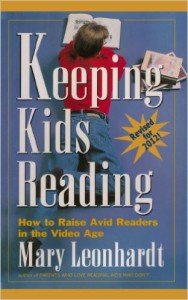
    The best program I’ve seen for helping kids learn to love reading is the one Mary Leonhardt outlines in Keeping Kids Reading: How to Raise Avid Readers in the Video Age. It’s the culmination of the insights she gained over her thirty-five years teaching high school English and focusing on helping kids learn to LOVE reading. What an excellent book!

    Oh, and one other idea. It might be effective to maybe just skip publishers altogether and help folks go directly to readers as indie writers. Amazon’s algorithms are pretty much race- and gender-blind.

    Share
  • |

    Iron Man, Military Insect Spies

    Iron Man was wonderful, every bit of what the trailers promised–adventure, humor, and a huge dose of gosh-wow. Of course, the idea of military exoskeletons are not new. It’s been in science fiction for a long time. More recently, Dan Brown used the idea in his thriller Act of War. In fact, if you think about it, it becomes clear that airplanes, ships, and tanks are all exoskeletons. So this is all old hat. But when did we ever need a brand-spanking new idea to have a wonderful and new story? What’s important is what the do with the idea–the characters, problem, plot, and setting. And Iron Man does a wonderful job of imagining new twists on all these parts of story.

    *

    In other news, it appears the future is not so far away. The military is going to be using robot bugs for recon.

    British defence giant BAE Systems is creating a series of tiny electronic spiders, insects and snakes that could become the eyes and ears of soldiers on the battlefield, helping to save thousands of lives.

    Prototypes could be on the front line by the end of the year, scuttling into potential danger areas such as booby-trapped buildings or enemy hideouts to relay images back to troops safely positioned nearby.

    Soldiers will carry the robots into combat and use a small tracked vehicle to transport them closer to their targets.

    Then they would swarm into the building and relay images back to the soldiers’ hand-held or wrist-mounted computers, warning them of any threats inside.

    I’m all for saving lives and projecting power while we’re doing it. And robo spies are just cool. Except, of course, when they’re used against you…

    Humm, zing!

    Share
  • Two Jillian Workouts & Gottman’s Seven Marriage Principles

    Jillian Michaels is, in the words of my brother-in-law, “the woman who chases the fat people around.” And indeed, as one of the main trainers on the TV series Biggest Loser, she gets those folks moving. But I didn’t know anything about her or the show earlier this year when a friend recommended her 30-Day Shred DVD workout (thank you, Mr. Dayton).

    I’m a cave dweller. I sit in my little basement office and do my thing. And I have to make sure I get some type of exercise lest I turn into a great jelly. So I’m always on the lookout for a good workout. But it’s got to meet certain standards. I don’t want anything that’s Mickey Mouse. And I don’t want any froo-froo.

    So I asked this friend if these workouts featured a bunch of women dancing around in fruity outfits, because I can tell you right now, as open to new experiences as I am, I wasn’t going to buy a leotard and tip toe through the tulips with them. My friend assured me it was froo-froo free. And boy was he right.

    Jillian shows up with two other gals, gives you a two-minute warm up, and then proceeds to bust your hiney with three circuits of strength, aerobic calisthenics, and ab exercises. The strength exercises include things like push-ups and squats with dumbbell military presses or curls. The aerobic segments have you doing jumping jacks and jump rope. The ab portions run you through all manner of crunches and lower ab exercises. The three circuits take twenty minutes to complete. And there are three different levels of workouts on the DVD.

    I walk or hike three miles a day four days a week, and so I thought I was in reasonably okay condition. Jillian disabused me of that silly notion. I couldn’t keep up. Heck, the first dozen times through the workout I think I spent half the time either catching my breath or trying not to faint.

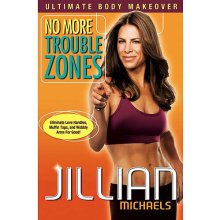
    But I kept with it and got stronger. And then I found Jillian’s No More Trouble Zones. This is a forty-minute workout. And I defy any of you he-men out there to try it and tell me you can keep up with this broad in this DVD. I still pant like a dog and have to take breaks when I do the workout. My only consolation is that Jillian and her two smiling evil pals work out with three-pound dumbbells while I work out with seven, fifteen, and twenty-five pounders.

    Like the shred workout, this forty-minute workout is comprised of circuits. But in the trouble zones workout there is no jumping about. It all double-whammy exercises that have you working both your upper and lower body at the same time or doing some killer ab maneuver. You’ll do pushups, squats, curls, a vicious plank circuit, and a dozen other exercises. You’ll work your triceps, biceps, shoulders, back, abs, and legs multiple times. This workout is no joke. 

    If you’re looking for an intense workout that doesn’t waste your time, I think you’ll enjoy either of these Jillian DVDs. All you need are a few dumbbells, a mat if you’re working on a hard surface, and prayer beads for those moments when you suspect you’re about to give up the ghost in a muscle-burning cardiac arrest.

    *

    Back in April of this year, Dr. Liz Hale, a licensed clinical psychologist, started her remarks to a local audience of more than 100 mental health professionals by saying, “Dear fellow colleagues, you are in danger of having an affair.”

    Her point was that every marriage, even those of the marriage gurus, is vulnerable to infidelity–be it sexual or emotional. Individuals have to actively curb all the subtle and often innocent beginnings that lead to unfaithfulness.

    “We make the mistake of thinking (marital) vows will keep us safe; and they don’t,” she said. She went on to say that couples cannot depend on love or similarities to keep their marriage intact. It’s not enough.

    Emotional or sexual infidelity isn’t as rare as we might think. But even if we don’t stray into some type of unfaithfulness, that doesn’t mean a marriage will stay together. Like anything worth having, a good relationship takes work.

    But what kind of work? What are the key principles for making a marriage last?

    For many years the prescriptions of marriage gurus were based on anecdotal evidence and rules of thumb—on opinion. Because the opinions weren’t tested, they led to all sorts of errors. For example, many yet believe that the road to marital bliss is through communication, specifically through successful conflict resolution. According to this idea, happy couples are those that have learned to resolve all their conflicts in a nice manner. The problem is that when conflict resolution was put to the test, the studies showed it didn’t work. Marriage therapies based on conflict resolution share a very low success rate—over the long haul they only work about 20% of the time.

    So what does work?

    John Gottman is a marriage counselor who took a different approach and started to collect rigorous scientific evidence on over 650 couples, tracking the fate of their marriages for up to fourteen years. The results of his work are startling.

    He uncovered a number of relationship myths, including the one about communication. He found that happy marriages were never perfect unions. These satisfied couples often had differences in temperament, interests, and family values. They argued over money, kids, and housekeeping, just like unhappy couples did. They had problems and faced issues. However, all these satisfied couples also practiced seven principles, even if they didn’t know it, which helped them navigate their way through all the difficulties and keep their marriages happy and stable.

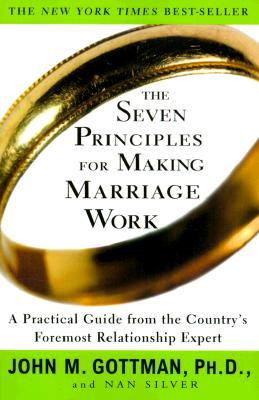
    And it’s not just opinion. The success rate for the type of marital therapy based on his research is 80%. He knows what makes marriages work and has written it up in a fabulous book called The Seven Principles For Making A Marriage Work.

    Every marriage is vulnerable to failure. It takes work to enjoy a satisfying relationship with a spouse. But it’s so much easier to improve and maintain a relationship when you’re working on the things that actually make a difference. If you want to improve your marriage, give Gottman’s book a read.

    Share
  • Cinefour theaters & the goodreads.com pricer

    I think I could write a horror novel about some dollar movie theaters. The unsuspecting movie goers are lured in. They blindly walk into the theater and take a seat, but, no! When they sit down, they find they’re trapped, their feet glued to the sticky soda floor. The doors close behind them. Outside the theater a man walking by thinks he hears screams. He pauses, alarmed. Those sound like REAL screams, people dying? But no, he thinks, it’s just a movie theater, just a scary movie, and he walks away. Moments later blood begins to seep out from underneath the theater’s exit door.

    Too gruesome? Okay, how about this. You go in, swim through a sea of popcorn to your seat only to find that all the seats flop back and leave you staring at the ceiling. This means that while you could listen to the movie, you actually have to crane your neck forward for two hours to see it. By the time the ending credits roll, you can’t walk. Instead, you have to hobble out like a troll. When you finally reach the exit, you swear you can hear the theater owner cackling. A man in a doctor’s coat shows up and slips the owner a manila envelope full of cash. Suddenly, it all becomes clear—it’s not a theater but a medical scam perpetrated by those who sell orthopedic suits and chiropractics. Mwuhahahaha!

    So you can see why the dollar theater dread fell upon me when I went up to the ticket counter at Logan, Utah’s Cinefour theaters and found out the tickets were only $3 each. Sweat began to bead on my brow. I looked around for signs of monster cockroaches that might carry me and my family away to feed to their young, but, to my surprise, the theater was, well, clean. When we entered, we found no sea of trash. No sticky floor. And the seats didn’t flop back into the dentist chair position (unlike another theater on the other side of the street). They actually supported our backs nicely.

    We sat in the dimly lit theater like the old days when you didn’t watch a steady stream of commercials. We chatted. Then the previews started up, the film ran, and nobody came out to murder us. It was great.

    Cinefour. Cheap movies. Nice little theaters. You can take the whole family out and still have money left over to buy a sink at Angie’s.

    ***

    If you love books as much as I do, you can easily spend your mortgage on them. Which is why libraries are so very nice. But even though libraries are great, there are still some books I want to own. One of the fab things about the internet is that it allows lots of companies and individuals to sell new and previously read (but in great condition) books for cheap. The bad news is that it’s hard to do comparison shopping to find the deals. But no longer–www.goodreads.com has solved that problem by doing the searching for you.

    Simply go to the site and search for a book title. When the search results display, click on the book you’re interested in. When the book’s page comes up, you’ll see a little button below the cover that says “buy for” and lists a price. Click that button, and you’ll see a list of all the main vendors and prices. You can then link to one of the vendors and make your purchase.

    So how much can you save? Sometimes a lot. For example, I looked up my own book. Its hard cover list price is $25.99. However, by using the goodreads.com feature, I found a brand new copy for $4.89. I could get a good used copy for one buck. ONE BUCK! Holy schnitzel, that’s a 96% discount. If you want to buy a book, go to goodreads.com to find the deals.

    Share
  • The Road by Cormac McCarthy

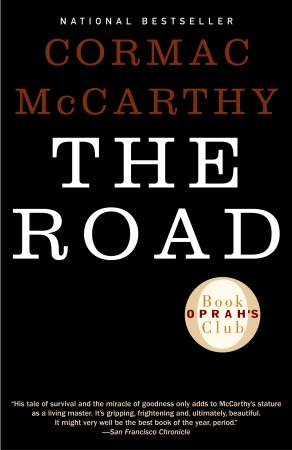
    If I’d known Cormac McCarthy’s The Road had won a Pulitzer Prize in 2007, I might not have picked it up. So many books that have won the award just bore my underpowered literary sensibilities to death. Luckily, I’d listened to McCarthy’s All The Pretty Horses a few years ago and enjoyed it. So when I saw the audio book, performed by Tom Stechschulte, in the library I checked it out. I’m so glad I did.

    The story is set in the Eastern US (although you don’t learn that into well into the book, and then only by one reference to them traveling through “the Piedmont”) years after a holocaust (meteor, nuclear, a caldera–it’s not ever really confirmed) and the resulting choas that turns America in a bleak place of ash and death. A father and son travel a mostly deserted road south to warmer weather, pushing a grocery cart with their few belongings. The father’s sick; he might be dying. And if he dies, we know the boy will die too because there’s nothing to eat but tins of what they can scavenge from houses that were ransacked and abandoned years before. And because others who survived have turned to hunting and eating people.

    This is an incredible story about the relationship between this father and son and the dangers they face. McCarthy tells the story in plain detail. In fact, his understatement and attention to detail in this terrible landscape make it all the more powerful. Stechschulte’s reading is perfect.

    The film is due out in 2009 and features Viggo Mortensen. But I wouldn’t wait for the movie if I were you. I’d get the book now. Or the recording. I couldn’t put this tale down. I’m betting you won’t be able to either.

    Share
  • Interview with Edmund Schubert, editor of IGMS

    I recently had the wonderful opportunity to interview Edmund Schubert, the editor for Orson Scott Card’s Intergalactic Medicine Show, about How To Write Magical Works: A Writer’s Companion, a collection of essays about the craft and the business of writing that he edited. Ed’s someone to listen to. But so are the authors whose essays fill the book: Faith Hunter, David Coe, C.E. Murphy, Misty Massey, A.J. Hartley, and Stuart Jaffe. Here’s what he had to say about this book.

    John: Edmund, you recently edited How To Write Magical Words: A Writer’s Companion. It’s chock full of advice from some pretty successful fiction authors, and an editor who, having purchased one of my stories, has shown exceptional taste (grin). But there are a lot of how-to’s by successful authors out there. What makes this book different, do you think? What’s the special value this book brings to the table?

    Edmund: I think the biggest thing that differentiates this book from others on the subject is its diversity of opinions. Most how-to books are written by one person, giving on perspective, but the truth is that there are many paths to success in this business. The Magical Words book was intentionally designed to replicate the give-and-take that exists on the MW blog. Sometime the MW writers agree, sometimes they don’t. The other thing that makes this book different is that it also includes some of the follow-up questions asked by readers of the blog, and the accompanying reply. That makes this book feel/read more like a writer’s conference than your basic info-dump book.

    John: I think the concept is great. And the contributors have quite a bit of experience. I know you can’t comment on every essay in the collection, but are there one or two that stood out to you while editing?

    Edmund: There were a few that stood out to me. One by Catie and one by David, both on the subject of money/advances. Those stood out to me because of how very blunt and honest they were about finances, and it’s information I think more people need to be aware of.

    The other one that stood out for me did so for personal reason. Catie’s essay about Visualizing The Story made me feel so much better about myself as a writer and my chances of success, because for years I’ve been hearing all these other writers at conventions talk about how their stories are like movies in their heads and all they have to do is record the action and the dialogue, and I used to hear that really worry because at best I might see a slide show of of bits and pieces of the action, but I’m totally making the rest up. Hearing Catie say that she didn’t/couldn’t visualize the story that way either gave me hope.

    John: I’m sure aspiring authors are going to be very interested in what Catie and David say about money. It’s also interesting that sometimes we writers hear other successful writers talk about how the invention process works for them, compare our process with theirs, and assume we’re lacking. In reality, the way we approach it might be just as effective. That’s one of the things I like about this book—it has multiple contributors. Let me ask one more question. You see a lot of stories as editor of Intergalactic Medicine Show. What are some of the topics addressed in this book that, based on the biggest issues you encounter in submissions, authors would be wise to carefully consider?

    Edmund: Magical Words as a group have two mantras: the first is that there is no one right way to do this crazy thing called writing, and the second is the exception that proves the rule: the one and only true answer to everything is BIC. Butt In Chair. You put your butt in the chair and you write. You figure it out as you go along. And the more you write, the more the other advice you hear will make sense. You want to be a writer? Write. The rest is details.

    ***

    John sez, amen to that. And amen to this book. I really enjoyed the format and the insights shared. I never tire talking about craft and business with other writers. With over 100 essays and 313 pages, this book has lots to share. If you want to hear what some very smart and a few very published authors have to say about writing, you’ll want to pick up your own copy.

    Share

3 Comments

  1. All this time, I’ve been calling him Robinson. Another example of your mind seeing what it wants to see. Fixed. Thank you.

  2. I agree, it’s a pretty awesome look into Howard’s head and at how mental illness can affect someone’s brain process.

    It is also very cool that they printed up copies to give away at Comic Con!

Comments are closed.