Indie Thoughts: How To Sell Loads of Books

From Russell Blake.

This does not represent the only way to do things, but it’s my way, and is the synthesis of everything I’ve learned over the last 23 months of self-publishing:

1) Pick one genre that’s popular and with which you are extremely familiar, and then write in that genre. Stick to it. Don’t hop around. It confuses your potential readers and muddies who you are in their minds, and will hurt your sales. If you want to write different genres, use a pseudonym, and if you like, let your readers know that moniker is you. But stick to one name, one genre, because you’re building your brand, and brand building is a function of clarity – clearly communicating what you do, and what your product is.

2) Write a series. Why? Because readers like series, and you want to give readers what they like. Or you won’t sell as much. You can try stand-alone – I have – but my series outsell my stand-alone books 4 to 1. Once you have at least three books in the series, make the first one free. Earn your income from the rest, but give readers a whole novel to decide whether they like you or not.

3) Write a lot. By that I mean try to write at least 3 novels a year. Don’t bother with short stories or novellas (40K or under) if you’re writing fiction – erotica, romance and non-fiction reportedly to do better with short form, but I don’t know from personal experience. Write 60-90K installments in your series, and release them AT MINIMUM every four months. Every three months would be better. Every two, better still. Momentum breeds success, and readers have short memories. The current market is a hungry animal, and you need to feed it, or risk being forgotten by the time your next one releases. Sorry. It’s the truth. And don’t start whining about how X famous author only puts out one book every Y years. If you’re Dan Brown and you sell tens of millions of novels each whack, then do whatever the hell you like. If you aren’t, listen up, or chock your strategy up to, “Become the next Dan Brown” and stop reading this drivel.

. . . .

5) Allocate time every day to write, and be disciplined. I suggest minimum one hour per day, or 1000 words. I actually ignore that and shoot for 5000-7000 a day when writing a novel, but that’s just my approach, and it’s not for everyone. My point is that you must be disciplined about your writing and develop that muscle. If you don’t make it a habit, you won’t write enough to put out one novel every four months, and you’ll already be way behind the curve.

6) Allocate time every day to market. I recommend a 75%/25% writing to marketing mix. So spend an hour writing every day, and fifteen-twenty minutes marketing (social media, blogging, interviews, message boards like this). Two hours writing, half hour to forty minutes marketing. And so on.

. . . .

13) Price competitively and intelligently. Look at your genre. Where are most books priced? Are you undervaluing/underpricing your work? Price to sell, but don’t go cheap, no matter what Locke or Hocking did years ago. Use low prices occasionally to move product, as promotional pricing. But price your product consistently with the rest of your peers. Over time, you can increase prices, if your product warrants it and your readership is willing to pay it. My advice here is don’t price too low, or too high.

. . . .

19) Have realistic goals. Look at what the average person does in their first year, and their second. That’s average. It ain’t pretty. If you want to be different than average in a good way, you need to do something better/different, and you need to make your own luck. Don’t get bummed because you haven’t been an overnight sensation. I sold $300 of novels in November, 2011, after six months of 15 hour days and seven releases. In December, 2011, I released five novels I’d been working on for months, to create a massive Xmas surge. I leaped to $1450. With a dozen books out. That’s not exactly a ton for the big Xmas season. But I continued writing as though my work was in hot demand. And I kept investing in my product, losing money, until it turned the corner and I started making decent money in Jan of 2012.

20) Book selling is a retail business, and retail businesses are promotions intense. You’re only going to be as good as your last, and next, promotion. Promotions are a necessary fact of life in retail. You have to generate noise – the product won’t do it by itself. There are millions of books out there. Yours are just more books. Figure out how to get some visibility. I won’t advise you on how – there are plenty of ‘experts’ that will charge you $5 for a book on what worked two years ago. Simply put, it’s constantly changing, so you need to experiment and push the envelope, share information with others and stay ahead of the curve. But if you aren’t promoting, you’re stalling. In business you’re either shrinking, or growing. If you aren’t promoting, chances are you aren’t growing.

There are 28 tips in all at “How to Sell Loads of Books.”
Indie Thoughts: 10 Things I Wish I’d Been Told

From Russell Blake.

I get a lot of emails from authors who are just starting out, or who are on the road but frustrated at the level of success they’ve seen thus far. I wish I had more time to correspond with everyone, but the truth is I’m usually slammed with writing/publishing related tasks, and don’t have a lot of opportunity to do more than offer a brief sentence or two.

But the last few missives I received got me thinking about what I wish someone had explained to me before I started self-publishing in June, 2011. So here’s my top 10 list, such as it is:

1) There are lots of talented writers out there. Lots. And it seems like everyone’s now got a book, or books, on Amazon. Being good isn’t enough to guarantee you anything but satisfaction for a job well done. It should, but it doesn’t. Don’t take it personally.

2) There are lots of crap writers out there. Lots. And while many sink to the bottom of the swamp with nary a whimper, some sell well, and some even become bestsellers. This is because the world’s unfair and, depending upon the genre, oftentimes readers don’t care much whether they suck or not, as long as the story entertains or reaffirms some conviction or bias the readers have. These authors succeed in spite of their abilities, rather than because of them. Don’t take it personally.

3) The internet is filled with gurus who know nothing. It’s hard to turn around without bumping into a writing or self-publishing expert. Most of them are completely full of shit, and don’t sell many books – but that doesn’t stop them from trying to get you to part with your money to hear them tell you what you need to do to sell well. Whenever you hear advice, consider the source. If it’s a million selling author, that means more than from someone whose work ranks slightly lower on Amazon than the collected love poems of Adolf Hitler in original German. Seems like everybody but me is selling seminars, courses, or how to books that promise much and deliver nothing. Must be a good business there, but I prefer labeling my fiction as such and putting in a car chase or gunfight rather than trying to trick the dim or desperate out of a few bucks.

4) You need to be able to put out books at a decent clip. Sure, you might hit huge off one, but probably not. You’ll be building your readership the hard way, which means one reader at a time, and the more quality books you have on your virtual bookshelf the more likely one will catch someone’s eye. This doesn’t appeal to a lot of authors’ wish that they could write a book every year or two and have a nice living. Sorry. I have yet to see that happen. But it’s a seductive siren song, so lots of newbies listen to it like it’s still a viable way to go. In self-publishing, not so much.

More at “10 Things I Wish I’d Been Told”.

I know, I know. Stop making blog posts, John, and finish CURSE.

Indie Thoughts: Enticing with price

The top two factors driving book sales both stem from having a loyal customer base. Building that base is the goal as it is in any business that depends on repeat customers. In a previous post I outlined these parts to building that base.

  1. Create a product (a book in this case) that’s likely to delight a certain set of consumers (readers).
  2. Let those consumers (readers) know about it.
  3. Make it enticing for them to give it a try.
  4. Make it easy for those who liked it to know when they can get another; and make it easy to get.
  5. Get more product (another book that’s similar to the last) out the door so your repeat customers can come back for more.

In this post I’m going to share some thoughts on #3.

So how do you entice someone new to give you a try? There are a lot of things I see that play into that:  a great cover, description, sample chapters, and reviews that all say quality and scream genre. But there’s another huge factor to making something enticing. And that is price. Or rather price vs. perceived value.

I’m looking at Mark Corkers reports from Smashwords.

I’m looking at slides 65-69. I know many of us have seen them.

If the patterns are similar at Amazon, which sells more ebooks than anyone else, then a price of $3.99 on average will sell more than double the copies of $6.99.

$3.99 means MORE readers who might develop some level of loyalty, MORE word of mouth, and it means MORE revenue than at other price levels.

It means more than double the chances of getting your stuff in front on an influencer.

More than double the chances for luck to come into play.

And those odds grow exponentially.

And, again, all along the way that price earns you more than if you were pricing at $6.99 or $9.99 because you sell more books.

Of course, these are averages, which means folks are winning at prices above and below this. Furthermore, it’s not the same across genres. For example, it appears romance tends to sell better towards the lower end of the range Corker shows.  But it clearly shows that price is an important part of enticing a reader to give you a try.

And when I look at the indies who are selling huge numbers and have built their customer base, the vast majority of them seem to have gotten there by tapping into the market forces Corker shows on these slides.

That doesn’t mean they price all their books the same. Some are doing very well using a loss-leader/sample strategy where they offer the first book in a series for 99 cents or free. This also doesn’t mean they set their price and forget. it. They seem to do just the opposite, experimenting with different prices.  I noticed the Joe Konrath, who became a mega-seller at $2.99, raised his prices to $5.99 recently. He’s dropped them back down to $2.99 and $3.99. But he was clearly testing something. In an interview earlier this year with Simon Duringer, Russell Blake who is doing very well in the thriller category recently said this.

Probably the most effective thing I did over the last two years other than Select, which came and went in terms of usefulness, was making the first book in my JET and my Assassin series free. That lowered the barrier to giving my work a whirl to nil, and my readership exploded from there. About a month and a half ago I stopped doing that because I saw my conversion rates were averaging about 12-13% from the first to the second book, and I questioned whether, with, say, 500 downloads a day, and seeing 60 sales of book two, it might not be more desirable to get 70 paid sales of book one, and seeing that same 60 on the conversion (because if someone pays for your first book, they’re probably going to read it, and soon, whereas if they get it free, it could take years, or more likely, never happen). So far so good.

Clearly the folks who are doing well with this are experimenting with price to see which levels maximize revenue and loyal customers. And I think that’s the key. They are looking at what seems to be working for others, experimenting, and basing decisions on results.


Indie Thoughts: What drives book sales?

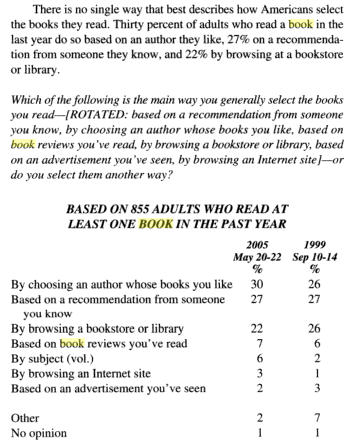
gallup-poll-how-readers-select-booksWhat are the biggest factors influencing which book a person will read next?

Many surveys have been conducted over the years to answer just that question. I’ve pasted one on the right and summarize the results of others here. One factor sits at the top of almost all of those surveys. Did you look at those other surveys? According to these surveys, folks tend to buy books by authors they already like.

This phenomenon is called a lot of things. One of the most common is “brand loyalty.” Some might be wondering how you define a brand and what could be branded in publishing. KKR has a great piece here that answers those questions.

So brand loyalty. How does it develop? Well, any time you please readers, their loyalty grows and inches them toward the loyal fan end of the spectrum. Your brand may not have the power of a Dean Koontz because you don’t have near the number of loyal customers as Koontz, but you still have a brand. And people who like your stuff are going to be loyal to some degree, but not the same degree.

I think that last point is important to remember: readers that know and like your brand won’t all have the same degree of loyalty.

You have hard-core fans who are totally dedicated to you and make an effort to know what’s happening. You’ve pleased them so much, your brand is gold to them.

You have others who will buy your book the minute they hear it’s out, but don’t make an active effort to keep up to date on things.

There are others who will mark it to be read when they hear about it, but don’t make a big effort to get it unless it’s convenient.

You have others who like your stuff but are still in that period where they like but haven’t yet committed to being a fan. That sometimes may take a few books.

That’s how it was with me and Lee Child. I read the first and liked it. Some time later I saw another and was predisposed to like it. I read that one and liked it too. I wasn’t a Child fan yet. But then I read the third. And that’s when I became a true fan. I’m not hard-core. But I now read everything he puts out within a few months of the release.

From what I can see, branding and brand loyalty matter no less in publishing than they do in any business where you’re relying on repeat customers.

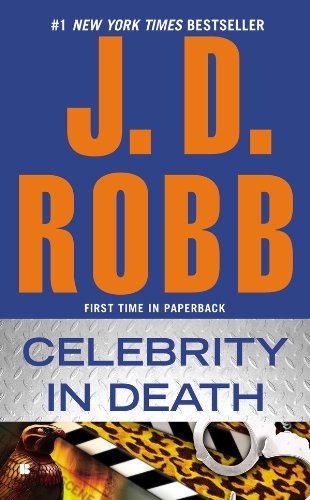
JD Robb Celebrity in DeathI see the effect of brand loyalty all over. It was the force behind the dramatic explosion of sales when it was revealed that Robert Galbraith, the author of The Cuckoo’s Calling, was J.K. Rowling. It was the force behind the midnight book store events when Stephanie Meyer would release a Twilight book (and the Twilight balls). And other similar events with many other authors. It’s the reason why publishers make the names of a lot of authors so prominent on the cover. Good grief, sometimes that’s all you need. Look at some of the Nora Roberts or JD Robb covers. On many of those the name, the brand, takes up 75% of the cover. You can see customer loyalty blossoming in reviews on GoodReads and Amazon and elsewhere where readers say in essence, “I loved this author and I will be looking for the next book.”

Building a base of loyal customers is they goal in businesses that rely on repeat sales. Because not only do those folks come back for more, but the also tell other folks about the product.

Go back an look at those surveys. What was usually the number two reason someone selected a book?

Word of mouth.

Word of mouth comes in many forms. Recommendations from folks you know. Recommendations from other influencers–folks like Rush Limbaugh or review sites you frequent. Recommendations from some other type of social influence mechanism like a bestseller list on Amazon.

The key takeaway for me is that top two factors driving book sales all stem from a loyal customer base. Which means building that base should be one of my main goals as a writer.

So how do you do that?

The same way everyone else in a repeat customer business does it. At a general level, you:

  1. Create a product (a book in this case) that’s likely to delight a certain set of consumers (readers).
  2. Let those consumers (readers) know about it.
  3. Make it enticing for them to give it a try.
  4. Make it easy for those who liked it to know when they can get another.
  5. Get more product (another book that’s similar to the last) out the door so your repeat customers can come back for more.

I’ll be sharing more of my ideas about aspects of those five steps in upcoming posts. And I’ll be wanting to hear what you’ve found that works. Because ultimately we’re all testing various strategies. And the more we share with each other, the more we’ll each benefit.

While you’re waiting, you might want to look at an awesome book on customer loyalty called The Loyalty Effect by Frederick F. Reichheld.

Indie Thoughts: Tend Your Garden

From Joe Konrath.

Your ebooks function much like a garden.

One rare occassions, a plant will thrive with little help from you.

Others may whither and die no matter how much help you give them.

But the majority need to be constantly tended. Planted, watered, fertilized, weeded, pruned, mulched, replanted, harvested. In other words, lots of work.

Ebooks aren’t a Mr. Popeill invention where you can set it and forget it. Quite the opposite. You need to pay attention, and keep active, or your garden won’t thrive.

Everyone experiences slow downs in sales. It’s inevitable, and it seems to be cyclical, but not in any sort of way I’ve been able to prodect. Sales seem to rise and fall for reasons unknown.

But if you’re doing what you can to make your books discoverable, you have a better shot at sales than those authors who self-publish then self-ignore.

Here are some tricks to tend to your garden.

1. Change prices. As an indie, this is one of the biggest advantages you have over the legacy industry. You decide what the customer pays, and this is powerful. Don’t be afraid to weild that power by experimenting with prices, both lower and higher.

2. Newsletter. There is no excuse why you don’t have a newsletter. People who sign up are actively looking for your titles. Make them aware a new title exists.

3. Sales. Unlike a change in price, a sale only lasts for a short time. KDP Countdown is what I’m currently using, because it offers 70% royalties when I drop the price. I’ve been pleased with my results.

4. Advertising. Bookbub and Booksends are the ones I use regularly. If you’ve had success with another company, list it in the comments.

He names eleven tips. Link to the rest at JA Konrath’s blog.

This goes back to something Blake Russell said in the myth posts I pointed to a few posts ago. There are some folks who suggest that you can either write the next book or you can promote the current one.

Folks who suggest it’s either/or leave me scratching my head. Why not do both?

Applying to BargainBooksy or BookSends takes less than 30 minutes. Sending a review copy out to a decent review site takes about the same amount of time. If I spend just one hour a week on promotion, I can do all three of those things each month plus something else.

Some folks suggest that promotion doesn’t work when you only have a few books out. And forget about it if you only have one. Promo can’t do anything for you if you only have one book out. At least, not as much as completing the next book can.

Let me ask a question.

If I open a McDonalds down some back road where nobody sees it and nobody travels, do we think that releasing a second McDonalds down some other back road where nobody travels is going to increase sales?

Nobody is going to go down those roads except by accident.

Is that how McDonalds or Walmart or whatever company you want to name built their vast empire? They did it by accident? How about the diner everyone loves in your town? They hid it at the end of a dirt road, told nobody about it, definitely did not put up a sign (good grief, not a sign), and, shazam!–the customers started rolling in?

Mcdonalds11

Some folks say, no, you’re missing the point. The purpose of a promotion is to get people to buy other books in your list at higher prices, so if you don’t have a lot of other books, your promotion can’t do anything for you.

Using loss-leader or sampling strategies with one book to sell others is certainly a smart thing to do. Because it works. With cheeses at Sam’s Club, with books, with a lot of things. But is that really the only thing you’re trying to do?

How about building a base of readers who have some degree of loyalty to your brand? You don’t need ten books to start to do that. You don’t need two books. You can start with one.

I started two series last December—a thriller and an epic fantasy–and (writing gods willing) will be releasing book 2 in the fantasy series this month. Since December I’ve sold close to a thousand in each series. It was easy to see that at least half of my sales, maybe more, came because of some type of promo. I know this because I watched the numbers.

This means I now have hundreds more folks waiting for book two than I did for book one in both series. I’m going to be releasing book two in both series with a bigger customer base than I would have had without promo. Why would I not want to start at a higher level for each successive book?

More readers means more word of mouth. Why wouldn’t I want more word of mouth about my books?

More word of mouth means higher odds that an influencer will hear about, try, like, and then promote my books. In fact, I’m looking at at least double the odds. Somebody remind me: why wouldn’t I want those better odds?

One of the main keys to this business is to get a big enough customer base so that the word of mouth takes on a life of its own. I am building that base more quickly with promo than without. Why would I want to build that base more slowly?

Finally, I have twice the money I would have had otherwise to invest in promo and covers and editing etc. Or just go spend on my wonderful wife and girls. Why wouldn’t I want this revenue?

Traditional publishers have built reader bases for an author one book at a time, often spaced a year apart, for decades. They put money into the promo that works in in-store venues: covers, pre-release reviews and the necessary ARCs, catalogs, a sales team, and co-op visibility in the stores. And while that promo didn’t guarantee anything, it made the odds more likely the book would get readers to sample and build that reader base.

Why shouldn’t we put money into the promo that increases the odds for online stores?

What business out there can’t benefit from good promo?

Of course, the next question is what methods of promo work? There are a many methods that are a waste of money. But not all of them are. I think it’s our job as entrepreneurs to test and find ways that are effective a la The Lean Startup by Eric Ries.

Anyway, Konrath’s advice to not self-ignore, and Blake’s “do both” approach make a lot of sense to me.