Please, Mr. Brown, I recommend you undress

Yesterday a man asked me to get naked.

It’s true, I can do that to some people. Not wanting to pass up any chance to go native, I agreed. Yes, I know what you’re thinking–these writers think they can bend all the rules! However, the man was a dermatologist. I was there to have this annoyance on my left ear checked. When he found out my sister had some skin cancer once (it appears I should have had my skin viewed annually), that’s when he became interested in my undressing. And in my glorious state of undress, well, with a “gown” that was about as big as a dish towel, he found this thing on my leg.

He’s like, “How long have you had that sore?”

I said, “That old thing, I don’t know, years.”

“Humm,” he said. He noted some odd moles that seemed to be of the happy and peaceful sort. Then he ordered a biopsy of my leg and my ear.

Don’t know the results of the leg yet. He suspects it’s not cancer, just some random mutant growth, which may be a result of the Lizard people that control our lives and which I learned about on book tour when I was at a Barnes & Noble in Arizona telling some folks my novel was about humans being ranched, and a glassy eyed dude sitting on a nearby chair stood up and said, “Your book is true! Your book is true!”

The biopsy of my ear demonstrated that I’m a squamous cell carcinoma head. I’m going to have a bit of Mohs micrographic surgery next Tuesday. He said we caught it very early. So I expect there to be no issues. In my mind it’s like finding a wart. True, this wart could spread. But it isn’t like they’re going to have to cut my ear off and replace it with that of a baboon.

Now, not only did I find Reptoid mutantcy yesterday, but I think the Reptoids have invaded the Logan, Utah police department. I say this because I went to the wrong hospital yesterday. I realized my mistake and zoomed off to the right one. There’s a hundred yard stretch along the road through fields. Lo and behold, after passing through that area, a short 4 seconds, I was pulled over by a cop who gave me a $240 speeding ticket for going 51 in a 30 mph zone. Does this not suggest to you some sort of conspiracy? To me it does. He’s obviously a Reptoid sympathizer.

Here’s more information for the curious.

Squamous cell carcinoma

http://www.aad.org/public/publications/pamphlets/sun_squamous.html

Mohs micrographic surgery

http://mohscollege.org/about/overview.php

Baboons

I think this clearly shows that what separates us from our primate cousins are brassieres and other articles of fine underwear. And as you can see here, they want them! Just another instance of sad human tyranny.

Look at this woman’s face. These are the kinds of people who they feature in horror movies. I think this must be part of casting. Put the actress in a car and see what she does with a troop of baboons. She sits and screams? Perfect. What, she taught them the meaning of roadkill? No, we don’t want anyone like that.

The Reptoids that Control our Lives and Prove My Book is True!
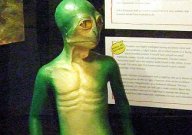
They live in the hollow part of the earth. Which is probably where the 10 Tribes of Israel went as well. And when they return we’ll have all sorts of lizard people high priests and prophets. Anything’s possible.

http://en.wikipedia.org/wiki/David_Icke (scroll down to “Reptilians and Shape-shifting”)

Entrances to hollow earth?

Are they real?

Share

Similar Posts

  • |

    PDF of presentation given at Heart of the West Conference

    Had a delightful time delivering “Story Lessons from the Hunger Games” at the annual conference for the Utah chapter of RWA up in Park City. Especially enjoyed delivering a sweet dream telegram involving waxed chests 🙂 Here’s the PDF as promised: Story Lessons from the Hunger Games RWA 2011

    Share
  • |

    Awful Intent Update: The power of having the electric ladies read to you

    Everyone says you cannot copyedit your own work.

    You’re an idiot if you try.

    Because you’re mind auto-corrects eorrs, and fills in missing punctuation or words like “of” “the” and “a”.  And often doesn’t care or know the house rules for capitalization. Etc.

    (Did you catch all the errors in that paragraph?)

    Except the brains of copy editors play this trick as well. That’s why some read the manuscript backward and others use arcane WordText code to suss out issues. And some change the font face. And some make multiple passes over a section, looking for dialogue issues the first time through, capitalization the next, and something else the third time. And despite all their work, you still find errors in the text.

    I’m not saying editors aren’t any good. I’m just saying that our brains, for the most part, don’t care about the details. They just care about the communication, and they’re very good at ignoring the rubbish. And when it’s just the brain and the eye working together, the brain makes sense of the text, even when something’s wrong or missing.

    So one trick to force the brain to see what’s actually on the page is to read your text out loud to yourself. It’s an excellent practice, except a human brain is still involved, and it sometimes still plays tricks. And sometimes we get lazy and start to read too quickly, and the next thing you know we’re subvocalizing and whipping along, missing all sorts of stuff.

    So what can you do?

    Well, a few book releases ago, I stumbled onto something. I invited an electric lady to help. And she was dynamite. (You can invite a man if you prefer the sound of those voices.)

    I’m talking about inviting your computer to read aloud every word of your manuscript to you. And highlight the words as it goes.

    I can tell you I’m never going back. These ladies have simply helped me see too many errors that were invisible to me and my beta readers who had editorial chops.

    I use WordTalk, a free plugin for Microsoft Word for this kind of reading. The University of Edinburgh created it to help kids learn how to read. It allows you to select from the text-to-speech voices you have on your computer, set the reading rate, and it highlights the word it’s reading so you immediately see where the error is.

    I set it at a slightly faster reading speed so my mind cannot wander during the reading and use the quick keys so I can start and stop and make my edits easily. And I always, always, always have my electric friend re-read any fixes I make because I can’t tell you how many times I’ve adjusted a sentence or paragraph and introduced more errors that I didn’t see, even though they were staring me in the face.

    I must admit that the electric ladies can’t do everything. Having them read to you cannot help you spot errors you don’t know are errors in the first place. If you don’t know, for example, the conventions for capitalization of personal titles or the conventions for numbers (is it a “.44mm” gun or “forty-four millimeter”?) If you don’t have your own house rules for the many areas where you have a choice like in an epic fantasy (do you use “Dreadman” or “dreadman”?) If you don’t know any of that, you’ll blithely skip over a host of errors and only see the issues you know like the misuses of “rise” and “raise” or “lie” and “lay.”

    So you have to learn the conventions or find someone who does (an editor). Or both.

    Also, doing this type of reading will not help you see if what you’ve written is actually translating the scene in your head clearly and vividly to the page for someone new to your story. Only a fresh set of eyes can tell you where your story isn’t clear, believable, or interesting (at least to that one reader).

    But for helping you spot the issues you do know, I haven’t found anything better. Give it a try.

    Oh, and the update on Awful Intent–Zira and I are almost finished with the copy edit! Which means the release is only days away.

    Share
  • |

    Writing Update: 5/28/11 – Freewrites, Storylines, Proportion

    I finished the next chapter of my outline, which turned into three chapters. Hurray for making progress. However, I’m going to need to make more time on a weekly basis if I’m going to meet my goal.

    I’ve kept stats over the last four novels. My average is 500 words per hour during the drafting stage. That includes revising and doing quick researches etc. So sometimes I will write a smoking (for me) 800 or 900 words per hour. Sometimes I won’t finish a thing. When I’m all done it averages out to 500 words. I’m going to see if I can’t get 20 hours this next week and finish 10,000 words. 

    Addition to last week’s post

     Do you remember last week’s post about the process of making it come alive in my mind first? Orson Card illustrates this as he describes how he prepared to write a story in his essay “How One Story Can Give Birth to Another“.

    Spideysense, farmer’s faith, and freewrites

    Last week when writing chapter 7, I finished, but felt something was off.  Years ago I would have freaked about writer’s block.  I would have told myself I sucked because the chapter was glucky. But not now.  It’s a gift.  So I stopped and talked to myself in a freewrite.  I had farmers faith that if I just kept working on it, something good would result. 

    Here’s what I wrote in that freewrite. It’s an awful read for you, but it shows you just how sloppy and cryptic and freewheeling my freewrites are.

    Okay, so I’ve written the stuff below and I could tweak it, I guess. But I keep having this nagging feeling that it’s not good. It’s not a compelling villain. I think he’s creepy and evil. And, truth be told, I don’t want to make him into something other than what he is—a total thrall to the Glory and the mother. So as the “pet” of the mother, what else could he be called? I don’t know.

    I shall call you endless because you will be spared, you shall continue, whereas the rest will not. Blessing. Blessed. Grateful. What would you call a thing that did you bidding reliably? But enthralled. I am part of you, you are part of me, and so you may take my name.

    He WOULD think—I am not like them. I am GRACED by the Mother’s touch. I have taken her into myself. Or she has graced me and so I have become more than I would be otherwise. I am obedient.

    What else do you call pets or tools. Maybe that’s what she calls him. My skir master. The skir lord. My trowel. Harvester.

    He’s over the harvest. Reaper. Or he’s the one that supplies food. Supplier. Gatherer. Cook. Chef. Hunter. Provider. Butcher. Slaughter.

    So I like Endless with the whole part of him being part of her. But he could use that—”you’re just like us” “no, we are part of the XXX (what was the name I had for them?) endless. You are meat”

    Devourers, Mothers, Sublimes

    Okay, so do I go with Endless or Harvest Hope. Endless it odd, neat. What could I add to Harvest to do the same. Harvest Lord, King, Overseer, Meatman, Food provider, Feeder, Harvester, Harvest, Rancher, Collector, The Harvester. Harvest.

    I think when you’re raised, you get a new name.

    Rebellion.

    Soul collector.

    The Shepherd.

    Harvest Prime

    Bald Head

    Laughter

    Everlast

    DIVINES

    ID HIM AS THE MAIN HARVESTER

    RIGHTEOUS ANGER

    The issue was that his motive wasn’t working.  I had a feel for what I wanted him to be, and my Spideysense was telling me it wasn’t working, wasn’t interesting.  Thomas McCormack in his book calls this feeling for what you want in your story a “prelibation”.  What an odd term.  But it’s real. 

    “Prelibation.  The desire for a certain effect on the reader.  It may or may not be followed instantly by an intuition of what item of narrative will cause that effect, and it’s important to see that intuition and the prelibation it is trying to serve are not the same thing. The intuiting of the narrative that will produce the effect-wanted is the work of the imagination” (p153 The Fiction Editor, The Novel, and the Novelist)

    There’s more in his book. I recommend it highly. So, after that freewrite, I didn’t have a solution, but I’d pinpointed the issue, the prelibation. I took a break with kids into the big city. Came back and had my solution for a narrative that would do the trick.  Luckily, it was something I’d cut out of the outline. Back it went with some significant tweaks and was better than before.

    Storylines & the Size of this Presentation Phase

    For those who have read my series on suspense, at this point, the presentation of the problem for the main story and many of my sub-stories is complete.  Depending on how you categorize them, I have nine to eleven story lines (which makes it impossible to write this book in 100k words).  There’s one main story line that touches everyone—the Mokaddian threat.  Then there are other questions and issues I raise that set the reader up with the expectation for a resolution.

    1. Talen
      1. Mokad/Nashrud (external threat)
      2. Lusts (internal threat, mystery)
      3. Sugar (relationship)
    2. Legs: Vulnerability
    3. Sugar
      1. Talen (relationship)
      2. Urban (relationship)
      3. Ancestors (relationship, mystery)
      4. Mokad (external threat)
    4. Argoth
      1. Mokad (external threat)
      2. Nettle (relationship)
      3. Bone Faces (external threat)
    5. Eresh
      1. Flax (conflict relationship)
      2. The Creek Widow (relationship)

    So most of these story lines have been presented, although not all. It took about 30,000 words to finish the presentation phase. I’m estimating 170,000 words, so that a presentation phase of roughly 18%.

    There are a lot of story lines and characters to juggle. Sometimes I kick myself for having so many. Of course, I love them, despite the challenge they present. Nevertheless, I AM looking forward to writing that thriller with a limited cast.

    Share
  • |

    Update and Fage

    I passed the 90% mark today on SERVANT. It’s been wonderful going back through this story, remembering why I loved these characters so much. The cover too is coming along. I’m looking forward to revealing it in the near future. Right now everything looks like it will release on target, although that may change.

    While you’re here, you know I have been on a quest for delicious low-sugar yogurt for some time. I have found it at last. Behold.

    Fage 2 percent yogurt

    No Greek yogurt has a better taste or texture. And there’s no added sugar. Add some fruit and it’s heaven.

    It’s pronounced “fa-yeh.” Except, how do you pronounce that? Who comes up with product names nobody can pronounce? 

    But it doesn’t matter how you pronounce it. We luvs it, Precious.


    Share
  • |

    Become A Story Idea Machine

    Now’s your chance

    Apply to take the next Novel Writers Academy course: How to Create Story Ideas That Beg To Be Written.

    • Six-weeks
    • Starts: Jan 2, 2022
    • Ends: Feb 21, 2022
    • Gobs of hands on practice
    • One-on-one guidance from me

    At the end of the six weeks you will be a story idea machine.

    I will be working with only a small set of people. And so you need to apply to get in.

    The deadline for applications is midnight, December 11th. So contact me now to get the application instructions.


    A cracking good story idea requires five critical elements.

    Until you have all five, you’ll struggle to plot. You’ll write a few scenes and run out of gas. You’ll feel like the story just isn’t going anywhere.

    And that’s because it isn’t. It can’t. A story isn’t a story without all five elements.

    However, once you develop these five things, your story will suddenly roar to life. There are a few other elements that are important as well, but these five things form the core of the story setup. 

    In this course you’re not going to merely learn about all of those story elements. You’re going to go deep and learn what can only be learned by actually doing the work and developing story idea after story idea with personal one-on-one feedback from someone who knows what they’re doing.   

    When you finish, you won’t just know story theory. You will be a story idea machine. And you will be that because you have put in the work. The right work.  

    Again, this is not a course full of lectures and videos. This is a course where you’re going to work. And develop the insights and skills that only come from doing the work.

    You’re actually going to:

    • Come up with story setup after story setup after story setup
    • And improve them with one-on-one feedback. 

    It’s going to:

    • Eliminate years of you wandering about in the story wilderness trying to figure things out on your own. 
    • Put you miles ahead of other writers who have no idea what’s really at the core of story. 

    You are going to learn how to develop killer story ideas on purpose instead of on accident. Which means you’ll be able to do again and again. Reliably. Like clockwork. 

    Course details

    The focus of the class is not on learning about story, although you will do that. The majority of your time will be spent on developing stories. 

    You can’t become a carpenter by watching videos and reading books about it.

    You have to get out on the work site, cut wood, and pound nails. You have to make the mistakes all beginning carpenters make, get feedback, and improve.

    The same goes for writing.

    And you’re going to work in this class. You develop 21 story setups. In fact, you develop more because the 21 are just the ones you turn into me. And with each one your skills, insights, and abilities grow.  

    In the beginning, your setups will be bare bones. By the end, they’ll be fully developed setups that beg to be written. Setups you can use to immediately write the first draft  of your novel, whether that’s in outline or chapter form. 

    Here’s what you do each week. 

    Week 1.

    • Uncover the secrets of what’s really at the heart of story and how to generate ideas. 
    • Define your genre requirements
    • Create story setups 1-3

    Week 2.

    • Uncover the secrets to compelling characters 
    • Create character sketches
    • Create story setups 4-7 

    Week 3.

    • Uncover the secrets to formidable obstacles
    • Create story setups 8-11 

    Week 4.

    • Uncover the secrets to interesting casts
    • Create story setups 12-15

    Week 5.

    • Uncover the secrets to managing multiple storylines and series
    • Create story setups 16-19 

    Week 6.

    • Create story setups 20-21. These are your capstone projects where you apply everything you’ve learned and take it to the next level

    In this class you develop story idea after story idea after story idea. You are going to be marinated in the work of developing characters, THOMs, goals, obstacles, settings, casts, and more. And because of that, each week will not only bring an explosion of insights, but new skills and abilities.

    Every week you get two private, one-on-one, live sessions with me where you get encouragement and feedback on what you’ve developed. And you’ll have access to a private Facebook group where you can apply the principles to brainstorm even MORE ideas for each other’s stories. 

    At first you might feel a bit shy and worried about your ideas and abilities. But you’ll soon get over that. By the end of the course you’ll be one of those people that can generate terrific ideas easily. And you’ll be able to do that because you will have put in the work to become a different writer.  

    What’s the price?

    Hours of one-on-one instruction from a professional editor or author costs thousands of dollars. An MFA program can cost $25,000 to $30,000 or more!

    But this course won’t cost anywhere close to that.

    Plus you’re going to learn things here you’ll never get in an MFA program (I know. I was accepted into a top-ranked program).

    The cost of this course is $799. And I personally guarantee your results. You’ll be totally oh-my-gosh-I’m-so-happy-I-took-that-class satisfied, or I’ll give you your money back. No questions asked.

    Now’s your chance to stop spinning your wheels. I can’t tell you how much I wish I’d had something like this when I’d started:

    • The secrets about the true core of story.
    • The secrets about how to come up with ideas. 
    • Actual work with personal one-on-one feedback. 
    • Laser focused on what actually matters, not a bunch of ridiculous writing rules. 

    When you finish, you will be a story idea machine. 

    You won’t know plotting. That’s a different course and set of skills. You won’t know how to write chapters. But you’ll know how to create the engine that powers all the rest of that. You’ll know how to create the core that makes awesome plots and chapters possible. 

    If you want to take this course, click the button below and contact me. I will tell you exactly how to apply.

    I’m not going to be able to accept everyone who wants to take the class. I have a very strict limit on the number of students I can work with. So you need to get your application in before the deadline of midnight, December 11th.

    Don’t wait!

    Contact me now to get application instructions.

    Share

5 Comments

  1. John,

    I just had a lump of Basal Cell Carcinoma taken off my neck. The lump was not big, but the scar is about 6 inches long! I wonder where we hung out when we were young that damaged our skin.

  2. Hummmmm, slathering ourselves with tanning oil, smelling of junipers and garden hoses. Hummmmmm.

  3. The sad part is, my wacked out dad totally believes all this david icke stuff. That lizard man you have there looks awfully reminiscent of a sleestak from Land of the Lost.

  4. But getting a baboon ear would be sooooo cool. You would be a hit at LTUE.

    And I haven’t forgotten, I still owe you a poke with a sharp stick for that whole Jude the Obscure thing.
    Then again, it makes me think I was born in the wrong time. If that got published back then, I would have been a writing god. My eyes still bleed just thinking about reading that.

Comments are closed.