Slides for my LDStorymakers Presentations

I loved attending the LDStorymakers conference this year. It was awesome, fun. I chatted with old friends and met new ones.  Got (stole) a great story idea from Donald Carey, the Conference King. Enjoyed Provo–love the weather down there this time of year! Attended some great presentations on writing. Gave some that seemed to help a number of folks. It’s a special delight to deliver a presentation that both entertains and helps. Furthermore, my family came down with me. So I got to hang out with them in the evenings. My daughters sneaked into the mass booksigning and got autographs from some of their favorite authors.  They were giddy with delight.

It was bliss.

I also worked with Isaac Stewart on a mock up of the new cover for SERVANT, and dude. DUDE.  If we can swing it, the covers for the Blacksword Books version are going to rock.

Anyway, I promised many people I would post my presentation slides here. Here they are in PDF format:

Vivid and Clear

Story Turns

And for those of you in the Story Turns class wanting that fine car chase clip, here it is!

Share

Similar Posts

  • |

    New Workshop: How to Write a Story that Rocks

    Folks, the first tentative schedule for Life, The Universe, & Everything (LTUE) has been set. For the past few years I’ve been teaching a 2-3 hour workshop called “The 3 Things You Must Learn To Write Killer Stories.” I think I must have taught it over 15 times in different venues. Hundreds have attended and said they loved it.

    However, this year I’m going to be doing something different. I’m developing a new two-hour workshop called “How to Write a Story that Rocks.”

    I’ll be teaching it Thursday evening, February 11th from 5 PM – 7 PM at LTUE at BYU. It’s FREE and open to all.

    What I found was that a lot of new aspiring authors get lost in mountains of rules. But great storytelling isn’t about rules. They try to form stories with word counts, chapters, and weird plot diagrams. But stories aren’t about those things. They have a hard time knowing what to write next because they don’t understand how story works. In fact, some don’t know how to start at all. They just flounder in their piles of zing. Finally, even if they can get a bullet outline, they have a hard time turning that into a scene.

    So what we’re going to do in this workshop is this.

    1. I’m going to bring in some ideas for character, setting, and problem. We’re not going to generate from scratch as we’ve done in the past because I want to get to the next steps.
    2. Then I’m going to teach you how to go from idea to outline–we’re going to do it together, and you’re going to learn exactly how to know what comes next 
    3. Then we’ll go from outline step to scene sketch.
    4. Then from scene sketch to draft.
    5. At every step I’ll be pointing out key story development concepts and principles

    When we finish, you should be able to:

    1. Identify the essential story objectives and story development questions–get these right and the rest doesn’t really matter. This will include the HANDFUL of key things you need to worry about and develop with character and plot.
    2. Develop more likeable and interesting characters
    3. Develop more powerful story concepts (call it premise, problem, situation, whatever). Once you get this the story writes a lot of itself.
    4. Explain the real Story Cycle. Not Campbell’s mumbo-jumbo hero’s journey. Not the three, five, seven, nine acts. Not Freytag’s diagram. Story.
    5. Explain what it means to “move a story forward,” “increase the stakes and tension,” “complicate the plot,” “complicate the motive” and how that’s done using surprise, conflict, motive, and problem. Included in this are “turns,” “rugpulls,” and “reversals.”
    6. Use the Story Cycle concepts to generate a story bullet outline and take a bullet step idea and turn it into a scene.
    7. Explain the creative principles that help you generate stories more easily.

    Larry Correia will be there as well. So I’m expecting this to be a very helpful workshop. I’m going to do all I can to make it as good or better than the first.

    Share
  • Indie Thoughts: What drives book sales?

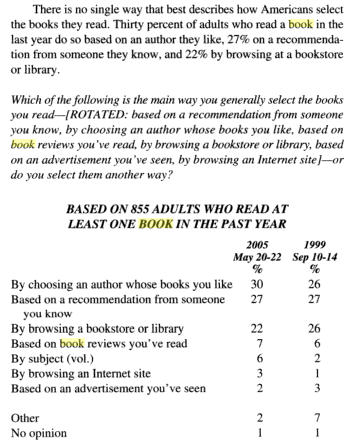
    gallup-poll-how-readers-select-booksWhat are the biggest factors influencing which book a person will read next?

    Many surveys have been conducted over the years to answer just that question. I’ve pasted one on the right and summarize the results of others here. One factor sits at the top of almost all of those surveys. Did you look at those other surveys? According to these surveys, folks tend to buy books by authors they already like.

    This phenomenon is called a lot of things. One of the most common is “brand loyalty.” Some might be wondering how you define a brand and what could be branded in publishing. KKR has a great piece here that answers those questions.

    So brand loyalty. How does it develop? Well, any time you please readers, their loyalty grows and inches them toward the loyal fan end of the spectrum. Your brand may not have the power of a Dean Koontz because you don’t have near the number of loyal customers as Koontz, but you still have a brand. And people who like your stuff are going to be loyal to some degree, but not the same degree.

    I think that last point is important to remember: readers that know and like your brand won’t all have the same degree of loyalty.

    You have hard-core fans who are totally dedicated to you and make an effort to know what’s happening. You’ve pleased them so much, your brand is gold to them.

    You have others who will buy your book the minute they hear it’s out, but don’t make an active effort to keep up to date on things.

    There are others who will mark it to be read when they hear about it, but don’t make a big effort to get it unless it’s convenient.

    You have others who like your stuff but are still in that period where they like but haven’t yet committed to being a fan. That sometimes may take a few books.

    That’s how it was with me and Lee Child. I read the first and liked it. Some time later I saw another and was predisposed to like it. I read that one and liked it too. I wasn’t a Child fan yet. But then I read the third. And that’s when I became a true fan. I’m not hard-core. But I now read everything he puts out within a few months of the release.

    From what I can see, branding and brand loyalty matter no less in publishing than they do in any business where you’re relying on repeat customers.

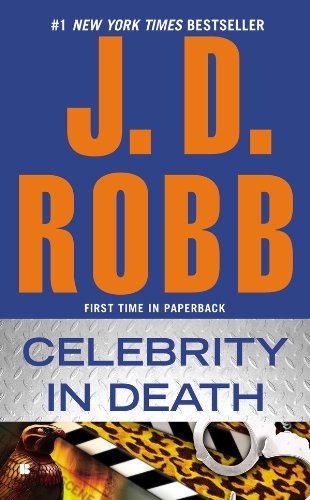
    JD Robb Celebrity in DeathI see the effect of brand loyalty all over. It was the force behind the dramatic explosion of sales when it was revealed that Robert Galbraith, the author of The Cuckoo’s Calling, was J.K. Rowling. It was the force behind the midnight book store events when Stephanie Meyer would release a Twilight book (and the Twilight balls). And other similar events with many other authors. It’s the reason why publishers make the names of a lot of authors so prominent on the cover. Good grief, sometimes that’s all you need. Look at some of the Nora Roberts or JD Robb covers. On many of those the name, the brand, takes up 75% of the cover. You can see customer loyalty blossoming in reviews on GoodReads and Amazon and elsewhere where readers say in essence, “I loved this author and I will be looking for the next book.”

    Building a base of loyal customers is they goal in businesses that rely on repeat sales. Because not only do those folks come back for more, but the also tell other folks about the product.

    Go back an look at those surveys. What was usually the number two reason someone selected a book?

    Word of mouth.

    Word of mouth comes in many forms. Recommendations from folks you know. Recommendations from other influencers–folks like Rush Limbaugh or review sites you frequent. Recommendations from some other type of social influence mechanism like a bestseller list on Amazon.

    The key takeaway for me is that top two factors driving book sales all stem from a loyal customer base. Which means building that base should be one of my main goals as a writer.

    So how do you do that?

    The same way everyone else in a repeat customer business does it. At a general level, you:

    1. Create a product (a book in this case) that’s likely to delight a certain set of consumers (readers).
    2. Let those consumers (readers) know about it.
    3. Make it enticing for them to give it a try.
    4. Make it easy for those who liked it to know when they can get another.
    5. Get more product (another book that’s similar to the last) out the door so your repeat customers can come back for more.

    I’ll be sharing more of my ideas about aspects of those five steps in upcoming posts. And I’ll be wanting to hear what you’ve found that works. Because ultimately we’re all testing various strategies. And the more we share with each other, the more we’ll each benefit.

    While you’re waiting, you might want to look at an awesome book on customer loyalty called The Loyalty Effect by Frederick F. Reichheld.

    Share
  • Washington Irving, Family, & Writing

    How do writers juggle writing and family?

    One of my heroes is Mary Higgins Clark who, as a single mom, started a career. She got up very early, wrote for 1-2 hours in the morning, and became a mega-seller.

    I have four girls. And a full-time job. When the first two were little my wife was working and I was Mr. Mom going to school. Then we switched.

    Here’s my experience. While I love writing, my stories do not run to me and give me wonderful strangling hugs after school like my youngest. While I laugh at the humor I come up with in my stories and enjoy it, it cannot replace the uncontrollable giggling I experience when I go on dates with my second. While writing lifts me, it does not fill my office with notes and wallpapers of love like my oldest. And writing never drags me out to play ghosts in the graveyard or hide and seek–daughter #3. Nor will my stories and novels be there for me when I’m old.

    While writing is incredibly fulfilling, my wife, kids, and other relationships are a joy it cannot replace.

    What all this means is that I try to recognize that I can’t let family and writing compete. They can’t be equal priorities. Family comes first. But this doesn’t mean I don’t write. I block out times to write. These are my writing times. I get up early to make time for this. I don’t watch a lot of TV. I don’t read a million blogs, nor, alas, can I read fiction at the level I used to. I make time. But I also make blocks when I just forget writing (even though it can be hard).

    Specifically, here’s my average work week.

    5:00 AM rise, wake and get centered for the day
    6:00 AM work (“work” is my day job and writing)
    6:30 AM family and breakfast
    7:30 AM go to work (at home). Try to get in 7-8 hours at day job and 2 hours writing. When I did commute I wrote for 1 hour during lunch and 1 hour in the morning before I went to work. Then I’d take a 2 hour block on Thursdays.
    5:30 PM family etc.
    9:30 PM bed

    On Saturdays I get a few more hours writing. Sunday I forget everything but family.

    With the new book contract I have to become a bit more creative. But if it ever comes down to sacrifice the last 2 years of my oldest being at home and writing, well, the books will go.

    When my writing plans meet reality, I try to adjust and find other slots for writing. It wasn’t easy in the beginning, but it’s become much easier. And I don’t worry about what I might have accomplished in writing if I’d just had the extra time. Such what-if’s, I’ve found, are almost always poisonous. And who the heck cares? Because while I want to write wonderful stories, I think the greatest loss I think I might experience at the end of my life (believing in an after life or not) is looking back and seeing that I traded the opportunity for wonderful relationships for a rapidly mouldering spot on the shelves.

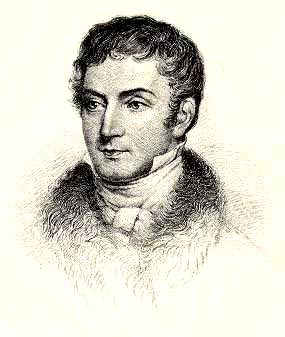
    Washington Irving wrote a funny and wonderful piece on this mouldering in his “The Mutability of Literature” in THE SKETCHBOOK OF GEOFFERY CRAYON. I recommend every writer read this to put life and writing into perspective.

    Share
  • More 10-to-20’s

    I just posted this in one of the comments sections and realized it would be useful to everyone.

    There’s another part to this that has to do with text. There will be more 10-to-20’s that go along with it. But I think I’ll be trying to create that presentation as a video for the site. We’ll see. Right now I’ve got to finish CODG. But when you finish the ones I assigned, I suggest you add these.

    1. BEGINNINGS. Go to the bookstore or library and pick up 10 to 20 random fiction books off the shelves and then sit down with them. Pick up each and read the first two pages. Note which ones pull you in and which resist you. Identify the cause. Then see what patterns you can find.

    2. 3 GRUNTS. Find 10 to 20 short stories or chapters from different books. Read them over three or four days. Do NOT read them looking for problems, but just as you would any book you’d picked up for enjoyment. While reading make a note of any section where your interest flags, the writing or story is unclear, or you just don’t believe it. These bumps are what Orson Card calls the three reader grunts. They occur when a story is unclear, unbelievable, or boring (i.e. you grunt huh? come on? or who cares?). When you’ve finished, look for the patterns that caused this response in you. ***This is one of the key things we did in Card’s boot camp that made me feel like the mists were being parted*** 

    3. ENDS. Look at the endings to 10 to 20 novels or short stories that you’ve read. Identify which you enjoyed the most and which you did not. Look for causes. See what patterns emerge.

    4. SMALL BEGINNINGS AND ENDS. Do the beginnings and ends analysis 10 to 20 chapters and then 10 to 20 scenes.

    Of course, you can look at anything this way–plot turns, magic systems, aliens, settings, dialogue exchanges. Get 10 to 20 of them. Identify which are interesting to you and which aren’t. And then try to see the patterns. But I’d recommend you start with those above.

    Share
  • SODG out to first round of possible blurbers

    “Blurbers” is so much more fun than “endorsers.” Stacy has sent the manuscript of Servant of a Dark God out to the first round of people who said they would give the story a go. If they find they’re in the audience, they’ll write up a blurb for it. This is all in preparation for the launch meeting in December when my editors go to bat for me and sell the book to the salespeople inside Tor.

    While I hope the potential blurbers will all find themselves in the story’s audience, I do not assume it’s a given. If they’re not, I’m still a happy man (although a bit disappointed). There are many wildly successful tales that I myself am not in the audience for.

    I expect we’ll get reactions back in a month or two. I’ll post here the results.

    I can’t remember the last time I was this anxious. Yesterday I read Scott Card’s review of K.J. Parker’s stuff.  All his business about great writers. And I’m thinking, holy heck. I’m a nothing. Just a little dude with this nothing book. And then I thought, what if none of these readers find they’re in the audience for the book? It’s one thing to send out a manuscript. You can always change, improve. But this is it. This is the book. It either soars or plops in the mud.

    But then I read Mette Ivie Harrison’s first article on writing for IGMS and thought—you know what, I tell the stories I tell. While others may aspire to “greatness,” that’s not something I care to strive for. I want to write stories that entertain and move. And while I can learn how to write and tell better stories, they’re always going to be John Brown stories. If they plop, they plop. And I just have to forget all the greatness-everybody-must-love-me nonsense and write John Brown

    I met Mette at Card’s boot camp in 2002. We’ve read each other’s manuscripts every once in a while. I respect her ideas, loved MIra, Mirror, and am grateful for that article. If you’re a writer, I recommend it to you highly.

    Share
  • |

    Why you can’t popularize literary fiction

    T.C. Boyle is one of my favorite writers. He saved me in my undergraduate program. I was buying the The Best American Short Story, Pushcart, and O’Henry anthologies. I was reading for my coursework. And so much of it bored me to death. And then one day I began reading “The Ape Lady in Retirement” and my eyes hung out because finally the text was interesting. Finally someone wrote a story I could read start to finish.

    I immediately bought his anthologies–Greasy Lake, If The River Was Whiskey, Descent of Man. I was in heaven. Now, not all of his stories worked magic on me. But when I was having a hard time finding one story in a whole anthology, his books seemed like a treasure trove.

    He didn’t do as well in his novels. Oh, the writing was just as good. The characters and descriptions just as odd and stunning. But he didn’t keep my interest. The problems never built into anything. Nevertheless, I loved him.

    I’ve been having a brief conversation with him and the fan boy in me is delighted to finally talk to this guy. And after reading an interview with him, I realize why he probably spoke to me. While the other literary fiction authors were following the tastes of the fringe group, Boyle at least wanted to entertain.

    In his interview he says.

     Everybody has forgotten that literature, like all art, is, at root, entertainment. It is supposed to entertain you. It’s not supposed to be some conundrum to be resolved by some professors in the university. It’s not a game. It’s not masturbation. It’s art. And I think great art is great on all levels. But the first level on which it must be great is that it must be entertaining.

    Amen, brother Boyle. Amen!

    I’m in a top-20 MFA program in the West.  And I think it’s odd that many in these MFA writing programs, mine included, totally miss the boat on what readers want and bemoan it when nobody comes to buy their stuff. They don’t get it’s about entertainment. About being moved. About much, much more than the language.

    Here the full Boyle AWP interview.

    However, I still think he misses the mark. In it he says about bestsellers:

    But it’s mainly vampire books and Tom Clancy and all the rest of it. I don’t understand why we can’t make our books more available to everybody-not by compromising what we do, but by popularizing them, getting them out to the public.
    He also says about editors and MFA programs:
    I think that now we don’t have great editors. We have editors who are basically trying to hold on to their jobs and who publish good books once in a while. They’re basically cheerleaders for the books. They’re not editors, really. They’re incapable of being editors; they don’t need to be. Because editing is done-self-editing is done-through the apprenticeship in the writing programs. Nearly everyone from my generation on to your generation and beyond will have been through an MFA program. It’s just the way it is now. It’s a different world. It’s essential.

    I’d like to suggest that Boyle, despite his love of entertainment, still misses the mark in his interview because you cannot popularize something that only appeals to a small market. The reason why Stephenie Meyer, Patterson, et al sell exponential circles around folks like Don DeLillo or Louise Erdrich is because Meyer and gang are very good at delivering what the largest portions of the reading public want. They deliver types of entertainment that DeLillo and Erdrich do not. (And I mean “entertainment” in a very broad sense.)

    We could point at the Oprah effect (whether you like it or not, Mr. Cold Mountain) and say that’s not true. It’s all PR and marketing. But that assumes publisers are idiots. And while some of them may be, I think it’s an extreme assumption. Publishers are in it for the love AND money. And you can be sure that the board of directors is looking for smart, money people to lead the companies. You don’t make money, you’re fired.

    Which means that IF the publishers found literary fiction sold like hotcakes they’d promote it like hotcakes. But literary fiction too often fails to entertain anybody but a handful of fringe readers. And so trying to popularize it can only have a limited effect. When people are thirsty, not many are going to pass up tall glasses of ice water for the pickled jalapenos at the end of the line.

    Meyer, Clancy, Grisham, Roberts etc are masters of entertainment. And, like it or not, that’s the main reason the small portion of the public who actually read go to fiction.

    I think it’s fine to cater to the fringe audience if that’s your pleasure. But I think it’s ridiculous to think such fare is better than what most people enjoy. Or that it deserves any special veneration. The MFA programs I’m familiar with seem, by and large, to miss the point. Instead of teaching the meat of fiction (entertainment) they focus on teaching students to serve up the parsley with great pomp. And when the customers go elsewhere to get the meat they crave (or the salad for you vegans), they respond by saying the customers are simply too dumb to get it or have no taste.

    Now, I’m not saying the folks I work with in the MFA program are idiots. Or jerks. Almost everyone I’ve met has been extremely nice and smart. They have great insights. But there is a strong pressure in that culture, amost a moral pressure, to think about fiction this way. And it’s based on their tastes.

    I think we all do this. 90% of what’s out there is crap. But it isn’t, really. The truth is that 90% of what’s out there simply doesn’t appeal to us. And so because it doesn’t deliver the goods, it’s crap to us. The problem is when we don’t realize the difference and begin to think that because we don’t have the taste for something that it’s garbage.

    It’s not.

    And that’s one thing the gentle and smart people in my program have shown me. I’m just as liable to make this mistake as anyone.

    So what MFA programs need to do is teach fiction. The meat. As well as the parsley. They need to teach all the genres, not just one. Alas, for the meat you have to go to communications departments to even talk about it. And then hope you find someone like Dolf Zillman, Bryant Jennings, Jenefer Robinson, or Peter Vorderer.

    Which leads me to the next point. Boyle is wrong about editors and writers. The majority of the authors that actually sell never set foot in an MFA program. MFA’s teach students to write for a small fringe market. And so they’ll dominate that fringe market, but not the big markets. Not what most people actually read.

    Since I haven’t worked with any editors in that so-called golden age of editing, I cannot comment on the difference. But I do know that the editors I and other authors have worked with do many edits on the projects they oversee. They are thorough. They want it to be the best story it can be. It’s true they won’t take something that’s a complete mess and work on it. But why should they? There are so many better manuscripts out there it only makes sense.

    Anyway, I love Boyle. Probably becasue he loves plot and story as much as language. His shorts saved me in my undergrad program. They were one of the few interesting things I read. I just am dismayed that these writing programs are so far off in the weeds.

    Share

8 Comments

  1. Story Turns was one of the best presentations I’ve attended over the years and definitely my favorite this year at the conference. Thank you!! I’ve posted a link from my FB page so others can see your presentation.

  2. I wish I’d attended your Vivid and Clear presentation. I can see the PDF but I don’t understand all of it. Any chance you’ll do some posts about it? Present it again some time?

  3. Rebecca,

    So glad to hear the presentation helped! That was a fun one.

    The Vivid and Clear one was a blast as well. I think it might have gone even better. The problem is I’m so booked right now I can’t tell when or if I might post about it. And posting my notes won’t make it more clear either.

    I’ve been invited to the League of Utah Writers conference in the fall, but I think they wanted Story Turns. If I have time in Feb, I might offer to do it for LTUE. I know that’s not the answer you were looking for, dang it.

    There’s got to be some way to find someone who attended to get their notes. Let’s see if someone drops in here and fills in the blanks.

    If not, I might have to do a post. I’d much rather record it. But again–time!

  4. I’ll keep checking back. I hate it when I go to a conference and find out that I missed an awesome class I really needed. I do have the notes from the syllabus. I’m loving your blog. I just finished the Developing Story posts. Great stuff! Your posts just make so much sense to me. Thanks!

  5. John,
    Thank you for all of the wonderful information at LDS Storymakers! I learned a lot and then I went home and shared it with my kids and now every movie I watch and every book I read I find myself saying there’s a story turn…out loud. They laugh. Good times, very good times!

Comments are closed.