The Blind Side, Blink, Tandoori Oven, Bischoff Cookies
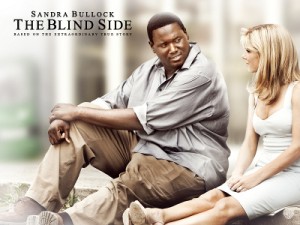
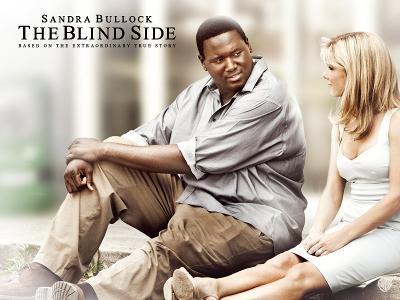
The Blind Side

Every time I see a sports movie advertised, I groan. Gee, what could this be–yet another story about an individual who, through pluck and determination, overcomes great odds to yadda, yadda, yadda win the game, yea, go team?

Yawn.

I enjoy sports, but only those where the outcome really is in question. Only those where I don’t already know the story. If I want a scripted win, I can watch some long-hairs and freaks on WWF.  

So you’ll understand why I didn’t rush out last year to see The Blind Side. What? A monstrously huge kid plays high school football as a lineman? Wow, he must have really worked hard at that. Is the paint still drying at the Zeyer’s house? Maybe I’ll go watch that instead.

And this was my response even though Sandra Bullock plays the leading role. I usually enjoy the movies Bullock stars in. Well, except for the last two–The Proposal and All About Steve–which I couldn’t bring myself to watch more than ten minutes of combined. But besides those, she’s probably been one of the most enjoyable actresses since Katherine Hepburn. This is because she actually plays real women, interesting characters, people with personality.

This is opposed to some actresses who don’t really play people at all, but are put in movies by directors who must think that if they can make the eyes bong out of male heads, those very males won’t notice that the story is dumber than a bag of rocks. These gals have lips that are so puffed up they look painful (e.g. Angelina Jolie, ouch, ouch, OUCH, somebody help her) or have seemingly nothing else to bring to the table besides their looks (e.g. Megan Fox, oooh, look at her shirt ride up over her belly, oooh, another shot of her eyes, oooh, white teeth), and so all their roles end up including very little besides posing for the camera so that we can see that, yes, Timmy, these women really were born with some mathematics, i.e. symmetry and facial proportions conforming to the golden ratio. Are your eyes bonging out yet, Timmy? See, that’s why you should study algebra and geometry. Math lets you do things like that.   

Anyway, so it was a Bullock film, yet I still didn’t want to see it. But my real-man brother-in-law suggested it for a date night, and so I reluctantly went to watch. (Date night as in double date with the wives, not him and me. Sheesh, you people.)

I’m so glad I went. The movie was excellent. Probably because it was not about the plucky athlete winning the game, but about something far more important and enjoyable. It’s based on the true story of a rich southern white couple–Leigh Anne and Sean Tuohy–who try to take a homeless teenage African-American, Michael Oher (“Big Mike”), into their family. Michael’s mother is a crack head. His father is unknown. Michael himself is not doing very well. He’s failing school. He doesn’t even have a place to sleep sometimes. And he’s got the good old boys of his neighborhood wanting to hook him up with their gang and drug scene. But Leigh Anne soon takes charge.

And, boy, does she take charge. She’s one of the most delightful characters I’ve seen in a long time. I laughed again and again at her lines and personality. She also made me think about what I’m doing with my life. This woman and her family did something significant. I won’t tell you what happened with Michael–blah, blah, blah, yea, go team. You can find out for yourself. That wasn’t the important story here. The important story, the one that touched my heart and funny bone, was the one about a delightful family who went way out of its way to try to give a complete stranger a chance at a happy life.

Go see this show. No, it’s not in the theater, but you can buy or rent it. Me, I get all my films via Netflix. If you haven’t subscribed, consider it. Then you too can feel the excitement of seeing the happy little red Netflix envelopes waiting for you in your mailbox.

By the way, I have enjoyed a number of other great sports films over the years. If you like The Blind Side, I think you’ll enjoy Coach Carter, Miracle, Invincible, and Cool Runnings (a Brown family favorite).

Blink by Malcolm Gladwell

We are told to make decisions based on logic, not emotion. Reason must prevail. The closer we are to Spock, the better. At least in our decision-making, right?

Well, no. That’s actually wrong.

Over the last two decades researchers have found that the vast majority of our decisions are made by our gut, in the blink of an eye. And even those we make consciously, we make with a large input from our emotions. In fact, people who have the emotion centers in their brains damaged seem almost unable to make good decisions. Give them seven types of apples to choose from, and they can’t seem to pick one. Ask them to schedule an appointment, and they’ll go round and round listing the pros and cons of different dates and times. Let them know one deck of cards is stacked against them, and they still choose to play with it. They have logic, but lack judgment.

The rapid, emotional part of our brain is critical for good decision making. Of course, out guts can often be spectacularly wrong. In Blink, Malcolm Gladwell explores both sides of the choices we make in the blink of an eye.

But this is no tome of dry erudition. Gladwell writes with fantastic simplicity, clarity, and power. He explains what we now know about human decision-making by letting us meet the psychologist who has learned to predict whether a marriage will last, based on just a few minutes of observing the couple; the tennis coach who knows a player will double-fault before the racket even makes contact with the ball; and the art experts who can spot a fake at a glance. He helps us see why New Coke failed, how we pick presidents, and how it was possible that the police shot down Amadou Diallo, who was simply coming home one night. He shares the story of Paul Van Ripper who beat the Pentagon war-gamers in a massive defeat and why.

Blink reveals that great decisions makers aren’t those who have the biggest brains and highest IQ, but those who have perfected the art of “thin-slicing”—focusing in on the factors that make the biggest difference.

The book was fascinating. Read it. You’ll start seeing the world differently.

The Tandoori Oven

While living in Orem, UT, Nellie and I got our first taste of Indian food. When we moved to the San Francisco area, we found a few Indian restaurants and really learned to love the cuisine. So you can imagine how excited we were when we moved up to boonieville Laketown and were told that just an hour away in Logan was a great Indian restaurant. So we followed the directions to the address we were given and ended up at the gas station just south of the USU football stadium on 720 East and 1000 North. And there above the gas station was the sign for the restaurant.

We both looked at each other and rolled our eyes. Were the people who told us about this kidding?

But I decided to just go look. Sometimes the little holes-in-the-walls can surprise you. Maybe in the back by the Hostess rack and chips we’d find some great food. I entered the gas station and found it run by a pleasant Indian fellow. I thought, dang, we’ve got our very own Apu’s Quiki-Mart (Apu being one of my favorite characters on the The Simpsons). However, there was no restaurant. I looked around and saw nothing but racks of normal gas station snacks. I was confused. “I was told there was an Indian restaurant here?” I said.

“Right over here,” he said in his Indian accent and pointed me to an entryway in the far wall hung with strings of beads. “Through there.”

Intrigued, I passed through the beads and did indeed find a small restaurant. They’d simply sectioned off a part of the original gas station. I also found that there was a separate door to the outside which I’d missed. I examined the buffet, which looked pretty good, went outside and waved Nellie in. We were going to give it a shot. We let them seat us, and proceeded to enjoy a fabulous meal.

The restaurant is called The Tandoori Oven: http://TandooriOvenLogan.com. Nellie and I go there regularly. It’s been updated since the first time we went and dished up our soup into treacherous styrofoam bowls. Now they use real cutlery, but the good food and friendly service hasn’t changed.

If you know Indian food, you can go in the evenings and order a number of dishes to share. But if you want the best deal, go for lunch. They put on an all-you-can-eat buffet which will let you sample a number of dishes. We love the kurmas, saags, vindaloos, curries, naans, and, dude, the spinach soup! Heck, it’s all good. Especially when we can sweeten it a bit with their tamarind or mango chutney. And make sure you leave room for their saffron helwa (spiced cubes of farina) smothered with cardamom rice pudding for dessert.

Bischoff Lotus Cookies

I recently performed a taste test. I got a package of Oreos and a package of Bischoff Lotus cookies, and I am here to state that the Bischoff Lotus cookies spanked the Oreos and sent them back to kindergarten for some schooling.

After the taste test, I had to force myself not to eat the rest of the Bischoff Lotuses in one sitting. I succeeded in lasting for two sittings. Yes, they’re that good—crisp, caramelized, sweet. They have none of the bitterness of gingersnaps, yet have enough spice to delight the tongue.

But these aren’t new cookies. The Dutch and Belgians have been enjoying them for years. Over there these types of cookies are called speculaas and are probably the most popular cookie around. I can testify they’re great with milk, hot chocolate, and Pero (hey, this is Mormon country). I understand they go great with coffee, even though I have not imbibed in that Aztec concoction and, therefore, cannot vouch for it personally. And for two years I enjoyed them, along with picturesque scenes of cobblestone streets, bicycles, and windmills.

When I came home, alas, I couldn’t find these delights anywhere except at specialty Dutch stores. And when we moved away from Utah, I never found them again. Then Delta Airlines started serving them on their flights. Oh, joy. But I don’t fly that often. So I’m excited to report that recently I was walking in Macey’s grocery store just across from the Stadium 8 movie theaters in Logan, scanning the packages along the cookie aisle and finding nothing appetizing, when the heavens parted, and a beam of light illuminated a white package with red lettering. I believe I heard a choir.

Bischoff Lotus cookies.

Could it be?

It was.

I heard reports they were also in Wal-Mart, but I didn’t see them there. So for the sure bet, go to Macey’s, buy, enjoy. And consider yourself Dutchified.

Share

Similar Posts

  • Navy SEALS Buds Class 234, Crackting the ACT, & Running the Green River

     Of the 1.4 million people in the armed forces, only 2,800 of them are Navy SEALS (acronym for “sea, air, and land”). That’s 1/5th of one percent. They are one of the most elite fighting forces in the world. However, less than 20% of those who attempt to become a SEAL ever succeed. To even try you must pass a physical screening test which requires you to swim 500 yards in ten minutes or less, perform seventy-nine push-ups in two minutes or less, and eleven pull-ups. You have to be able to run 1.5 miles in at least 10:20 minutes, and that’s while wearing boots and trousers.

    Some may think: well, that’s not too difficult. I could work up to that. However, the reality is that this level of physical fitness will not be enough. Because once you get into the initial training, you’re going to be doing far more than this every day.

    Can you knock out 500 push-ups in a day, along with a four mile run, hours of paddling out in a six-man raft into a ten foot wave that tumbles you again and again into chilling waters, hefting your share of a 160 pound log over your head until you can barely lift your arms, and running an obstacle course with obstacles three-stories high. You’ll do a lot of this while covered with sand, your thighs and armpits chafing. On some days you’ll have to swim a few miles in a cold sea. And then you’ve got to get up and do it all again the next day. No wimpy hour-long workouts on Monday, Wednesday, and Friday with rest days in between. Heck, on the third week, you’ll get only about four hours of sleep over four days.

    Can you do it?

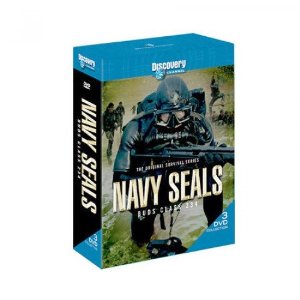
    Maybe you can. But before you try, or assure yourself that you could have if you’d only had the chance, let me suggest you watch Discovery Channel’s Navy SEALS BUDS Class 234 to witness what it takes to become the best of the best. It’s a fascinating three-DVD set, just over five hours of programming, that follows class 234 through the initial six-month SEAL training called BUDS (basic underwater demolition/SEALS). You’ll see 114 men start the six-month course and only 17 finish it. In fact, less than thirty make it past the first three weeks, which include the most grueling and punishing training I’ve ever seen. Those initial weeks are designed specifically to weed out all but the most committed and able.

    The Discovery Channel does a great job with this six-part series. And it’s not just for guys. It only took about three minutes for each of my daughters to get hooked as well. And why wouldn’t they? It’s as fascinating as any American Idol or So You Think You Can Dance. In fact, in many ways it’s far more interesting. Heck, it was so good I think I’m going to watch it again. You can get it on Amazon, rent if from Netflix, or check it out from the Logan library.

    For more info on the SEALS, let me recommend you start with these two sites: http://www.seal.navy.mil/seal/ and http://en.wikipedia.org/wiki/United_States_Navy_SEALs

    *** 

    My high school age daughters took the ACT last year and got good scores. But we wanted to make sure that they had excellent scores. High enough to put them in the upper levels of those applying to their desired universities. But how would we prepare them?

    Back in the olden days when I was preparing to get my Masters of accounting degree, I knew I’d need some help to get a score on the GMAT that would be competitive. I looked at a number of study guides and ended up choosing the Princeton Review guide for the GMAT. I studied hard, got a great score, and became a believer. The guide made everything so easy. More importantly, everything the guide prepared me for was on the test. This is why, when I wanted to get a Masters of fine arts in creative writing, I used the Princeton Review for the GRE. Again, the study guide was easy to follow, and I got an equally good score on that test. Having had two great experiences, it’s no surprise I turned to Princeton Review again to help my two girls with their test. (BTW, some may see an attempt to get more than one graduate degree as smart, others as masochistic, and yet others as simple ivory tower bone-headery—I’ll let you decide which it might be in this case.)

    The Princeton Review guide for the ACT is called Cracking the ACT. A new edition is published every year and includes general ACT test-taking tips, everything you need to know in the specific content areas, and practice tests. It also includes access to the Princeton Review’s online resources which include another practice test. It’s a big guide (this year’s edition was 619 pages), but the size is deceptive. There’s plenty of white space for taking notes, and the text is written so clearly, and everything broken down in such an easy manner to follow, that you’ll start only to suddenly realize you’ve just read thirty pages. Besides, you don’t have to study it all. You can focus on specific content areas, if that’s all you want to do.

    This spring, both daughters worked through the book. We looked at their previous scores, identified areas for improvement, and set up a six-week schedule that required them to study about an hour per day, sometimes with help from Mom or Dad, but mostly on their own. One daughter studied hard, took the test in June, and improved her score by five points. The other daughter studied a little less diligently, took the same test, and improved her score by four points.

    When 36 is the highest possible score, such jumps become significant. However, they’re not the result of special DNA. While I tend to think my girls are everything and a bag of chips (especially when they give me back scratches), the truth is the ACT doesn’t test some mumbo-jumbo innate intelligence. It tests skills. Skills anyone can learn. What my girls supplied was consistent effort. All they needed was expert guidance in how to apply the effort. And Cracking the ACT provides boatloads of that.

    If you’re looking to improve your own score or help your children improve theirs, get this book. I have no doubt that anyone who supplies a bit of effort will be able see some nice results.

    ***

    Imagine emerald pools, steep red canyons, and a gentle breeze. Imagine water so clear you can see the plants and rocks sixteen feet down on the bottom. Imagine trout swimming only feet away. Imagine swimming with those trout and then getting back into your raft to ride some rapids. Imagine picnicking a the water’s edge or atop a flat, shaded rock forty feet up that gives you a grand view of the river. If you’re lucky, maybe you’ll see an osprey dive for a fish or watch a pair of river otters swim by. Imagine doing this with family or friends, all in a short twenty-four hour period.

    This experience is only about three hours away from Laketown, Utah. Well, everything except the swimming with the trout bit. The fish don’t really swim with you. They mostly just flee, but you get the idea. To enjoy it, all you need to do is raft the seven mile stretch of the Green River from the Flaming Gorge dam down to the Little Hole campground.

    My family and I just did this with some friends and had a grand time. Because the river is relatively slow and the rapids are relatively moderate and short, parents don’t have to worry every second that someone is going to fall in and drown in a man-eating surge. In fact, along many of the calm areas we actively helped the children into the sparkling cold water (grin), including one rafter who was only three years old. One of the most enjoyable moments was when we pulled the rafts up into the gentle backwash of a large rock in the middle of the river, climbed the rock, and took turns jumping into the current and letting it carry us downstream.

    The sun was shining, the weather warm. It was a wonderful trip. A total memory-maker. We put in just before noon and hauled the raft out just before 6 PM. But we could have taken much longer to play along the way.

    The experience was fairly cheap. It cost about $70 to rent an eight-man raft. Perfect for six people. But there are other smaller and larger raft sizes. You’ll need to arrange a way to get the raft to the river and back again. We simply tied our raft to the top of our minivan. You can pay the rental people to drive your car to the exit ramp at Little Hole after you put into the river, or bring two cars (or a bike) and drop one at the exit. Or you can pay for a shuttle service where they drive you to the River and pick you up.

    You’ll want to bring a small cooler with drinks, snacks, and sunscreen. You’ll also want to have good footwear. The river bed is rocky, and when you pull into shore, you don’t want to be ouching it the whole way in. I don’t recommend flip flops. They’re no better than bare feet. Old sneakers are fine, but they don’t dry quickly. And they waterlog and get heavy, which makes them less than ideal for swimming. Your best bet is to get real water shoes that are made to be light and drain quickly and yet still have a decent sole–a sandal or mesh covered shoe that uses Velcro to strap up. You can be fancy and spend a lot, or do what I did and get yours at Wal-Mart for less than ten bucks.  

    You could make it a long trip and drive to and from the gorge and run the river all in one day, but why push it? Just find a place to stay overnight. There are some motels in the area, but we elected to camp. The spots at the Firefighters Memorial campground were $27 per night. The campground was beautiful and tidy with restrooms and running water. One of the most surprising things about this particular campground was that I didn’t see one mosquito while I was there.

    I’m one of these types that attracts the villains. If there’s only one mosquito within a mile radius, it will smell me, pass up many other suitable victims (including my wife), and risk its life and limbs to sink its #@!* proboscis into my flesh. I think my blood must be some kind of mosquito crack. There’s probably some mosquito black market out there for it, run by some nasty mosquito cartel, which is led by a murderous, malaria-ridden mosquito boss making piles of evil mosquito money and spending it on opulent mosquito yachts and guns!

    Anyway, not one bite. We watched the sun set and then fell to sleep with the stars overhead and the wind gently soughing through the boughs of the pine trees.

    To make campsite reservations, go to www.utah.com to get a good map view of possible camping sites. Then go to www.recreation,gov to make the reservations online. Make sure your specific camping spot has everything you need. Our campground was very rocky and not all of the sites had tent pads. If you want to scope the lay of the land, the recreation.gov site will give you GPS coordinates of the campground. Enter those into Google maps then switch to satellite view and zoom in. You see exactly what you get. This way you can avoid accidently booking the site right next to the bathrooms or road or the one that features no trees.

    Finally, when you’re done, you might want to top it all off by stopping at the The Flaming Gorge Lodge restaurant, just a few miles south of the dam, and enjoying a monster-sized cup of hot chocolate with whipped cream and one of their fabulous desserts. The blackberry cobbler and ice cream was delicious.

    Share
  • Animals Make Us Human by Temple Grandin

    Which animals do you think have a better life: family dogs or cattle on ranches?

    Think about it. Cattle get branded and tagged and slaughtered. Some live only a year or two. Meanwhile, Fido gets the run of the house, a spot in front of the couch, and chew toys.

    You might be surprised to know that many cattle have it better than pampered family pets. That’s the claim Temple Grandin makes in her fascinating and practical book Animals Make Us Human: Creating the Best Life for Animals.

    Grandin is not a beef industry lobbyist working smoke and mirrors PR to make ranchers look good. She’s a practical, down-to-earth, get-your-hands-dirty animal scientist who has revolutionized the beef industry and had an impact on many others. She isn’t a vegetarian, and has no intention to become one. But she does love animals. And her insight and research has made the lives of millions of animals better.

    When people ask her how she can work in the beef industry instead of being an activist against it, she says that all things die. It’s the cycle of life. She has no problem eating animals. In fact, she believes that our relationship with the animals we use for food is symbiotic–mutually beneficial. But she also believes that if we’re going to raise them, or keep them as pets, we need to give these animals a quality life.

    So what do animals need for a quality life? Should we give our cattle rubdowns? Let our dogs roam through city streets? What do our cats and pigs and horses need? Is it freedom?

    Her answer, surprisingly, is that focusing on freedom really isn’t a good guide for trying to give animals a good life. Not because freedom is a bad thing, but because it’s too confusing. Instead, she believes that we should be basing animal welfare on the core, or what she calls the “blue ribbon,” emotion systems in the brain. The key systems are SEEKING, RAGE, FEAR, PANIC, and PLAY.

    The rule is simple: avoid stimulating the negative emotions; do stimulate the positive ones. In the book she shares what she knows about how to do that for dogs, cats, horses, cows, pigs, chickens and other poultry, wildlife, and animals in zoos.

    Grandin is always fascinating, and with her trademark style of stories and practical insights, she shares what the research and her more than 30 years of practical hands-on experience working with animals has taught her. You’ll learn why your chickens need a place to hide, even if you’ve fenced out every fox and skunk with thirty feet of concrete; what makes pigs happy; why clicker training is so successful with horses; why you might want to consider the color of your cat’s fur; why leaving your dog locked in the house with food and plenty of toys may actually be very stressing. You’ll even learn to look at zoo habitats differently. Each chapter focuses on a different animal and how to avoid the negative and stimulate the positive blue ribbon emotions. This is not touchy-feely fluff. It’s not the ranting and raging of someone who thinks the planet would be better of without humans. It’s the insights of someone who is rigorously scientific, down-to-earth practical, and passionate about animals.  

    In her own words: “Everyone who is responsible for animals needs a set of simple, reliable guidelines for creating good mental welfare that can be applied to any animal in any situation.” Read her book to find out what she suggests these should be. If you own pets or raise animals, I think you’ll love this read. If you’d like to sample the first chapter, you can at Grandin’s website:  http://www.grandin.com/

    Share
  • Gandhi & Waiting for Superman

    Enthralling History

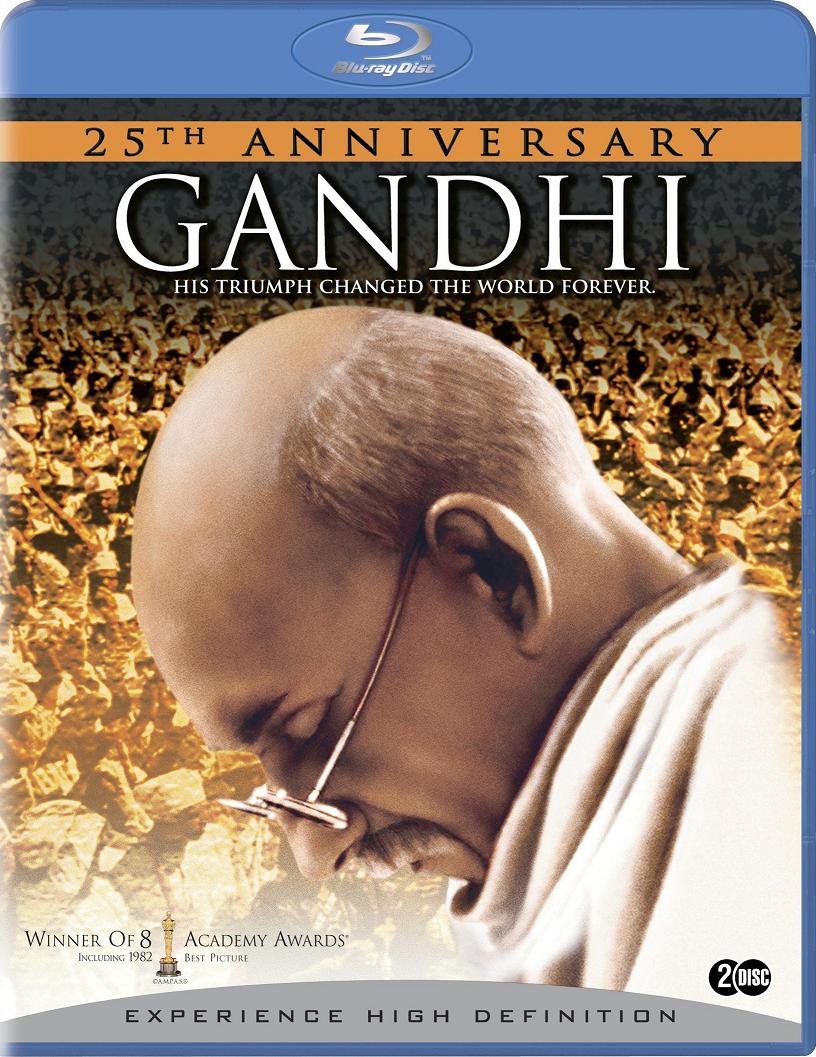
    The miracle of Netflix means that no movie or television show becomes unavailable. And there are so many produced over the last fifty years that are so very good. I recently re-watched the 1982 Gandhi with my family and have to say it is one of those fabulous movies that’s amazing every time I watch it. Not once did the production feel dated. And even though I’d already seen it, I found myself enthralled with the events and the character played so well by Ben Kingsley. No wonder it won eight Academy Awards.

    The movie portrays the last 50 years of Mahatma Gandhi’s life. It starts in 1893, when Gandhi, educated in the UK, is thrown off a South African train for being an Indian and traveling in a first class compartment. Gandhi decides to start a non-violent protest campaign for the rights of all Indians in South Africa. Quite an undertaking in those years. He’s arrested and finds himself in a number of dicey moments, but ultimately brings change.

    Gandhi is then invited back to India, where he is considered a national hero. Leaders there urge him to take up the fight for India’s independence from the British Empire. Gandhi agrees and mounts a non-violent campaign of unprecedented scale. Nothing of this magnitude has ever happened in the recorded history of the world. Which is why it’s a rough road all the way to the end.

    There’s suspense and humor and heartbreak in this movie. But it goes far beyond entertainment. This movie will move you. It has power to change. This movie is what history should be. If you haven’t seen Gandhi, or haven’t seen it in a while, let me recommend you get it this week and sit down with friends or family to enjoy a wonderful experience.

    Education and Teachers Unions

    I find it interesting that teachers in Utah, one of the most conservative states in the union, send almost three million dollars each year to the National Education Association. That’s the $165 in NEA dues for each of the roughly 18,000 union members in Utah. This is interesting because the NEA, the largest labor union in the United States, is one of the biggest supporters of the Democratic party.

    For example, the NEA spends roughly 85-90% of its direct candidate donations on Democrats. The NEA is quick to point out that those direct candidate donations do not come out of the three million Utah teachers send to them, but from additional donations to one of their political action committees. It’s illegal, in fact, to contribute directly to candidates with money received from union dues. However, there are a lot of other ways to support candidates and causes in addition to direct donations. 

    Mike Antonucci, a teacher’s union observer, explains just how that works in his article “How Much Does the NEA Spend on Politics”. The upshot is that the NEA can spend as much as they want on politics with their dues. And the lion’s share of that spending goes toward liberal causes. ACORN, for example, has been a beneficiary of NEA grants.

    Now, I don’t see anything wrong with that. People should be able to donate to whatever cause they think is important. The NEA has just as much right to make their voice heard as anyone else. I just think it’s interesting that so many conservatives have been led to donate their cash to these causes. And it’s not just in Utah. About 60% of NEA members identify themselves as conservative or independent. And yet they donate to these liberal causes via the union. What’s even more ironic is that most of them probably do not personally donate anything close to that to conservative candidates and causes. It’s not like teachers have tons of extra cash.

    It’s a neat trick to get conservatives to donate so much money to liberals. And perhaps some teachers feel it’s the price they have to pay for the services they want from the union. I would think it would be better to start another union, but that’s me. However, this is not the only kink teachers unions have introduced into the education system.

    I’m not going to argue that teachers unions are evil. These unions arose in a time when female teachers were heavily discriminated against. They do some good things. But mixed in with the good is, well, you’ll have decide for yourself if it smells.

    A great place to begin is with the documentary Waiting for Superman. You should know this movie came out of the gate with a huge strike against it in my mind–it’s produced by Davis Guggenheim, the same guy who did An Inconvenient Truth. Good grief, that’s all I wanted was another two hours of Chicken Little running around saying “sky is falling, the sky is falling!”

    But I didn’t find any of that in the film. For example, the film doesn’t say all American schools are awful. It doesn’t say teachers are terrible. Contrary to what the movie’s critics claim, including the NEA and its many state and local affiliates, the film doesn’t suggest charter schools or standardized testing are the silver bullet answers to our issues. I simply didn’t encounter the sensational propaganda others claimed would be there.

    No. What the film does is examine some of the issues in our current system, which put so many children at a disadvantage, and the role the teacher unions play. It does not, as some critics claim, go on to suggest any solutions. It presents a problem, experienced by real parents and children right now, then poses a question: what can be done?

    I found it eye-opening and thought-provoking. I think it’s a must-see. If you have children or grandchildren in school, if you’re one of our many fine teachers or school administrators, you’ll want to watch this movie and then ask yourself that same question. What can be done? What works? What’s best for the children? And does the current way our unions operate work in any way against those interests? For those who elect not to go into immediate union-attack or union-defense mode, I think this film will introduce some valuable points to the discussion about education.

    Share
  • |

    Jolie, Salt, & trading suspsense for surprise

    Last week I went and saw Salt. Wow. The movie started with a bang and was off to the races with lots of great action. Unlike many action films where the characters perform stunts which are simply too hokey for me to buy into, I found myself believing in all but two of Salt’s. So I was wowed most of the time instead of thinking about whether they were using wires or what or that it was all so wrong and geeze don’t these guys have consultants? They weren’t as stunning as the opening of Casino Royale, but what is? 

    But it wasn’t just action. The premise and acting were all great as well (yes, I recant, I slammed Jolie a while back as an actress cast only for her face value; and while you know that’s one of the reasons why she was here, she still was convincing in her role). Furthermore, the story had a lot of great reversals and reveals. But this was also its ultimate downfall.

    When I got to the ending, I did not feel a climax release. No catharsis. No afterglow. It just ended and left me feeling empty. It’s an awful feeling. Totally unsatisfactory. Such a maddening cut off. 

    But why? It was all so good up to that point.

    *** SPOILERS ***

    As I was talking it over with Nellie I believe I indentified the answer: in their effort to be surprising, the director and writers removed everything that would have built suspense. So instead of getting a Sixth Sense ending where the surprise adds to the climax and gives it a wonderful texture, we got a slap of surpise and then nothing.

    For me to feel relief, triumph, and the desire to stand up and cheer–all those great climax emotions–I have to be worried about a character. Stressed, thinking they’re going to fail. They need to fight courageously against insurmountable odds and actually come to a point where it appears all is lost. Where I groan inside. All this creates massive pent up worry and anxiety for them. And at that point, the character snatches victory from the jaws of defeat.

    Boom! The climax floods me and it’s delight, relief, cheer, joy.

    It’s just like a football game where we bite our nails until the very end. Where our non-ranked team is playing the #3 team in the nation. Maybe we jump ahead in the second quarter, but in the third we fall behind. We make some great plays but can’t catch up. And when we do put points on the board, the other team immediately responds. There are three seconds left. We’ve stalled at the twenty yard line. We have one more play. From the moment it starts it appears to be broken, our QB is going down, and then . . . he passes to a running back who has made some space. Who is standing open in the end zone! Yeeeeeaaaaaaahhhhhh!

    In order to feel a release a climax, something has to build up. The thing that builds is worry, fret, desperate hope. This is what we mean when we talk about suspense. We know the team’s goal, see their predicament, see the overwhelming odds. See them about to lose it all. The dread of defeat and what will be lost rises.

    But in Salt the director and writers went for the effect of surprise instead of suspense and triumph. The moment Salt starts in on the Russian president I thought she was the bad guy. Yes, there was the bit about the spider that had me wondering. Yes, I knew she felt anguish about her husband being killed (that smart little reveal in her expression). I knew all of that. But the movie kept me busy thinking she was the bad guy up until almost the very end. Everything in the film lead me to believe this. Not because I didn’t get it. I got it precisely. It’s exactly what the director wanted. It was the setup for the big surprise/reversal at the end.

    But when they went for surprise by not letting the audience know what Salt was really up to, the immediately removed the possibility of suspense. So I didn’t feel any suspense at her infiltrating the old group of spies. No relief at her killing them–that was just her revenge. No suspsense when she went to the White House. Nothing when she chased the president down the elevator shaft. The whole time I was thinking, crap, they really did indoctrinate her. She’s bad.

    More importantly, there was no rooting, no worry building to release proportions.

    Not until the very end do we realize what she’s been trying to do. Oh, the role reversal with her and Ted Winter (btw, like Liev Schreiber who plays the part) was all a big surprise, as it was designed to be. But the surprise faded and there was . . . nothing to replace it. That’s how surprise works. It’s a relatively short effect. 

    Yes, she kills Winter. Yes, he was a threat at the end with his scissors, but I didn’t care that much. I hadn’t been whipped into a fever pitch. Not like I was in Gladiator with the emperor and the lead in the coliseum. There was no pressurized worry ready to burst. There wasn’t any because we hadn’t had any time for it to build and because by that time nothing for Salt was really at stake. The one meaningful thing she stood to loose–her relationship with her husband–was taken away from us in an earlier scene when he was shot dead. So what was at stake? A big old nuclear war. Well, who cares about that? Nobody. It’s too generalized. We cared about Salt and her husband.

    The result was that the director and writers traded climax for surprise. Alas.

    So here’s my conclusion. Surprise is a relatively easy effect to create. You simply have something unexpected but logical occur. Relief, triumph, climax needs something much different. And surprise can be a part of it. But in our effort to build surprise we must not remove the conditions necessary for please-dear-mother suspense. Suspense requires we root for and worry about a character for a significant period, our unease growing until it’s drawn taut, straining. All the time something significant has to be at stake. Something we can sympathize with. Something personal to the person we care about. Only then can we feel the climactic release. Only then will we stand up and cheer in holy-crap-no-way relief and delight.

    Share
  • Good Stuff! The Highwayman by Alfred Noyes

    Alfred Noyes (1880-1958) wrote poetry that thundered and sang. It’s the kind of stuff that begs to be read aloud. And I want to share with you one of my favorites–“The Highwayman.” I love it for the sound, the story, and the awesome images (note all the color).

    All you need to know is that back in the 1600s and 1700s, a highwayman was a robber, often on horseback, who held up travelers. And that when it mentions “priming,” it’s talking about the charge of powder used to ignite a musket.

    For maximum pleasure, let me suggest you start Loreena McKennitt’s killer ballad version I’ve embedded at the end, then scroll back up and read along as she sings.

    THE HIGHWAYMAN
    By Alfred Noyes

    The wind was a torrent of darkness among the gusty trees.
    The moon was a ghostly galleon tossed upon cloudy seas.
    The road was a ribbon of moonlight over the purple moor,
    And the highwayman came riding—
    Riding—riding—
    The highwayman came riding, up to the old inn-door.

    He’d a French cocked-hat on his forehead, a bunch of lace at his chin,
    A coat of the claret velvet, and breeches of brown doe-skin.
    They fitted with never a wrinkle. His boots were up to the thigh.
    And he rode with a jewelled twinkle,
    His pistol butts a-twinkle,
    His rapier hilt a-twinkle, under the jewelled sky.

    Over the cobbles he clattered and clashed in the dark inn-yard.
    He tapped with his whip on the shutters, but all was locked and barred.
    He whistled a tune to the window, and who should be waiting there
    But the landlord’s black-eyed daughter,
    Bess, the landlord’s daughter,
    Plaiting a dark red love-knot into her long black hair.

    And dark in the dark old inn-yard a stable-wicket creaked
    Where Tim the ostler listened. His face was white and peaked.
    His eyes were hollows of madness, his hair like mouldy hay,
    But he loved the landlord’s daughter,
    The landlord’s red-lipped daughter.
    Dumb as a dog he listened, and he heard the robber say—

    “One kiss, my bonny sweetheart, I’m after a prize to-night,
    But I shall be back with the yellow gold before the morning light;
    Yet, if they press me sharply, and harry me through the day,
    Then look for me by moonlight,
    Watch for me by moonlight,
    I’ll come to thee by moonlight, though hell should bar the way.”

    He rose upright in the stirrups. He scarce could reach her hand,
    But she loosened her hair in the casement. His face burnt like a brand
    As the black cascade of perfume came tumbling over his breast;
    And he kissed its waves in the moonlight,
    (O, sweet black waves in the moonlight!)
    Then he tugged at his rein in the moonlight, and galloped away to the west.

    He did not come in the dawning. He did not come at noon;
    And out of the tawny sunset, before the rise of the moon,
    When the road was a gypsy’s ribbon, looping the purple moor,
    A red-coat troop came marching—
    Marching—marching—
    King George’s men came marching, up to the old inn-door.

    They said no word to the landlord. They drank his ale instead.
    But they gagged his daughter, and bound her, to the foot of her narrow bed.
    Two of them knelt at her casement, with muskets at their side!
    There was death at every window;
    And hell at one dark window;
    For Bess could see, through her casement, the road that he would ride.

    They had tied her up to attention, with many a sniggering jest.
    They had bound a musket beside her, with the muzzle beneath her breast!
    “Now, keep good watch!” and they kissed her. She heard the doomed man say—
    Look for me by moonlight;
    Watch for me by moonlight;
    I’ll come to thee by moonlight, though hell should bar the way!

    She twisted her hands behind her; but all the knots held good!
    She writhed her hands till her fingers were wet with sweat or blood!
    They stretched and strained in the darkness, and the hours crawled by like years
    Till, now, on the stroke of midnight,
    Cold, on the stroke of midnight,
    The tip of one finger touched it! The trigger at least was hers!

    The tip of one finger touched it. She strove no more for the rest.
    Up, she stood up to attention, with the muzzle beneath her breast.
    She would not risk their hearing; she would not strive again;
    For the road lay bare in the moonlight;
    Blank and bare in the moonlight;
    And the blood of her veins, in the moonlight, throbbed to her love’s refrain.

    Tlot-tlot; tlot-tlot! Had they heard it? The horsehoofs ringing clear;
    Tlot-tlot; tlot-tlot, in the distance? Were they deaf that they did not hear?
    Down the ribbon of moonlight, over the brow of the hill,
    The highwayman came riding—
    Riding—riding—
    The red coats looked to their priming! She stood up, straight and still.

    Tlot-tlot, in the frosty silence! Tlot-tlot, in the echoing night!
    Nearer he came and nearer. Her face was like a light.
    Her eyes grew wide for a moment; she drew one last deep breath,
    Then her finger moved in the moonlight,
    Her musket shattered the moonlight,
    Shattered her breast in the moonlight and warned him—with her death.

    He turned. He spurred to the west; he did not know who stood
    Bowed, with her head o’er the musket, drenched with her own blood!
    Not till the dawn he heard it, and his face grew grey to hear
    How Bess, the landlord’s daughter,
    The landlord’s black-eyed daughter,
    Had watched for her love in the moonlight, and died in the darkness there.

    Back, he spurred like a madman, shouting a curse to the sky,
    With the white road smoking behind him and his rapier brandished high.
    Blood red were his spurs in the golden noon; wine-red was his velvet coat;
    When they shot him down on the highway,
    Down like a dog on the highway,
    And he lay in his blood on the highway, with a bunch of lace at his throat.

    . . .

    And still of a winter’s night, they say, when the wind is in the trees,
    When the moon is a ghostly galleon tossed upon cloudy seas,
    When the road is a ribbon of moonlight over the purple moor,
    A highwayman comes riding—
    Riding—riding—
    A highwayman comes riding, up to the old inn-door.

    Over the cobbles he clatters and clangs in the dark inn-yard.
    He taps with his whip on the shutters, but all is locked and barred.
    He whistles a tune to the window, and who should be waiting there
    But the landlord’s black-eyed daughter,
    Bess, the landlord’s daughter,
    Plaiting a dark red love-knot into her long black hair.


    Share
  • Good Stuff! Wonder, Darkest Hour, Sea Wolves

    I had seen a lot of good reviews of Wonder. My wife told me a lot of her students enjoyed the book. But I thought it was going to be a heavy topic, full of sadness and heart-wrenching drama. I’m happy to report that while Wonder does indeed have some difficult moments, it’s also full of humor. And triumph.

    It’s a story about Auggie, a boy with a rare medical deformity that has put him through multiple surgeries. His parents have homeschooled him, but now that he’s at the age where he could go to middle school, they feel it’s time for him to navigate the world. The perfect time, right?

    But it’s not just about Auggie. The film is also about Auggie’s sister, her former best friend, and Jack, Auggie’s classmate. We get to see their stories as well, and they are woven into a wonderful, poignant story.

    You’ll laugh and wince and cry and cheer. You’ll enjoy Julia Roberts and Owen Wilson, who do a wonderful job as Auggie’s parents. And you’ll enjoy the children and teens. Me, my wife, my married daughter, and my teen all loved this film. I will be watching it again. If you want a great movie to watch as a family, I think you’ll love this.

    *

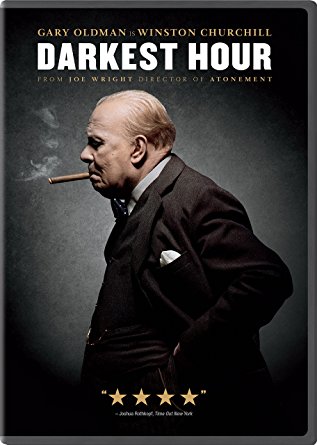
    As soon as I saw the preview for the Darkest Hour, I knew I had to see it. And, boy oh boy, this is yet another movie I can’t wait to watch again.

    The phrase “The Darkest Hour” is used in Britain to refer to the time when the United Kingdom appeared to be under direct threat of invasion from Germany at the beginning of World War 2. Germany had launched its attack on France, Belgium, and the Netherlands and had smashed their armies, sweeping all before them. The bulk of the British army was trapped at Dunkirk and looked like it would be annihilated.

    The British government was split between those who saw no path to victory and wanted to make a peace treaty with Hitler and those who wanted to resist him. The opposition party in parliament forced Neville Chamberlain to resign. And the only man they’d accept in his place is Winston Churchill. But Churchill was not the lion we think of him as today. He had a poor reputation among many of the leaders of his party and was not someone they wanted to elevate.

    So the film starts with the ouster of Chamberlain. We then get to watch how Churchill deals with the catastrophe of what’s happening just across the channel and all the voices pressuring him to make peace.

    There’s humor, suspense, and a number of one-liners that we all began repeating to each other immediately after the film ended. You get a feel for what it must have been like at the time and why so many wanted to sue for some peace treaty with the monster across the channel. You also get to see a slightly different picture of Churchill as a man. I particularly loved the exchanges between him and his wife.

    If you are interested in World War 2 or Britain in even the slightest degree, you simply must see this film.

    *

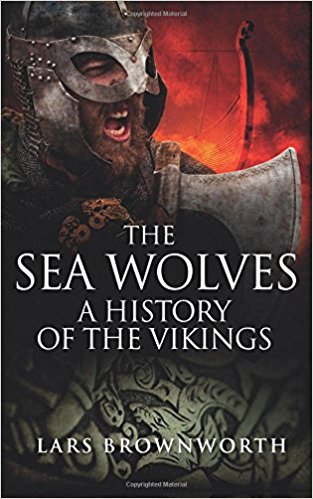
    I have now listed to the audio book of The Sea Wolves by Lars Brownworth twice.

    Yes, it’s that good.

    In this book, Brownworth tells the history of the Vikings. And he tells the history the way history should be told, bringing to life the old Norse world of epic poets, sea kings, and raiders, including Ivar the Boneless, Eric Bloodaxe, Harald Hardrada, Rollo the Walker—all the major figures.

    And Brownworth does it in a way that helps you understand how their dominance was possible and what their effect on the wider world was. Did you know, for example, that Russia comes from the word “Rus”, which was the name for the Swedish Vikings that started that nation?

    What? Russia was started by the Vikings?

    Yes.

    Read or listen to the book. You’ll learn that plus a whole bunch more that will make you look at that time in a different light.

    And if you want to get the other side of the tale, let me recommend reading Bernard Cornwell’s historical fiction series that starts with The Last Kingdom. The series tells the story of the invasion of the Danes during King Alfred’s rule from the point of view of Uhtred of Bebbanburg. It’s a terrific series.

    By the way, I do not recommend the TV series based on the books—too much sex for my tastes. But the books are fabulous. As are the audio versions. I’ve listened to six of them so far, and they have provided hours of enjoyment and interesting insights about the time and the events that took place.

    Share

3 Comments

  1. I really need to try Indian food some time. Sounds like lots of good stuff.
    For sports films, you mentioned my two favorites–Miracle and Cool Runnings. I think for this genre (and many others) it’s usually pretty clear how things will turn out in the end–it’s just the execution that will make or break the film. However, I have thought in the past that it’d be pretty funny to have the team lose the championship at the very end for a sports movie one day, just to see the reaction on the audiences’ faces. (Maybe if I become a millionaire I can fund such a disastrous movie.)

  2. But I think that’s exactly why I liked Coach Carter and Cool Runnings so much. Miracle and Invincible, well, those two were just well-executed stories. I’ll have to watch them again to see what worked so well.

Comments are closed.