The Blind Side, Blink, Tandoori Oven, Bischoff Cookies
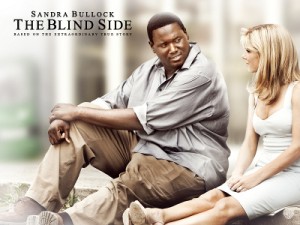
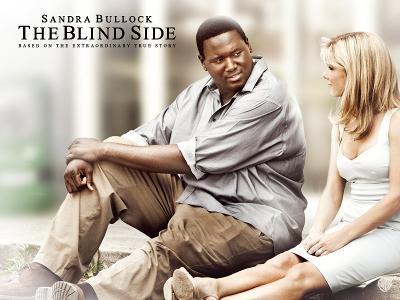
The Blind Side

Every time I see a sports movie advertised, I groan. Gee, what could this be–yet another story about an individual who, through pluck and determination, overcomes great odds to yadda, yadda, yadda win the game, yea, go team?

Yawn.

I enjoy sports, but only those where the outcome really is in question. Only those where I don’t already know the story. If I want a scripted win, I can watch some long-hairs and freaks on WWF.  

So you’ll understand why I didn’t rush out last year to see The Blind Side. What? A monstrously huge kid plays high school football as a lineman? Wow, he must have really worked hard at that. Is the paint still drying at the Zeyer’s house? Maybe I’ll go watch that instead.

And this was my response even though Sandra Bullock plays the leading role. I usually enjoy the movies Bullock stars in. Well, except for the last two–The Proposal and All About Steve–which I couldn’t bring myself to watch more than ten minutes of combined. But besides those, she’s probably been one of the most enjoyable actresses since Katherine Hepburn. This is because she actually plays real women, interesting characters, people with personality.

This is opposed to some actresses who don’t really play people at all, but are put in movies by directors who must think that if they can make the eyes bong out of male heads, those very males won’t notice that the story is dumber than a bag of rocks. These gals have lips that are so puffed up they look painful (e.g. Angelina Jolie, ouch, ouch, OUCH, somebody help her) or have seemingly nothing else to bring to the table besides their looks (e.g. Megan Fox, oooh, look at her shirt ride up over her belly, oooh, another shot of her eyes, oooh, white teeth), and so all their roles end up including very little besides posing for the camera so that we can see that, yes, Timmy, these women really were born with some mathematics, i.e. symmetry and facial proportions conforming to the golden ratio. Are your eyes bonging out yet, Timmy? See, that’s why you should study algebra and geometry. Math lets you do things like that.   

Anyway, so it was a Bullock film, yet I still didn’t want to see it. But my real-man brother-in-law suggested it for a date night, and so I reluctantly went to watch. (Date night as in double date with the wives, not him and me. Sheesh, you people.)

I’m so glad I went. The movie was excellent. Probably because it was not about the plucky athlete winning the game, but about something far more important and enjoyable. It’s based on the true story of a rich southern white couple–Leigh Anne and Sean Tuohy–who try to take a homeless teenage African-American, Michael Oher (“Big Mike”), into their family. Michael’s mother is a crack head. His father is unknown. Michael himself is not doing very well. He’s failing school. He doesn’t even have a place to sleep sometimes. And he’s got the good old boys of his neighborhood wanting to hook him up with their gang and drug scene. But Leigh Anne soon takes charge.

And, boy, does she take charge. She’s one of the most delightful characters I’ve seen in a long time. I laughed again and again at her lines and personality. She also made me think about what I’m doing with my life. This woman and her family did something significant. I won’t tell you what happened with Michael–blah, blah, blah, yea, go team. You can find out for yourself. That wasn’t the important story here. The important story, the one that touched my heart and funny bone, was the one about a delightful family who went way out of its way to try to give a complete stranger a chance at a happy life.

Go see this show. No, it’s not in the theater, but you can buy or rent it. Me, I get all my films via Netflix. If you haven’t subscribed, consider it. Then you too can feel the excitement of seeing the happy little red Netflix envelopes waiting for you in your mailbox.

By the way, I have enjoyed a number of other great sports films over the years. If you like The Blind Side, I think you’ll enjoy Coach Carter, Miracle, Invincible, and Cool Runnings (a Brown family favorite).

Blink by Malcolm Gladwell

We are told to make decisions based on logic, not emotion. Reason must prevail. The closer we are to Spock, the better. At least in our decision-making, right?

Well, no. That’s actually wrong.

Over the last two decades researchers have found that the vast majority of our decisions are made by our gut, in the blink of an eye. And even those we make consciously, we make with a large input from our emotions. In fact, people who have the emotion centers in their brains damaged seem almost unable to make good decisions. Give them seven types of apples to choose from, and they can’t seem to pick one. Ask them to schedule an appointment, and they’ll go round and round listing the pros and cons of different dates and times. Let them know one deck of cards is stacked against them, and they still choose to play with it. They have logic, but lack judgment.

The rapid, emotional part of our brain is critical for good decision making. Of course, out guts can often be spectacularly wrong. In Blink, Malcolm Gladwell explores both sides of the choices we make in the blink of an eye.

But this is no tome of dry erudition. Gladwell writes with fantastic simplicity, clarity, and power. He explains what we now know about human decision-making by letting us meet the psychologist who has learned to predict whether a marriage will last, based on just a few minutes of observing the couple; the tennis coach who knows a player will double-fault before the racket even makes contact with the ball; and the art experts who can spot a fake at a glance. He helps us see why New Coke failed, how we pick presidents, and how it was possible that the police shot down Amadou Diallo, who was simply coming home one night. He shares the story of Paul Van Ripper who beat the Pentagon war-gamers in a massive defeat and why.

Blink reveals that great decisions makers aren’t those who have the biggest brains and highest IQ, but those who have perfected the art of “thin-slicing”—focusing in on the factors that make the biggest difference.

The book was fascinating. Read it. You’ll start seeing the world differently.

The Tandoori Oven

While living in Orem, UT, Nellie and I got our first taste of Indian food. When we moved to the San Francisco area, we found a few Indian restaurants and really learned to love the cuisine. So you can imagine how excited we were when we moved up to boonieville Laketown and were told that just an hour away in Logan was a great Indian restaurant. So we followed the directions to the address we were given and ended up at the gas station just south of the USU football stadium on 720 East and 1000 North. And there above the gas station was the sign for the restaurant.

We both looked at each other and rolled our eyes. Were the people who told us about this kidding?

But I decided to just go look. Sometimes the little holes-in-the-walls can surprise you. Maybe in the back by the Hostess rack and chips we’d find some great food. I entered the gas station and found it run by a pleasant Indian fellow. I thought, dang, we’ve got our very own Apu’s Quiki-Mart (Apu being one of my favorite characters on the The Simpsons). However, there was no restaurant. I looked around and saw nothing but racks of normal gas station snacks. I was confused. “I was told there was an Indian restaurant here?” I said.

“Right over here,” he said in his Indian accent and pointed me to an entryway in the far wall hung with strings of beads. “Through there.”

Intrigued, I passed through the beads and did indeed find a small restaurant. They’d simply sectioned off a part of the original gas station. I also found that there was a separate door to the outside which I’d missed. I examined the buffet, which looked pretty good, went outside and waved Nellie in. We were going to give it a shot. We let them seat us, and proceeded to enjoy a fabulous meal.

The restaurant is called The Tandoori Oven: http://TandooriOvenLogan.com. Nellie and I go there regularly. It’s been updated since the first time we went and dished up our soup into treacherous styrofoam bowls. Now they use real cutlery, but the good food and friendly service hasn’t changed.

If you know Indian food, you can go in the evenings and order a number of dishes to share. But if you want the best deal, go for lunch. They put on an all-you-can-eat buffet which will let you sample a number of dishes. We love the kurmas, saags, vindaloos, curries, naans, and, dude, the spinach soup! Heck, it’s all good. Especially when we can sweeten it a bit with their tamarind or mango chutney. And make sure you leave room for their saffron helwa (spiced cubes of farina) smothered with cardamom rice pudding for dessert.

Bischoff Lotus Cookies

I recently performed a taste test. I got a package of Oreos and a package of Bischoff Lotus cookies, and I am here to state that the Bischoff Lotus cookies spanked the Oreos and sent them back to kindergarten for some schooling.

After the taste test, I had to force myself not to eat the rest of the Bischoff Lotuses in one sitting. I succeeded in lasting for two sittings. Yes, they’re that good—crisp, caramelized, sweet. They have none of the bitterness of gingersnaps, yet have enough spice to delight the tongue.

But these aren’t new cookies. The Dutch and Belgians have been enjoying them for years. Over there these types of cookies are called speculaas and are probably the most popular cookie around. I can testify they’re great with milk, hot chocolate, and Pero (hey, this is Mormon country). I understand they go great with coffee, even though I have not imbibed in that Aztec concoction and, therefore, cannot vouch for it personally. And for two years I enjoyed them, along with picturesque scenes of cobblestone streets, bicycles, and windmills.

When I came home, alas, I couldn’t find these delights anywhere except at specialty Dutch stores. And when we moved away from Utah, I never found them again. Then Delta Airlines started serving them on their flights. Oh, joy. But I don’t fly that often. So I’m excited to report that recently I was walking in Macey’s grocery store just across from the Stadium 8 movie theaters in Logan, scanning the packages along the cookie aisle and finding nothing appetizing, when the heavens parted, and a beam of light illuminated a white package with red lettering. I believe I heard a choir.

Bischoff Lotus cookies.

Could it be?

It was.

I heard reports they were also in Wal-Mart, but I didn’t see them there. So for the sure bet, go to Macey’s, buy, enjoy. And consider yourself Dutchified.


Share

Similar Posts

  • Donald Rumsfeld, The King’s Speech, Aquatic Ancestor Apes & Talking Bacteria

    Donald Rumsfeld

    I just finished Known and Unknown, a fat memoir by Donald Rumsfeld, and enjoyed every page.  Rumsfeld served as the Secretary of Defense under George W. Bush.  But Rumsfeld’s service didn’t start there. He was a Navy pilot, an assistant to a congressman during the Eisenhower days, and, in the early 60’s, a four-term congressman from Illinois.  He held various positions in the Nixon White House in the late 60’s and early 70’s, including ambassador to NATO.  He was Chief of Staff and Secretary of Defense when Ford took over from Nixon.  Reagan tapped him to be a special envoy to both the Middle East after the Beirut bombing and to the Law of the Sea treaty discussions.  He was the president of Searle, a pharmaceutical, as well as General Instrument, the company that pioneered HDTV.  Only after all that, did George W. Bush bring him on as Secretary of Defense.

    When writing novels, I try to create characters worth knowing, either because of their interesting personality or skills or because of the events they take part in. Donald Rumsfeld is just such a character, except he’s no fiction.

    In his memoir he shares insider information on everything from Watergate to 9/11 to the war in Iraq. What emerges is a fascinating look into many of the most important events in the last forty years.  You’ll get insight into some of the issues experienced in various White House administrations and see what really was going on with waterboarding, Guantanamo, Abu Ghraib, hurricane Katrina and many other of the hot button issues in the Bush years. There are some laugh out loud moments where his understated humor shines through. There are also parts where he reveals some of his differences with others that worked with him in the various administrations, including issues with Nelson Rockerfeller, Colin Powell and Andy Card. But in everything he writes he’s fair and restrained and attempts to present the facts accurately. This is no attempt to settle scores.  Just a wonderful read.

    If you are interested in politics at all, I think you’ll enjoy this book. Moreover, I think you’ll come out a little wiser, maybe a little better person, for having spent a few hours with Donald Rumsfeld.  

    The King’s Speech

    I do not watch many r-rated movies.  They are usually too vulgar or pornographic for my prissy tastes. However, I did my research on The King’s Speech, and having heard so many glowing reviews, Nellie and I rented it.

    It was wonderful.

    The movie tells the story of prince Albert Frederick Arthur George of Britain who did not ever expect to inherit the throne and did not want to, in part because of his stammer. Can you imagine having to be a public figure like a king and have to deal with something like that? Most of us dread the thought of public speaking. Can you imagine having to try with a stammer?

    But Albert’s lot was not to live the sheltered life. He became king when his brother abdicated the throne because of improprieties in his personal life. The day before the abdication, Albert went to London to see his mother, Queen Mary. He wrote in his diary, “When I told her what had happened, I broke down and sobbed like a child.” That is not the entry of a power-hungry man.

    He assumed the throne in 1936, when England ruled over almost a quarter of the world’s population. Three years later in 1939 WW2 broke out and Britain’s king needed to be able to address the people.

    In the movie, Colin Firth plays Price Albert. Geoffery Rush (Captain Barbossa in Pirates of the Caribbean) plays Lionel Logue, the unorthodox Australian speech therapist to whom Albert’s wife turns for help. The script is wonderful and the star-studded cast is spot on. There are moments of humor and poignancy and triumph. I was caught up in this movie as much as any I’ve seen.

    If you like English dramas, you’ll enjoy this one. And the profanity, the reason for the r-rating, is not there to depict casual vulgarity. It was part of a technique used by the therapist. In the end, you’ll overlook it and find yourself on pins and needles, rooting for this fine man.

    Aquatic Ancestor Apes & Talking Bacteria

    I’ve written about TED before. The annual TED (technology, entertainment, design) conferences, in Long Beach/Palm Springs and Edinburgh, bring together the world’s most fascinating thinkers and doers, who are challenged to give the talk of their lives (in 18 minutes or less). The folks at TED record these speeches and put them up for free on their site for the rest of us to watch. And I just watched two dandies.

    The first is by Elaine Morgan who says we evolved from aquatic apes (sigh, just when you think you’ve found grandpa Eddy hanging out in the trees, you learn he’s an imposter). Morgan is a Welsh writer for television and also the author of several books on evolutionary anthropology. In the speech she describes the reasons why it makes sense that humans had aquatic ancestors. Along the way, she illustrates key principles of science, including why science by consensus is no science at all. Her manner is so delightful and engaging I think I could listen to her for hours, preferably around the dinner table. Watch her right now. She just might convince you.

    The second speech was given by Bonnie Bassler, an American molecular biologist, who has been part of the team that discovered key insights into how bacteria talk. It appears that bacteria do not invade a host and start doing damage. No, they wait until their numbers are sufficient that they have a chance of surviving. They coordinate defense and mount attacks as a group. Who would have thought? Knowing how this works is not only interesting all by itself, but it has stunning implications for medicine and fighting infection. Bassler is a fascinating and enthusiastic presenter. Among other things, you’ll end up seeing that humans are more bacteria than you could imagine. Watch her.

    Share
  • Good Stuff: Poldark, Monk, and the cure for dragon feet

    For all of you longing for just one more season of Downton Abbey, I’ve found a new series from the BBC I think you’ll enjoy (thank you Duane Robinson for the recommendation).

    It’s called Poldark and is set in the late 1700s in Cornwall, that little southwestern leg of England that juts out into the Atlantic. The dark-haired and handsome Ross Poldark returns to England after having fought in the American War of Independence and finds that his father has died, and he’s inherited the estate. Except the estate is in ruins.

    The house, which is a long way from being anything grand, is a mess and being inhabited by the deceased father’s last two servants. A man and a wife who are equal parts louts and lushes. The land isn’t producing. The mine is closed. And Poldark has very little money.

    By the way, when we think of British aristocracy, we most often think of dances and fine clothing and large tracts of lands. We seldom think of mines. But Cornwall has been mining tin for a very long time, and so were its lords. In fact, Cornwall was known outside of the Isles anciently, and some historians suggest that Cornwall was probably selling tin to the seafaring Greeks and Phoenicians many hundreds of years B.C.

    So our young and handsome lord has come home to a mess and very little money. But he immediately sets about trying to repair things. And what unfolds is a wonderful story with love, action, humor, injustice, and villains plotting Poldark’s downfall.

    We loved Downton in part for the refinement and high society (and Lady Grantham’s hilarious one-liners). However, Poldark isn’t about the top of the aristocracy. It’s about a man almost at the bottom. And many of those of the lower class who are his friends. There’s a refreshing earthiness about it even while you still have scenes of the high society and all that goes with it.

    We just finished the first season and are hooked. In fact, I stood up and cheered at the end of the last episode we watched. So if you love English historicals, you’re going to enjoy Polkdark.

    *

    The humorous detective series Monk debuted in 2002 and ran for eight seasons. It was a huge hit. But because I’m a cave dweller I didn’t get to it until now. But, boy, I’m happy I did.

    If you haven’t seen it yet, you’re in for a treat. Monk is one of those brilliant detectives like Patrick Jane in The Mentalist or Sherlock Holmes who sees all sorts of details that so many others miss. But unlike those guys, Monk has obsessive-compulsive disorder plus a number of phobias.

    And so he can’t just walk in and stun everyone with his brilliance because at any moment he might get sidetracked straightening pictures or moving lamps or trying to avoid germs. In one funny scene he’s being chased on foot by someone intent on killing him, and he can’t help but touch the poles as he runs by. However, he’s not all helpless because he’s hired a female nurse, Sharona Fleming, to help him. And the interaction between the two of them adds another enjoyable dimension.

    And so you get to experience all the awe of watching someone like Sherlock solve crimes plus laugh along the way. I couldn’t help but laugh out loud during a number of episodes.

    If you like The Mentalist, Elementary, or Psych, I think you’ll really enjoy Monk.

    *

    This last review is for all of you who have dragon feet.

    That’s what I had until two months ago. Dry dragon feet. So dry and with such sharp and jagged calluses that I regularly wore the area on my sheets around my feet to shreds. Nellie’s side of the sheets were nice and smooth. My side, after a year or two, looked like the dog had attacked it.

    The calluses were so bad I periodically sanded them off with 400 grit sandpaper.

    I also got stress cracks in the winter, which I tried to heal with band-aides and Neosporin. And that worked a decade ago. But the stress cracks were just getting more frequent and longer-lasting. This last winter I had three that stayed for weeks and weeks.

    And so when I went into my dermatologist for my annual skin cancer check, I asked him if there was anything to be done. He said, “Get CeraVe cream with SA, salicylic acid. It has to have SA.”


    After the appointment, I promptly drove to Walmart and walked down to the cosmetic aisle and purchased a little tub of CeraVe Renewing SA Cream. And I began to use it that night, putting socks on after I applied it. I applied it every morning and night.

    And, miracle of miracles, a few weeks later my feet were normal human feet again. The calluses were gone. The stress cracks gone. The pain gone. My sheets love me. My wife loves me. I’m saving money on sand paper.

    Folks, if you have dragon feet and want to be human again, let me suggest CeraVe with SA.

    Share
  • The Road by Cormac McCarthy

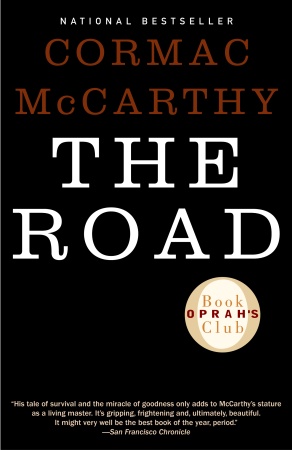
    If I’d known Cormac McCarthy’s The Road had won a Pulitzer Prize in 2007, I might not have picked it up. So many books that have won the award just bore my underpowered literary sensibilities to death. Luckily, I’d listened to McCarthy’s All The Pretty Horses a few years ago and enjoyed it. So when I saw the audio book, performed by Tom Stechschulte, in the library I checked it out. I’m so glad I did.

    The story is set in the Eastern US (although you don’t learn that into well into the book, and then only by one reference to them traveling through “the Piedmont”) years after a holocaust (meteor, nuclear, a caldera–it’s not ever really confirmed) and the resulting choas that turns America in a bleak place of ash and death. A father and son travel a mostly deserted road south to warmer weather, pushing a grocery cart with their few belongings. The father’s sick; he might be dying. And if he dies, we know the boy will die too because there’s nothing to eat but tins of what they can scavenge from houses that were ransacked and abandoned years before. And because others who survived have turned to hunting and eating people.

    This is an incredible story about the relationship between this father and son and the dangers they face. McCarthy tells the story in plain detail. In fact, his understatement and attention to detail in this terrible landscape make it all the more powerful. Stechschulte’s reading is perfect.

    The film is due out in 2009 and features Viggo Mortensen. But I wouldn’t wait for the movie if I were you. I’d get the book now. Or the recording. I couldn’t put this tale down. I’m betting you won’t be able to either.

    Share
  • |

    Jolie, Salt, & trading suspsense for surprise

    Last week I went and saw Salt. Wow. The movie started with a bang and was off to the races with lots of great action. Unlike many action films where the characters perform stunts which are simply too hokey for me to buy into, I found myself believing in all but two of Salt’s. So I was wowed most of the time instead of thinking about whether they were using wires or what or that it was all so wrong and geeze don’t these guys have consultants? They weren’t as stunning as the opening of Casino Royale, but what is? 

    But it wasn’t just action. The premise and acting were all great as well (yes, I recant, I slammed Jolie a while back as an actress cast only for her face value; and while you know that’s one of the reasons why she was here, she still was convincing in her role). Furthermore, the story had a lot of great reversals and reveals. But this was also its ultimate downfall.

    When I got to the ending, I did not feel a climax release. No catharsis. No afterglow. It just ended and left me feeling empty. It’s an awful feeling. Totally unsatisfactory. Such a maddening cut off. 

    But why? It was all so good up to that point.

    *** SPOILERS ***

    As I was talking it over with Nellie I believe I indentified the answer: in their effort to be surprising, the director and writers removed everything that would have built suspense. So instead of getting a Sixth Sense ending where the surprise adds to the climax and gives it a wonderful texture, we got a slap of surpise and then nothing.

    For me to feel relief, triumph, and the desire to stand up and cheer–all those great climax emotions–I have to be worried about a character. Stressed, thinking they’re going to fail. They need to fight courageously against insurmountable odds and actually come to a point where it appears all is lost. Where I groan inside. All this creates massive pent up worry and anxiety for them. And at that point, the character snatches victory from the jaws of defeat.

    Boom! The climax floods me and it’s delight, relief, cheer, joy.

    It’s just like a football game where we bite our nails until the very end. Where our non-ranked team is playing the #3 team in the nation. Maybe we jump ahead in the second quarter, but in the third we fall behind. We make some great plays but can’t catch up. And when we do put points on the board, the other team immediately responds. There are three seconds left. We’ve stalled at the twenty yard line. We have one more play. From the moment it starts it appears to be broken, our QB is going down, and then . . . he passes to a running back who has made some space. Who is standing open in the end zone! Yeeeeeaaaaaaahhhhhh!

    In order to feel a release a climax, something has to build up. The thing that builds is worry, fret, desperate hope. This is what we mean when we talk about suspense. We know the team’s goal, see their predicament, see the overwhelming odds. See them about to lose it all. The dread of defeat and what will be lost rises.

    But in Salt the director and writers went for the effect of surprise instead of suspense and triumph. The moment Salt starts in on the Russian president I thought she was the bad guy. Yes, there was the bit about the spider that had me wondering. Yes, I knew she felt anguish about her husband being killed (that smart little reveal in her expression). I knew all of that. But the movie kept me busy thinking she was the bad guy up until almost the very end. Everything in the film lead me to believe this. Not because I didn’t get it. I got it precisely. It’s exactly what the director wanted. It was the setup for the big surprise/reversal at the end.

    But when they went for surprise by not letting the audience know what Salt was really up to, the immediately removed the possibility of suspense. So I didn’t feel any suspense at her infiltrating the old group of spies. No relief at her killing them–that was just her revenge. No suspsense when she went to the White House. Nothing when she chased the president down the elevator shaft. The whole time I was thinking, crap, they really did indoctrinate her. She’s bad.

    More importantly, there was no rooting, no worry building to release proportions.

    Not until the very end do we realize what she’s been trying to do. Oh, the role reversal with her and Ted Winter (btw, like Liev Schreiber who plays the part) was all a big surprise, as it was designed to be. But the surprise faded and there was . . . nothing to replace it. That’s how surprise works. It’s a relatively short effect. 

    Yes, she kills Winter. Yes, he was a threat at the end with his scissors, but I didn’t care that much. I hadn’t been whipped into a fever pitch. Not like I was in Gladiator with the emperor and the lead in the coliseum. There was no pressurized worry ready to burst. There wasn’t any because we hadn’t had any time for it to build and because by that time nothing for Salt was really at stake. The one meaningful thing she stood to loose–her relationship with her husband–was taken away from us in an earlier scene when he was shot dead. So what was at stake? A big old nuclear war. Well, who cares about that? Nobody. It’s too generalized. We cared about Salt and her husband.

    The result was that the director and writers traded climax for surprise. Alas.

    So here’s my conclusion. Surprise is a relatively easy effect to create. You simply have something unexpected but logical occur. Relief, triumph, climax needs something much different. And surprise can be a part of it. But in our effort to build surprise we must not remove the conditions necessary for please-dear-mother suspense. Suspense requires we root for and worry about a character for a significant period, our unease growing until it’s drawn taut, straining. All the time something significant has to be at stake. Something we can sympathize with. Something personal to the person we care about. Only then can we feel the climactic release. Only then will we stand up and cheer in holy-crap-no-way relief and delight.

    Share
  • Good Stuff! The Greatest Showman

    I saw the previews of The Greatest Showman, the movie about the circus guy. I rolled my eyes. The circus? Come on.

    But my daughters, one by one, went to see it and came home raving.

    And then my wife went to see it and came home raving.

    And then my youngest was playing some music the other night, and I said, “Ooh, that’s nice. Good beat. Wow. What is that?”

    She said with much affection, “The Greatest Showman, loser.”

    I said to myself, maybe the previews simply stank. I said, I’ve seen movies where the previews were better than the full-length film. Maybe this was the reverse.

    I said, to my fine daughter and wife, “How about a movie night?”

    They were more than game to see it a second time. So we went and saw The Greatest Showman this week.

    Here’s the report.

    Oh. My. Holy. Freaking. Heck!

    This movie is one of the best movies I’ve seen in the last few years. And get this: it was released more than eleven weeks ago, back in December of last year. How many movies do you know that stay in the theaters for eleven weeks straight? When a movie keeps attracting crowds week after week, long after the release night hype has faded, they say it “has legs.”

    Let me tell you, this one has some legs. The music is awesome. The visuals are wonderful. And the story—the story is everything a story should be. I came out of the theater having wept and cheered and bitten my nails and been thrilled with a number of the scenes. I came out of the theater happy, positive, thinking about life, thinking about what really matters.

    Look, if you enjoy musicals, if you enjoy dramas, if you enjoy Hugh Jackman of Wolverine fame, you must drop everything you’re doing right now and run to see this before it leaves the theaters. You’ll be so happy you did.

    And now, I’m going to figure out how I can go see it again.

    Share

3 Comments

  1. I really need to try Indian food some time. Sounds like lots of good stuff.
    For sports films, you mentioned my two favorites–Miracle and Cool Runnings. I think for this genre (and many others) it’s usually pretty clear how things will turn out in the end–it’s just the execution that will make or break the film. However, I have thought in the past that it’d be pretty funny to have the team lose the championship at the very end for a sports movie one day, just to see the reaction on the audiences’ faces. (Maybe if I become a millionaire I can fund such a disastrous movie.)

  2. But I think that’s exactly why I liked Coach Carter and Cool Runnings so much. Miracle and Invincible, well, those two were just well-executed stories. I’ll have to watch them again to see what worked so well.

Comments are closed.