The Meth Epidemic, The Marines

The Meth Epidemic

Mamphetamine is the most addictive illegal drug in America. Unlike marijuana, cocaine, or heroin, all of which are synthesized from easy-to-obtain plant material (cannabis, cocoa leaf, opium poppy), meth requires ephedrine or pseudoephedrine, which are very complex to make and require a lot of know-how and high-tech processing. The only folks who have that ability are legitimate chemical factories. In fact, there are less than a dozen such factories around the world that produce these chemicals. Which means it should be easy to stop illegal use at the source.

“Should” is the key word there.

When you’re trying to halt drug trafficking, you can work two sides. There’s the demand side and the supply side.

When you work on the demand side, you try to affect people’s desire and use.  For example, in the 1960’s the Federal Trade Commission, along with other government agencies and private groups, began a campaign against tobacco. Using government policy, public awareness, and education over the last forty years, these groups have significantly altered demand for tobacco in the United States. In 1963 more than half the nation smoked. 4,345 cigarettes were consumed per capita. But as these groups worked to affect demand, those numbers dropped steadily until by 2006 only 1,619 cigarettes were consumed per capita.

That’s astounding, folks. A whole culture was changed.

When you work on the supply side, you try to reduce the production and distribution of drugs. This can sometimes be almost impossible to do. For example, almost anyone can grow marijuana. And it takes very little knowledge to harvest and package the parts that are used.  Same with alcohol–home brewing has been practiced for ages. In both examples, the ingredients are easy to obtain and the processing is relatively simple and easy to hide.

But there are some drugs that are very difficult to produce. The key ingredient for barbiturates is one. In the 1950’s and 1960’s barbiturate abuse was increasing. But the government instituted some regulations on the legitimate businesses that produced these ingredients, and it reduced the amount available on the streets until we very seldom hear of barbiturates being used these days.

So where does meth fit in? Well, as I stated above, there are less than a dozen factories that create the key ingredients. Meth is a perfect candidate for supply side intervention. Unfortunately, regulation isn’t as easy as it may seem.

PBS’s Frontline recently aired “The Meth Epidemic” which explains the history of meth in the United States and the battle raging over its cure. If you’ve ever wondered about what meth is and how it affects our nation, you’ll want to watch this. I think you’ll find it eye-opening and well worth your time. Watch it for free here: http://video.pbs.org/video/1933783731.  

The Marines

The US Marine Corps is a fascinating organization with special capabilities. With the exception of the Coast Guard, they are the smallest of the United States’ armed forces, although they’re still bigger than the entire British army. Part of what makes the Marines unique is that they have the ability to rapidly deploy an independent task force (infantry, air support, ships) to almost anywhere in the world within days. Because of this, they are usually the first boots on the ground in any engagement. They pave the way and the Army and other branches follow to provide overwhelming and continuous force.

But the differences include more than their mission. The Marine Corps emphasizes authority and responsibility downward to a greater degree than the other military services. It members are, on average, younger. And its creed “Every Marine’s a Rifleman” has special implications for its commanders and troops.

In order to do some research for a novel I’m writing, I’ve been watching a lot of documentaries about special operations forces and the Marines. One of the best introductions to the Marines I’ve come across is the 2007 PBS documentary called The Marines. It examines what it takes to become a Marine and what it truly means to be one, outlining the rigorous training process that each recruit must endure to become a commissioned officer. I found it fascinating.

If you have ever been curious what makes the Marines different from the other branches of the military and what it takes to become one, you’ll want to watch this film. I couldn’t find it on the PBS site, but you can find it split into 10 parts at YouTube.com. Just go to site and search for “pbs the marines”.

Share

Similar Posts

  • The Veggie from Outer Space & The Mentalist

    I’ve been trying to increase my intake of vegetables and fruits because you are what you eat, and I think I’d like to look like a broccoli—long, sturdy, and with a lot of bushiness on top. So we’ve enjoyed our weekly box of fruits and veggies from the Bountiful Baskets co-op that we pick up in Garden City each Saturday.

    And we’ve enjoyed the surprises. Because someone else orders the produce, we never know quite what we’re going to get. Of course, this also means we sometimes get things we don’t normally seek out. Take cauliflower, for instance. We received a number of heads three or four weeks in a row back in October.

    Cauliflower?

    Who eats cauliflower? You ever hear anyone say: “Cauliflower’s on—let’s make a run to Brigham City to get some,” or “LaVern, I believe I’m going to knock back another floret,” or “It’s a party! You bring the chips and soda, I’ll bring the cauliflower?”

    No. We don’t hear those things because cauliflower is just weird. It’s the stuff that nobody eats on the vegetable tray. It looks like some growth spore from the planet Xenon. In fact, I want to know who started the rumor that aliens had big eyes and spindly limbs. That’s all propaganda. The aliens are already living among us, and cauliflower is their freaky pupal metamorphosis growth stage!

    Or, at least, that’s what I thought. Then I ate a serving of creamy mashed cauliflower at Ruby Tuesday’s and gained a testimony of both Ruby Tuesday’s and the weird white cousin of cabbage.  

    So when we received our surprise veggie, did I despair or use it for target practice on the idiot orange tom cat that comes around our house? No. I went to search for that Ruby Tuesday’s recipe. And through the miracle of the internets, I found it. Or something close enough for government work.

    Here it is. Enjoy.

    CREAMY MASHED CAULIFLOWER

    • 1 head cauliflower
    • ¾ C water
    • 1 T corn starch
    • 1/3 C heavy cream
    • 1 t granulated sugar
    • ¾ t salt
    • Pepper to taste
    • 1/8 t garlic powder
    • 1/8 t onion powder
    1. Divide the head of cauliflower into florets that are all roughly the same size. Steam or microwave until cauliflower is tender (we pressure cook it). Drain and toss it into a bowl of ice water to bring the cooking process to a screeching halt.
    2. Put florets into a food processor along with ½ C water. Puree on high speed until smooth, but with some small bits for texture. Or you can simply mash it like you do potatoes.
    3. Pour all the puree into a medium sauce pan. Dissolve the corn starch in the remaining ¼ cup of water and add to the puree.
    4. Add the cream, salt, pepper, garlic powder, and onion powder to the mixture and stir. Set the saucepan over medium heat and cook, stirring often, for 5-10 minutes, or until thick.

     You can experiment and switch the water for milk if you’d like, or if you don’t have cream. Leftovers are delicious. Of course, if I end up lumpy and round, you know it’s the cauliflower’s fault, or the alien’s that has set up shop in my chest cavity, whichever’s the truth. 

    For those who haven’t tried Bountiful Baskets, go to bountifulbaskets.org for more info. For those who wonder if cauliflower has any nutritional value at all, here’s the wikipedia on its goodness:

    “Cauliflower is low in fat, high in dietary fiber, folate, water and vitamin C, possessing a very high nutritional density. As a member of the brassica family, cauliflower shares with broccoli and cabbage several phytochemicals which are beneficial to human health, including sulforaphane, an anti-cancer compound released when cauliflower is chopped or chewed. Boiling reduces the levels of anti-cancer compounds, with losses of 20–30% after five minutes, 40–50% after ten minutes, and 75% after thirty minutes. However, other preparation methods such as steaming, microwaving, and stir frying had no significant effect on the compounds.

    Along with other brassica vegetables, cauliflower is a source of indole-3-carbinol, a chemical which boosts DNA repair in cells and appears to block the growth of cancer cells. The compound also appears to work as an anti-estrogen, appearing to slow or prevent the growth of tumors of the breast and prostate. Cauliflower also contains other glucosinolates besides sulfurophane, substances which may improve the liver’s ability to detoxify carcinogenic substances. A high intake of cauliflower has been found to reduce the risk of aggressive prostate cancer. Cauliflower is also a good source of carotenoids.”

    I guess the short version of all that is blah blah blah science says it’s good.

    ***

    Nellie and I have been enjoying The Mentalist for two years now. It’s a CBS crime thriller mystery series about a “mentalist,” a guy named Patrick Jane, played wonderfully by Simon Baker, who used to be a professional mind-reader and psychic, and a very good one at that, but gave it up and came clean. All psychics, he says in the pilot episode, are either fakes or deluded.

    But he was so good at it and made so much money–why would he give it up?

    Because a serial killer named Red John murdered his wife and daughter. So Jane has dedicated his life to hunting down and killing the murderer. To do that, he becomes a consultant to the California Bureau of Investigation (CBI) and works with a team of investigators.

    Some of the episodes are about the hunt for Red John. Many more are about other cases the team has to solve.

    Patrick Jane is the main attraction of the series. His outrageous behavior, acute observation skills, and keen wit all fascinate and delight. As the series progresses, the other characters take on their own interesting personalities as well. Agent Cho, for example, provides many moments of laugh-out-loud deadpan humor.

    The series is into its third season, but with the miracle of Netflix you can start at the beginning and watch them all commercial free at your own leisure.

    Share
  • Me and Santa, Woodyatt Cherry Jam, Despicable Me, Shameless Commerce

    Why I got me a beef with Santa

    Okay, men. I’m going to share a secret. Maybe help you avoid my situation. Women love flowers. They love diamonds and other expensive bits of gravel you can’t find out at the road pit. Some relish a backrub. Those are all good. But if your girlfriend, wife, mother, sister, or daughter likes to cook, well, you’d better watch out.

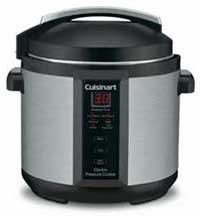
    About two years ago, Santa brought my wife a Cuisinart six-quart electric pressure cooker (item CPC-600). Every time she takes that thing out, she talks about what a great gift that was, and how wonderful it is to be able to cook foods in 30% of the time it normally would take, and how pressure cooking is more nutritious because vitamins and minerals can’t boil away. Foods stay moist and flavors stay true. Blah, blah, blah. Oh, how she loves Santa.

    I have to admit, Santa was a genius for getting her that gift. But you don’t mess with my girl. This year, if he comes around (you listening, Santa!), I’m going to be waiting with my gun.

    For the rest of you, I suggest you go out and find yourself one of these before Santa tries to muscle in. Him and his ho-ho-ho. If you google it, you’ll see it’s only $80 bucks online. A small price to pay, let me tell you. And it lasts a heck of a lot longer than flowers.

    Adventure Jam

    I’m one of those people who can’t go to a restaurant and order the dish that I know is good. Nope, just before the waitress comes to take my order, a compulsion to try something new takes hold of me. Alas, three out of four times, the dish I order will taste like somebody cooked it in a shoe. I’m thinking my plan from now on should be to lock myself in the car and wait until my wife calls me and tells me that she’s placed my order and the coast is clear.

    Of course, that doesn’t prevent me from buying things like kippers and kumquats at the grocery store. Nor does it prevent me from accepting strange gifts. For instance, this last week I was asked if I would like a six-sided bottle of Montmorency Tart Cherry Jam from Woodyatt Cherry Farms. I love cherries, but cherry jam, with big old cherries in it? And what’s with the weird name and bottle?

    But it was a gift from a fine friend, so how could I say no?

    The next day I made toast and buttered it, and as I reached for the sure-fire delicious creamed honey, I was overcome by that maddening spirit of wild culinary adventure. So I pulled the six-sided bottle from the pantry instead, twisted off the white lid, and looked at the cherries crowded within. I drew back for a moment. What was I thinking?! The answer came: “Tart cherry jam, you wimp.”

    So I manned up and spread the jammed cherries on my toast. I took a bite, waited to be disappointed, but it was good. I took another bite.

    Dang. It was real good.

    That jar of zingy jam is now almost empty. But I can tell you I plan on getting some more.

    If you’re a bit adventurous and every now and again want something different but excellent, let me recommend this cherry jam to you. I couldn’t find a website for Woodyatt Cherry Frams, but you can drop by at 7630 S. Highway 89, Willard, UT 84340 or call them at (435) 720-7366  and place an order.

    Funny Family Movie

    My wife and I took the kids out to the Cinefour theaters this last week. That’s the three-dollar theater that’s nice and clean in Logan, UT. We watched the animated Despicable Me. I know, it came out back in July, but who said I had to review things the minute they hit the market?

    Gru, super villain, has his secret hideout in a happy suburban neighborhood. He’s got everything a villain could want: a wicked jet-powered vehicle, freeze rays, and minions. But another villain has just upstaged him with a major heist in Egypt. So Gru decides make a bigger heist, the biggest in the history of the world—he’s going to steal the moon. Sounds impossible, doesn’t it? Ah, but he’s going to use a shrink ray first. Then he can put the moon in his pocket. The problem is the upstaging villain takes the shrink ray. And the only way Gru can steal it back is with the help of three little orphan girls.

    The movie is full of humor (I laughed so hard at one point that I missed a full minute of the movie) and fun action. The orphans and minions are wonderful. Toward the end there was one moment where a sob caught in my throat. (The things cartoons will do to you these days!) The movie is not going to win an Academy Award. But I can guarantee you it will give you and your kids two hours of excellent entertainment and a few funny lines that will enter your family vocabulary.

    Brown’s Shameless Commerce Section

    I know some of you are at a loss for what to get your teen or adult friend who likes fantasy stuff—dragons, magic, etc. It’s not like you can just go buy them a pet monster or suit of armor. And there are soooo many books in the science fiction and fantasy section of the bookstore. So let me help you.

    Servant of a Dark God was recently released in paperback (think inexpensive) and is the perfect stocking stuffer for readers who liked Lord of the Rings. Don’t let the title scare you; the book won the Whitney Awards Best Novel of the Year in speculative fiction and has been getting excellent national reviews. And it just so happens that your humble reviewer is the author.

    If you want to read the first chapters or find out more about the book, click on the Fiction part of the site. There are copies in Smith’s, Macey’s, Fresh Market, Raley’s, and other grocery stores. Or you can order it from Barnes&Noble.com and Amazon.com and have it delivered to your door. Whoever receives it will thank you for the epic fantasy thrills.

    Share
  • Brown Family Christmas Fun — I Hope

    I like paintball.

    My wife and girls do not. Something about bruising and pain.

    We could get pantywaist nerf guns. We do have some PVC marshmellow shooters. But a man wants something with a bit more kick.

    I think I’ve found it. They’re called AirForce BlowGuns. Like PVC guns, you power them with your own breath. Unlike a lot of those guns, these seem to have some power.

    Watch the video here to see them in action: http://www.indiegogo.com/projects/airforce-blowguns-toy-foam-dart-gun

    We just ordered six. I really, really hope this one funds.

    If you’re looking for some family fun on Christmas morning, maybe this is it.

    Share
  • La Brea Bakery Breads Cookbook, Very Young Girls

    Divine Nature

    I became a fan of bread when I lived in Europe. But not just any bread. I’m talking about the kind of bread with a crust that crackles and is chewy. With an inside that’s soft. Bread that doesn’t need anything on it, but makes you sing when you eat it with soup or a thin smear of butter. Alas, I came home and could not find such bread. It was all Wonder Bread nonsense and its many sandwich bread relatives.

    Luckily, I married a gal who had lived in Europe as well. And who, for a few years, actually had some time to bake. It took some time to find a cookbook with recipes that worked. It took some practice. But she was finally able to recreate that crackle, chewy, soft (not the shattering, roof-of-mouth cutting stuff either). And we enjoyed great bread for a few years. Then she took a job outside the home and we’ve been relegated to American sandwich bread again.

    Enter four daughters. Three of whom are working through a church program like the Boy Scouts that’s meant to help them develop key virtues. Each of the virtues requires they complete a number of tasks to educate them about that virtue. When they’ve completed the tasks for a virtue, they are to devise and undertake a ten hour project to help them practice what they’ve learned.

    Recently, I sat down with my oldest to see where she was and found to my surprise that she still had a number of things to complete. As I reviewed the requirements with her, I pointed out that she’d fulfilled the requirements for all of these virtues many times over. But she refused to count her activities that might apply because she didn’t perform them at the time with the intent to fulfill the requirements. She wanted her accomplishment to be purposeful. She’s focused on the intent of the program, not the award for the award’s sake. (Where do such children come from?) I saw her point, applauded it, and went back to work trying to help her brainstorm what she could do.

    We came to the virtue called Divine Nature, which states: “Be partakers of the divine nature. Giving all diligence, add to your faith virtue; and to virtue knowledge; and to knowledge temperance; and to temperance patience; and to patience godliness; and to godliness brotherly kindness; and to brotherly kindness charity.” Many of the activities revolve around womanhood and family. But it was the big project she needed to complete, one that “will help you practice what you have learned. This should be a significant effort that will take at least ten hours to complete.”

    Some of the suggested projects had to do with service in the community, others with talents. Then I read: “Develop a skill you could use in your future home, such as cooking, sewing, making repairs, organizing, or designing.”

    Cooking?

    My bread soul stirred.

    Cooking?! Baking is cooking.

    Memories of crackling crust and soft centers filled the mind of my bread beast. “Bread!” I declared.

    Luckily, Daughter Number 1 had also eaten her mother’s bread and missed it. “Bread,” she agreed. And we pulled the book out that my wife had found so useful, and began.

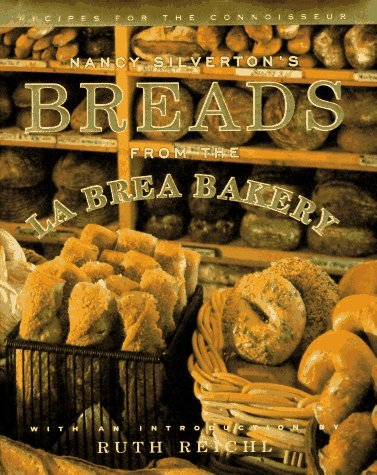
    The book is Nancy Silverton’s Breads From The La Brea Bakery. Silverton is a master chef.  She owns and operates the Campanile restaurant and the La Brea Bakery in Los Angeles. Her bread is sought for all over the nation. Her breads and the breads she shares in this book are all made with a sourdough starter that she teaches you to make from scratch with grapes. Actually, you don’t make it, but feed it. Because it’s a living thing. And after a while it becomes almost like a strange family pet growing on the counter and in the fridge.

    Some might hear “sour” and turn away, but Silverton explains how to keep the starter from becoming too sour. The result is a crackling, chewy, soft bread with a light tang that’s delicious. In fact, Daughter Number 1 just made bagels from the recipe in the book. There’s no tang at all. They’re the best bagels I’ve had. She’s also made the regular loaf, pancakes, and waffles from this same starter. They’re all delicious.

    The book starts off with a lesson in bread making then shares about 60 recipes, everything from baguettes to whole-wheat sandwich bread to sourdough onion rings. The only downside to the book is that I wish it had more pictures. An illustration, for example, in the section on rolling bagels would have been helpful. But we found one on youtube, and it sufficed. And I will confess that I didn’t think once about pictures when eating the bread.

    BTW, we’ve stopped calling this bread. Now, when it’s time, one of us will say, “I think it’s time to make some divine nature.”

    Our Young Girls

    I was recently reading about organized crime and their main activities.  In the section about what ties such groups have to prostitution, the authors reported that it’s estimated that 20% of all prostitutes are street walkers. Another 15% are call girls or escort service workers, and the remaining number, 65%, work in an establishment of some kind—massage parlors, brothers, bars, and hotels.  

    The authors reported that most street walkers have a lover or companion relationship with their pimp. This didn’t make sense to me at the time. But after watching Showtime’s Very Young Girls, I now understand what they’re talking about.

    This film is a documentary about teenage girl prostitutes in New York City and the GEMS (Girls Education and Mentoring Services) that helps them to find a new direction, which is not always easy.

    One of the awful statistics the film reveals is that the average age of entry into street walker prostitution in the United States is just thirteen.

    No, that’s not a typo. It’s thirteen. THIR-TEEN.

    The film introduces us to Rachel Lloyd who dropped out of school and became a teenage stripper and hooker. But she got out. She changed her life and then started the GEMS program to help young girls who found themselves in situations like the one from which she escaped. Lloyd began the program in her apartment and eventually got funding to open a recovery center where girls can seek shelter while they’re trying to redirect their lives.

    The film profiles a number of the girls working through the program. Some of these kids are kidnapped off the street and forced into the “life” as they call it. Some are lured away by pimps who initially act as if they want them to be their girlfriends, flattering them and showing them a good time, and only after they’ve been sleeping together for a while do the pimps then explain that they need to make some money.

    Many of these girls come from broken homes. Many have grown up believing the sexual messages portrayed by the media. The girls are beaten and given drugs.

    Some have been so psychologically manipulated by their pimps that they feel compelled to return. Others have successfully broken with their pasts.

    And all of them are just kids. KIDS!

    This is a movie that’s hard to watch. It’s not graphic in any way. It’s simply the subject matter. It’s also eye-opening and, while the problem is huge, does provide some hope. Thank the Lord for people like Rachel Lloyd. And for people everywhere who live upstanding lives and by kindness and good teaching save their children and others in their communities from this terrible waste. Rent this movie on Netflix. I think you’ll find it’s well worth the time.

    Share
  • Good Stuff: Books Worth Multiple Readings Part 1

    Would you like to improve your relationship with your spouse or children?

    Would you like to improve your experience with teachers, coaches, and administrators this coming year at school as you try to influence them and work with them for the benefit of your children?

    Would you like to simply have a better time with the people in your community?

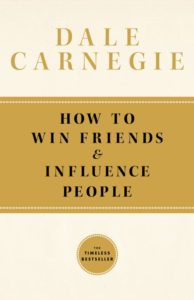
    There are some books so full of practical wisdom about relationships that they deserve to be read every year or three. I want to recommend two such books to you. The first is How to Win Friends and Influence People by Dale Carnegie.

    This book has been in print for eighty years. And not only that, it has been, year after year, one of the bestselling books out there for almost each of those eighty years. For example, Amazon right now ranks it the #9 most read book. You’ll see other books come and go on that list. But books like this and Stephen R. Covey’s The Seven Habits of Highly Successful People stay.

    There are thousands of how-to books published each year on relationships in business and personal settings. Most are never seen again. But this one has stayed because people find it so useful they recommend it over and over again.

    And I wish to heck I’d not waited ten years to pick my copy up again.

    As I re-read the book this last month, I saw that if I’d been thinking about the practical guidelines Carnegie shares, I could have avoided a number of public and private arguments I’ve had over the last few years.

    I could have avoided subjecting those relationships to attack, coming to my senses, and then trying to clean up the mess, large or small.

    But even more important, I could have added a little more sweetness to my life and the life of others I encounter on my way. There are only so many days we have here on earth, and how much better it is to add additional drops of honey to them instead of vinegar.

    One of the wonderful things about his book is that Carnegie shares the wisdom in a down-to-earth way with lots of examples and stories. He shares wisdom on building relationships, being liked, winning people to your way of thinking, and how to make your requests for change known without giving offense or rousing resentment. And he does it simply and in a way that you feel like you’re sitting down with a good-humored grandfather. There are no dry, abstract parts. Just look at a sampling of the chapter titles.

    • “If You Want to Gather Honey, Don’t Kick Over the Beehive”
    • “He Who Can Do This Has the Whole World with Him. He Who Cannot Walks a Lonely Way”
    • “An Easy Way to Become a Good Conversationalist”
    • “If You Must Find Fault, This Is the Way to Begin”
    • “Give a Dog a Good Name”

    I can tell you that every time I try to approach things the way he proposes, they almost always seem to go better.

    If you have an issue you want to discuss with a school teacher, coach, or administrator this year, let me suggest you first listen to what Carnegie has to say. I can promise you you’ll get much farther. And you will probably end up enjoying the interaction.

    If you want to improve your time with your wife and kids, open this book and look for insights.

    If you want to have a better time with your co-workers or boss, I suggest reviewing the wisdom you’ll find here.

    Carnegie doesn’t possess all the wisdom there is to be had about relationships. There are many people out there with great insights. But, gee whiz, he provides a great start. If you want to add some sweetness to your life, I think you’ll find this book a great help.

    Let me illustrate this Carnegie stuff with an experience I had with one of our high school coaches two years ago. I have a vast background in basketball that includes, well, nothing. I basically know how to dribble a ball. Oh, yeah, I also played church ball two or three years in a row back in the 1980s. So, as you can see, my knowledge is vast.

    And not to toot my own horn, but this wasn’t just any church ball team. This was a team that improved the sport.

    How? You ask.

    Well, during one of those church ball years, me and the guys from my ward (“congregation” for those not familiar with the Mormon faith) thought it would be capital to make jeans and concert tee-shirts our uniforms. Back in those days concert tee-shirts looked like this.

    This meant we ran up and down the church courts with drugs, sex, and rock and roll on our chests (I’m sure that’s precisely what the brethren had in mind for the program).

    As you can see, we were way up there on the basketball ladder.

    So back to this coach. My daughter was playing on the high school team, and the team was having a consistently hard time with one type of defense. And I thought, “Self, there’s got to be a way to break that defense.” These are the big thoughts that basketball gurus like myself have.

    And so I researched and watched and talked to folks who had actually played basketball competitively (unfortunately, without concert tee shirts) and identified an offensive counter that looked like it might work.

    And I sent an email to the coach sharing my idea.

    Now, the coach could have reacted in many ways. Especially given the fact that (1) he had already thought of the idea I was proposing, (2) had already tried it in games that, yes, I had attended, and (3) probably knew just a teensy bit more about basketball and his team than I did even though my church ball team had vastly superior uniforms.

    But this coach, whether he knew it or not, was following a number of the principles found in Carnegie’s book, including the chapter titled “Let the Other Person Save Face”. This meant that instead of rolling his eyes or ridiculing or saying something like, “Brown, are you blind?”, he explained what he was doing and then expressed his appreciation. He was happy I was so invested. He thanked me.

    And here’s the thing: he meant it.

    I replied that if he ever wanted someone to suggest an idea he was already trying, to just call. I’d be happy to help.

    We laughed, but the important thing is that what could have been a wedge became a good experience for all. And, more than ever, I wanted to work with him to help my daughter in the program.

    I will give you one more example. There’s a mother who had four of her children go through my wife’s seventh and eighth grade language arts classes. Now, Nellie is a worker. She expects her students to work. She wants to have a good time, loves having great interactions with the kids, but she also wants them to improve and learn, and knows that’s going to take some work. Sometimes the assignments, despite her best efforts, aren’t clearly understood. Sometimes they’re a bit challenging. And this sometimes creates frustration.

    There are a lot of ways that parents deal with this. But this one mother took an approach that, whether she knew it or not, followed many of the principles in the book including those shared in “You Can’t Win an Argument” and “A Formula That Will Work Wonders For You”. This resulted in a fabulous working relationship. It helped the mother have less stress. Helped her kids. And helped Nellie improve her program.

    The issues the mother encountered could have become wedges, but instead, because of how she handled them, they became stepping stones. And this didn’t happen with this one individual. There are many mothers and fathers who have taken a similar approach with similar results. The principles work every time.

    I could go on with many more examples in other situations, but why listen to mine? Carnegie has a book full of them. If you want to improve your relationships or persuade others to your way of thinking, you’ll want to start by reading this book.

    The second book I want to recommend is I Don’t Have to Make Everything All Better by Gary and Joy Lundberg. But this post is full, so stay tuned, and next time I’ll explain what awaits you in its fabulous pages.

    Share
  • “Clockwork Chickadee” by Mary Robinette Kowal

    Mary Robinette Kowal is a professional puppeteer and a dang good story teller. I ran across her “Clockwork Chickadee” this last summer and forgot to blog about it. Then she won the Campbell Award. And I thought to blog it again. Now it’s November and you see what it means to run on “Brown time.” But however belated my review, this story is marvelous. The images have stuck in my mind since that first reading. And the chickadee, well, let me share the beginning with you.

    The clockwork chickadee was not as pretty as the nightingale. But she did not mind. She pecked the floor when she was wound, looking for invisible bugs. And when she was not wound, she cocked her head and glared at the sparrow, whom she loathed with every tooth on every gear in her pressed-tin body.

    The sparrow could fly.

    He took no pains to conceal his contempt for those who could not. 

    I am an impatient reader: if the story doesn’t grab me within the first few lines, I usually pass. I’m trying very hard not to be so demanding and extend this to two pages (no, I do not have the fortitude some readers do to extend this to twenty, forty, or sixty pages). But sometimes I slip back into my old ways. However, with Clockwork Chickadee I didn’t need to remember to be patient. I just read and read and read some more.  

    For those who care about story, you’ll notice it doesn’t run on the normal fuel of sympathy and suspense. This is a curiosity story. And Kowal does it so well.

    Here’s the text version. But if you have no time to read, that’s no problem. Listen to the audio version right now or download it to your iPod or MP3 player and listen while you’re out and about.

    Enjoy!

    Share

5 Comments

  1. Loved that you mentioned the marines. I was in for almost three years and while it felt just like any other job when I was in; Now I look back and have some great memories. I was able to go to Europe and Tunisia while I was on deployment and also did a 12 day peace-keeping mission in Kosovo. When you finish your thriller that your doing the research for, I just might have to pick that one up to.

  2. Hey, I’m going to need some folks to vet it for accuracy. Just saying 😉 The Marines rock. And thanks for your service.

  3. Thanks and i’ll keep that in mind. I don’t think i’ve read a thriller in years since Ludlum’s The Tristan Betrayal about 4-5 years ago. I’m going to have to check out those clips on youtube one of these days.

  4. Anthony, try THE GOOD GUY by Dean Koontz. I think you’ll like it a lot.

  5. Ok I’ll check it out. I loved The Taking and finished Breathless, which I thought was interesting.

Comments are closed.