Bartimaeus & The Time Traveler’s Guide to Medieval England

Pure Delight
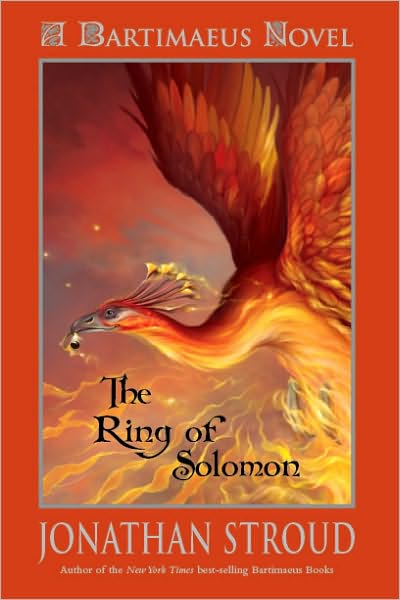
One of the most delightful literary characters to appear in the last decade is the cheeky Bartimaeus–a five-thousand-year-old djinni (“genie”) who plays the lead role in Jonathan Stroud’s trilogy The Amulet of Samarkand, The Golem’s Eye, and Ptolemy’s Gate.

In Stroud’s world, magicians have no magic in themselves, but they do have the lore to summon and enslave demons, who can work magic. There are demons of various levels and powers. The lowest regularly summoned and enslaved are Imps, who can be crude and like to tell outright whoppers, but are good for standing watch and carrying messages. Next come Foliots, which Bartimaeus describes as “cut price djinn.” In the middle of the great chain of beings are the Djinn themselves, whose clever intelligence Bartimaeus extols, followed by Afrits, and finally Marids, who are rarely summoned because they are too strong for any but the most powerful magicians to control. Of Marids, Bartimaeus insightfully reveals that they are “dreadfully full of themselves.”

In the trilogy, Bartimaeus is summoned and enslaved to do the bidding of a sometimes jerkish young magician who learns to be a better person, despite himself. Of course, along the way the magician sends Bartimaeus in great peril, which he eludes with cunning, sardonic wit, and many good one-liners. I read the first book, loved it, then listened to all three read by Simon Jones, who makes these stories even better. The sad news is that I finished them. I simply wasn’t ready to let Bartimaeus go.

Which is why I was so happy to find that Stroud recently released a fourth book: The Ring of Solomon, which is a stand-alone prequel to the trilogy. The family and I just finished listening to it, and it is every bit as good, if not better, than the first three.

This story is set in biblical times where King Solomon has risen to uncontested power because of his possession of an all-powerful ring which allows him to summon hordes of powerful demons in a blink. Bartimaeus is enslaved to one of Solomon’s magicians.  A mean man, who Bartimaeus catches in a mistake and escapes, principally by devouring him. But Solomon doesn’t take kindly to that, and orders Khaba, a sinister and cruel magician, to summon him back to make an example for the other demons.

Meanwhile, the Queen of Sheba, having denied Solomon’s marriage proposal three times, is sent an extortion threat.  Angry and frightened, she sends Asmira, a young woman and loyal captain of the guard, to Jerusalem to assassinate Solomon.

Bartimaeus and Asmira hook up and find themselves in quite a pickle as they attempt to solve their problems. The story provides lots of humor, adventure, peril for both Bartimaeus and Asmira, and a number of surprising turnarounds. It also, in its own way, makes a comment on leadership, loyalty, and zealotry.

You’ll find it in the middle-grade section of your bookstore, but don’t let the placement fool you into thinking it’s not for adults. Like the best stories, it offers something for everyone. It’s a perfect blend of insight and entertainment and had my whole family, oldest to youngest, spellbound for the duration as we listened to it riding in the car. This is one of my favorite books this year. And if you want to really indulge yourself, listen to the audio book read by Simon Jones.

Travel to Medieval England
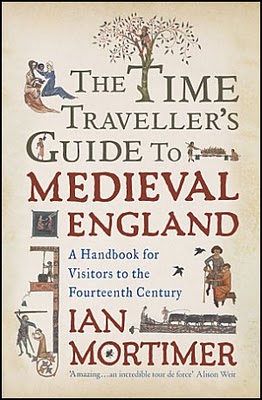
I love learning new things about places and peoples, even if it’s a place I’ve “been” to before, which is why Ian Mortimer’s The Time Traveler’s Guide to Medieval England intrigued me. The first page convinced me to buy to book. And I’m so happy I did.

I’ve read my fair share of interesting and well-written texts on this subject, including, among others, Life in a Medieval City and Life in a Medieval Village by Frances and Joseph Gies, Standards of Living in the later Middle Ages by Christopher Dyer, The Medieval Castle by Philip Warner, Daily Life in the Middle Ages by Paul B. Newman, and Power and Profit: The Merchant In Medieval Europe by Peter Spufford. All engrossing reads. What sets Mortimer’s book apart is that he not only approaches the topic as a travel guide that leads to you interesting sights and shares fascinating tidbits about the place, but he also helps you imagine how it would be, as a 21st century person, to actually travel there.

For example, where would you go if you got sick? What happens if you’re robbed, where do you report the crime, and should you? Where might you get food and would it be something you’d find palatable? How will you get from place to place? Why kind of entertainment can you expect? And what can you wear without offending your hosts?

Mortimer focuses on the fourteenth century England, since this period comes closest to the popular idea of the medieval times. He tackles the topics of the landscape, people, the Medieval character, basic essentials, what to wear, traveling, where to stay, what to eat and drink, health and hygiene, the law, and what to do. And he does it all in a chatty, clear, and informative manner, with a bit of humor thrown in for spice.

Each page was a delight, and I found myself feeling like I was there. Furthermore, I learned a number of things that I hadn’t picked up in my previous readings. I’m tempted to quote all sorts of interesting tidbits he shares about the age, but I’ll refrain. If you are at all interested in the Middle Ages, I think you’ll love this book.

Share

Similar Posts

  • Good Stuff: Books Worth Multiple Readings Part 2

    What’s your typical response when someone shares a frustration, problem, or issue with you? Or when they state an opinion or desire you disagree with?

    Sometimes we get impatient, exasperated, or annoyed with them and simply don’t want to hear it.

    Sometimes we get mad. Or defensive. And want to line them out.

    Sometimes, however, we want to help.

    And wouldn’t you know it, but we sometimes cause as many problems with that last reaction as the first two.

    How can this be?

    Your teenage daughter comes home and expresses disappointment about something that happened at school, and you want to help. How in the world could that be wrong?

    Your spouse shares a frustration about something that happened with a friend, and you don’t want him or her to be sad. This is a bad thing?

    Your coworker expresses annoyance with a program management is trying to implement, and you know exactly what will fix the problem and want to share it. This is going to cause problems?

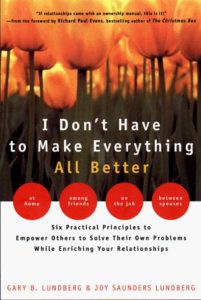
    In their fabulous book, I Don’t Have to Make Everything All Better: Six Practical Principles that Empower Others to Solve Their Own Problems While Enriching Your Relationships, Gary and Joy Lundberg show two different ways of acting on the desire to help others that have dramatically different results. If we try to help using the first method, we actually create more issues. We will make the person less willing to talk to us, introduce strain into the relationship, and create a lot of stress for ourselves. On the other hand, if we try to help using the second method, we’ll find the person more willing to talk. There will be more friendliness in the relationship. And our own stress will go way down. Furthermore, we’ll end up helping the person far more than we ever could with the first method.

    Gary is a licensed marriage and family therapist. His wife Joy is a writer and lyricist, and they have held marriage retreats, firesides, and seminars throughout the country. And the six principles they share in the book for using the second method all revolve around accepting this one statement: “I do not have the power to make anything all better for anyone else. I can offer my help, but I cannot make it all better.”

    Accepting this view has a dramatic impact on how we approach helping others.

    So when the teenage daughter comes in and expresses disappointment, instead of trying get her to buck up or tell her she just needs to do xyz with her friends, or do 123 in sports practice, we listen, validate her emotions, leave the responsibility for the problem where it belongs—with her!—and then, when it’s all out, offer to help in a way that empowers her, not have us take over.

    When the spouse shares frustration, it’s the same. When the coworker expresses annoyance, the same. When someone comes in to complain to us, it’s the same.

    What the Lungbergs do in this book is show exactly what this looks like with tons and tons of examples. They even have a whole chapter (a short one) which gives a list of validating phrases and questions. The first six chapters of the book explain the principles. The last eight each apply them to a different group: young children, teenagers, adult children, spouses, parents and parents-in-law, friends, and coworkers.

    Folks, this book is a gem. It’s loaded with wisdom and insight. Every time I practice what’s in here, my interactions go better. This stuff produces immediate results. I just wished I’d studied and practiced it more. But it’s never too late. And that’s why I’m rereading it now.

    And why I wanted to share it here. If you want to improve your interactions with others and enrich your relationships, do yourself a favor and immediately go get this book.

    Share
  • Dr. Horrible’s Sing-Along Blog

    I enjoyed Joss Whedon’s movie Serenity as well as many of the TV episodes of Firefly which featured the same characters and world. So when I saw Whedon had put up another movie called Dr. Horrible’s Sing-Along Blog and made it available over the internet, I had to watch it. And then watch it again, and again.

    I loved the characters. I couldn’t get some of the songs out of my mind. Some of the plot turns simply delighted. Here’s a preview.

    And here’s where you can watch it right now for free. It’s only 42 minutes long. Give it 4 minutes (literally). If you’re not hooked, let me know right here. I’d give it a PG-13 for some language and thematic stuff.

    Share
  • I Am Not A Serial Killer by Dan Wells

    IAmNotASerialKillerYou can scare the crap out of me (Aracnaphobia), and I will love you forever. You can make me bite my nails in terrible suspense (Wait Until Dark, The Village) or throw supernatural at me (Poltergeist) and I will sing with praise. But the moment you do gruesome, the moment you start showing me entrails and organs, my discomfort level shoots through the roof.

    And this is why I would not have finished  I Am Not A Serial Killer by Dan Well’s if I had just picked it up off a shelf–because the main character is the son of a woman who owns a mortuary. We get to see him help process a mutilated body very early in the book, pumping fluids in etc., and Wells knows his craft so I was THERE. I’m sure it’s not too gruesome for some, but I just have issues with organs. I don’t know why. I also have an issue with clowns.

    Clowns are, by far, the scariest things around. And this is not because I read the book IT by Stephen King as a wee lad because I didn’t. It’s because they’re painted vessels of evil. End of story. They’re perfect examples of the freakazoids that lurk in the uncanny valley.

    Anyway, I’d heard Wells read a portion of this book that had all of us in the room crying because we were laughing so hard. So I read on, telling myself I had to at least get to that part. And I am so very happy I did. 

    I Am Not A Serial Killer is young adult story about a good-hearted teen named John Cleaver who is a sociopath with all the traits shared by serial killers. John’s in counseling, but more importantly, he is convinced he can prevent himself from becoming a serial killer by keeping rules he’s made for himself like not watching people for too long and complimenting someone when they make him angry. Such rules, he hopes, will keep him from feeding compulsions he won’t be able to resist.  The problem is a real serial killer has come to town (but unlike any you’ve seen before). And John may be the only one who can stop him. Will he let go of his rules to save the town? Or will he keep his monster asleep while others die around him?

    It’s a fascinating situation (without a clown in sight, may the writing gods be praised). And Wells takes the reader on a journey through it that includes mystery, dread, and humor. In the hands of some other author, that would be enough. But Wells does more than entertain us. He gives us things to think about. He gives us great characters to boot–come on, when was the last time you read a book where the hero was a likeable sociopath? And most of the gruesome is up front anyway.

    Read this book. Skim the body processing if you must. But you simply don’t want to miss the rest. It was a fabulous read and I recommend it highly.

    The US version comes out in March of 2010. But you can get the UK version now on Amazon UK, Borders UK, etc. The links are all here on Well’s site.

    Share
  • Donald Rumsfeld, The King’s Speech, Aquatic Ancestor Apes & Talking Bacteria

    Donald Rumsfeld

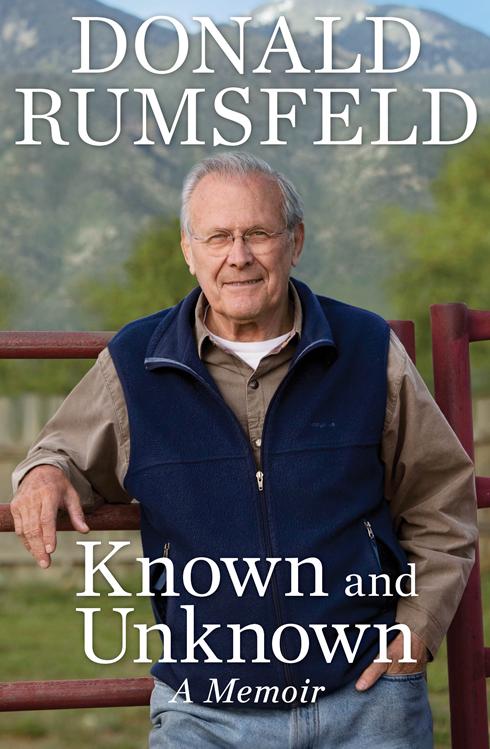
    I just finished Known and Unknown, a fat memoir by Donald Rumsfeld, and enjoyed every page.  Rumsfeld served as the Secretary of Defense under George W. Bush.  But Rumsfeld’s service didn’t start there. He was a Navy pilot, an assistant to a congressman during the Eisenhower days, and, in the early 60’s, a four-term congressman from Illinois.  He held various positions in the Nixon White House in the late 60’s and early 70’s, including ambassador to NATO.  He was Chief of Staff and Secretary of Defense when Ford took over from Nixon.  Reagan tapped him to be a special envoy to both the Middle East after the Beirut bombing and to the Law of the Sea treaty discussions.  He was the president of Searle, a pharmaceutical, as well as General Instrument, the company that pioneered HDTV.  Only after all that, did George W. Bush bring him on as Secretary of Defense.

    When writing novels, I try to create characters worth knowing, either because of their interesting personality or skills or because of the events they take part in. Donald Rumsfeld is just such a character, except he’s no fiction.

    In his memoir he shares insider information on everything from Watergate to 9/11 to the war in Iraq. What emerges is a fascinating look into many of the most important events in the last forty years.  You’ll get insight into some of the issues experienced in various White House administrations and see what really was going on with waterboarding, Guantanamo, Abu Ghraib, hurricane Katrina and many other of the hot button issues in the Bush years. There are some laugh out loud moments where his understated humor shines through. There are also parts where he reveals some of his differences with others that worked with him in the various administrations, including issues with Nelson Rockerfeller, Colin Powell and Andy Card. But in everything he writes he’s fair and restrained and attempts to present the facts accurately. This is no attempt to settle scores.  Just a wonderful read.

    If you are interested in politics at all, I think you’ll enjoy this book. Moreover, I think you’ll come out a little wiser, maybe a little better person, for having spent a few hours with Donald Rumsfeld.  

    The King’s Speech

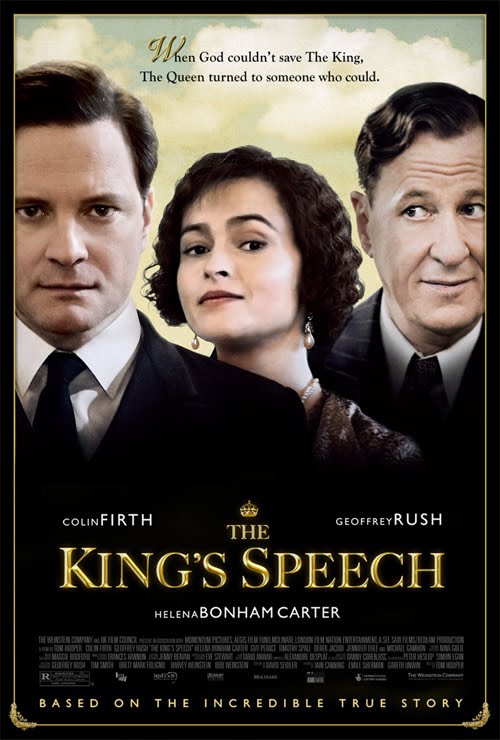
    I do not watch many r-rated movies.  They are usually too vulgar or pornographic for my prissy tastes. However, I did my research on The King’s Speech, and having heard so many glowing reviews, Nellie and I rented it.

    It was wonderful.

    The movie tells the story of prince Albert Frederick Arthur George of Britain who did not ever expect to inherit the throne and did not want to, in part because of his stammer. Can you imagine having to be a public figure like a king and have to deal with something like that? Most of us dread the thought of public speaking. Can you imagine having to try with a stammer?

    But Albert’s lot was not to live the sheltered life. He became king when his brother abdicated the throne because of improprieties in his personal life. The day before the abdication, Albert went to London to see his mother, Queen Mary. He wrote in his diary, “When I told her what had happened, I broke down and sobbed like a child.” That is not the entry of a power-hungry man.

    He assumed the throne in 1936, when England ruled over almost a quarter of the world’s population. Three years later in 1939 WW2 broke out and Britain’s king needed to be able to address the people.

    In the movie, Colin Firth plays Price Albert. Geoffery Rush (Captain Barbossa in Pirates of the Caribbean) plays Lionel Logue, the unorthodox Australian speech therapist to whom Albert’s wife turns for help. The script is wonderful and the star-studded cast is spot on. There are moments of humor and poignancy and triumph. I was caught up in this movie as much as any I’ve seen.

    If you like English dramas, you’ll enjoy this one. And the profanity, the reason for the r-rating, is not there to depict casual vulgarity. It was part of a technique used by the therapist. In the end, you’ll overlook it and find yourself on pins and needles, rooting for this fine man.

    Aquatic Ancestor Apes & Talking Bacteria

    I’ve written about TED before. The annual TED (technology, entertainment, design) conferences, in Long Beach/Palm Springs and Edinburgh, bring together the world’s most fascinating thinkers and doers, who are challenged to give the talk of their lives (in 18 minutes or less). The folks at TED record these speeches and put them up for free on their site for the rest of us to watch. And I just watched two dandies.

    The first is by Elaine Morgan who says we evolved from aquatic apes (sigh, just when you think you’ve found grandpa Eddy hanging out in the trees, you learn he’s an imposter). Morgan is a Welsh writer for television and also the author of several books on evolutionary anthropology. In the speech she describes the reasons why it makes sense that humans had aquatic ancestors. Along the way, she illustrates key principles of science, including why science by consensus is no science at all. Her manner is so delightful and engaging I think I could listen to her for hours, preferably around the dinner table. Watch her right now. She just might convince you.

    The second speech was given by Bonnie Bassler, an American molecular biologist, who has been part of the team that discovered key insights into how bacteria talk. It appears that bacteria do not invade a host and start doing damage. No, they wait until their numbers are sufficient that they have a chance of surviving. They coordinate defense and mount attacks as a group. Who would have thought? Knowing how this works is not only interesting all by itself, but it has stunning implications for medicine and fighting infection. Bassler is a fascinating and enthusiastic presenter. Among other things, you’ll end up seeing that humans are more bacteria than you could imagine. Watch her.

    Share
  • Sticky Ideas, Cook’s Country Magazine

    They stole his kidney . . .

    A friend of a friend of mine is a frequent business traveler.  To keep his identity safe, I’ll call him Bill.  Bill was recently in Atlantic City for an important meeting with some new clients.  Afterward, he went to a local bar to kill some time before his flight and took a seat at a table. 

    He’d just finished one drink when an attractive woman approached and asked if she could buy him another.  He was surprised, but flattered (Bill isn’t exactly a Brad Pitt).  He accepted the drink.  The woman walked to the bar and brought back two more drinks—one for her and one for him.  He thanked her and took a sip. And that was the last thing he remembered . . . before he woke up, disoriented, lying in a hotel bathtub, his body submerged in ice.

    He looked around frantically, trying to figure out where he was and how he got there.  Then he spotted the note:

    DON’T MOVE. CALL 911.

    A cell phone rested on a small table beside the bathtub. He picked it up and called 911, his fingers numb and clumsy from the ice. The operator seemed oddly familiar with his situation. She said, “Sir, I want you to reach behind you, slowly and carefully. Is there a tube protruding from your lower back?”

    Anxious, he felt around behind him. Sure enough, there was a tube.

    The operator said, “Sir, don’t panic, but one of your kidneys has been harvested. There’s a ring of organ thieves operating in this city, and they got to you. Paramedics are on their way. Don’t move until they arrive.”

    Incredible, isn’t it?

    More importantly, do you think you could remember enough of that, without review, to tell it to someone tomorrow?

    My guess is that you could. And if you did, you’d be spreading one of the most successful urban legends of the past fifteen years.  

    But I didn’t tell you the story to focus on urban legends. There are a lot of stories people tell one another that don’t go viral.  What makes this one different?  In fact, what makes any idea stick effortlessly, like this one does, in someone’s brain?

    Are you a teacher? In school, at home, or at your business? Do you give presentations?  Do you ever need to advertise something—a product, service, or yourself? If so then you’ve had this question.

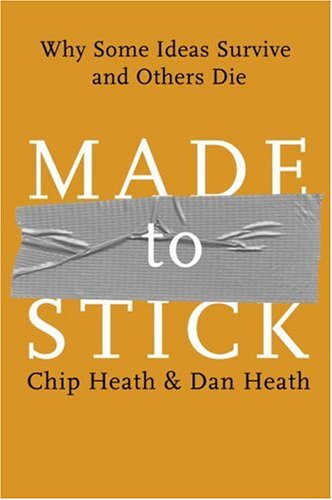
    Maybe you’ve uncovered some of the secrets. Maybe you haven’t.  But there’s no reason to despair: Chip and Dan Heath have written the book on it. It’s called Made to Stick: Why Some Ideas Survive and Others Die and is one of the most fascinating and practical reads I’ve come across in the last few years.

    The brothers Heath spent hundreds of hours researching sticky ideas: urban legends, advertising campaigns, wartime rumors, proverbs, conspiracy theories, jokes, some of the nation’s best teachers—you name it; if it was sticky, they looked at it. They asked questions like what makes some urban legends so compelling? Why do some chemistry lessons work better than others? Why do some political ideas circulate widely and others fall short? What they found was that sticky ideas exhibit six traits. And it was relatively easy for someone, once they understood those traits, to make almost any idea stickier.

    I can see the traits in some of the things that I’ve done that have been sticky. I can see other ways to improve. The cool thing is that I’m not going to be guessing as much. If you need to make your ideas stick, let me recommend you get this book.  If you want a preview, go to madetostick.com.

    Recipes that actually work?

    I was once induced, through insidious mind control, to purchase a cookbook that included all sorts of tempting dishes. I prepared a number of the recipes, and every one of them was a bust, especially the cinnamon flank steak with eggplant, which I think Nellie and I chewed for about six hours until our jaws dropped off.

    Not satisfied to learn my lesson once, I soon purchased another book on making bread the Old World way. Despite our best efforts and many valiant attempts, all we could produce were loaves that were so bitter and sour they could have been used at Guantanamo Bay to threaten captured Talibanists to talk.

    Let’s just say that after a few more of these, I finally beat back the mind control. I’ve been gun-shy of cookbooks ever since. We’ve been very selective over the years, and this has saved me some money. Unfortunately, I think all of those lessons learned are going to go out the window.

    I was recently watching the Create channel and saw an episode of Cook’s Country where they showed how to make coleslaw that wouldn’t get all watery and a grilled chicken with traditional Southern white BBQ sauce that had me slavering in my seat. During the show they talked about testing these recipes and their failures.

    I learned that the folks there had just finished an eleven-season series called America’s Test Kitchen (where was I all that time?). In the series, they tested hundreds of recipes five ways to Sunday to come up with ones that really worked.

    When the episode of Cook’s Country finished, the old cookbook mind control had risen to full force. This time, though, I was able to exercise some restraint. Instead of buying fifty cookbooks, I started a 14-day trial to Cook’s Country magazine, a thirty-four page, oversized, bi-monthly that’s full of recipes that have been tested. 

    One of the neat features is that they don’t simply present the recipes, they also include the stories behind the testing so a reader can learn from their failures and successes right along with them. In fact, the stories of the tests were so interesting I made Nellie sit down while I read them to her. The magazine also includes cooking tips and product ratings. In the issue I received, I learned, for example, which egg wash proved, through testing, the most successful on pies and which graham cracker tasted best in recipes. One of the best things about the magazine is that, unlike many magazines that have three sentences of content and forty pages of advertisements, Cook’s Country has zero advertisements. Zero! It’s nothing but cooking.

    We’ve tried five recipes so far. Three of them have been clear winners for all the tasters in this family. There other two were good, but not spectacularly so. Still, there weren’t any cinnamon flank steaks! 

    In the next set of reviews, I’ll share their potato salad recipe that had us all oohing and aahing. And maybe the chocolate éclair cake we adjusted to perfection. I’m going to continue the subscription and give their family cookbook a try.  I’ll report my results. In the meantime, I suggest you look at Cook’s Country magazine online at cookscountry.com or watch the show on Create.

    Share
  • Short Reviews: Icefall, Gravity, 42, Z, and Lynda.com

    The last few weeks I’ve been burning the candles at both ends with publication tasks. So no time for long reviews, but I still wanted to share.

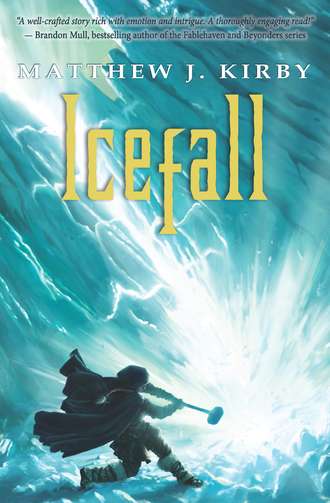
    Icefall by Matthew KirbyIcefall by Matthew Kirby

    Wow. I loved this book. LOVED IT! It’s Norse historical fiction. A war is coming, and the king sends his children away to a remote fjord steading to keep them safe. He also sends a number of trusted warriors, a company of beserkers, a cook, a thrall, and a skald. But the fjord isn’t remote enough.

    It’s a fine tale full suspense, wisdom, surprise, and two lovely character arcs. It’s told from the point-of-view of Solveig, the king’s plain daughter. And her voice and the details Kirby includes totally transported me to their world. A wonderful tale, wonderfully told.

    Gravity

    I don’t know if I like 3D very much, but Bullock and Clooney do a marvelous job. Do you remember Tom Hanks in the excellent Castaway where he’s marooned on a tiny island? This is Bullock’s Castaway, except the physics of space are deadly. A great film.

    42

    This film is about Jackie Robinson, the first Black man to play in the White leagues of American baseball, and recounts his first year. It stars Harrison Ford as the owner of the Brooklyn Dodgers, the guy who is determined to bring Blacks into the game he loves, as well as Chadwick Boseman who is new to me. I watched this with the whole family, and we were all enthralled. What a great story.

    World War Z

    I not a big zombie fan. So for me to recommend this means it had to be good. It was good. A delicious thriller with plenty of scare. I really liked the thriller feel to this. My wife and two youngest daughters sat on the couch holding each other’s hands. I sat in my La-Z-Boy throne heart pumping with the action.

    Lynda.com

    As I mentioned above, I’ve been working hard trying to get my books out the door. (Please, boys, just get out! It’s time for you to make your way in the world!) I’m using Adobe InDesign to format them for Kindle and EPUB, but I barely know the program. That caused some big problems. But then I subscribed to Lynda.com–a training website. I can’t tell you how happy I am that I did.

    For $25 per month (and you can just subscribe for one month), you get access to hundreds of high-quality online classes recorded by experts. Each class is usually a few hours long, made up of videos that are usually each shorter than ten minutes. The site allows you to create playlists of various courses you want to take, makes recommendations, and lets you know which videos in a class you’ve watched. It also includes a verbatim transcript so you search for the part of the video that’s interesting to you.

    The workhorse I’ve been using is “InDesign CS6 to EPUB, Kindle, and iPad” by Anne-Marie Concepcion. It’s 7.5 hours long.  I’ve also been referring to parts of “InDesign CC Essential Training” by David Blatner and “Creating Long Documents with InDesign” by Mike Rankin. And I have 16 other courses in my playlist that I can’t wait to get to like “Designing a Book Cover” by Nigel French and others on graphic design, typography, and logos.

    If you need training on some software product, go out to Lynda.com and see if they have a course for you.

    Share

2 Comments

  1. I am really happy to see you recommending the Bartimaeus books to everyone. I loved these when I read them a couple of years ago (I’m 27, but like so many others enjoy a good YA book now and then). They’re fantastic books, and I really think that if they hadn’t come out at the same time as the unstoppable juggernaut that was Harry Potter, they could have been VERY popular indeed. People, trust John Brown! His tastes will not lead you astray. There, rant finished.

Comments are closed.