Brown’s Breakfast Burrito, The Way Back

The Way Back
GULag is the acronym for the government agency that administered the main Soviet forced labor camp systems in the early 1900’s. In Romanized Russian that’s “Glavnoye upravlyeniye ispravityel’no-trudovih lagyeryey i koloniy” which means “Chief Administration of Corrective Labor Camps and Colonies.”  The term “Gulag” quickly morphed to represent the camps themselves, which housed a wide range of convicts and many political prisoners.  It’s also come to stand for the repressive Soviet system with its arrests, interrogations, transport in unheated cattle cars, forced labor, destruction of families, years spent in exile, and early and unnecessary deaths.

The Gulag was a meat grinder. An estimated 1,053,829 people died in the Gulag from 1934 to 1953.

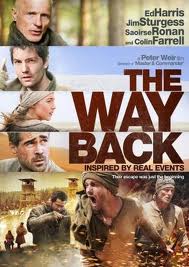
Some of those camps were in Siberia, one of the most remote and harsh places on earth. Sawomir Rawicz was one of those who claimed to have escaped such a camp in Siberia. He wrote about it and his subsequent 4,000-mile walk to freedom in India in The Long Walk. That story inspired Peter Weir to write and direct The Way Back, which tells the story of a group of men who attempt to escape out of Siberia, across the Mongolian wastes, and into India.

The film stars Ed Harris (who is interesting in anything he does), Colin Farrel (also starred in Ondine), Mark Strong (the villain in Sherlock Holmes), Saoirse Ronan (the fabulous lead in Hanna), and Jim Sturgess (the boyfriend in One Day). One of the group is an outright murderer. The others are all political dissidents—a teacher, priest, businessman, artist, etc. I found the performances honest and believable. But it wasn’t just the characters–the screenwriters subtly used syntax and word choice to transport the viewer.

But more important than the believability were the various tensions and stories contained within the escape plot. Each of the men, and the lone girl, has a story, and the film gives space for the stories to be told. As for the lone girl: Ronan was amazing in Hannah.  She’s amazing here. Furthermore, the role she played here leavened the whole film with something it wouldn’t have had otherwise.

The story will surprise you, make you shed a tear, think, and laugh. When you’re finished, you’ll talk about it. It’s that kind of a film. If you like dramas with action and suspense, I think you’ll like this film.

As always, use KidsInMind.com to see if it contains things you might find objectionable.

Brown’s Breakfast Burrito

How about a meal that’s so good you’ll want to slow way down to savor each bite? A breakfast that will keep you full until lunch? A tasty repast that isn’t loaded with mind-numbing calories? Let me suggest the John Brown breakfast burrito. It’s full of succulent umami, bursts of piquant pepper, healthy mushrooms, and lots of filling protein. And it only takes about 10 minutes to prepare. The recipe below makes one burrito. Scale it up to feed more.  

VEGGIES

  • 1/4th red bell pepper, chopped into small pieces
  • ½ to 1 cup of mushrooms, sliced
  • Dash of thyme

EGGS

  • 2 eggs (120 calories)
  • 1 T milk or half-and-half
  • Salt
  • Pepper
  • Dash paprika
  • Dash garlic powder
  • Dash onion powder

 THE REST

  • Pam cooking spray
  • 1 tortilla (150 calories)
  • 1 ounce of Jimmy Dean Premium Pork sausage (90 calories)

If you don’t have one of the spices, don’t freak out. It will still taste great. But the spices really take it to the next level. Here are the instructions. 

  1. Start with your veggies. Spray pan with Pam and sauté peppers for two minutes on medium high heat. Add mushrooms. Give them a spray of Pam and dash with salt. Cover until the mushrooms sweat (release their water).
  2. Next is the sausage. While mushrooms are cooking, start your sausage frying.
  3. Finish veggies. Uncover mushrooms. Just before you finish them, sprinkle with a dash of thyme. When the spice becomes fragrant (its smell rises up in delicious glory from the pan), remove the veggies from the pan and cover to keep them warm.
  4. Cook eggs. Turn heat down to medium low. Beat eggs, milk, salt, pepper, paprika, garlic powder, and onion powder.  Spray pan you used for veggies with Pam, then cook your scrambled eggs on medium low heat, stirring and scraping the whole time. And keep it on medium low—no browning or burning of eggs allowed! Cook until the eggs glisten with the last bits of moisture. Remember: you don’t want dry desert eggs. You want soft succulent ones.
  5. Assemble the glorious concoction. Put the veggies, scrambled eggs, and sausage in your tortilla and wrap it up smartly. (What does “smartly” mean? I don’t know, but it sounded good, didn’t it?)
  6. Go to heaven and return singing. This means you eat your breakfast burrito, but you do it savoring each bite. This is food meant to be enjoyed, not gobbled.

 As for calories, I estimate about 360 for the main ingredients. Veggies really don’t count in my book. Come on! Nobody gained weight eating turnips. But I’ll round it up to 400 just to be safe. Add in a glass of water and a piece of fruit and you’ve got a 450 calorie breakfast that starts your day off with delight, gratitude, and the joy of redemption. It could also make those you cook for kneel down upon the floor in well-deserved homage. And that’s always a nice thing for the cook.


Share

Similar Posts

  • Good Stuff: Poldark, Monk, and the cure for dragon feet

    For all of you longing for just one more season of Downton Abbey, I’ve found a new series from the BBC I think you’ll enjoy (thank you Duane Robinson for the recommendation).

    It’s called Poldark and is set in the late 1700s in Cornwall, that little southwestern leg of England that juts out into the Atlantic. The dark-haired and handsome Ross Poldark returns to England after having fought in the American War of Independence and finds that his father has died, and he’s inherited the estate. Except the estate is in ruins.

    The house, which is a long way from being anything grand, is a mess and being inhabited by the deceased father’s last two servants. A man and a wife who are equal parts louts and lushes. The land isn’t producing. The mine is closed. And Poldark has very little money.

    By the way, when we think of British aristocracy, we most often think of dances and fine clothing and large tracts of lands. We seldom think of mines. But Cornwall has been mining tin for a very long time, and so were its lords. In fact, Cornwall was known outside of the Isles anciently, and some historians suggest that Cornwall was probably selling tin to the seafaring Greeks and Phoenicians many hundreds of years B.C.

    So our young and handsome lord has come home to a mess and very little money. But he immediately sets about trying to repair things. And what unfolds is a wonderful story with love, action, humor, injustice, and villains plotting Poldark’s downfall.

    We loved Downton in part for the refinement and high society (and Lady Grantham’s hilarious one-liners). However, Poldark isn’t about the top of the aristocracy. It’s about a man almost at the bottom. And many of those of the lower class who are his friends. There’s a refreshing earthiness about it even while you still have scenes of the high society and all that goes with it.

    We just finished the first season and are hooked. In fact, I stood up and cheered at the end of the last episode we watched. So if you love English historicals, you’re going to enjoy Polkdark.

    *

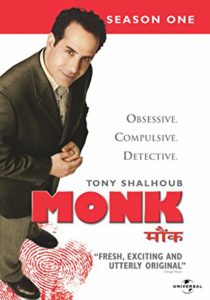
    The humorous detective series Monk debuted in 2002 and ran for eight seasons. It was a huge hit. But because I’m a cave dweller I didn’t get to it until now. But, boy, I’m happy I did.

    If you haven’t seen it yet, you’re in for a treat. Monk is one of those brilliant detectives like Patrick Jane in The Mentalist or Sherlock Holmes who sees all sorts of details that so many others miss. But unlike those guys, Monk has obsessive-compulsive disorder plus a number of phobias.

    And so he can’t just walk in and stun everyone with his brilliance because at any moment he might get sidetracked straightening pictures or moving lamps or trying to avoid germs. In one funny scene he’s being chased on foot by someone intent on killing him, and he can’t help but touch the poles as he runs by. However, he’s not all helpless because he’s hired a female nurse, Sharona Fleming, to help him. And the interaction between the two of them adds another enjoyable dimension.

    And so you get to experience all the awe of watching someone like Sherlock solve crimes plus laugh along the way. I couldn’t help but laugh out loud during a number of episodes.

    If you like The Mentalist, Elementary, or Psych, I think you’ll really enjoy Monk.

    *

    This last review is for all of you who have dragon feet.

    That’s what I had until two months ago. Dry dragon feet. So dry and with such sharp and jagged calluses that I regularly wore the area on my sheets around my feet to shreds. Nellie’s side of the sheets were nice and smooth. My side, after a year or two, looked like the dog had attacked it.

    The calluses were so bad I periodically sanded them off with 400 grit sandpaper.

    I also got stress cracks in the winter, which I tried to heal with band-aides and Neosporin. And that worked a decade ago. But the stress cracks were just getting more frequent and longer-lasting. This last winter I had three that stayed for weeks and weeks.

    And so when I went into my dermatologist for my annual skin cancer check, I asked him if there was anything to be done. He said, “Get CeraVe cream with SA, salicylic acid. It has to have SA.”


    After the appointment, I promptly drove to Walmart and walked down to the cosmetic aisle and purchased a little tub of CeraVe Renewing SA Cream. And I began to use it that night, putting socks on after I applied it. I applied it every morning and night.

    And, miracle of miracles, a few weeks later my feet were normal human feet again. The calluses were gone. The stress cracks gone. The pain gone. My sheets love me. My wife loves me. I’m saving money on sand paper.

    Folks, if you have dragon feet and want to be human again, let me suggest CeraVe with SA.

    Share
  • Peak

    peakbyandersericssonHow many pushups can you do in a row?
    10, 20? Could you do 100?

    And you’d have to be a freak if you could do 500 in a row, right?

    Well, no.

    You’d just be human.

    In 1980 Minoru Yoshida of Japan did 10,057 pushups nonstop.

    In 1993 Charles Servizio of the good old USA did 46,001 pushups in 21 hours and 21 minutes.

    In 2016 David Escojido of the USA did 2,298 pushup in 1 hour.

    You might think that these folks must be oddities. They must be gifted. They must have some weird thing in their DNA allowing them to do these things.

    But you’d be wrong.

    None of these people were born that way. In fact, what researchers are finding is that most of the folks that we think are prodigies—folks like Mozart, Tiger Woods, chess masters who can play 20 games at once without even looking at a board—the biggest thing that separates them from the rest of us isn’t DNA.

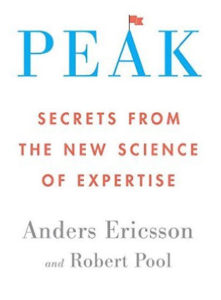
    Anders Ericsson, a researcher at Florida State University, has spent the last 30 years studying what gives experts their edge. And he reveals in Peak: The New Science of Expertise that he and other researchers have found that while there are some physical traits like height and size that definitely make a difference in some physical activities (notice how all the top gymnasts are short), what really sets people apart is how much of a certain type of practice they’ve done.

    Not just practice, but a certain type of practice.

    Practicing “hard” doesn’t do much for you. Putting in a lot of hours doesn’t do much either. Instead, you need to practice in a way that has been shown to lead people to actually improve their performance. You still have to put in a lot of time practicing—there is no shortcut—but only the type of practice he explains in the book seems to lead to the increase of performance.

    Is he saying that anyone can do anything?

    No. When I first looked into his research, one of my big issues was that it seemed he was claiming anyone could do anything with 10,000 hours of practice.
    But he’s not saying that.

    Is he saying genetics has no influence?

    It can, but what he’s found is that it doesn’t have the role we normally think of when we think of top performance. And, most importantly, we place artificial limits on ourselves by thinking people are born to this or that activity.

    There is far too much to post here. What you need to know is that what he shares in this book is fascinating, compelling, and surprising. I’ve been training people for over thirty years. And I found myself enlightened. If you’re at all interested in education, or getting better at some activity (from parenting to golf), or helping your kids get better, you’ll want to read this book. Highly recommended.

    Share
  • Good Stuff: Books Worth Multiple Readings Part 1

    Would you like to improve your relationship with your spouse or children?

    Would you like to improve your experience with teachers, coaches, and administrators this coming year at school as you try to influence them and work with them for the benefit of your children?

    Would you like to simply have a better time with the people in your community?

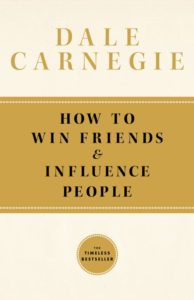
    There are some books so full of practical wisdom about relationships that they deserve to be read every year or three. I want to recommend two such books to you. The first is How to Win Friends and Influence People by Dale Carnegie.

    This book has been in print for eighty years. And not only that, it has been, year after year, one of the bestselling books out there for almost each of those eighty years. For example, Amazon right now ranks it the #9 most read book. You’ll see other books come and go on that list. But books like this and Stephen R. Covey’s The Seven Habits of Highly Successful People stay.

    There are thousands of how-to books published each year on relationships in business and personal settings. Most are never seen again. But this one has stayed because people find it so useful they recommend it over and over again.

    And I wish to heck I’d not waited ten years to pick my copy up again.

    As I re-read the book this last month, I saw that if I’d been thinking about the practical guidelines Carnegie shares, I could have avoided a number of public and private arguments I’ve had over the last few years.

    I could have avoided subjecting those relationships to attack, coming to my senses, and then trying to clean up the mess, large or small.

    But even more important, I could have added a little more sweetness to my life and the life of others I encounter on my way. There are only so many days we have here on earth, and how much better it is to add additional drops of honey to them instead of vinegar.

    One of the wonderful things about his book is that Carnegie shares the wisdom in a down-to-earth way with lots of examples and stories. He shares wisdom on building relationships, being liked, winning people to your way of thinking, and how to make your requests for change known without giving offense or rousing resentment. And he does it simply and in a way that you feel like you’re sitting down with a good-humored grandfather. There are no dry, abstract parts. Just look at a sampling of the chapter titles.

    • “If You Want to Gather Honey, Don’t Kick Over the Beehive”
    • “He Who Can Do This Has the Whole World with Him. He Who Cannot Walks a Lonely Way”
    • “An Easy Way to Become a Good Conversationalist”
    • “If You Must Find Fault, This Is the Way to Begin”
    • “Give a Dog a Good Name”

    I can tell you that every time I try to approach things the way he proposes, they almost always seem to go better.

    If you have an issue you want to discuss with a school teacher, coach, or administrator this year, let me suggest you first listen to what Carnegie has to say. I can promise you you’ll get much farther. And you will probably end up enjoying the interaction.

    If you want to improve your time with your wife and kids, open this book and look for insights.

    If you want to have a better time with your co-workers or boss, I suggest reviewing the wisdom you’ll find here.

    Carnegie doesn’t possess all the wisdom there is to be had about relationships. There are many people out there with great insights. But, gee whiz, he provides a great start. If you want to add some sweetness to your life, I think you’ll find this book a great help.

    Let me illustrate this Carnegie stuff with an experience I had with one of our high school coaches two years ago. I have a vast background in basketball that includes, well, nothing. I basically know how to dribble a ball. Oh, yeah, I also played church ball two or three years in a row back in the 1980s. So, as you can see, my knowledge is vast.

    And not to toot my own horn, but this wasn’t just any church ball team. This was a team that improved the sport.

    How? You ask.

    Well, during one of those church ball years, me and the guys from my ward (“congregation” for those not familiar with the Mormon faith) thought it would be capital to make jeans and concert tee-shirts our uniforms. Back in those days concert tee-shirts looked like this.

    This meant we ran up and down the church courts with drugs, sex, and rock and roll on our chests (I’m sure that’s precisely what the brethren had in mind for the program).

    As you can see, we were way up there on the basketball ladder.

    So back to this coach. My daughter was playing on the high school team, and the team was having a consistently hard time with one type of defense. And I thought, “Self, there’s got to be a way to break that defense.” These are the big thoughts that basketball gurus like myself have.

    And so I researched and watched and talked to folks who had actually played basketball competitively (unfortunately, without concert tee shirts) and identified an offensive counter that looked like it might work.

    And I sent an email to the coach sharing my idea.

    Now, the coach could have reacted in many ways. Especially given the fact that (1) he had already thought of the idea I was proposing, (2) had already tried it in games that, yes, I had attended, and (3) probably knew just a teensy bit more about basketball and his team than I did even though my church ball team had vastly superior uniforms.

    But this coach, whether he knew it or not, was following a number of the principles found in Carnegie’s book, including the chapter titled “Let the Other Person Save Face”. This meant that instead of rolling his eyes or ridiculing or saying something like, “Brown, are you blind?”, he explained what he was doing and then expressed his appreciation. He was happy I was so invested. He thanked me.

    And here’s the thing: he meant it.

    I replied that if he ever wanted someone to suggest an idea he was already trying, to just call. I’d be happy to help.

    We laughed, but the important thing is that what could have been a wedge became a good experience for all. And, more than ever, I wanted to work with him to help my daughter in the program.

    I will give you one more example. There’s a mother who had four of her children go through my wife’s seventh and eighth grade language arts classes. Now, Nellie is a worker. She expects her students to work. She wants to have a good time, loves having great interactions with the kids, but she also wants them to improve and learn, and knows that’s going to take some work. Sometimes the assignments, despite her best efforts, aren’t clearly understood. Sometimes they’re a bit challenging. And this sometimes creates frustration.

    There are a lot of ways that parents deal with this. But this one mother took an approach that, whether she knew it or not, followed many of the principles in the book including those shared in “You Can’t Win an Argument” and “A Formula That Will Work Wonders For You”. This resulted in a fabulous working relationship. It helped the mother have less stress. Helped her kids. And helped Nellie improve her program.

    The issues the mother encountered could have become wedges, but instead, because of how she handled them, they became stepping stones. And this didn’t happen with this one individual. There are many mothers and fathers who have taken a similar approach with similar results. The principles work every time.

    I could go on with many more examples in other situations, but why listen to mine? Carnegie has a book full of them. If you want to improve your relationships or persuade others to your way of thinking, you’ll want to start by reading this book.

    The second book I want to recommend is I Don’t Have to Make Everything All Better by Gary and Joy Lundberg. But this post is full, so stay tuned, and next time I’ll explain what awaits you in its fabulous pages.

    Share
  • Sherlock Holmes, Mission Impossible, The Art of Shaving, Wages

    Sherlock Holmes & Mission Impossible

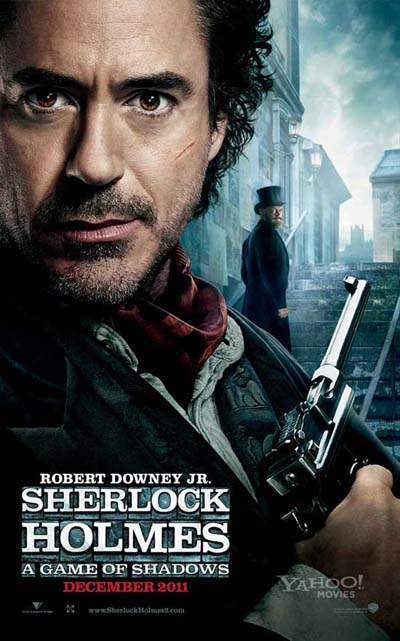
    I have been looking forward to two movies this holiday season. One of them was as good as I’d hoped it would be. The other disappointed me because the story tellers forgot to make things clear. The two movies were Mission Impossible: Ghost Protocol and Sherlock Holmes: A Game of Shadows.

    I loved the first Sherlock Holmes movie—the story was intriguing and plotted well, the atmosphere and music were amazing, and the characters and relationships were even better. In fact, the movie presented some of the most delightful characters I’ve enjoyed over the last few years. So it was a no-brainer to plan in a date to see this new episode.

    Sherlock Holmes: A Game of Shadows provided the same great atmosphere and music as I enjoyed before. Holmes and Watson were as wonderful as they’d ever been. The film introduced a wonderful new character: Madam Simza Heron, a gutsy gypsy who you can’t help but want to know better. And it brought on Professor James Moriarty, the uber-villian. There was plenty of the wit that we enjoyed in the first one. It had all the elements to work.

    However, the film fell down in its plotting. There were many times when I had no idea why the characters were doing what they were doing or how it fit into the overall threat. At other times, it appeared Sherlock could have taken out the villain but didn’t only because it would have ruined the plot.

    The film makers also decided to kill off one of the characters, and therefore relationships, that had provided so much satisfaction in the first movie. And they did it without much fanfare. Who thinks it’s a good idea to kill off beloved characters like that? If you’re going to kill someone we love, you’d better make it meaningful and the core of the film. Alas, they didn’t.

    In fact, it felt like there was too much stuffed into this film. Cool ideas that couldn’t be explored or have much impact including facial surgery for spies, a lost brother, European politics, resistance fighters, a henchman we hardly see. The wonderful Madam Simza Heron didn’t play the pivotal role she could have. So unlike Irene Adler in the first movie who becomes central to the story, she’s more of a bit of the setting.

    If you loved the first film, you’ll have to see this. There’s a lot of good. But you must go knowing it’s a grade lower than the first film.

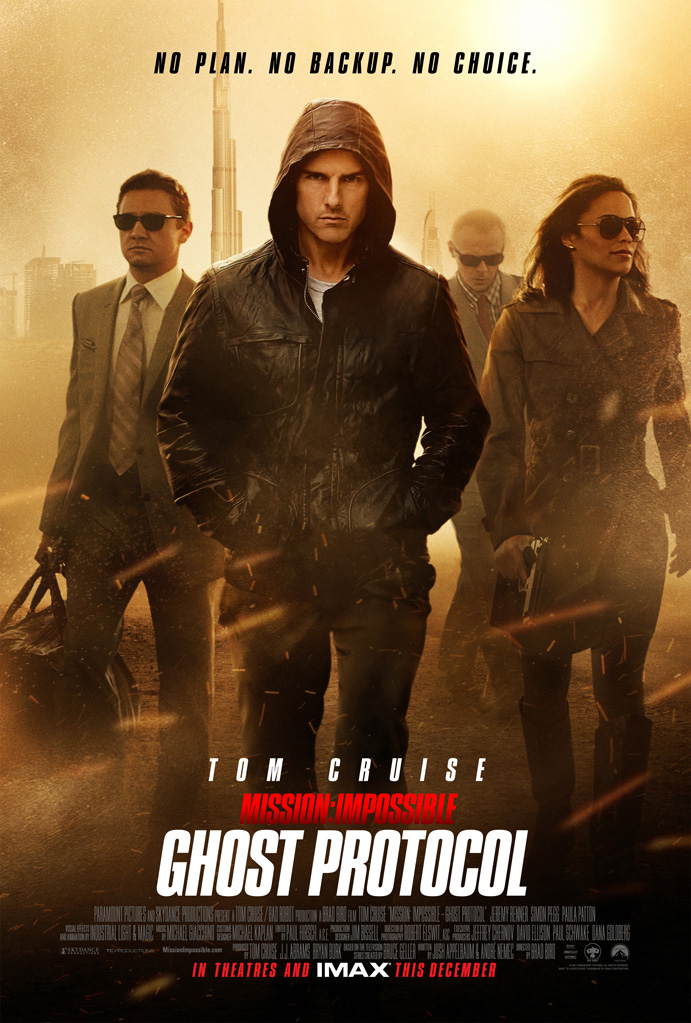
    Now, I stopped liking the Mission Impossible movies about thirty minutes into the second in the series. But the previews for Mission Impossible: Ghost Protocol intrigued me. I like Tom Cruise as an actor. And so we decided to give it a try.

    Mission Impossible: Ghost Protocol didn’t provide the atmosphere or super-delightful characters and relationships of Sherlock Holmes. But that’s not to say its characters were tepid. On the contrary, the cast was great with a lot of funny interplay. Furthermore, unlike some action films where everything seems to work for the hero, a lot of things go wrong for Tom Cruise’s character. These problems and his reactions are part of what make the movie.

    The story also provided plenty of “action” but did it in a new way. This is the first time, for example, I’ve seen a car chase in a sandstorm. And it was a fab chase. It’s also the first time I’ve seen a final battle in an automated parking lot. The director and writers did a good job choosing new twists on common action elements.

    But a story needs more than characters and new sights—the plot has to make sense. Especially when the plot takes center stage, which it does in action movies. And I’m happy to say that I never once wondered why our characters were doing something or how it affected the main threat. Furthermore, every one of the characters made a difference. The result was that I thoroughly enjoyed the film from start to finish. I can’t wait to watch it again. If you like action films, I think you’ll enjoy Ghost Protocol.

    The Art of the Shaving

    When I was on a mission in the Netherlands I was an idiot and did not take care of my face in the winter. I’d hop onto the bicycle with the temperature hovering around zero degrees (not counting the wind chill) and bike out with Fearless Companion to an area to meet with people or knock on doors. And I’d do it with hardly a thing covering my face and ears. As a result, I damaged my skin.

    So now when I’m exposed to cold, my face flushes and stays that way for some time even when I’m in a warm house. I can’t wear cologne. And I’ve had a love/hate relationship with shaving. I can’t stand the prickle of a beard and so love to shave, but I hate the fact that when I shave, my face turns the color of a tomato for four to six hours. And this is when I use shaving cream specifically formulated for “sensitive skin.”

    But then I walked into The Art of Shaving store in Fashion Place Mall and learned that those shaving creams designed for sensitive skins weren’t super gentle. They just numbed the skin so you didn’t feel the shave. The folks at The Art of Shaving suggested, of course, I use their product.

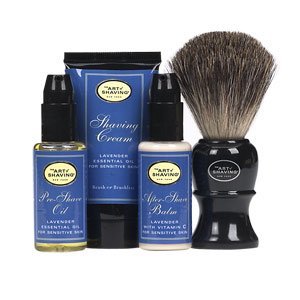
    I bought a kit (I’m a sucker for good sales pitches even when I know I’m being suckered) which included: a badger hair brush (they say it is optional, but I love mine and wouldn’t do this without it), pre-shave oil, shaving cream, and after-shave balm. They had five types to choose from: unscented, lemon, sandalwood, ocean kelp, and lavender. I selected the lavender because it was formulated for sensitive skin. At first I was worried about being overpowered with the smell, but was pleasantly surprised to find the scent as light as a feather. I didn’t need a new razor; they said my Mach3 was just fine.

    I came home with my bag expecting a huge dose of buyer’s remorse. Except after my first shave with their product, my face didn’t flush. Could this really be a product that worked? I wasn’t willing to make that conclusion at the time. But now, after about a month of shaving, I can honestly say that this is the best shave I’ve had in years. My face doesn’t flush. The after-shave balm does what a balm is supposed to do–soothe. There’s no alcohol burn. In fact, I use the after-shave balm on non-shave days. If your skin hates shaving, let me suggest you visit theartofshaving.com and order some product or go to one of their stores. I think you’ll also become a fan. 

    Info for Choosing a Career

    There are many things I wished I’d done differently when choosing a career. I wish I’d broadened my horizon on the horde of different careers possible. I wish I’d really looked at what the various careers earned on average. Luckily for those looking to select a new career today, Utah’s Department of Workforce Services compiles data on more than 700 occupational wages and shows you the average and median annual wage as well as the average for inexperienced folks in that occupation.

    Not only does looking through the list help you see options you might not have considered, it also helps you get a realistic expectation for what you might earn in that profession. Now, the list, although large, doesn’t show every possible occupation (FBI agent, Marine) or every permutation of the occupations shown. For example, there’s one line for accountants and auditors, but there are tax accountants, fraud accountants, security accountants, auditing accountants, etc. Nevertheless, this is an excellent list to begin a search.

    To get the list, go to this state website: http://jobs.utah.gov/jsp/wi/utalmis/default.do. Click on “Utah Occupational Wages.” That will open a page with a map of Utah. Click on the link on the right “Utah Occupational Wages” to get the Excel spreadsheet of all 700+ occupations listed.

    Share
  • Bartimaeus & The Time Traveler’s Guide to Medieval England

    Pure Delight

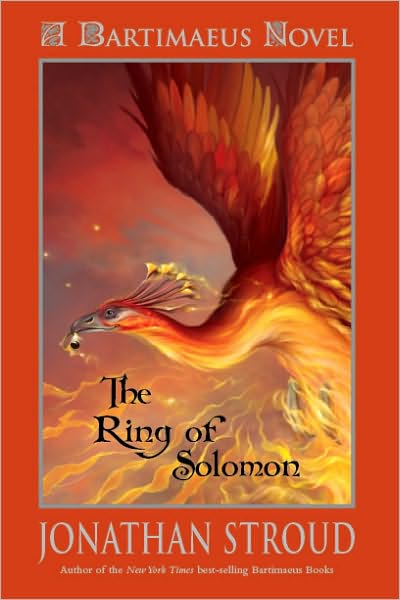
    One of the most delightful literary characters to appear in the last decade is the cheeky Bartimaeus–a five-thousand-year-old djinni (“genie”) who plays the lead role in Jonathan Stroud’s trilogy The Amulet of Samarkand, The Golem’s Eye, and Ptolemy’s Gate.

    In Stroud’s world, magicians have no magic in themselves, but they do have the lore to summon and enslave demons, who can work magic. There are demons of various levels and powers. The lowest regularly summoned and enslaved are Imps, who can be crude and like to tell outright whoppers, but are good for standing watch and carrying messages. Next come Foliots, which Bartimaeus describes as “cut price djinn.” In the middle of the great chain of beings are the Djinn themselves, whose clever intelligence Bartimaeus extols, followed by Afrits, and finally Marids, who are rarely summoned because they are too strong for any but the most powerful magicians to control. Of Marids, Bartimaeus insightfully reveals that they are “dreadfully full of themselves.”

    In the trilogy, Bartimaeus is summoned and enslaved to do the bidding of a sometimes jerkish young magician who learns to be a better person, despite himself. Of course, along the way the magician sends Bartimaeus in great peril, which he eludes with cunning, sardonic wit, and many good one-liners. I read the first book, loved it, then listened to all three read by Simon Jones, who makes these stories even better. The sad news is that I finished them. I simply wasn’t ready to let Bartimaeus go.

    Which is why I was so happy to find that Stroud recently released a fourth book: The Ring of Solomon, which is a stand-alone prequel to the trilogy. The family and I just finished listening to it, and it is every bit as good, if not better, than the first three.

    This story is set in biblical times where King Solomon has risen to uncontested power because of his possession of an all-powerful ring which allows him to summon hordes of powerful demons in a blink. Bartimaeus is enslaved to one of Solomon’s magicians.  A mean man, who Bartimaeus catches in a mistake and escapes, principally by devouring him. But Solomon doesn’t take kindly to that, and orders Khaba, a sinister and cruel magician, to summon him back to make an example for the other demons.

    Meanwhile, the Queen of Sheba, having denied Solomon’s marriage proposal three times, is sent an extortion threat.  Angry and frightened, she sends Asmira, a young woman and loyal captain of the guard, to Jerusalem to assassinate Solomon.

    Bartimaeus and Asmira hook up and find themselves in quite a pickle as they attempt to solve their problems. The story provides lots of humor, adventure, peril for both Bartimaeus and Asmira, and a number of surprising turnarounds. It also, in its own way, makes a comment on leadership, loyalty, and zealotry.

    You’ll find it in the middle-grade section of your bookstore, but don’t let the placement fool you into thinking it’s not for adults. Like the best stories, it offers something for everyone. It’s a perfect blend of insight and entertainment and had my whole family, oldest to youngest, spellbound for the duration as we listened to it riding in the car. This is one of my favorite books this year. And if you want to really indulge yourself, listen to the audio book read by Simon Jones.

    Travel to Medieval England

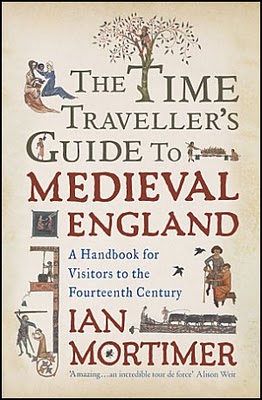
    I love learning new things about places and peoples, even if it’s a place I’ve “been” to before, which is why Ian Mortimer’s The Time Traveler’s Guide to Medieval England intrigued me. The first page convinced me to buy to book. And I’m so happy I did.

    I’ve read my fair share of interesting and well-written texts on this subject, including, among others, Life in a Medieval City and Life in a Medieval Village by Frances and Joseph Gies, Standards of Living in the later Middle Ages by Christopher Dyer, The Medieval Castle by Philip Warner, Daily Life in the Middle Ages by Paul B. Newman, and Power and Profit: The Merchant In Medieval Europe by Peter Spufford. All engrossing reads. What sets Mortimer’s book apart is that he not only approaches the topic as a travel guide that leads to you interesting sights and shares fascinating tidbits about the place, but he also helps you imagine how it would be, as a 21st century person, to actually travel there.

    For example, where would you go if you got sick? What happens if you’re robbed, where do you report the crime, and should you? Where might you get food and would it be something you’d find palatable? How will you get from place to place? Why kind of entertainment can you expect? And what can you wear without offending your hosts?

    Mortimer focuses on the fourteenth century England, since this period comes closest to the popular idea of the medieval times. He tackles the topics of the landscape, people, the Medieval character, basic essentials, what to wear, traveling, where to stay, what to eat and drink, health and hygiene, the law, and what to do. And he does it all in a chatty, clear, and informative manner, with a bit of humor thrown in for spice.

    Each page was a delight, and I found myself feeling like I was there. Furthermore, I learned a number of things that I hadn’t picked up in my previous readings. I’m tempted to quote all sorts of interesting tidbits he shares about the age, but I’ll refrain. If you are at all interested in the Middle Ages, I think you’ll love this book.

    Share
  • Good Stuff: Why We Get Fat

    What if everything you know about fat, cholesterol, and diet is pretty much wrong?

    What if you found out that the science behind the good old food pyramid is, well, not really there?

    We’ve been told that a healthy diet consists of lots of grains, bagels, bread, pasta, cereals, rice, etc. and very little fat. What if it’s actually the reverse?

    If it is, then it might explain why the rates of diabetes and obesity began to skyrocket as the nation started to implement a low fat high carb diet.

    I remember having gained about fifteen pounds when I was first married. I decided I would go on a diet. I read up on the low fat high carb diet and followed it strictly. Two weeks later, I had gained ten more pounds. Did I, at the time, look at the diet and think that maybe there was something wrong with it?

    No. That would have been too intelligent.

    Instead, I figured something must be wrong with me and continued to try to “eat healthy.” What’s that definition of insanity—doing the same thing over and over again and expecting different results? Call me insane. Or slow. Or too trusting of authority.

    It appears that the science of nutrition got hijacked. Government policy then ran away with it. It’s a fascinating and cautionary tale. Let me recommend three books that explain what really causes us to deposit fat and how we got off track.

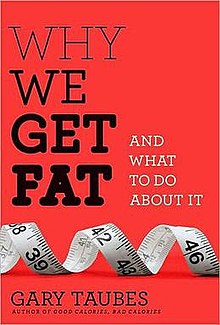
    The first is Why We Get Fat by science writer Gary Taubes. In it he reveals the bad nutritional science of the last century, why the good science was ignored, what really causes us to store fat, and what to do about it.

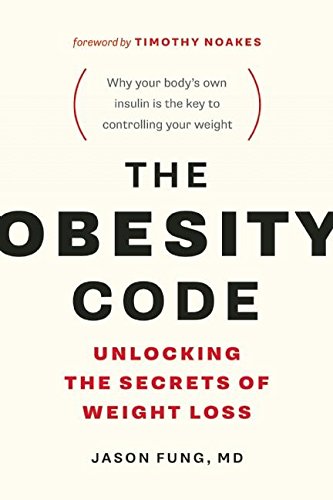
    The next is The Obesity Code by Dr. Jason Fung. Fung is a kidney specialist. Obesity and diabetes are the root of many kidney problems. And so he decided to help his patients by strop treating symptoms and get at the root cause. Fung’s gift is clarity. He explains how obesity and diabetes became an epidemic, the errors in how we think about calories and diet, and then he explains in great clarity the new model of what really causes obesity and how to reverse it.

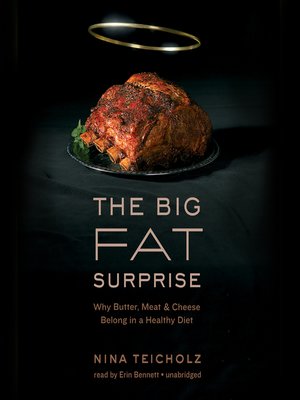
    The last is The Big Fat Surprise: Why Butter, Meat & Cheese Belong in a Healthy Diet by investigative journalist Nina Teicholz. She spent nine years investigating this, and the book reveals how the misinformation about saturated fats took hold in the scientific community, government, and the public and how recent findings overturn these beliefs. It’s a startling history, a cautionary tale showing how ego, bias, and premature institutional consensus allowed dangerous misrepresentations to become dietary dogma.

    If you’re dealing with obesity, heart disease, or diabetes, I think you’ll find these books very interesting.

    Share

2 Comments

  1. I also enjoyed “The Way Back.” I wanted to know more and it didn’t take me long to find out that there was a lot of controversy about the truth of the book. So I would have liked it better if the blurb had said, “May have been inspired by real events.”

    Your food advise has been solid in the past. I am excited to give this breakfast burrito a try.

  2. Matt,

    Yeah, I agree, and that’s why I said “claimed.” They probably shouldn’t have had that blurb at all because it sets up expectations. All they needed to do was talk about the Gulag and escape attempts etc. Oh, well.

    As for the burrito, you’re going to love it. Another version is to use tater tots instead of the mushrooms. Not very high class, but delicious nevertheless. Let me know how you like it.

Comments are closed.