|

The average American reads 17 books per year

Americans and Reading

The Pew Research Center has just published their findings on reading in America. It’s called “The Rise of E-reading“. There’s a LOT of fascinating information in the report. Here’s a taste:

  1. Americans 18 and older read on average 17 books each year. 19% say they don’t read any books at all. Only 5% say they read more than 50.
  2. Fewer Americans are reading books now than in 1978.
  3. 64% of respondents said they find the books they read from recommendations from family members, friends, or co-workers.
  4. The average reader of e-books read 24 books (the mean number) in the past 12 months; the average non-e-book consumer read an average of 15.

Building an Audience

I also want to recommend this week’s post by Kris Rusch on Audience. She has a number of interesting things to say about the dream of being a best seller and building an audience. The money quote comes as she refers to a post by Tracy Hickman:

“The point here is that you do not have to feel as though you are in competition with the entire world. You don’t NEED the entire world to be a successful writer. What you need is an audience—just enough of an audience, mind you—who reads your words, is changed by them and wants to come back for more.”

An audience. More importantly, an audience that reads and “is changed by” your words. Not an audience who loves them, not even an audience who likes them. An audience who is changed by them, and because of that experience, “wants to come back for more.”

Simple. Important. Usually forgotten.

She talks about lots more. Read the whole thing.

My thoughts?

First, there’s no need for authors or readers to worry about wading through “crap.”

According to Pew, readers only read 15 or 24 books a year on average.  That’s not a lot of books.

More importantly, it takes about 3 seconds to get a lead for a good book.  You hear something from a friend or family member, you look at the USA Today best sellers list, you browse a few books at a store or online, you read a blog and suddenly you’ve found a book. 

Readers fill up their book reading slots much more quickly than they can ever empty them.  That’s why we all have years of reading in our queues.

It doesn’t matter that there are millions of other books out there, a good majority of which might have been written by monkeys. There’s no need for authors to worry that readers will have to wade through a mountain of crap to find a good book. They don’t need to because they have leads for good books coming out their ears.

Second, people purchase books that friends, family, and co-workers love.

Which means that when you deliver a great experience to one person, it’s going to ripple out. It’s probably not going to be linear. It’s probably going to ripple out like viruses do into different population pockets. Or seeds do into different environments. It will run through one pocket, make a jump to one or more others, or it may not jump at all. Some pockets are big, some are small.

The way to keep a virus going is to release it in a lot of places where it’s likely to thrive or in places that a lot of people travel through. And as Kris points out, writing is all about repeat business–making sure you have a stream of good product (something I hope to rectify with my own writing this year).

Bottom line: the best way to build your writing business is to simply write the best book you can, and keep them coming.

Third, the market is BIG. 

If you read Rusch’s and Hickman’s articles, you’ll see that even the mega sellers only reach a fraction of those who read. This is reinforced by the statement made by Thomas McCormack, former CEO of St. Martin’s that you can read here. So just because 100,000 people read one book doesn’t mean 100,000 others won’t read mine.  

Moreover, e-books and online shopping are broadening distribution. Brick and mortar stores only have so many slots for books. Every 8-12 weeks they rotate the old books out (like 12 weeks is old) and replace them with the new ones, unless, of course, your book is selling very well and gets “modeled” at the store.  The point is: when you only display a few books at a time, those books will get bigger sales numbers. This happens because there isn’t anything else to purchase.

But you don’t have that limitation with e-books and online shopping. Nothing rotates out of the store. Sure, things rotate on and off the best seller lists. But the books are always there. With an ever growing selection, there won’t be as many mega sellers.  Publishers Weekly discusses this trend in their 2011 Facts & Figures articles, which list best-seller numbers (make sure you click through to the Trade Paperback article as well). The same thing has happened with TV station viewership with the explosion of channels, DVDs, and online streaming. Same thing happened with music.

What this means is each author has a better chance of getting his or her books to those who will love them. We’ll still have best-sellers. But we’ll also have a lot more medium sellers as well. And that’s great for authors everywhere.

Share

Similar Posts

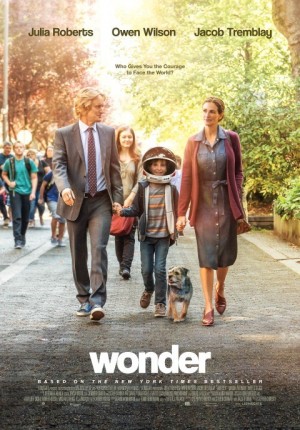
  • Good Stuff! Wonder, Darkest Hour, Sea Wolves

    I had seen a lot of good reviews of Wonder. My wife told me a lot of her students enjoyed the book. But I thought it was going to be a heavy topic, full of sadness and heart-wrenching drama. I’m happy to report that while Wonder does indeed have some difficult moments, it’s also full of humor. And triumph.

    It’s a story about Auggie, a boy with a rare medical deformity that has put him through multiple surgeries. His parents have homeschooled him, but now that he’s at the age where he could go to middle school, they feel it’s time for him to navigate the world. The perfect time, right?

    But it’s not just about Auggie. The film is also about Auggie’s sister, her former best friend, and Jack, Auggie’s classmate. We get to see their stories as well, and they are woven into a wonderful, poignant story.

    You’ll laugh and wince and cry and cheer. You’ll enjoy Julia Roberts and Owen Wilson, who do a wonderful job as Auggie’s parents. And you’ll enjoy the children and teens. Me, my wife, my married daughter, and my teen all loved this film. I will be watching it again. If you want a great movie to watch as a family, I think you’ll love this.

    *

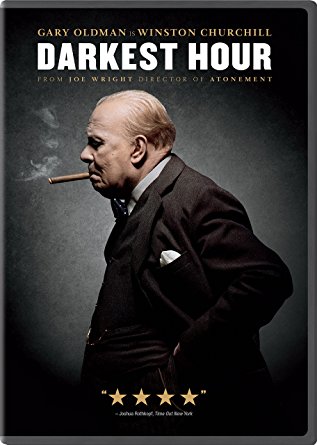
    As soon as I saw the preview for the Darkest Hour, I knew I had to see it. And, boy oh boy, this is yet another movie I can’t wait to watch again.

    The phrase “The Darkest Hour” is used in Britain to refer to the time when the United Kingdom appeared to be under direct threat of invasion from Germany at the beginning of World War 2. Germany had launched its attack on France, Belgium, and the Netherlands and had smashed their armies, sweeping all before them. The bulk of the British army was trapped at Dunkirk and looked like it would be annihilated.

    The British government was split between those who saw no path to victory and wanted to make a peace treaty with Hitler and those who wanted to resist him. The opposition party in parliament forced Neville Chamberlain to resign. And the only man they’d accept in his place is Winston Churchill. But Churchill was not the lion we think of him as today. He had a poor reputation among many of the leaders of his party and was not someone they wanted to elevate.

    So the film starts with the ouster of Chamberlain. We then get to watch how Churchill deals with the catastrophe of what’s happening just across the channel and all the voices pressuring him to make peace.

    There’s humor, suspense, and a number of one-liners that we all began repeating to each other immediately after the film ended. You get a feel for what it must have been like at the time and why so many wanted to sue for some peace treaty with the monster across the channel. You also get to see a slightly different picture of Churchill as a man. I particularly loved the exchanges between him and his wife.

    If you are interested in World War 2 or Britain in even the slightest degree, you simply must see this film.

    *

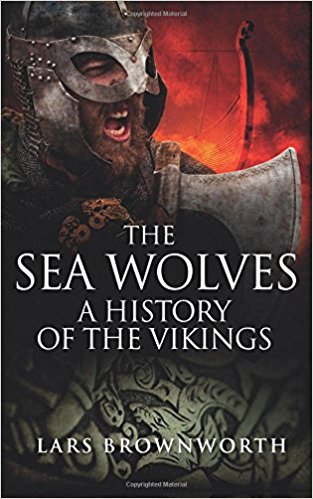
    I have now listed to the audio book of The Sea Wolves by Lars Brownworth twice.

    Yes, it’s that good.

    In this book, Brownworth tells the history of the Vikings. And he tells the history the way history should be told, bringing to life the old Norse world of epic poets, sea kings, and raiders, including Ivar the Boneless, Eric Bloodaxe, Harald Hardrada, Rollo the Walker—all the major figures.

    And Brownworth does it in a way that helps you understand how their dominance was possible and what their effect on the wider world was. Did you know, for example, that Russia comes from the word “Rus”, which was the name for the Swedish Vikings that started that nation?

    What? Russia was started by the Vikings?

    Yes.

    Read or listen to the book. You’ll learn that plus a whole bunch more that will make you look at that time in a different light.

    And if you want to get the other side of the tale, let me recommend reading Bernard Cornwell’s historical fiction series that starts with The Last Kingdom. The series tells the story of the invasion of the Danes during King Alfred’s rule from the point of view of Uhtred of Bebbanburg. It’s a terrific series.

    By the way, I do not recommend the TV series based on the books—too much sex for my tastes. But the books are fabulous. As are the audio versions. I’ve listened to six of them so far, and they have provided hours of enjoyment and interesting insights about the time and the events that took place.

    Share
  • |

    Since when did young adult fiction become the cure for cancer?

    Meghan Cox Gurdon wrote an opinion piece for the Wall Stree Journal called “Darkness Too Visible” in which she complained that it was hard to find young adult fiction these days that isn’t filled with coarse, dark material–profanity, pederasty, mutilation, etc. She claims that “contemporary fiction for teens is rife with explicit abuse, violence and depravity” and wonders “why is this considered a good idea?” She concludes by saying:

    So it may be that the book industry’s ever-more-appalling offerings for adolescent readers spring from a desperate desire to keep books relevant for the young. Still, everyone does not share the same objectives. The book business exists to sell books; parents exist to rear children, and oughtn’t be daunted by cries of censorship. No family is obliged to acquiesce when publishers use the vehicle of fundamental free-expression principles to try to bulldoze coarseness or misery into their children’s lives.

    This, of course, sent hordes of folks into a frenzy of posts sneering at Gurdon’s so-called prissy sensibilities, decrying censorship, and extolling the virtues of young adult literature and dark material in particular. For example, Mary Elizabeth Williams in a Salon piece called “Has young adult fiction become too dark?” rolls her eyes, then deigns to wade into what’s she thinks is an obviously juvenile argument to apparently show Gourdon how “stupid” she really is. Williams concludes:

    One of the terrific side effects of an obviously click-baiting piece of editorial twaddle like Gurdon’s is that it reminds people how many fellow passionate readers there are in the world. That incendiary WSJ piece promptly sparked a tear-jerkingly beautiful twitter #YA saves trend full of heartfelt reactions and links to outstandingly reasoned, article responses from well-read adults and teens on the value within so much of YA literature and its downright lifesaving effects.

    Williams suggests fiction doesn’t have the power to lead people into bad behaviors. After all, she assures us, “an entire generation of women managed to devour the ‘Flowers in the Attic’ series without having sex with their brothers.” No, according to Williams (and all the #YAsaves folks), YA fiction only saves lives. And she provides a link to prove it.

    But Williams misses the mark. Completely. This isn’t about whether fiction has power to influence us in good and bad ways. There’s a huge body of research on media effects which clearly proves fiction’s power for both. Nor is it about the theraputic uses of dark material.

    The heart of the matter revolves around a rather mundane thing–customer service and marketing.

    Gurdon and those parents she describes in her article want a certain type of entertainment. For years, YA fiction has provided that type of entertainment. But things have changed, and the YA label isn’t reliable to them any more. It’s like someone who has purchased steel cut oatmeal for years is now suddenly bringing the bags home to find them filled with sardines or, horrors, Twinkies.

    We can argue the merits of sardines and Twinkies. And a hundred other foods. We can argue the merits of certain types of stories for certain types of readers. And my metaphor above–maybe you think using Twinkies is unfair; maybe you would have wanted me to use something like Triscuts or Wheat Thins. But that’s all beside the point.

    The real problem here is that the publishers have ignored a significant segment of the market who want to buy books but can’t find the types they’re interested in. Either the covers and blurb material don’t help them find what they’re looking for, sometimes misleading them, or the publishers have simply made the mistake of not thinking about this segment of the reading market.

    The fix is easy. (1) Produce more books for these folks. (2) Label your books in a way that makes it easy for the consumer to find what they want. They’re not asking for censorship. They’re asking for a nutrition label that lets them know what they’re getting. Publishers can do what the movie and gaming industries have done with rating systems that prominently display on the cover. Or use some other method. This isn’t a moral issue, it’s simply a matter of helping the right customers find your good or service. It’s a matter of good marketing and branding.

    And I would think, with the upheavals in the book industry today, that publishers and booksellers would want to do whatever they could to boost sales. Surely it doesn’t help to turn customers away because your package is confusing them.

    In the meantime, the battle will rage and this simple practical core of the issue will be lost in the fires and clouds of smoke produced by the arguments extolling and excoriating the virtues and vices of fiction.

    Share
  • Indie Thoughts: Your First 1000 Copies by Tim Grahl

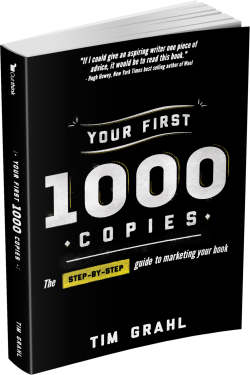
    Your First 1000 copies by Tim GrahlDo you know what’s awesome about Your First 1,000 Copies by Tim Grahl?

    He bases his advice on tests. Tests he’s performed with other authors and tests he’s performed with his own book.

    For example, what’s more effective: advertising and posting our on places like Facebook and Twitter or a mailing list? Do authors really need to have a social presence? Or is that a bunch of bunk?

    Tim has tested this question and shares what he’s found.

    What about marketing? What’s the best approach to take to win new customers?

    I think you’ll find his answer surprising. As a side note, I have to say I find his definition of marketing more insightful and practical than any I’ve come across. And I got a business degree!

    How do you set up mailing lists and which ones should you use?

    Tim tells you.

    What should you blog about?

    Tim shares his front-line insights.

    What’s the quickest way to find new customers?

    Tim discusses that as well. And it’s all put together in his framework or system he calls “Permission, Content, Outreach, Sell.”

    If you’re an indie author, I think you’ll want to hear what Tim has to say. There are three books on indie publishing that I’ve found super useful. Your First 1,000 Copies by Tim Grahl is one of them.

    Share
  • Good Stuff! Savory Thai, Planters Medley, Everest, The Arrival

    I love finding little, non-chain restaurants with excellent, reasonably priced food. And I just found another one this week. It’s called Savory Thai, and it’s on 182 W Center Street in Orem, UT.

    Oh, baby. If you decide to go, you are in for a treat. We ate there in celebration of my third daughter’s call to do missionary work in the middle and western Pennsylvania area (go Steelers, Amish, and “yous all”).

    I learned to love Thai food because it’s so close to Indonesian food. And I learned to love that because I lived in the city of Nijmegen in the Netherlands for five months and in Amersfoort, which is maybe an hour away, for seven. In Nijmegen, I lived in the attic of a row house with a series of missionary companions. In Amersfoort, I lived in a spare bedroom with another series of companions. Both homes were owned by Indonesian grandmothers who cooked one or two Indonesian meals a day for us. Think about that—home cooked Indonesian food every day. It was marvelous. When I came back to the States, Indonesian restaurants were few and far between, but to my delight I found that the Thai cuisine is very close, and so that became my stand in.

    If you’ve never had Thai food, it’s kind of like Chinese, but it’s got curries, so it’s a little like Indian as well, but that doesn’t describe it either because it has its own separate taste that’s entirely wonderful.

    This place is in a little strip of stores. It’s small enough that you could drive right past and never know it existed. But when you walk in, you’ll see that they know how to make a good first impression. It’s clean, smells good, and the host is friendly, but these guys go farther than that. You’ll notice, of all things, the menu cover. Instead of handing out some flimsy paper or laminated thing, they hand out these thick menus covered in what looks like some kind of leather. It gives a feel of permanence, of solidity, as if the restaurant has been there for years (it’s two months old). But of course we weren’t there for menus or friendly servers. We were there for the food. And we were not disappointed.

    I can happily report that their green curry (spicy), pineapple curry, massaman curry (a lovely peanuty sauce), orange chicken, chicken cashew, fried rice, and pad Thai were all excellent. They use no MSG, cook it fresh, and keep it reasonably priced, $8-$10 per dish. I can promise you that we’ll be back.

    If you’re in the area and want some great food, stop at Savory Thai.

    *

    I love almonds and have been for many years a big fan of the W?nderful brand bags of roasted and salted almonds you can find in Sam’s Club. However, this last week, I came across something new from Planters called their Almond Lover’s Medley, which is a blend of four different varieties of almonds, dry roasted and unsalted. It includes the Marcona, Nonpareil, Fritz, and Butte-padres, which is the variety used in the W?nderful bags. I can report that this mix from Planters is delicious. The differences in taste and texture between the varieties is subtle, but real. And I was surprised at how much I enjoyed them unsalted. If you love nuts, you’ll want to give this blend a try.

    *

    I did not want to watch a movie about climbing Mt. Everest. Everest? Were you kidding me? I couldn’t think of anything more boring, but this is what my daughters wanted, and it was Thanksgiving weekend, and so we watched Everest, the 2015 movie.

    I am happy to report that it ended up being a great, disaster thriller, based on a true story, which was captured in the book Into Thin Air by Jon Krakauer. I cared about the characters, was on pins and needles during great portions, and exclaimed out loud during a number of tense parts. And after all that sweating, the story made me think about the things we do and how to prioritize when life is on the line.

    If you like stories about survival, you’ll love this. If you don’t, I still think there’s a good shot you’ll really enjoy it.

    *

    My wife is a sport. We were in the big city to watch a movie with our youngest daughter who is in high school. Our daughter, with her teenage brain, had the wild idea of a double-feature. My original man brain thought that sounded capital—how long had it been since we’d squandered five or six hours watching movies! The wise man brain didn’t think it was a very practical idea, and suggested it would be much better to do a double-feature next week we we could start at three in the afternoon. But the wise man brain was outnumbered and soon succumbed. And then all of the crazy brains ganged up on my wife, who graciously relented, and so we watch The Arrival and Fantastic Beasts and Where to Find Them and got home at like 1:30 am.

    As for Fantastic Beasts, if you like Harry Potter stuff, you’ll love it. If you’re not mad for Harry Potter, it’s not going to rock your world (although you still might have a good time). Enough said.

    What about The Arrival?

    This is a movie about the arrival of aliens, but it’s not a shoot-em-up like Independence Day or War of the Worlds. It’s more like Contact, the one with Jodie Foster. It’s a film that makes you think and is for those who are willing to be a little patient. If you can slow down and just enjoy the film, I think you’ll end up loving it because it’s about far more than meeting mysterious creatures. It ends up being about the choices a woman makes about her family. If you go and give it the space it needs, I guarantee you’ll chat about it and savor it afterwards.

    I won’t tell you anything more because you’ll only understand what’s going on in the woman’s life when you get to the last fourth of the movie, and I don’t want to spoil the delicious revelation for you. So just know that the alien tech and the alien themselves are strange and mysterious and cool, but that this movie is about so much more.

    If you liked Contact or even Inception (sans the frustrating non-ending), you’ll love this.

    Share
  • The Drowned Cities by Paolo Bacigalupi

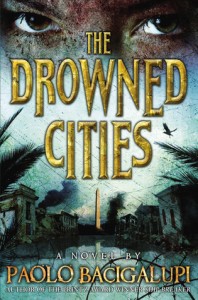
    The Drowned Cities by Paolo BacigalupiI just finished The Drowned Cities by Paolo Bacigalupi, and, holy cow, folks—this story rocked.

    It’s set in the future in the area around Washington D.C. which is the titular drowned cities. They’re drowned because the climate has gotten warmer, the seas have risen, and D.C. is half under water, permananetly flooded. It’s more like Georgia or Florida—gators, kudzu, the works. But this is not another dumb book about global warming. If it were, I wouldn’t be writing this.

    No, the United States has fallen apart. Up north there’s some alliance with money and power and the ability to keep those in the Drowned Cities out. South, who knows? West? Don’t know. But right around D.C. everything has gone to hell.

    It’s like Mogadishu, Somalia in the 1990’s (Blackhawk Down) with warlords fighting each other, tearing the place apart.

    It’s like Sierra Leone at the end of that decade with different factions butchering locals and forcing kids to fight as soldiers.

    Except instead of the U.S. or Europe or the U-freaking-N sending in peacekeepers to stabilize the situation, it’s China. And just like the U.S. in Somalia, the warlords send the Chinese peacekeepers packing. And so now it’s just chaos.

    Talk about a setting for a story. But Bacigalupi doesn’t stop there. He adds in genetically modified creatures. He starts the book with one named Tool. A creature that’s got the DNA of humans, mastiffs, tigers, reptiles and who knows what else all combined to make him smarter and stronger than humans ever could be—a monster that’s the ultimate killer, the ultimate soldier, the ultimate war machine. One that was bred to submit to a master, but something went wrong with Tool. And he was able to break free of that bond.

    Tool is trying to escape prison and death. But as mighty as he is, he’s weak and injured. And then two kids from a village run into him while in the jungle. He knows they’re going to reveal his whereabouts to the warlord searching for him. In his weakened state, Tool is only able to grab the small boy named Mouse.

    Mahlia, the girl, promises to bring medicine if Tool will only spare the boy. He knows she’s lying.

    And so starts a rich tale of the monster, the boy, and the girl: a tale that is filled with friendship, triumph, loss, heroism, cowardice, and earthy sci-fi coolness all set in the midst of a guerilla war. The beginning sucks you in. The ending leaves you breathless. Along the way you get to see into the character of all three plus some of the bad guys. In the end you get a story about sacrifice and love.

    If you liked A Long Way Gone, Ishmael Beah’s memoir of his time as a child solider in Africa; if you liked The Hunger Games, and not primarily for the romance; if you like person in jeopardy fiction or war flicks where a small group has to fight for its life, I think you will love this book.

    This is the second book set in the same world. The first was Ship Breaker. Tool, one of the most interesting characters I’ve come across, is in that one too. But you don’t need to read that to enjoy this. And I wouldn’t put this read off to do so. Go give The Drowned Cities a try. Three or four pages in, I suspect you’ll be completely lost in the wondrous tale.

    Share
  • Plot Basics

    In the comments to this week’s writing excuses on the 3 act structure, a writer asked if the try/fail cycle would really work with her chase story because her folks do not “fail to solve the problem” every time so much as “escape by the skin of their teeth”.

    I thought this was a great question because we ARE often led to believe that the characters need to fail in each attempt. But if we look at a number of stories we’ll see that this isn’t the case. The hero is NOT always failing in his scene or sequence goal. In fact, much of the time he succeeds. So how does plot really work? Here’s my post.

    [edited for clarity]

    Jen, fwiw:

    A few things finally opened up acts and plot to me. Maybe they’ll be helpful to you. I say this because a chase would work the same as anything else. I’ll just start at the beginning, although I’m sure you know a lot of this.

    1) Story is about someone solving a problem. The problem is one of happiness (danger or lack on some level–physical, social, freedom, etc.) or mystery.

    2) The reason why we tell stories about problems is because the solving of problems, if done a certain way, evokes suspense, surprise, and curiosity in the reader, and then a release of emotional tension. Why we humans like that ride, I don’t know. But we must keep this in mind when dealing with #1 because these effects are the main effects the bulk of people go to story for.

    3) Plot is simply the actions the characters take, the results of their action, and what they decide to do next. Except this can’t be any old action and result. It has to be action and result that builds the anxiety of suspense, surprise, and the mystery or puzzle.

    4) There are four possible answers to the question of “did the hero’s action solve the problem?”: yes, no, yes but, no furthermore.

    For example. Yes, you killed the monster. No, you didn’t. Yes, you killed the monster, but it bit you and now you have the virus that’s going to turn YOU into a monster. No, you didn’t kill the monster furthermore you woke up its mumma.

    Of those four possiblities, only the last two build suspense and curiosity. The first removes it totally. So it’s out. And a no answer leaves suspense unchanged. All you’re doing is delaying things with that. What you want to do is ratchet it up.

    So if you want to build suspense then when a character takes an action, that action has to make things worse. They may escape by the skin of their teeth, but now the federal police know where they are (yes-but). Or not only did they not escape the police, but now the mafia, the real bad guys, know where they are (no-furthermore). These escalations and complications to the plot/problem continue until the hero’s plan is in total shambles and it appears he really is done for. That’s when they get one last shot at it.

    If someone is trying to escape you don’t need a different plot structure. Their actions simply need to make it harder and harder and harder. Their plan needs to start to come apart. Things go wrong. Things they didn’t plan for make it worse. Someone double-crosses them or goes AWOL. We need to see them walking into dangers they didn’t plan for. If you go back and look at Prison Break season 1, you’ll see this all over the place in the last two episodes.

    5) Acts are just a nifty way of breaking up the problem solving process into parts. In act 1 (the beginning), as stated, you introduce the problem and show that the character won’t or can’t walk away. Often a big reversal or reveal (a big yes-but or no-furthermore) marks the end of that act. But the key thing is that the hero MUST act. The stakes or too high or they simply can’t get away.

    Now in act 2 (the middle) the hero says, aha, this is the real problem. Let’s try to solve it. Act 2 is a breeze to write IF you think about escalations and complications and nasty surprises–yes-buts and no-furthermores. He takes an intelligent action. BAM. It gets worse. And as these complications pile up we see that the hero comes to a point where his plans are in a shambles and the problem looks almost certain to squash him for good. In Star Wars, sure they saved the princess, but they led the empire to the secret base and the death star is going to blow them away (a grand yes-but).

    In the last act, the hero straps on his guns and trys one more thing. Sometimes it helps to think of acts 1 and 2 as the hero reacting and act 3 as the hero finally getting the inititative, although it appears to be almost too late, and strapping on his guns. In Star Wars they do this. They’re running, running, running, and then they attack the death star. But the odds are slim. And they only have one little chance.

    Remember: the odds are slim at this point and things get worse not because this is how problems are solved. Many get solved on the first try in real life. But because solving a problem in this way produces maximum suspense, surprise, and curiosity–the chief effects readers go to stories for. Any time you see a new plot structure or theory, you need to ask yourself what effect it has on the reader. If you can’t see any, junk it.

    So you might have three acts, four, five, seven (all variations I’ve seen). It doesn’t matter. An act usually ends with a huge change in the nature of the problem. See Robert McKee’s STORY. But the number of acts isn’t the issue. It’s the effect on the reader. The acts are just means to an end. If we don’t keep the end in mind we’re likely to misuse the techniques. 

    6) The key for moving through the acts is to ask myself about actions, obstacles, and results. Here are some questions I’ve found productive.

    Action. What are some intelligent actions the hero might take in this situation? What would I do? What are some logical steps that the reader might not think of?

    Obstacles. What happens? What are some compelling obstacles the hero will face in this attempt? Are there points of conflict with himself, someone else on his side, the antagonist or his henchmen, someone in the background, with the setting? What does the antagonist do to foil the hero? What is a logical but maybe an unexpected and surprising obstacle to both the reader and hero? How does the hero’s plan begin to come apart?

    Results. What happens? What are some possible results that pose a yes-but or no-furthermore? What would be unexpected, surprising to both the hero and the reader? How does the character’s action make it worse? How does the result reveal the problem is much worse than the hero and reader first thought?  I’m thinking of complications and escalations–things that make the problem harder to solve or more important because more’s at stake.

    In all of these, I choose the options that gives me the most zing and run with them. If they peter out, I try another (take 2, take 3, take 4), until I have one that works. Then I repeat it all over again and again until the hero is looking the gun in the face.

    7) The “hero’s journey” is nothing more than a bunch of mystical names for common elements in this specific type of problem solving structure. Why does the hero have to leave home? Not because of some mystical archetype mumbo jumbo. No, because this forces them out into unfamiliar territory–adventure, risk. Things go wrong. The hero has to face the problem.

    Why does the hero go to “the cave”? Again, not because of some mystical archetype mumbo jumbo. No, because turning and facing the monster, going onto ITS turf, poses the MOST RISK and hence most danger and hence most suspense for the reader.

    Always keep the purpose of the story in mind. Suspense and curiosity DRIVE the structure of most stories. Yes, there are other effects we go to story for. But the reason stories are structured the way they are is because of those two reader effects. And all the rest of those Joseph Campbell terms are useless to writers unless they make the connection and see how they play into suspense and curiosity.

    And even then I’ve found it’s wrong-headed to bind yourself to to a form just because. Or to think you need to slavishly follow it. The decision has to feel right for the story. It has to build anxiety and curiosity. And whatever does that well is right, regardless of whether it follows some formula. Although, I will say that certain story structures are used again and again because they deliver the goods to the reader better than other structures. Like biological evolution, they survive because of natural selection by readers.

    So that ended up longer than I intended. Hopefully the ideas were as helpful to you as they were to me.

    This writer’s question arises because of the common way of explaining the try/fail cycle sets us up to think there is only a no or no-furthermore option to each attempt by the hero. However, if we just look at a handful of stories, we’ll see the yes-but option is used all the time. What we want to avoid is the yes option, because that just stops the story. It stops the story because story is about solving a problem. And once the problem is solved, the story is over.  

    Other writers talk of formulas, however “pattern” has always been a more helpful way of looking at it than “formula.” I know, that’s semantic quibbling. But “formula” suggests to me THE way while “pattern” suggests to me something not so strict, something with some give to it and perhaps a great number of variations. Either way, pattern or formula, I found that unless I can understand the why of a part of the pattern, the effect it has on the reader’s experience, it’s not much use to me. It all comes down to plunging our hero into trouble or mystery, and then making the trouble or mystery worse SO THAT the reader feels increasing anxiety, curiosity, and surprise.

    BTW, here’s a good explanation of the 3 act structure with some tips from Stephen J. Cannell, an old pro. I really like his tips on act 2 issues and complications. Because if we make the antagonist an active force, he or she will provide many wonderful yes-but and no-furthermore options.

    You’ll find other excellent explanations of plot in TECHNIQUES OF THE SELLING WRITER by Dwight V. Swain, HOW TO WRITE BEST SELLING FICTION by Dean Koontz, and THE SECRETS OF ACTION SCREENWRITING by William C. Martell.

    Share