Similar Posts
Lessons 2-4 on writing now available
I’ve added 3 more writing lessons to help you learn:
- The fundamental parts of story
- Story structure
- Plots
- How suspense works
- What makes characters interesting
- How to see and sensitize yourself to how a story works its magic
- The core driver of your story
- And more
Find them on the menu or link to them here.
Lesson 2: How in the world does that work?
Lesson 4: More cause and effect
Enjoy!
Indie Thoughts: Your First 1000 Copies by Tim Grahl
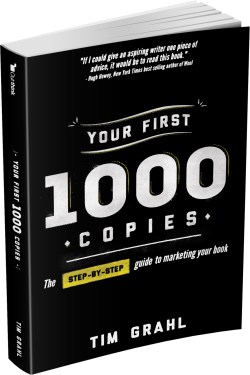 Do you know what’s awesome about Your First 1,000 Copies by Tim Grahl?
He bases his advice on tests. Tests he’s performed with other authors and tests he’s performed with his own book.
For example, what’s more effective: advertising and posting our on places like Facebook and Twitter or a mailing list? Do authors really need to have a social presence? Or is that a bunch of bunk?
Tim has tested this question and shares what he’s found.
What about marketing? What’s the best approach to take to win new customers?
I think you’ll find his answer surprising. As a side note, I have to say I find his definition of marketing more insightful and practical than any I’ve come across. And I got a business degree!
How do you set up mailing lists and which ones should you use?
Tim tells you.
What should you blog about?
Tim shares his front-line insights.
What’s the quickest way to find new customers?
Tim discusses that as well. And it’s all put together in his framework or system he calls “Permission, Content, Outreach, Sell.”
If you’re an indie author, I think you’ll want to hear what Tim has to say. There are three books on indie publishing that I’ve found super useful. Your First 1,000 Copies by Tim Grahl is one of them.
How to write a logline
I have found that having a logline is not only essential to pitch a story, but it also helps me as I’m writing the story. An unnamed producer sent this to Orson Card who passed it onto his online workshop. It is the best tutorial I’ve ever come across on writing loglines. And everything Christopher Lockhart says about loglines can be used when pitching your novel to agents and editors. I would also read his article about pitching your story. Now I did a little digging and found these resources as well that include both Lockhart articles plus a examples of loglines that work and don’t and few other articles that you might find helpful.
“Story Turns” video, bootleg style
And here is the bootleg recording of “Story Turns”, my second presentation at this year’s LTUE. You can also downlad the PDF of the presenation.
A big thanks goes to Aaron Allred who recorded the audio and Michael Barker who mashed it up with the presentation.
Binge read
“When you are really and seriously stuck and you hate everything you’ve written, BINGE READ.”
That’s from super author Maya Lassiter. If you recall, she did a great guest post here on her creative process. I love this technique for getting unstuck. When you binge read (or watch), not only do you see other options that you might take and adapt for your purposes, but those other options also spark whole new ideas.
I just used this with the battle I’m writing for Curse. I wasn’t to the hate stage; I actually liked what I had. But I didn’t quite know how to get it to where I wanted it to be. So I decided to read some books by one of the masters of historical battle.
I binge read and listened.
And enjoyed the heck out of both the reading and the ideas I gleaned for my sequence.
Binge read.
It’s an awesome creative technique.