On writing lesson 5 is up

In lesson 5, I share insights on creativity that elude many who start down the path of writing. Not knowing them can cause a lot of frustration and convince writers to quit. Don’t be frustrated. You’re going to learn:

  • What creativity really is
  • How it actually works
  • What it requires
  • And two of the main tools that will help you practice it–hunting zing and creative Q&A

Here it is: Lesson 5: How do you get and develop ideas?

Enjoy!

Share

Similar Posts

  • |

    New Workshop: How to Write a Story that Rocks

    Folks, the first tentative schedule for Life, The Universe, & Everything (LTUE) has been set. For the past few years I’ve been teaching a 2-3 hour workshop called “The 3 Things You Must Learn To Write Killer Stories.” I think I must have taught it over 15 times in different venues. Hundreds have attended and said they loved it.

    However, this year I’m going to be doing something different. I’m developing a new two-hour workshop called “How to Write a Story that Rocks.”

    I’ll be teaching it Thursday evening, February 11th from 5 PM – 7 PM at LTUE at BYU. It’s FREE and open to all.

    What I found was that a lot of new aspiring authors get lost in mountains of rules. But great storytelling isn’t about rules. They try to form stories with word counts, chapters, and weird plot diagrams. But stories aren’t about those things. They have a hard time knowing what to write next because they don’t understand how story works. In fact, some don’t know how to start at all. They just flounder in their piles of zing. Finally, even if they can get a bullet outline, they have a hard time turning that into a scene.

    So what we’re going to do in this workshop is this.

    1. I’m going to bring in some ideas for character, setting, and problem. We’re not going to generate from scratch as we’ve done in the past because I want to get to the next steps.
    2. Then I’m going to teach you how to go from idea to outline–we’re going to do it together, and you’re going to learn exactly how to know what comes next 
    3. Then we’ll go from outline step to scene sketch.
    4. Then from scene sketch to draft.
    5. At every step I’ll be pointing out key story development concepts and principles

    When we finish, you should be able to:

    1. Identify the essential story objectives and story development questions–get these right and the rest doesn’t really matter. This will include the HANDFUL of key things you need to worry about and develop with character and plot.
    2. Develop more likeable and interesting characters
    3. Develop more powerful story concepts (call it premise, problem, situation, whatever). Once you get this the story writes a lot of itself.
    4. Explain the real Story Cycle. Not Campbell’s mumbo-jumbo hero’s journey. Not the three, five, seven, nine acts. Not Freytag’s diagram. Story.
    5. Explain what it means to “move a story forward,” “increase the stakes and tension,” “complicate the plot,” “complicate the motive” and how that’s done using surprise, conflict, motive, and problem. Included in this are “turns,” “rugpulls,” and “reversals.”
    6. Use the Story Cycle concepts to generate a story bullet outline and take a bullet step idea and turn it into a scene.
    7. Explain the creative principles that help you generate stories more easily.

    Larry Correia will be there as well. So I’m expecting this to be a very helpful workshop. I’m going to do all I can to make it as good or better than the first.

    Share
  • |

    John guests on Writing Excuses season 3 episode 16

    writing-excuses-the-guys2-300x139A while ago the Writing Excuses team asked me to record with them, and last Friday I got to do it and had a blast.

    We recorded three episodes. In the first podcast we talk about putting and not putting ourselves in our writing and making characters who don’t all sound like the author. As usual, the guys had some great insights. Check it out: The Anti-Mary Sue Episode.

    Share
  • |

    Writing Update: 5/28/11 – Freewrites, Storylines, Proportion

    I finished the next chapter of my outline, which turned into three chapters. Hurray for making progress. However, I’m going to need to make more time on a weekly basis if I’m going to meet my goal.

    I’ve kept stats over the last four novels. My average is 500 words per hour during the drafting stage. That includes revising and doing quick researches etc. So sometimes I will write a smoking (for me) 800 or 900 words per hour. Sometimes I won’t finish a thing. When I’m all done it averages out to 500 words. I’m going to see if I can’t get 20 hours this next week and finish 10,000 words. 

    Addition to last week’s post

     Do you remember last week’s post about the process of making it come alive in my mind first? Orson Card illustrates this as he describes how he prepared to write a story in his essay “How One Story Can Give Birth to Another“.

    Spideysense, farmer’s faith, and freewrites

    Last week when writing chapter 7, I finished, but felt something was off.  Years ago I would have freaked about writer’s block.  I would have told myself I sucked because the chapter was glucky. But not now.  It’s a gift.  So I stopped and talked to myself in a freewrite.  I had farmers faith that if I just kept working on it, something good would result. 

    Here’s what I wrote in that freewrite. It’s an awful read for you, but it shows you just how sloppy and cryptic and freewheeling my freewrites are.

    Okay, so I’ve written the stuff below and I could tweak it, I guess. But I keep having this nagging feeling that it’s not good. It’s not a compelling villain. I think he’s creepy and evil. And, truth be told, I don’t want to make him into something other than what he is—a total thrall to the Glory and the mother. So as the “pet” of the mother, what else could he be called? I don’t know.

    I shall call you endless because you will be spared, you shall continue, whereas the rest will not. Blessing. Blessed. Grateful. What would you call a thing that did you bidding reliably? But enthralled. I am part of you, you are part of me, and so you may take my name.

    He WOULD think—I am not like them. I am GRACED by the Mother’s touch. I have taken her into myself. Or she has graced me and so I have become more than I would be otherwise. I am obedient.

    What else do you call pets or tools. Maybe that’s what she calls him. My skir master. The skir lord. My trowel. Harvester.

    He’s over the harvest. Reaper. Or he’s the one that supplies food. Supplier. Gatherer. Cook. Chef. Hunter. Provider. Butcher. Slaughter.

    So I like Endless with the whole part of him being part of her. But he could use that—”you’re just like us” “no, we are part of the XXX (what was the name I had for them?) endless. You are meat”

    Devourers, Mothers, Sublimes

    Okay, so do I go with Endless or Harvest Hope. Endless it odd, neat. What could I add to Harvest to do the same. Harvest Lord, King, Overseer, Meatman, Food provider, Feeder, Harvester, Harvest, Rancher, Collector, The Harvester. Harvest.

    I think when you’re raised, you get a new name.

    Rebellion.

    Soul collector.

    The Shepherd.

    Harvest Prime

    Bald Head

    Laughter

    Everlast

    DIVINES

    ID HIM AS THE MAIN HARVESTER

    RIGHTEOUS ANGER

    The issue was that his motive wasn’t working.  I had a feel for what I wanted him to be, and my Spideysense was telling me it wasn’t working, wasn’t interesting.  Thomas McCormack in his book calls this feeling for what you want in your story a “prelibation”.  What an odd term.  But it’s real. 

    “Prelibation.  The desire for a certain effect on the reader.  It may or may not be followed instantly by an intuition of what item of narrative will cause that effect, and it’s important to see that intuition and the prelibation it is trying to serve are not the same thing. The intuiting of the narrative that will produce the effect-wanted is the work of the imagination” (p153 The Fiction Editor, The Novel, and the Novelist)

    There’s more in his book. I recommend it highly. So, after that freewrite, I didn’t have a solution, but I’d pinpointed the issue, the prelibation. I took a break with kids into the big city. Came back and had my solution for a narrative that would do the trick.  Luckily, it was something I’d cut out of the outline. Back it went with some significant tweaks and was better than before.

    Storylines & the Size of this Presentation Phase

    For those who have read my series on suspense, at this point, the presentation of the problem for the main story and many of my sub-stories is complete.  Depending on how you categorize them, I have nine to eleven story lines (which makes it impossible to write this book in 100k words).  There’s one main story line that touches everyone—the Mokaddian threat.  Then there are other questions and issues I raise that set the reader up with the expectation for a resolution.

    1. Talen
      1. Mokad/Nashrud (external threat)
      2. Lusts (internal threat, mystery)
      3. Sugar (relationship)
    2. Legs: Vulnerability
    3. Sugar
      1. Talen (relationship)
      2. Urban (relationship)
      3. Ancestors (relationship, mystery)
      4. Mokad (external threat)
    4. Argoth
      1. Mokad (external threat)
      2. Nettle (relationship)
      3. Bone Faces (external threat)
    5. Eresh
      1. Flax (conflict relationship)
      2. The Creek Widow (relationship)

    So most of these story lines have been presented, although not all. It took about 30,000 words to finish the presentation phase. I’m estimating 170,000 words, so that a presentation phase of roughly 18%.

    There are a lot of story lines and characters to juggle. Sometimes I kick myself for having so many. Of course, I love them, despite the challenge they present. Nevertheless, I AM looking forward to writing that thriller with a limited cast.

    Share
  • |

    Writing Update: 6/13/11 – reviewing the beginning

    I’ve finished chapter 17 of CURSE. I’m up to 50,000 words and have moved from the presentation phase into the struggle. And I’m stopping at this point to review the what I’ve got. I’ve learned that if the foundations of the story–the presentation phase–has fundamental flaws in it, you’re only going to create a HUGE rewrite mess if you push on.

    I know this from experience. When writing the first draft of CURSE back in 2009 (oh my heck, it feels like forever ago), I ignored my Spideysenses and told myself I could fix anything that was wrong in post production.  And it IS possible to fix many things afterwards–you can change scenes, improve clarity and transport, remove continuity errors, layer in character tags and things like that.

    And it IS true that sometimes you do just have to write to the end to figure out the story.  Sometimes you have to just write to the end, and do it in a substandard way, because if you don’t you’ll never finish anything. Sort of like sketching first and then painting. But if there’s something wrong with the basic premise of a story line, and you keep writing, then that story line affects everything it touches. The fractures ripple out all the way to the end of the book. And you might end up, like I did, having to toss a huge amount of what you’d written.

    Which is not all bad. I learned a lot and invented a lot of cool stuff while writing that. But when you’re on a deadline, it can be a killer.  And I’m not doing that this time. I worked out the big issues in my chapter outline.

    So I’m pulling back and reviewing. I’m delighted with everything but the villain. He’s still not right. I love his chapters, the scenes. I love the name I’ve given him–Endless. But the structure isn’t right. I’ve inadvertantly created two main villains. And that’s not useful. Having two “main” villains doesn’t double the power of the opposition. It splits it. The villain/henchman model works well. But I don’t have that either. Over the next few days I’ll be rectifying the setup. Then moving forward.

    For those of you who are writers, I thought you’d be interested to know that there were a few times these last two weeks when I dreaded the writing. I had a large problem before me or had to invent a new chapter (as opposed to using something from the previous draft), and a dread filled me. But I sketch/drafted my way to the end, and soon found the writing a joy again. 

    I can’t say enough about the sketch/draft method. I’ve found it works in creative activities OUTSIDE writing as well. When working up a lesson plan for my day job, designing landscaping for our house, developing a talking script for a sales call, writing a technical manual, or a hundred other things I’ve had to do–it’s always easier to work from something than create everything all from scratch.

    Sketching allows me to create that first draft. And it allows me to do this without having to worry about quality. Sketches can be silly. Weird. Full of crap. They can be all this because I can throw them away. They’re not meant to be permanent. And so there’s no pressure to perform. There’s no staring at a blank screen or page. Sketching is a free-wheeling joy. It fills me up with ideas. And then, when I’ve got the general idea of what I want to do, I can start in on the “real” draft knowing WHAT I want to accomplish which leaves me free to think about the HOW. And if I run into problems and realize the draft isn’t going to work, or I run into something better, I just call the current draft a sketch (or “take” as used in the movie business) and move on to the real one.

    Sometimes a chapter or section requires 1 sketch or take, sometimes I’ve run up into the 20’s. Sometimes I haven’t needed any at all. It’s not the number that’s important, it’s the process that has really freed me.

    Share
  • Some lessons from Tom Clancy’s first novel

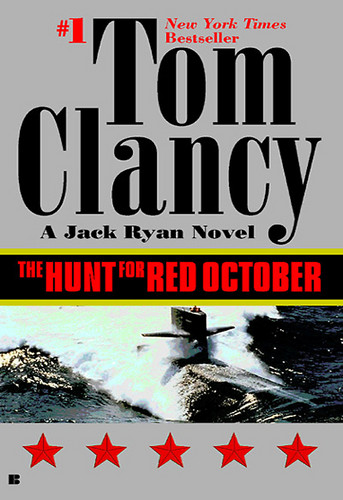
    tom-clancy-the-hunt-for-red-octoberTom Clancy is one of the biggest authors of our time. How did he break in? It’s an interesting story that Deborah Grosvenor, the editor who acquired The Hunt for Red October (Clancy’s first book), tells here.

    And this early interview provides more insights.

    So what conclusions can you draw from this? Here’s what I picked up.

    1. Writing a good book is one thing. That book finding success is quite another.

    2. Endorsements from the right people make a huge difference. More here in my blog Is Product Popularity Random?

    3. Know what you write. And if you don’t know it, do the research. And then invent what you have to.

    4. It’s not always a bad thing to start with a small press, especially if they’re going to put as much $$ into marketing and PR as this one did.

    5. To finish your novel, you’re going to have to set aside time and get it done.

    6. Finally, follow the zing. Clancy loved this stuff. Notice how his book was fed by the stories he heard and read.

    Share