The secret of Mormonism

If you want to understand the secret to Mormonism, something 99.9% of the world does not know, even though many think they do, read on.

This last Tuesday I was at dinner with a number of wonderful coworkers. We were talking about religion and listening to the guy who helps set up our training environments talk about the interesting hunting ministry he’s involved with (it’s very cool—12,000 acres of woodland in Alabama all dedicated to hunting, outdoor survival, and God).

At one point in the conversation, a delightful fellow trainer, who shared with us the night before the definition of diplomacy as being able to tell someone to go to hell and have them look forward to the trip, asked me, “Does your church believe in Christ. Or, no, is it some other fellow?”

It’s a great question, and I realized that many people are confused. And so I wanted to take time to clear it up.

So what the heck is a Mormon?

It’s not what you think.

And for those of you who think you know, nope, it’s not about that book.

Let me explain. You’ll come away knowing more about us than anyone in any of your circles, and you can lord your superior knowledge over them at dinner parties, when playing games that require vast stores of smarts, or at random moments, just because you can.

Here’s the deal. The first part of the name of the church is “The Church of Jesus Christ.” So, yes, we believe in Christ, that he died for us, was resurrected, is our Lord and god, etc.

The last part of the name is “of latter-day saints.” We don’t use “saint” to mean super-holy people like the Catholic church does, but more as followers or disciples. So you could translate the last part of the name of our church as “of latter-day followers.”

So the whole name would be The Church of Jesus Christ of Latter-day People who Follow Him.

Okay, then what’s the deal with the name “Mormon”?

Well, here’s where we get to the nub of it and the thing that 99.9% of the world doesn’t know. The key difference between the Mormon church and other Christian churches is that we believe that Jesus has called apostles again in our day, just like he did back in the good old days. And when I say apostles, I mean guys like Peter, James, John, Paul, etc.

You might be wondering what an apostle is. What made those guys special?

It wasn’t that they had great faith in Jesus. Lots of people had great faith. It was that they were called to bear special witness of him. And that special witness was not merely that they believed, but that they knew Jesus was the Messiah because they had seen and heard him after his resurrection.

Peter himself said it best when he wrote in his letter, “For we have not followed cunningly devised fables, when we made known unto you the power and coming of our Lord Jesus Christ, but were eyewitnesses of his majesty.”

When the apostles had to choose someone to replace Judas, Peter said, “Wherefore of these men which have accompanied us all the time that the Lord Jesus went in and out among us, beginning from the baptism of John unto that same day that he was taken up from us, one must be ordained to be a witness with us of his resurrection.”

These guys didn’t simply believe. They knew. They were eyewitnesses to the fact that Jesus wasn’t just some preacher—he was the son of God and was resurrected.

So Mormons believe that Jesus has called apostles again today who bear witness of an absolute certain knowledge of the reality of Jesus the Christ. We believe their purpose is also to be the Lord’s spokesmen when He wants to make general announcements or give general instructions. Finally, we also believe they’ve received the authority to offer the covenants the Lord wants to make with all of us.

We believe the first apostle called in these latter days was a fellow by the name of Joseph Smith. We don’t worship Smith. He was just an apostle. Just like Matthew or John of old were. But we do believe the Lord called him to be an apostle and restore some truths that had gotten lost or confused over the years.

We also believe the Lord asked him to bring forth other scriptures in addition to those in the Bible. One of these new scriptures was a translation of an ancient record called The Book of Mormon. It’s called that because Mormon is the name of the guy who wrote it. And Mormon was another apostle—one called by Jesus in ancient America.

And guess what the purpose of The Book of Mormon is? It’s to testify of Jesus Christ and explain his gospel.

So the name of the Mormon church is really The Church of Jesus Christ of Latter-day Saints. Mormons believe that Jesus has called and commissioned apostles in our times, right up to today, to bear special witness of him. And in addition to that, those apostles have brought forth additional scriptures that witness of the divinity and mission of Jesus Christ.

For Mormons, it’s all about Jesus Christ.

So when someone asks, what’s a Mormon? You can say, let me tell you the real answer. It’s not about an additional book of scripture. Yes, folks gave them the nickname of Mormons because of that book, but the key difference is that Mormons believe that Jesus has called apostles like Peter and Paul again in our day to be his spokesmen, and bear a certain witness of him and his good news, and help folks receive all the blessings the Lord wants to pour out on them.

And, O, what a wonderful message we Mormons believe that is.

If you liked those videos, you can see more here.

Please feel free now to randomly lord your superior knowledge over your family and friends.

Share

Similar Posts

  • Good Stuff! Two fun family and party games

    There’s nothing quite like the laughter and fun a good family or party game creates. And we discovered two games this summer that have brought hours of pleasure.

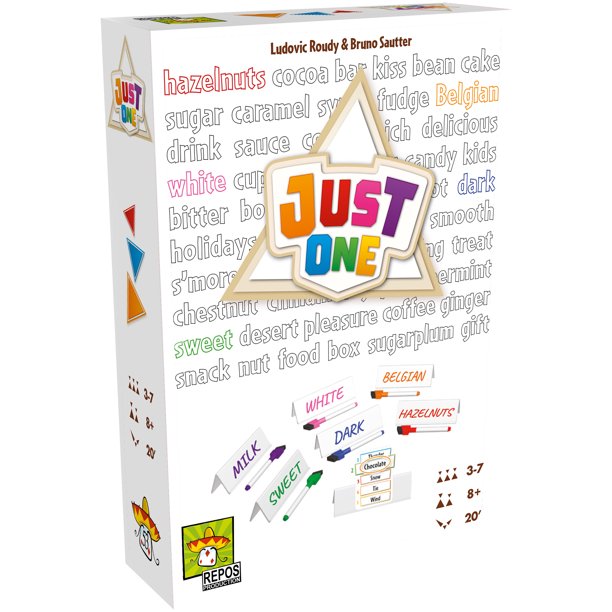
    The first is Just One. It’s for 3 to 7 players and takes about 20 minutes to finish.

    Now, I was skeptical of this game at first because it’s a cooperative party game.

    I mean, come on. Cooperation?

    No teams?

    No competition?

    What were we going to do—hold hands and sing Kumbaya?

    I was fully expecting to be bored out of my mind. Boy, was I wrong. There was suspense, laughter, and loads of fun.

    There are 13 rounds in each game. In each round, one player blindly selects the number of a word on one of the game cards. The other players each write a one word clue to help that player guess the word. However, if two or more players write down the same word, they have to remove that clue.

    So you’re trying to come up with one-word clues the others won’t that still help the guessing player. Some clues lead the guessing player off onto funny tangents. Others are just funny. And then there’s the suspense of whether someone else wrote your word and whether the player will be able to guess it from the clues that are left.

    Your goal is to guess all 13 words selected. And there’s a little score card that ranks what it means if you get 13, 12, 11, etc.

    As an aside, it’s crazy to me that the score card provided motivation. But it did. It was a delightful little brain hack.

    One Word is a quick, fun game. We’ve played it with a few as 3 and as many 8 players and had a ball each time. We are so happy to have it in the family game closet.

    The next is Fish Bowl. It’s for 4+ players. What this game does is take favorites like Taboo, One Word, and charades and mixes them together in a competitive game between two teams.

    Here’s how you play it. Each person writes up 5 to 7 different words or phrases on separate slips of paper, folds the papers, and puts them in a bowl. Then you do 3 rounds.

    Round 1 is like Taboo, where you can describe, but can’t say or act out the word or phrase on the paper. You select a team to go first. One person on the team selects the papers from the bowl and then tries to describe the word or phrase. The team has 30-45 seconds (you decide) to guess as many of the words as possible. When the time is up, it’s the other team’s turn. Back and forth you go, selecting a new team member each turn to give the clues, until there are no more slips of paper in the bowl. Then you count the number of slips each team got and move to round 2.

    In round two, you put all of the slips of paper back into the bowl. The team that went second in the first round starts this one. This time the person giving clues gets to share one word. That’s it. And the team has to guess it. Again, the team has 30-45 seconds to guess as many as they can.  Then it goes to the next team. And you switch back and forth just like you did in round 1, and when the slips of paper are gone, each team counts up their score.

    In round 3, you put all of the slips of paper back into the bowl. The time the person giving the clues has to act them out. No words allowed. You run this round just like you did the first two with  30-45  second turns, switching back and forth between the teams until all the papers are gone. At that point, the teams  total their scores for this round and then for all 3 rounds together to see which team won.

    If you don’t want to use paper, you can play a version online.

    Either way, it’s another fast, fun game. In fact, we played it last night. And laughed and laughed when one daughter was trying to get the other to guess “sling” and nailed her teammate in the head trying to act out a rock hitting Goliath.   Movies are great. But sometimes what you need is some delightful game fun. And I’m betting you’ll love these.

    Share
  • The First Step to Being an Entertaining Storyteller

    What’s the first step to becoming an entertaining storyteller?

    In a recent ZOE Nutrition podcast, James Clear, author of Atomic Habits, suggests the key to starting a new behavior, like telling entertaining stories, is doing four things:

    • Make the cue to the behavior OBVIOUS.
    • Make the behavior more ATTRACTIVE.
    • Make the behavior EASY.
    • Make the behavior SATISFYING.

    But what’s the FIRST step?

    It’s mastering the art of showing up.

    That’s it.

    What does that look like?

    He shared an interesting story in the section where they were talking about making the behavior easy.

    START

    Let me give you two examples that’ll probably help clarify. So the first one this is just a really simple tactic, a very actionable thing, that you can use for building better habits. I call it the two-minute rule, and it just says take whatever habit you’re trying to build and you scale it down to something that takes 2 minutes or less to do.

    So read 30 books a year becomes read one page. Do yoga four days a week becomes take out my yoga mat.

    Now sometimes people resist that a little bit because they’re like, okay buddy, you know I know the real goal is not to just take my yoga mat out. I know I’m actually trying to do the workout, so this is some kind of trick, and if I know it’s a trick, then why would I fall for it?

    I have this reader his name is Mitch. I mentioned him in Atomic Habits. He lost over 100 pounds. So what is that? 40 or 50 kilos? And he kept it off for more than a decade. And he had this strange little rule for himself where he first started going to the gym, and for the first like 6 weeks he wasn’t allowed to stay for longer than 5 minutes.

    So he would get in the car, drive to the gym, get out, do half an exercise, get back in the car, and drive home, and it sounds ridiculous. You know? It sounds silly. It’s obviously not going to get the guy the results that he wants, but what you realize is that he was mastering the art of showing up.

    He was becoming the type of person that went to the gym four days a week even if it was only for 5 minutes, and this is a pretty deep truth about habits. Which is that a habit must be established before it can be improved. It has to become the standard in your life before you can scale it up and turn it into something more. You need to standardize before you optimize.

    And so the two-minute rule kind of helps push back against that perfectionist tendency that we have sometimes, or against that tendency to try to do too much, and encourages you to master the art of just showing up.

    END

    That’s the answer!

    If we want to be entertaining storytellers, the first, most powerful identity we can adopt is being the creative who shows up every day to work on his or her entertainment. Or maybe it’s five days a week. Or six days, four days, whatever your number is.

    The first identity is that I’m the kind of creative that shows up to work. This awesome work of entertainment.

    So what’s a two-minute behavior that might go along with that?

    Here’s mine. After I come back from weighing myself in the morning, I set my writing session timer, open my writing document, read a bit of what I wrote in the previous session, and identify the task for this session.

    That’s it. Nothing more.

    That’s showing up.

    If I show up and do that, I’ve shown up.

    If, for some reason, I miss showing up. I identify the next slot in that day to get it done.

    I can master all the other parts of writing entertainment later. But I must master the art of SHOWING UP first.

    So tell yourself you’re the kind of creative who shows up to write entertainment every day.

    Make that your identity. You can expand that identity later. But let’s start here.

    Write your two-minute behavior. Get specific on the time and action.

    Then be like Mitch. Show up and celebrate showing up.

    And if, like Mitch, it takes you six weeks to master the art of showing up, then it takes six weeks. Big whoop.

    Writing fiction is a long-haul game. That means the name of this game is playing the game until you win the game. And to do that you first have to master the art of showing up.

    This is the key. When you master this, everything else is possible.

    “I am the kind of creative who shows up every day to create.”

    Tell yourself that. Repeat it when brushing your teeth. Make that your identity. Be that guy.

    If you have a two-minute action for showing up, share it.

    If you don’t have one yet, identify one and share it. And if your action doesn’t work? No biggie. Act like a scientist and tweak it until it does.

    NOTES

    ZOE Nutrition podcast with James Clear. https://www.youtube.com/watch?v=mcdzK8BOfBY or https://zoe.com/learn/podcast-how-to-master-healthy-eating

    Share
  • |

    Indie Thoughts: When an author should self-publish and how that might change

    From publishing consultant Mike Shatzkin:

    For a number of reasons, the belief here is that most of the time for most authors who can get a deal with an established and competent house, their best choice is to take it.

    Sounds reasonable, but then we get to the money quotes.

    The strength of the traditional publishers and the traditional deals is directly related to the amount of the market that is served by inventory in stores. When that proportion was “nearly all”, the power allocation was “nearly all” to the traditional publishers.

    ***

    Self-publishing and new-style digital-first publishing can grow more to the extent that the book-in-store share of the market shrinks more. But while that’s happening, the big publishers are also adding to their capabilities: building their databases and understanding of individual consumers (something that all the big houses are doing and which the upstarts seem not to believe is happening, or at least not happening effectively), distributing and marketing with increasing effectiveness in offshore markets, and controlling more and more of the global delivery in all languages of the books in which they invest.

    It will compound the pressure on the alternative players if Amazon continues to grow its global market share for ebooks. The bigger the percentage of the market that can be reached by self-publishers with one stop at Amazon, the less interest they’ll have in picking up smaller chunks of the market with additional deals and the more powerful will be any incentives Amazon cares to offer for making the title exclusive to them.

    Link to the rest at The Shatzkin Files, and thanks to Passive Guy for the original link.

    Shatzkin’s discussion of the amount of the market served by inventory in stores is right on. But his “best choice” conclusion doesn’t follow.

    Why?

    Because the question for each author has to be which stores will I be in, what kind of floor space will I have, and how long will I be there? And in many cases the answers to those questions do not compete well with indie options.

    For example, a lot of in-store sales come from the drug store, grocery store, airport, Walmart, Costco type venues. But it’s rare than an author getting an average deal will see the light of day in those places. Those are reserved for bigger sellers. And not very many of those. So unless you’re getting a big deal, you can’t count that floor space.

    Poof. Tens of thousands of venues are now no longer part of the equation.

    So you are now left with whatever number of stores the publisher can get you into at Barnes&Noble (a max of 675 stores), Books-a-Million (max of 200 stores), Hastings (max of 149 stores), non-chain stores,  etc. I think the total number of book stores in the USA is around 10,000 or so. But publishers won’t get you into all of them. Some don’t carry your type of book: they’re used books stores, or kids book stores, or Christian book stores. And even if it’s a store like Barnes&Noble, you probably won’t get into all their stores. So how many stores will you actually be in?

    Next, you have to wonder where you’ll appear in the stores you do get into. Will you be face-out somewhere prominent? Or will you have two copies spine-out in the back? If you’re spine-out, that’s just reduced the value of the floor space publishers offer you yet again.

    Finally, how long will you be there? If you sell your two copies in a store, are you done at that store? Will your books be there longer than 12 weeks? Will they be there even 8 weeks?

    James Patterson can sell millions of books because he has multiple copies in tens of thousands of stores with great display. And he’s usually there for more than just a handful of weeks. If you have two books spine-out in each of 500 stores for eight weeks, how well are you going to do?

    Here’s some math on author revenue and units sold. Is selling 1,000 books with the royalties and contract terms offered really worth it? What about 4,000 books? 7,000? Are you going to be in enough stores with a decent placement to get those numbers?

    If you’re going to be in thousands and thousands of stores with good placement, and the terms of the contract are reasonable, then, good golly, working with a publisher looks great. But if you’ve got a book that’s good enough to make an editor somewhere want to buy rights to it and the publisher is offering to put you spine-out in a little over a thousand stores with all sorts of contract crap, then Shatzkin’s “best choice” is really a poor one. In those situations my money is on going indie.

    EDIT: It seems there are about 12,700 book stores in the USA. But that includes big-box stores, which I think are the Walmarts and Costcos.

    Share
  • I spent 7 days in a car with Larry Correia, International Lord of Hate, and lived to tell about it

    Larry-Correia
    I think this was taken when someone stole  the ILOH’s Cheetoes

    Seven days.

    San Diego, Phoenix, and a wild trip through Wyoming, around Denver, and back to Utah.

    Seven days.

    Five nights.

    In Arizona, I was told by a wild-eyed denizen of the Barnes & Noble we were signing at that my epic fantasy book was true–we are ruled by lizard people!

    Imagine how shocking it was to learn that. I mean it doesn’t have anything to do with my book, but lizard people? A hollow earth? Is the CIA in on it? I don’t think I’ve recovered yet.

    In San Diego, we rode around with Dave Farland in his old four-door sedan. A Lincoln? All I remember is that it was big and floated like a dream. After some narrow misses, Dave asked me to drive. Two big guys up front. One older, rough-looking guy being chauffeured in the back. At one point we walked to a restaurant during the day like some made man and his two goons. The restaurant was empty except for three rough characters sitting around a table on the far side. They looked at us, sized us up, then looked away. We sat at a table on our side.

    In Wyoming we drove in high winds that sent streams of snow across the highway like multitudes of slithering snakes. At one point we passed one semi that was on fire, winds howling about. About an hour later, we passed a truck driver out in the median, thigh-deep in snow, a huge knife in his hand. He was trying to saw off the frozen antlers of an elk that had been hit. I looked up at his rig as we passed and did not see anyone behind the wheel. I swear the thing was rolling slowly down the highway, unmanned.

    On the way back from Denver, we rode along a wintery, icy highway with trucks and cars littering the sides. Larry white-knuckled the steering wheel, but we made it. Two big guys, one 6’4″ the other 6’2″, in a tiny Ford Focus.

    Did the very road fear the Lord of Hate? I cannot tell.

    On this trip, Larry, that man of hate, brought a bag of Walmart beef jerky that smelled like, well, a particular kind of flatulence. What kind of person does that to beef? But we ate it. Because you do such things on epic journeys.

    Now, here’s the thing. If you spend any amount of time with me, you will eventually tell me your life story.

    You will.

    Not because I’m a prier. But because I’m simply and sincerely interested. In people. If you work for the sanitation department, I’m going to want to know about garbage trucks. If you bowl, I’m going to want to know about bowling. If you’re some kind of wackadoo, I’m going to want to hear your wackadooness. Sooner or later, you’re going to talk. And, yes, there will be things along the way that I just might put in my zing file. That’s not why I’m talking to you. But sometimes the slices of life are too good not to capture.

    So you put Larry Correia, International Lord of Hate, into a car with me, and he’s going to spill his guts.

    Let me tell you what I found. Oh yeah, wait until you hear this.

    Larry loves Bridget, his wife. No, do not turn away in horror. You must hear the rest of the tale.

    He doesn’t like taxes, which is outrageous. Simply beyond the pale.

    He’s a strong advocate of the right to bear arms. He figures people are safer with guns than without. And he was loaded. I remember getting to the hotel in Denver and seeing he draw his guns and put them on the table. A Kimber/Bul Poly .45 from his waist and a little Kahr MK9 on the ankle. Frightening. Of course, I never worried about going anywhere with him, but the guns had nothing to do with that.

    He doesn’t like the idea of a small group of people in Washington telling folks what they need to do. He’s not anti-government. He just likes a minimal amount of government. This too is outrageous. Government is the source of all good in the world.

    He doesn’t like a lot of what Franklin Delano Roosevelt did. One of those things he doesn’t like is the rounding up of Japanese Americans and putting them in war camps. Another was Roosevelt’s attempt to pack the Supreme Court with justices who would rule his way, essentially eliminating that branch’s check on the presidency. Nor does he like Roosevelt for being the first president to explicitly embrace deficit spending. The list with Roosevelt could go on. Of course, we all know that wise people everywhere thought Roosevelt made the right choice on these things.

    Larry honors the folks who serve in our military and law enforcement. Big time. Guys and gals who put their lives on the line or support those who do. I roll my eyes.

    Larry’s a big believer in pulling yourself up by your boot straps and getting to work. He worked on his father’s dairy farm milking cows early in life. Busted his chops in school. Busted his chops at work. Busted his chops writing novel after novel. And now he lives on Yard Moose Mountain. A supposed example of can-do economic mobility, which all smart people know is a farce.

    I mean, work? Come on. Do you see how unreasonable the man is?

    He’s an accountant and pretty good with numbers. Ergo he doesn’t like a lot of bureaucratic waste. It stinks to his accountant soul. And he saw a lot of that as a military contractor. I’m really for a lot of waste of taxpayer dollars, but I let him have his say.

    Larry was once a bouncer.

    He’s a big guy, but got his trash kicked in some early amateur MMA. But he still loved it.

    LarryCorreiacismale
    The International Lord of Hate in multiple colors

    In a friendly wrestling match, he broke his roommate’s toe, and said roommate responded by breaking the International Lord of Hate’s nose. Yes, the nose, Ladies and Gentlemen.

    Larry is funny.

    Larry has a lot of friends because, shocker, he’s a friendly guy.

    He’s also kind of a sheepdog.

    Larry is a capitalist. And it appears he’s the dirty greedy kind who uses his capitalistic ties for helping folks down on their luck.

    There’s more. But let me tell you what I never heard. I never heard him make a racist remark. Not even when he told me about growing up in California’s Central Valley, or when some idiot kids who had been tasked with beating someone up to to join a Hispanic gang targeted him. Never heard him make a misogynistic remark.

    I did hear how he loved to argue with folks on the internets. And then saw that later when I started reading his blog. It’s clear Larry likes a good fight. He’s a barbarian with big boots. But, in truth, he’s a friendly barbarian.

    That’s the expose. I know. Shocking, isn’t it.

    Now he’s gone and done this Hugo thing and calls people names and uses four-letter words on his blog posts.

    I’ve found that Larry in person is not quite the same as Larry online when you disagree with him. In person he’s usually very conversational when you disagree.

    Some might say he needs to be more polite online. Use more class.

    They might have a point. Sometimes I think he steps over the line. Then again, they might not. He does get people to listen. And some of the things he has to say are insightful and worthwhile. Others are just plain funny.

    Whatever your opinion, all I know is that if you’re wanting Abraham Lincoln, you’re going to have to look elsewhere. If you come out swinging, he’s not going to regale you with Kumbaya.

    larrycorreia
    The International Lord of Hate radiating fearsome hate

    And because he fights the way he does as Internet Larry, his posts seem to push some folks buttons to the point that they actually miss his intent.

    For example, when Larry responded to Alex MacFarlane’s call for “an end to the default of binary gender in science fiction stories,” he never once suggested that we should discriminate against the folks MacFarlane wants to read stories about. He never suggested there shouldn’t be any such stories. Nor did he ever suggest folks who are discriminated against never have a case. His point was that the best way to write an entertaining story was to put the entertainment first, not some political agenda. His point was also that he’s sick of folks trying to foist their interests on him and everyone else. If you want to write about certain types of characters, do it. But don’t tell everyone else they must.

    That was lost on some people. All they saw was someone who disagreed “rudely,” and they saw red.  I’d be seeing red too if I felt ruded upon. At the same time, they still missed his point. A lot have missed his point about the Hugos as well.

    But whatever happens with this latest kerfluffle, I had to tell my tale. Because I spent seven days with Larry Correia, International Lord of Hate. It was nip and tuck the whole time, but I survived his horrible onslaught. And then we enjoyed some ice creams and tropical trail mix, which I can happily report smelled a lot better than the beef jerky.

    Share
  • Gun Runner wins Dragon Award

    I was very happy to receive news that GUN RUNNER, the novel Larry Correia and I wrote together, just won the 2021 Dragon Award for Best Military Science Fiction or Fantasy Novel.

    The Dragon Awards are a set of literary and media awards presented annually by Dragon Con in Atlanta, Georgia for excellence in various categories of science fiction, fantasy, and horror novels, movies, television, and games.

    And the cool thing is that these awards are voted on by fandom, meaning thousands and thousands of folks voted.

    Past winners have included authors such as Terry Pratchett, Brandon Sanderson, Rick Riordan, and Stephen King.

    As stated in earlier posts, the seed came from Larry’s eleven-year-old son, Joe.

    When Larry and I sat down to develop an idea for a workshop we were holding for Life, the Universe and Everything, a large annual writer’s conference in Provo, a number of years ago, Joe was listening in on the stairs.

    We settled on a genre, and then Correia asked, “Hey Joe, what’s cool?”

    Joe immediately popped up and said, “Giant robots, bandits, and murderers.”

    “We looked at each other and said, ‘Dang, that IS cool.’”

    Forty minutes later we had the key elements we needed for the story we’d use in the workshop. A number of years after that workshop, Baen Books wanted a collaboration from Larry, and that story was one of the first he thought of.

    Larry and I are both frequently asked to present at writers conferences. And one of the tips each of us shares to new authors is to loosen up and have fun. One of the keys to writing an entertaining story is to simply ask, “What’s cool?” And go from there.

    I’m thrilled and honored that those who voted selected Gun Runner for this award.

    Share
  • Good Stuff! La Brea, Bingham’s, Aggie Lemon Custard

    I have cut my consumption of bread to almost nothing. And so when I want a slice, I’m not going to waste it on run-of-the-mill sandwich bread. I want something delicious. And the best bread we’ve found is the La Brea Bakery bread that’s sold at Smith’s and other Kroger food stores.

    Our favorites are the cranberry walnut loaf, the toasted sunflower honey loaf, and the pecan raisin loaf. These breads are made the old-fashioned way with a substantial crumb and a crackly, chewy crust that’s a joy to eat. And unlike the bread from a chain bread company that will remain unnamed, these loaves are actually fully cooked.

    We just got two loaves today on our trip to Logan. We came back home, cut a few slices, popped them in the toaster, buttered, and ate with some chicken noodle soup. Pure bread heaven.

    #

    With that bread you might want some bratwurst. Not grocery store brats. Real brats. If so, I found the spot to get them (thank you, Larry Correia). There’s a gem of a butcher’s shop in Morgan, Utah called Bingham’s Custom Meats. It’s clean, well-lit, and nice-smelling. The people there are friendly. And they have over thirty different flavors of brats.

    Bratwurst, by the way, comes from German. It’s made up of two words. “Brat,” which means finely chopped meat, and “wurst,” which means sausage. At Bingham’s they don’t add nitrates or any other preservatives. Their recipes are pork mixed with various sets of spices.

    So far I’ve tried nine of their flavors, and they’ve all been delicious. They’re great for a low-carb diet. A Bingham’s brat and a bunch of cooked vegetables makes an awesome lunch. If you want, you can also just slit the casing and cook the sausage patty or stir fry style.

    #

    I’ve also cut my consumption of sweets. Which means if I eat something, I want it to be worth it. And so it gives me great pleasure to report my discovery of a wonderful flavor of Aggie ice cream at the USU Creamery—it’s called lemon custard.

    I know. Lemon ice cream?

    And when I say ice cream, I mean ice cream. This is not a sherbet. And let me tell you right now, this ice cream is amazing. It’s amazing all by itself. It’s amazing with a banana, which they sell at the creamery. Furthermore, for a little fun, if you combine it with the regular Aggie chocolate, the two together taste like a Tootsie Roll. No lie.

    I had it last month, and the month before, and I can’t wait for another date with the wife to go enjoy another scoop.

    Share

4 Comments

  1. To respond specifically, the modern LDS apostles and prophets have almost never testified that they have seen Christ as did the scriptural ones. One famous testimony from Joseph Smith actually changed over the tellings. What changes is who he saw and what age he was and why he had gone. I’ve heard the apologetics and find them lacking. Following is a link to the several accounts.
    http://mit.irr.org/changing-first-vision-accounts-1827-first-vision-account-related-willard-chase
    I find it a stretch to call them special witnesses.

  2. Jerry Timothy, it’s true they don’t bandy it about. These are sacred experiences. And so they refer to them most often in general terms.

    But I’m not sure the old apostles did anything different. What we have from those old apostles mostly are their letters to fellow saints, not what they always preached openly. Even Christ himself did not proclaim his divinity often. What the four gospels show us is that he mostly spoke in parables. During his three-year ministry we only have a few instances when he spoke openly.

    But to say that the modern apostles don’t testify of their certain knowledge is not at all accurate. Let me give you one of the first and some others more recent, including one as recent as 2 years ago.

    https://www.lds.org/scriptures/dc-testament/dc/76.19-24?lang=eng (Joseph Smith and Sidney Rigdon, verses 19-24)

    https://www.lds.org/general-conference/1985/04/the-purifying-power-of-gethsemane?lang=eng (Bruce R. Mckonkie)

    https://www.lds.org/general-conference/2014/04/the-witness?lang=eng (Boyd K. Packer)

    https://www.mormonchannel.org/listen/series/conversations-audio/elder-richard-g-scott-and-daughter-linda-mickle-episode-6 (Richard G. Scott, start at 79:55 and listen to the end)

    Now if you are here to argue the validity of their claims, that’s not the purpose of this post. We can talk about that at a different time. This post is to tell you what Mormons believe. Not establish the truth of it. That’s an entirely different discussion 🙂

    Also, if someone wants to view the various versions of what Jerry is talking about, you can see them all here with a well-informed discussion of those differences: https://www.lds.org/topics/first-vision-accounts?lang=eng#_

Comments are closed.