Gun Runner wins Dragon Award

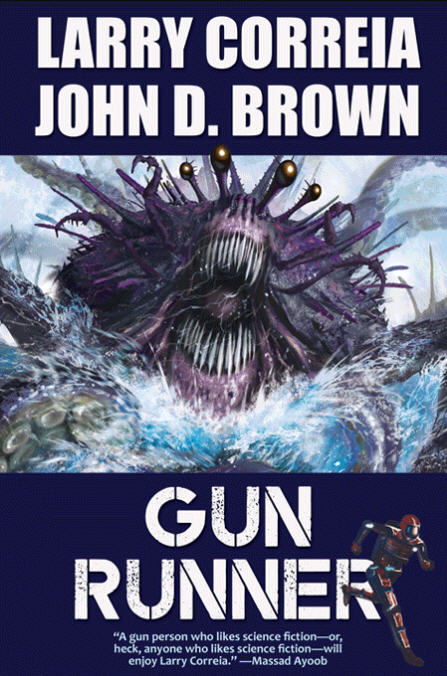
I was very happy to receive news that GUN RUNNER, the novel Larry Correia and I wrote together, just won the 2021 Dragon Award for Best Military Science Fiction or Fantasy Novel.

The Dragon Awards are a set of literary and media awards presented annually by Dragon Con in Atlanta, Georgia for excellence in various categories of science fiction, fantasy, and horror novels, movies, television, and games.

And the cool thing is that these awards are voted on by fandom, meaning thousands and thousands of folks voted.

Past winners have included authors such as Terry Pratchett, Brandon Sanderson, Rick Riordan, and Stephen King.

As stated in earlier posts, the seed came from Larry’s eleven-year-old son, Joe.

When Larry and I sat down to develop an idea for a workshop we were holding for Life, the Universe and Everything, a large annual writer’s conference in Provo, a number of years ago, Joe was listening in on the stairs.

We settled on a genre, and then Correia asked, “Hey Joe, what’s cool?”

Joe immediately popped up and said, “Giant robots, bandits, and murderers.”

“We looked at each other and said, ‘Dang, that IS cool.’”

Forty minutes later we had the key elements we needed for the story we’d use in the workshop. A number of years after that workshop, Baen Books wanted a collaboration from Larry, and that story was one of the first he thought of.

Larry and I are both frequently asked to present at writers conferences. And one of the tips each of us shares to new authors is to loosen up and have fun. One of the keys to writing an entertaining story is to simply ask, “What’s cool?” And go from there.

I’m thrilled and honored that those who voted selected Gun Runner for this award.

Share

Similar Posts

  • Gun Runner is out today!

    Gun Runner on Amazon! Order here!
    Autographed copies available from Uncle Hugo’s here!
    Podcast discussion with the authors here!

    The is 100% Brown and Correia, which means it’s action-packed, full of fun characters, and none of that navel gazing business.

    It’s about a guy named Jackson Rook who works on a crew that smuggles weapons. They’re active in a righteous cause, helping the oppressed peoples of various planets stand up for themselves against the whoresons with the money and power.

    But then Jackson learns something about the current job that turns his gut. And he begins to think they might just be working for the wrong team.

    Will he be able to set things right when just about everybody and everything on the godforsaken planet called Swindle wants to kill him or turn him back into the monster he once was?

    Read to find out.

    If you like action and science fiction, I think you’re going to love this book.

    Share
  • Good Stuff! Two books, a movie, and a dinner

    Are you ready for a story that’s heroic and inspirational? And poignant. And action-packed. And all true.

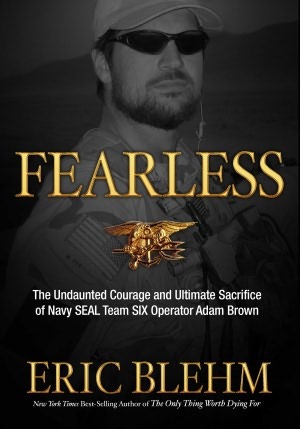
    I just finished Fearless: The Undaunted Courage and Ultimate Sacrifice of Navy SEAL Team SIX Operator Adam Brown by Eric Blehm. And wow. I can’t tell you how happy I am to have read this book.

    It tells the story of Adam Brown who was killed while on assignment in 2010. But this book isn’t about a special operations battle in Afghanistan, although the battle is detailed. It’s not a war book. Although it tells about many episodes in the life of a Navy SEAL operator. No, this book starts when Adam was a kid.

    It like the story of Louis Zamperini that’s told in Unbroken by Laurel Hillenbrand (and, yes,the film adaptation missed so much of the story, including the most important part,that if you haven’t read that book, you are missing out on an absolute treat). In this one, Brown starts out as a boy with bright promise, but after he graduates from high school, he makes a number of bad choices and drives his life right off a cliff.

    You’ll be flipping the pages to see what helps him turn it around and whether he can make the change permanent, or if he’ll lose everything, including the love of his wife and kids. You’ll also be amazed at his grit. It’s a tremendous read. If you can listen to it on audio, you’ll enjoy the narration by Paul Michael. Either way, if you like stories about redemption and triumph amidst struggle, if you like books about special operations forces and elite soldiers, then you’re going to love this book. Highly recommended.

    *

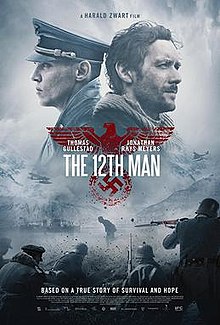
    The 12th Man is a 2017 World War 2 historical drama based on the true story of Jan Baalsrud. He and eleven other Norwegian resistance fighters set off from the UK on board a fishing boat with six to seven tons of TNT to sabotage some German military facilities.

    However, their mission falls apart soon after reaching Norway. A German warship attacks. The resistance fighters set fire to the TNT on their boat and jumped into the water just off shore. Eleven of the fighters are caught by the Germans. The twelfth, Jan Baalsrud, gets shot in the toe, but still runs across land and manages to elude immediate capture by swimming across the fjord, in the dark, in the freezing, winter water.

    Yeah, and that’s just the beginning. The story is about his attempt to get to the safety of Sweden, a neutral country. I watched this with my teenage daughter, and we were riveted with the suspense and action. And we were amazed at what this guy endured.

    You will have to read English subtitles during a large parts, but we found that after a few minutes, we really didn’t notice it. It was a great date night. If you like war movies and action, I think you’ll love this movie.

    *

    Tonight I ate a dish that instantly became one of my favorites. My oldest daughter and her husband found it. They love it and shared it with Nellie. And since it was her night to cook, she decided to give it a try. My first bite was wow.

    It’s a baked casserole, a cross between lasagna and spaghetti, called “MillionDollar Spaghetti” from tastesbetterfromscratch.com. Just click on the link the get the recipe.

    Now, here’s the thing: you can use spaghetti pasta, or you can make it totally low carb by replacing the pasta with cooked spaghetti squash like we did. The low carb version was awesome. I can’t wait to heat up the leftovers tomorrow.

    By the way, here’s a quick way to cook spaghetti squash.

    First, cut the squash in half lengthwise. The easiest and safest way I’ve found to do this is to place the uncooked squash on a cutting board. Next, get a big knife and set it along the line you want to cut. Finally, rap the spine of the blade smartly with a thick stick or long block of wood until the knife cuts through all the way. Using a knife this way is called batoning because you’re using a baton, a stick. It’s a slick and safe way to cut a hard squash.

    Once you have cut the squash in half, scrape out the seeds with a large spoon.

    Next, pour about a quarter cup of water into the hollow of the squash, and then turn the squash hollow-side down on a plate or microwave dish. Microwave the half on high for five to six minutes. It’s done when you can easily pierce the outside with a fork.

    Remove the plate with hot pads and use a fork to scrape out the cooked squash. Voila! Cooked spaghetti squash in less than 10 minutes.

    You can also just bake the halves in the oven for 40 minutes on 375 degrees. Baking gives the squash a slightly richer flavor. In this method, you brush the halves with olive oil and sprinkle with salt and pepper then put the sides face-down on a baking sheet. Again, it’s done when you can easily pierce the outside with a fork.

    *

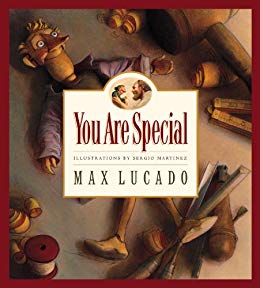
    And here’s one more because it’s Christmas. I attended a young women’s meeting for my local congregation not too long ago. As part of the program, one of the leaders read a picture book called You Are Special by Max Lucado.

    It’s about these small wooden people called Wemmicks who stick gold stars or gray dots on one another. The pretty or talented ones always get stars. The others, like Punchinello, get the ugly gray dots. And then one day Punchinello finds a happy Wemmick that has no dots at all. In fact, no dots stick to her. How does she manage it?

    It’s a great little tale with an important insight. After hearing it, I knew I needed a copy of the book to read to all my grown up kids. 

    Share
  • Impeachment might not be what you think it is

    I’ve come to realize I didn’t understand the process of impeachment and the standards by which it is conducted. Here are a few key things I’m betting most of us didn’t know. Some of them will surprise you.  

    First, the process has three steps:

    1. The Congress starts an investigation, which can be conducted by any part of that body—the House, Senate, a special counsel, etc.
    2. The House leadership decides on whether to vote on “articles of impeachment.” The articles need only a simple majority to pass. If they do pass, the person is impeached. However, the articles of impeachment are not a conviction; they are a formal allegation of wrongdoing. The analog to this in the criminal justice system is an indictment.
    3. The Senate then holds a trial to decide if the allegations are true with both sides bringing witnesses, evidence, cross-examination, etc. The chief justice presides when the president is impeached. If two-thirds of the senators deem the allegations true, then the person is convicted and removed from office and may be barred from holding future positions. If the super majority isn’t reached, the person is acquitted of the charges.

    There are two big questions in all of this. First, what standard of proof is used for passing the articles and then convicting the person of the allegations?

    It appears that the standard of proof required for impeachment and conviction is left to the discretion of each individual representative and senator. There is no standard defined. So while some may use the standard of beyond a reasonable doubt, others may not.

    Second, what can someone be impeached for?

    According to the constitution they can be impeached for “Treason, Bribery, or other high Crimes and Misdemeanors.” However, the phrase “high Crimes and Misdemeanors” is not defined in the Constitution itself. 

    The most authoritative explanation of what “high crimes and misdemeanors” are appears to be a document written by the staff of the House Judiciary Committee. The latest version of this was written in 2015 and is called “Impeachment and Removal.”

    According to the Wikipedia article on impeachment, “While this document is only staff recommendation, as a practical matter, today it is probably the single most influential definition of “high Crimes and Misdemeanors.””

    A key take away from that house committee report is that not all crimes are impeachable offenses and not all impeachable offenses are crimes. So what are grounds for impeachment? Well, it’s a bit vague.

    In 1788, Alexander Hamilton argued in the Federalist Paper 65 that impeachment was for “the misconduct of public men, or in other words from the abuse or violation of some public trust.” The House Committee report expounds on that, including the following general grounds:

    • “Constitutional wrongs that subvert the structure of government, or undermine the integrity of office and even the Constitution itself”
    • “Abuse of the particular powers of government office or a violation of the “public trust””

    The report goes on to say the following.

    “Congressional materials have cautioned that the grounds for impeachment “do not all fit neatly and logically into categories” because the remedy of impeachment is intended to “reach a broad variety of conduct by officers that is both serious and incompatible with the duties of the office.” Nonetheless, congressional precedents reflect three broad types of conduct thought to constitute grounds for impeachment, although they should not be understood as exhaustive or binding: (1) improperly exceeding or abusing the powers of the office; (2) behavior incompatible with the function and purpose of the office; and (3) misusing the office for an improper purpose or for personal gain.”

    But the report doesn’t give much definition beyond this, just a few examples of what individuals have been impeached for since the founding of the country. What does all of this mean?

    I think the Wikipedia article sums it up well.

    “Several commentators have suggested that Congress alone may decide for itself what constitutes a “high Crime or Misdemeanor”, especially since the Supreme Court decided in Nixon v. United States that it did not have the authority to determine whether the Senate properly “tried” a defendant. In 1970, then-House Minority Leader Gerald R. Ford defined the criterion as he saw it: “An impeachable offense is whatever a majority of the House of Representatives considers it to be at a given moment in history.””

    Impeachment is a political remedy, not a criminal justice or civil justice one. And given the vague definition of grounds for impeachment and the lack of any required standard of proof, what this all means, unfortunately, is that the process, especially in our current climate, is going to be rife, not with objectivity, but partisan politics. On both sides. 

    Here’s more for the curious.

    Share
  • Harry Reid’s Chickens

    Are we all wearing Coke bottle glasses with this government shut down?

    First, it seems silly to me when reporters ask Americans who is causing the shut down. It’s like, duh, if either party just gave into the other party’s demands, we wouldn’t have the issue. Which means that BOTH parties are causing the shut down.

    Second, it seems a lot of folks have forgotten that this is precisely what should happen.

    What?

    Yes, our government is designed to allow these types of things.

    But, John, isn’t that just asinine?

    No. It’s not an oversight. I think it’s smart. Even if it causes some pain.

    Let me explain what it seems some in the media and elsewhere are forgetting.

    This is not a nation that belongs to a government. It’s not a nation owned by some lord or entity. This is a nation of individuals who decided to band together because we thought that banding together would allow us to protect our lives, liberty, and pursuit of happiness better than if we stood alone individually.

    This is a nation of individuals who said, you know, we think we can figure things out better together ourselves than having someone dictating to us what we’re going to do. We’ll get together and talk. We’ll argue. We’ll persuade. We’ll try to convince each other of our individual ways of thinking. And when enough of us are convinced that we should do something, we’ll act.

    We’ll set up a process for talking and making decisions that ensures everyone can be heard. It would be great if we could get 100% agreement on everything, but we know that’s not realistic. At the same time, we don’t like the idea of forcing our will on others. So we’ll make a compromise; we’ll set up the rules for making decisions so it requires that a good majority of us are in agreement before we can take action, especially on matters that are important to a lot of us.

    Finally, we’ll make sure no individual or group can take control and deprive us of this way of living. We did the monarch thing, and we’re done with that. We will not bow to any king ever again. We’re going to be very careful about this one item because a lot of bad things begin to happen when any one person or group gets too much power.

    So we set up the rules and started working together this way. And the basic premise under all of this is that we would respect each other’s free will. We’re a land of liberty. We’re a land where we get together and agree on a course of action. Not one where we impose our will on others.

    One of the main methods we used to ensure that no individual or group could take control of the rest of us and that a good majority of us must agree before taking a course of governmental action was to distribute the power to make and enforce rules. We did this in a wide variety of ways. We did this because power’s a slippery thing and easily abused. Furthermore, because we knew no system is perfect, we also set up a system of checks and balances so that if one person or group abused their power, we could stop them and force them to remember to respect the freewill that the rest of us have.

    So what has caused this shutdown?

    It’s very simple.

    A lot of Americans do not agree with Obamacare. By most polls, it’s a majority of Americans. They were not listened to when it was being developed. They were not listened to when it was made law. They feel it was passed, not with open discussion, but a lot of chicanery. They feel it’s not some minor regulation, but a very big thing that will infringe on their rights to live how they want to live.

    Now, it might be that all their fears are unfounded. It might be that Obamacare is going to usher in utopia. Many signs suggest it’s not going to do anything of the sort. But let’s just say it is the finest piece of legislation ever. Let’s say is a celestial piece of governing.

    That isn’t enough.

    It’s not nearly enough.

    Because this is not a nation that belongs to any group. We are a nation of individuals who have banded together, agreeing that we will talk things out amongst ourselves and only act when a good majority of us agree on a course of action. This is a nation that tries to tread lightly on each other’s liberty.

    But many of the folks in Washington back in 2009-2010 forgot this and forced this thing called Obamacare upon the rest of us; in doing so, they violated one of the basic agreements of our compact. If they had followed the underlying intent of our union, they would not have done what they did. They would have crafted legislation that a good majority of us could get behind.

    In 2010, those of us who protested this use of power voted in new folks into the House of Representatives to deal with the matter. In fact, when given the chance, Americans (both Republican and Democrat) in the heavily Democratic state of Massachusetts voted Republican Scott Brown into office, hoping to stop this legislation in the Senate before it became law. But Harry Reid didn’t listen. He didn’t care. He and Pelosi and Obama weren’t interested in allowing a full national discussion. He and the others were more concerned with getting their way. And so he used a parliamentary trick to force it through.

    This shut down is about one group of people forcing their will on the rest of us. It’s about using the checks and balances designed into the system to correct such errors. It’s about the chickens of some poor decisions coming home to roost.

    I know the shut down has caused issues. It’s a partial shutdown; 13% of the government. I think 87% is still funded and running. Still, I know it’s causing some pain.

    But none of that pain needs to occur. Everyone wants to fund cancer research. Everyone wants to help poor single mothers. Those things aren’t the issue. The issue is that not everyone agrees with Obamacare.

    If you’re a supporter of Obamacare, let me ask you this: if the tables were turned, what would you do?

    Would you not stare at the folks trying to force their will on you and say, hey, come on. We’re adults here. We all agreed that we wouldn’t do anything unless a good majority of us were convinced it was the right course of action. Let’s get together and come up with something a good majority of us can get behind.

    If you’re an opponent of Obamacare, you too should recognize that a good portion of your fellow citizens are clamoring to change the way things are. They’ve been clamoring for some time. Should you force your will on them? Or should you sit down and listen and try to come up with something that addresses the points we can agree on?

    I don’t know if the folks many of us voted to go to Washington will stick to their guns and correct this. I hope they do. And I hope that those on both sides who have forgotten one of the basic tenets of our social compact will wake up and remember we are banded together, not to game the system to get what we want, but to act on only what a good majority of us want.

    Share
  • The MacFarlane (Tor), Correia, Hines Cage Match: Put It In The C Story

    Larry Correia is a big-booted barbarian who likes to fight in a cage. And a lot of us love to watch big-booted barbarians go at it.

    We like demanding matches. We like a little blood and good sportsmanship (of course, sportsmanship in the cage is different than in other venues). And we respect both sides for showing up and giving it their best.

    This last week Larry Correia battled with Alex Dally MacFarlane (and Tor, the silent partner, who thought her new column would be a great idea and has given her their big platform to talk) and Jim Hines. If you didn’t watch the match, here are the links.

    I’ve enjoyed reading the give and take in this fight. For me, the barbarians seem to have landed more blows (and done so with many more funny and memorable one-liners.) But that doesn’t mean Alex Dally MacFarlane shouldn’t crusade.

    And I mean crusade, as in battle.

    Underneath it all MacFarlane wants to change something. She wants to change hearts and minds. A lot of us want to change hearts and minds about various things. A lot of us will show up and risk getting bloody for such things in a variety of settings. Heck, Correia the Barbarian was even willing to spend two years of his barbarian life trying to change hearts and minds in a setting where big boots are not allowed (poor Correia, more sad puppies).

    But here’s the deal.

    If you want to win someone like me, you’re going to do it not by scolding or brow beating me or by mandating something and then trying to back it up with sticks.

    You’re going to do it by writing something so delightul that I cannot but help listen to you.

    You’re not going to tell me what I can’t write.

    You’re not going to tell me what I must write.

    You’re going to model writing that makes me want to write that thing.

    You’re going to be like Tolkien and spawn five decades of writers who want to do nothing more than imagine worlds filled with strange races and wonderous settings and weird talking tree men who have lost their wives.

    You’re going to invite like-minded folks to join you in creating wonders. Or in just having a good old time.  And not worry about other writers inviting folks to their creations, which might be totally different from yours.

    And those wonders and good times are the things that will work the magic.

    Miguel Sabido is a master of entertainment with message. Here’s a great piece in The New Yorker introducing him, his work, and methods. Notice what made his stuff so effective. The new ways of thinking he wanted to offer were never found in the A story. They were never found in the B story.

    Why?

    Because the number one thing the story had to do was suck people in (entertain).

    And so the new thing to consider was in the C story.

    MacFarlane, put it in the C story. And build a Middle-earth. Or a ring world. Or at least some vampires that sparkle.

    In the meantime, I’ve got a barbarian book on the shelf that looks like a mighty good time. I think I’m going to give it a read.

    Share

7 Comments

  1. congratulations!!!!John, you deserve this and there will be more recognition and plaudits in the future

Comments are closed.