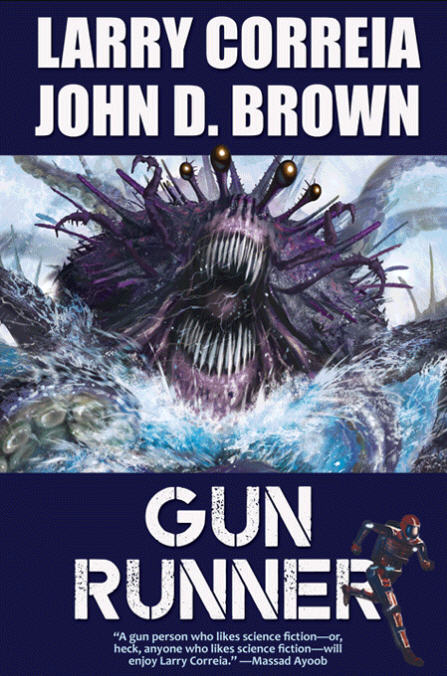
Gun Runner on Amazon! Order here! Autographed copies available from Uncle Hugo’s here! Podcast discussion with the authors here!
The is 100% Brown and Correia, which means it’s action-packed, full of fun characters, and none of that navel gazing business.
It’s about a guy named Jackson Rook who works on a crew that smuggles weapons. They’re active in a righteous cause, helping the oppressed peoples of various planets stand up for themselves against the whoresons with the money and power.
But then Jackson learns something about the current job that turns his gut. And he begins to think they might just be working for the wrong team.
Will he be able to set things right when just about everybody and everything on the godforsaken planet called Swindle wants to kill him or turn him back into the monster he once was?
Read to find out.
If you like action and science fiction, I think you’re going to love this book.
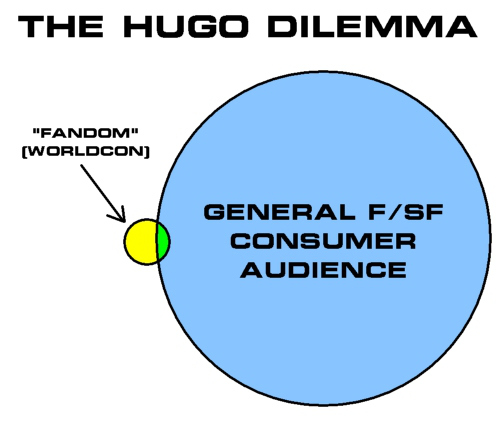
There are a number of great science fiction and fantasy authors who feel that the Hugo awards have become irrelevant because the folks voting–only those who are members of Worldcon–do not represent science fiction and fantasy fandom.
But this is not only about the fact that the voting block is not a statistically valid sample of fandom. It’s also a campaign against what Larry, Brad, and many others see as a politically correct shibboleth in parts of the publishing community that they feel short shrifts authors who do not toe the liberal political line.
Two years ago, Larry Correia decided to give this issue a lot of attention. He did this by asking his fans to purchase a Worldcon membership and then consider a list of authors he thought were very good but didn’t necessarily reflect the prevailing values of the traditional Worldcon audience. Last year he repeated the effort and created a shirt-storm (I like that image so much better than the one that includes flying poops). This year, Brad is carrying the banner. Read Larry’s post Sad Puppies 3: The Slatening? to see this year’s slate of alternative folks and a summary of why these guys are doing this.
I’m friends with Larry and Brad. And I do not like the Should Police coming out and telling me I should or must include more X in my stories and less of Y, whatever that X and Y may be.
But, I’m wondering if storming the Hugos is the right way to do this.
Yes, the Hugo award has a lot of brand equity. But must the Hugo represent fandom?
Is Sad Puppies attempting to storm the castle and force upon Worldcon something Worldcon members don’t care for?
Let’s go back to the original issue that Sad Puppies is trying to shine a light on.
Reader Kim wants more of X and less of Y in his or her books.
But instead of saying, “Geez, where in the crap do I find books with more of X and less of Y?”
Instead of trying to get with a bunch of folks and saying to suppliers, “Hey if someone would write more of X and less of Y, we’d buy it! Look at this market that’s dying for product!”
Instead of developing the More X and Less Y website dedicated to helping readers who like that find their books.
Instead of that, Kim says, “Gosh darn it! All books should have more X and less of Y. And if they don’t, they’re, they’re, they’re bad, and bad for you, and probably make kids smoke! And we should make all stories conform.”
And the mandated “should” is where things get all tangled up. That should is what Sad Puppies is speaking out against.
So instead of trying to stomp out differing opinions or requiring all authors to write stories with some allotted amount of XY content, would it not be more productive to simply work with our wonderful free market to try to create a new silk road (or pave the existing one fit only for camels) that connects readers who like XY stories with authors who are happy to write them?
I think it would.
At the same time, this same argument could be applied to the Hugos. Instead of trying to force Worldcon members to change their ways, why not let them like the stories they like, but create a fresh new award that seeks a broader base? It would require work to build its brand equity, but maybe that’s a more effective long-term strategy.
It’s kind of like the New York Times best seller list. There are many problems with that list, including, but not limited to, the fact that it can be gamed. But instead of trying to change it, USA Today came up with something much better. Yes, “NY Times Best Seller!” still has huge brand equity. But USA Today is gaining on it. And as the market learns more and more about the difference between the lists, USA Today’s will only grow in luster.
I suppose it’s true that you sometimes do indeed need to storm the castle. And maybe this one needed some barbarians to show up and sack it. But I wonder if it’s time to pivot. I’m wondering if in this case the best long-term strategy wouldn’t be to simply build an armored division of M1-Abrams with air and sea support and make the castle irrelevant. Maybe this is something to think about for next year.
There’s nothing quite like the laughter and fun a good family or party game creates. And we discovered two games this summer that have brought hours of pleasure.
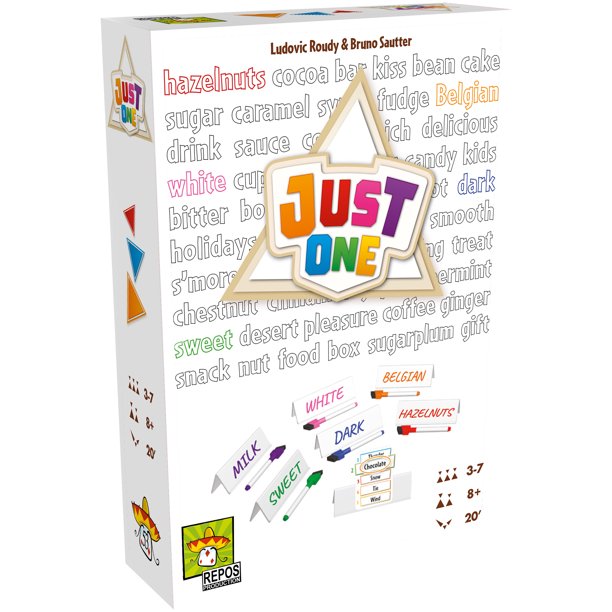
The first is Just One. It’s for 3 to 7 players and takes about 20 minutes to finish.
Now, I was skeptical of this game at first because it’s a cooperative party game.
I mean, come on. Cooperation?
No teams?
No competition?
What were we going to do—hold hands and sing Kumbaya?
I was fully expecting to be bored out of my mind. Boy, was I wrong. There was suspense, laughter, and loads of fun.
There are 13 rounds in each game. In each round, one player blindly selects the number of a word on one of the game cards. The other players each write a one word clue to help that player guess the word. However, if two or more players write down the same word, they have to remove that clue.
So you’re trying to come up with one-word clues the others won’t that still help the guessing player. Some clues lead the guessing player off onto funny tangents. Others are just funny. And then there’s the suspense of whether someone else wrote your word and whether the player will be able to guess it from the clues that are left.
Your goal is to guess all 13 words selected. And there’s a little score card that ranks what it means if you get 13, 12, 11, etc.
As an aside, it’s crazy to me that the score card provided motivation. But it did. It was a delightful little brain hack.
One Word is a quick, fun game. We’ve played it with a few as 3 and as many 8 players and had a ball each time. We are so happy to have it in the family game closet.
The next is Fish Bowl. It’s for 4+ players. What this game does is take favorites like Taboo, One Word, and charades and mixes them together in a competitive game between two teams.
Here’s how you play it. Each person writes up 5 to 7 different words or phrases on separate slips of paper, folds the papers, and puts them in a bowl. Then you do 3 rounds.
Round 1 is like Taboo, where you can describe, but can’t say or act out the word or phrase on the paper. You select a team to go first. One person on the team selects the papers from the bowl and then tries to describe the word or phrase. The team has 30-45 seconds (you decide) to guess as many of the words as possible. When the time is up, it’s the other team’s turn. Back and forth you go, selecting a new team member each turn to give the clues, until there are no more slips of paper in the bowl. Then you count the number of slips each team got and move to round 2.
In round two, you put all of the slips of paper back into the bowl. The team that went second in the first round starts this one. This time the person giving clues gets to share one word. That’s it. And the team has to guess it. Again, the team has 30-45 seconds to guess as many as they can. Then it goes to the next team. And you switch back and forth just like you did in round 1, and when the slips of paper are gone, each team counts up their score.
In round 3, you put all of the slips of paper back into the bowl. The time the person giving the clues has to act them out. No words allowed. You run this round just like you did the first two with 30-45 second turns, switching back and forth between the teams until all the papers are gone. At that point, the teams total their scores for this round and then for all 3 rounds together to see which team won.
If you don’t want to use paper, you can play a version online.
Either way, it’s another fast, fun game. In fact, we played it last night. And laughed and laughed when one daughter was trying to get the other to guess “sling” and nailed her teammate in the head trying to act out a rock hitting Goliath. Movies are great. But sometimes what you need is some delightful game fun. And I’m betting you’ll love these.
6 Comments
Thank you for a marvelous presentation at Storymakers! It was terrific! Such a specific way to look at how to raise tension and the stakes in a story and keep readers turning the pages. Just bought your book BAD PENNY, too! Thanks again.
Glad to hear you found it useful, Kimberley 🙂
Your presentation on this was riveting. I haven’t read your books, but if they’re anything like your presentation style, I’m in! Thank you for making the PDF available, too. Great stuff.
Terrific. So glad to hear you enjoyed the presentation.
Thank you for making your presentation available. It was one of the most helpful I attended.


Thank you for a marvelous presentation at Storymakers! It was terrific! Such a specific way to look at how to raise tension and the stakes in a story and keep readers turning the pages. Just bought your book BAD PENNY, too! Thanks again.
Glad to hear you found it useful, Kimberley 🙂
Your presentation on this was riveting. I haven’t read your books, but if they’re anything like your presentation style, I’m in! Thank you for making the PDF available, too. Great stuff.
Terrific. So glad to hear you enjoyed the presentation.
Thank you for making your presentation available. It was one of the most helpful I attended.
That’s excellent to hear.