I Am Not A Serial Killer by Dan Wells

IAmNotASerialKillerYou can scare the crap out of me (Aracnaphobia), and I will love you forever. You can make me bite my nails in terrible suspense (Wait Until Dark, The Village) or throw supernatural at me (Poltergeist) and I will sing with praise. But the moment you do gruesome, the moment you start showing me entrails and organs, my discomfort level shoots through the roof.

And this is why I would not have finished  I Am Not A Serial Killer by Dan Well’s if I had just picked it up off a shelf–because the main character is the son of a woman who owns a mortuary. We get to see him help process a mutilated body very early in the book, pumping fluids in etc., and Wells knows his craft so I was THERE. I’m sure it’s not too gruesome for some, but I just have issues with organs. I don’t know why. I also have an issue with clowns.

Clowns are, by far, the scariest things around. And this is not because I read the book IT by Stephen King as a wee lad because I didn’t. It’s because they’re painted vessels of evil. End of story. They’re perfect examples of the freakazoids that lurk in the uncanny valley.

Anyway, I’d heard Wells read a portion of this book that had all of us in the room crying because we were laughing so hard. So I read on, telling myself I had to at least get to that part. And I am so very happy I did. 

I Am Not A Serial Killer is young adult story about a good-hearted teen named John Cleaver who is a sociopath with all the traits shared by serial killers. John’s in counseling, but more importantly, he is convinced he can prevent himself from becoming a serial killer by keeping rules he’s made for himself like not watching people for too long and complimenting someone when they make him angry. Such rules, he hopes, will keep him from feeding compulsions he won’t be able to resist.  The problem is a real serial killer has come to town (but unlike any you’ve seen before). And John may be the only one who can stop him. Will he let go of his rules to save the town? Or will he keep his monster asleep while others die around him?

It’s a fascinating situation (without a clown in sight, may the writing gods be praised). And Wells takes the reader on a journey through it that includes mystery, dread, and humor. In the hands of some other author, that would be enough. But Wells does more than entertain us. He gives us things to think about. He gives us great characters to boot–come on, when was the last time you read a book where the hero was a likeable sociopath? And most of the gruesome is up front anyway.

Read this book. Skim the body processing if you must. But you simply don’t want to miss the rest. It was a fabulous read and I recommend it highly.

The US version comes out in March of 2010. But you can get the UK version now on Amazon UK, Borders UK, etc. The links are all here on Well’s site.

Share

Similar Posts

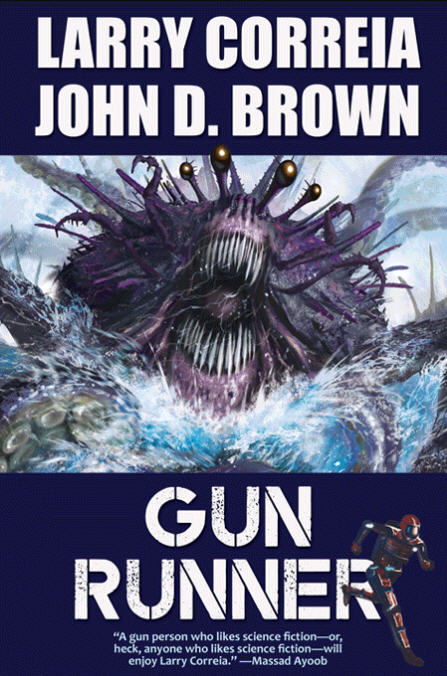
  • Gun Runner is out today!

    Gun Runner on Amazon! Order here!
    Autographed copies available from Uncle Hugo’s here!
    Podcast discussion with the authors here!

    The is 100% Brown and Correia, which means it’s action-packed, full of fun characters, and none of that navel gazing business.

    It’s about a guy named Jackson Rook who works on a crew that smuggles weapons. They’re active in a righteous cause, helping the oppressed peoples of various planets stand up for themselves against the whoresons with the money and power.

    But then Jackson learns something about the current job that turns his gut. And he begins to think they might just be working for the wrong team.

    Will he be able to set things right when just about everybody and everything on the godforsaken planet called Swindle wants to kill him or turn him back into the monster he once was?

    Read to find out.

    If you like action and science fiction, I think you’re going to love this book.

    Share
  • No. I’m Fine by Howard and Sandra Tayler

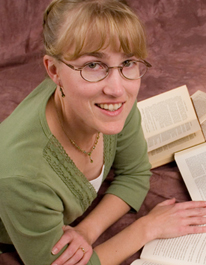
    Robison_Wells____Green_Hills_Photography_0-201x300Sometimes it’s the small things that make the most difference.

    Like sharing an issue you might be dealing with.

    I was once at a writer’s retreat at a home above the Sundance ski resort. I’d be asked to present to some of the other writers there. Robison Wells, who writes awesome YA,  was also presenting. He talked about marketing and plot, but the presentation that was probably most memorable was the one he gave on the obsessive compulsive disorder he deals with.

    He started off by telling us folks really didn’t know what they were talking about when they talked about obsessive compulsive disorder. He described it this way. He said he and his wife were sitting on the couch watching TV one evening. She said she was craving some ice cream, orangesicles, I think. He replied that he was craving banging his head into the wall. She anticipated some delicious ice cream. He anticipated some delicious head whacking. He then pointed at the wall behind all of us and said that it would feel so good to bang his head on the corner of the wall behind us. Needless to say, he had our attention.

    He went on to explain more about this condition and mental illness in general and urged us, when we wrote about it, to get it right. To be accurate. To not turn such conditions into happy-happy super powers, nor to make them into things to be feared.

    By the way, Robison had a fine little dog with him. Not some yapper to carry about in a purse, but a nice little companion. I keep wanting to call her Abby, but I know that’s not its name. We learned that his dog was trained to watch him and remind him to take his meds. It appeared that Robison would sometimes rationalize away doing that.

    Robison isn’t crazy. We didn’t have a dangerous wild man among us. He’s just a guy who has to deal with some kinks in his hoses.

    HowardTayler2So what happened next? Well, nothing. We had a great retreat and went home. But the story doesn’t end there. See, if an issue is taboo, it becomes very difficult to deal with it. As an individual, a couple, a family, a community. In fact, hiding something like this only creates more problems. For example, if Robison ever says he’s going out to pick up some hammers, we  now know that we probably ought to have someone go with him (grin). So Robison not only wanted to educate us, he also wanted to help bring mental illness out of the dark. And he’s talked about this issue in a number of different places.

    Howard Tayler, the cartoonist, heard him talk about the self-harm once. He saw the good being open did and decided to write a bit about some things he has to deal with. Howard’s got a tricky bit of depression he has to manage. Sandra, Howard’s wife, decided to add to it what it was like being married to someone with such an issue.

    Now, I didn’t know the Taylers had written anything up until last week at Comic Con. During the event a woman talked to me. In our conversation she indicated that she’d been wrangling with some mental crap, but that Howard’s comments about his had helped her. We continued with our discussion, and she left. On Friday evening after the expo for the Salt Lake City Comic Con had closed, I walked around the event floor, chatting with some folks I hadn’t had time to visit during the event. I stopped at Howard’s booth and said hello to him and Sandra. They were busy, and I didn’t stay long, but as I went to walk away, I thought I should pass on what the woman had said. So I did. I didn’t know what comments she was talking about. All I knew was that Howard had helped her. And I wanted to make sure he knew it.

    SandraTaylerWe talked some more as they tried to clean up their booth before Howard had to run off to a panel. Then Howard handed me “No. I’m Fine”.  It’s a little 15-page booklet that contains the title story, written by Howard, plus the essay “Married to Depression” by Sandra, his wife.
    The story is an excellent short that gives you the feeling of what’s it like to be dealing with one form of the bugger. The essay reveals a bit of what it’s like as the spouse and recommends some action. But the thing I found so wonderful about both the story and the essay was the example of tender love in the midst of adversity.

    I’m a writer. I can’t help but be drawn to potential characters and stories. The view we get of these two in this booklet is good stuff to build some characters on. Of course, that’s not the reason to read the booklet. The reason is because what they share is fascinating and tender—it’s good drama—and, if you or someone you know is dealing with these issues, it just might help.

    Go read “No. I’m Fine” and “Married to Depression”. You’ll be glad you did.

    While we’re talking about this, those of you who have been following this blog know that I’ve had a few dust-ups with depression myself. I wrote about it and the tools I used to deal with it then and when it tries to come back to town. After reading the Tayler’s stuff, you’ll want to look at it as well.

    Edit 9/14: Addeded links to “Married to Depression”

    Share
  • Miss Potter, Downton Abbey, Human Planet

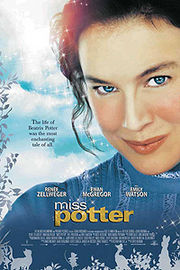
    Miss Potter, a true romance

    How many shows are good enough that you can walk into them partway through and within a minute become completely engrossed? I found two this week. The first is the 2006 film Miss Potter, which tells the story of Beatrix Potter (1866-1943), who is the best selling children’s author of all time. You might know her by the most famous of her 23 illustrated children’s stories: The Tale of Peter Rabbit.

    As a side note, Potter spent a lot of time at her family’s country home in the Lake District. I was lucky enough to be able to vacation there once, but never knew until I saw this film that the gorgeous landscapes that had been preserved were partially due to her donation of 4,000 acres.  

    The movie opens with the fact that Potter, who is played so well by Renée Zellweger, has missed her early chances of marriage. She’s a young spinster, and, having a number of her illustrations purchased, is determined to make some money publishing her own illustrated stories. The movie follows her journey to publication, which met with opposition from both publishers and her family, but the real heart of the film is the story of her meeting and falling in love with Norman Warne, whom her parents, especially her mother, don’t approve of because he’s a tradesman. The film is full of wonderful drama, humor, tragedy, and solace. I can’t recommend it highly enough. In fact, I found myself watching it a second time two days later with my girls with just as much enjoyment.

    Downton Abbey, a period drama

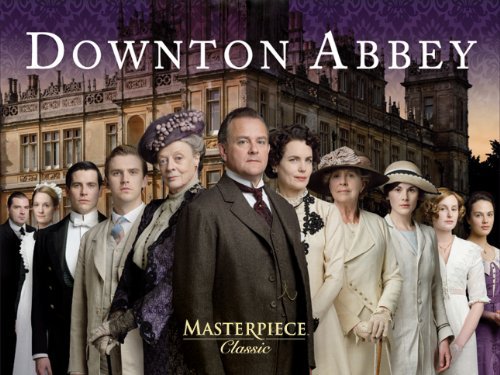
    The second show is the BBC miniseries Downton Abbey.  Its first season of seven episodes aired last year in the USA on PBS’s Masterpiece Theater.  The second season will air at the beginning of 2012.  

    The series is set in the fictional Downton Abbey and follows the lives of the aristocratic Crawley family and their servants. The stories take place over the time period that starts with the sinking of the Titanic in April 1912 to the outbreak of the First World War on 4 August 1914.

    The main story line running through the episodes is the fact that the Crawley family must give up the estate to a distant relation because they have no male heir. But what I find so refreshing is that the stories of various servants are included. Some are funny. Some pull at your heart strings.

    So far I’ve met and enjoyed some truly delightful characters as well as a couple of villains. If you enjoyed the BBC’s Pride & Prejudice or the Cranford series, I think you’ll enjoy this.

    Human Planet, an amazing documentary

    These last two weeks I’ve watched with fascination the eight episodes of the BBC and Discovery documentary series Human Planet. One species on our planet has adapted to every environment on earth—that’s us. The series looks at a number of remarkable ways humans have adapted to the various habitats.

    You’ll see people from all over the globe who do things you never would imagine. Here’s just a small sample:


    • -Folks in Churchill, Manitoba Canada who trick or treat on Halloween with hungry polar bears stalking the streets
    • -A man in Papua New Guinea practicing the ancient art of shark calling in a small canoe
    • -Dolphins that help humans fish in Brazil
    • -A wild honeyguide bird working with Maasai boys to steal honey from wild African bees
    • -Mongolians using tamed golden eagles to hunt fox
    • -People in the eastern Amazon who love their pet monkeys so much they breastfeed them
    • -Inuit Canadians who risk death going under the arctic ice during low tide to gather mussels
    • -Three Dorobo in Kenya stealing food from a lion pride of more than twenty lions


    Oh, and how could I not mention the three children who hunt tarantulas in Venezuela, roasting them up as tasty treats that taste a little like crab. I could go on and on. There are sixty-three of these stories in all, grouped into eight episodes that each focus on a certain habitat, including deserts, the Arctic, jungles, mountains, grasslands, rivers, and cities. Each episode also includes a behind-the-scenes story about the filming of one of the episodes. And some of these are as thrilling as the stories themselves.

    In fact, that’s one of the things I love about this series. In addition to showing me fascinating things I’ve never seen, a number of the stories also raise the adrenaline just a bit. And yet, that’s not all. Because while presenting “strange” cultures, the stories humanize these folks so that instead of presenting aliens, these people feel more like fascinating distant relations. This is storytelling at its finest. If you like nature shows at all, you’ll be totally delighted with Human Planet.

    Share
  • Good Stuff! How to Make Meetings Work

    Do you regularly sit through meetings that seem to accomplish nothing?

    Meetings where people drone on and on and on.

    Meetings where people discuss and no decision is ever made.

    Meetings that always slide off topic.

    Meetings that should never have been held in the first place.

    In many cases, the reason these meetings stink is because those organizing them are not aware there’s any other way to hold a meeting. But there is. I was fortunate enough to have been exposed to it just out of college while working for a business consulting firm in San Francisco. (And why they didn’t teach this in my business degree I will never know!)

    After learning the simple and powerful principles, I was eventually paid to plan and facilitate meetings for clients. In some of these meetings they were making incredibly important decisions. I remember a client flying me and a colleague from San Francisco to Delaware for two days of meetings.

    You might be groaning at the thought. But they paid thousands of dollars to have us come and facilitate. And when we were done, the energy in the room was palpable. A number of those that were involved were astounded and said they’d never been involved in such productive sessions. They’d accomplished more in the hours we were there than in months of other meetings. They were happy and grateful we’d come.

    Think of that—happy and grateful for a meeting that went on for hours!

    When meetings are done right, the collaboration and synergy can be amazing. Now, you may think that some secret handshake is required to learn how to do this. Or that it’s only for those with some special knack. Or that it’s only for high-powered jobs. If you do, you’d be wrong.

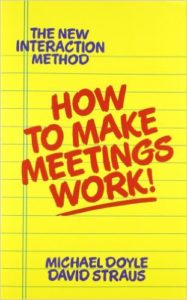
    And that’s because you can learn the principles all for a few bucks. They’re laid out in perfect clarity in How to Make Meetings Work by Michael Doyle and David Straus. This is the book that was the source of our training sessions all those years ago. And I reread it every few years to brush up. The principles work in everything from a family council to a board meeting to class settings. I know because I’ve used the ideas in all of them. And when I fail to take just a few minutes to prepare, that’s when the meeting becomes, well, just another (yawn) meeting.

    If you hold meetings of any kind and want to improve them, give this book a try. I think you’ll be happy you did.

    Share
  • |

    Animals in Translation by Temple Grandin + Interview

    I have read few books more interesting than Temple Grandin’s Animals in Translation: Using the Mysteries of Autism to Decode Animal Behavior.

    In it she describes her world of autism and how it helped her a perspective into animals unlike any other expert in the field. She can literally see what we block out. It’s part of what helped her make a huge impact on the meat packing industry.

    And it’s had an impact on her. When she was visiting her grandparents once in Arizona, she saw a squeeze chute in operation on a ranch. She saw the cattle calm, for the most part, in the chute. “Watching those cattle calm down,” she says, “I knew I needed a squeeze chute of my own.” So when she got back home she built a human-sized one with the help of her teacher. “I got through my teenage years thanks to my squeeze machine and my horses.”

    Grandin is not a vegetarian activitst (she eats meat herself) or a brutal slayer. She has taken the middle ground between the fantatics that want to prevent the consumption of all meat, on one hand, or totally disregard the life of animals on the other. She writes, she says, “because I wish animals could have more than just a low-stress life and a quick, painless death. I wish animals could have a good life, too, with something useful to do. I think we owe them that.”

    Temple has dozens and dozens of insights into animals, which she shares here. You’ll learn about rapist roosters and the problem of one-trait breeding, whether prediators find it “fun to kill a groundhog” (yes, she says, they do), whether animals have true cognition, and so many other things it’s impossible to list them here. I was fascinated on every page. If you have anything to do with animals, you’re going to LOVE this book.

    Get the book. Read it. In the meantime, watch a 27 minute interview of Temple by Doug Fabrizio on Utah NOW. I caught this on TV flipping through the channels and couldn’t look away. This is a fascinating interview of a fascinating woman.

    Source:Temple Grandin on Utah NOW

    Share
  • Laff and Learn

    My daughters have introduced me to Studio C, a comedy program that started with The Divine Comedy troupe on the BYU campus who all growed up and were given a gig on TV. They do these  hilarious skits.

    Like “Drivers Ed”

    And “Blind Date“.

    And “Shoulder Devil”.

    I hope you enjoy them as much as I do.  BTW, Studio C airs weekly on BYUtv.

    My oldest daughter introduced me to Olan Rogers. Who is crazy.  Here’s “Ghost in the Stalls”

    If you loved that, I think you’ll enjoy “Midnight Claw”  

    Sock slouch . . .

    Next is John Branyan’s brilliant “Three Little Pigs”. My family and I have been enjoying this for months.

    Finally, here’s something to think about. You know I enjoyed Jonathan Haidt’s book The Righteous Mind. Matt Wolfe pointed it out his TED talk to me. The one that preceeded his book. If you’re conservative, like I am, this talk will, at times, annoy you.  But the ideas behind it are great.

    If you want to be equally enlightened but less annoyed, let me suggest you watch Bill Moyer’s interview of Haidt instead.


    Share

2 Comments

  1. I absolutely LOVED this book. Really a page turner. I remember sitting at the kitchen table in the middle of the night, kinda creeped out, turning page after page until it was 3 AM and I was finished. I actually did an interview with Dan on my blog not too long ago. He’s a really nice guy, and this is a planned trilogy, so it just keeps getting better.

    By the way, I’m loving your book right now. A very deep world you’ve got going for you, and Hunger and The Mother are just plain cool. Thanks again for the early copy, and when I’m finished I’ll make sure to get some questions to you for our interview.

Comments are closed.