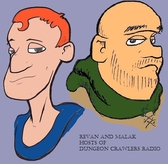
 Interview with The Man Monday night
Dungeon Crawlers Radio interviews The Man Monday, March 8th at 10:30 PM MTN. You can listen live or to the archive they’ll post to their site. All brought to you by UtahFM. Malak and Revan are great guys. I had a blast with them.
Cool facts on breaking in, advances, etc. for writers
New page on writing facts & figures in the On Writing section.
Novel update
CURSE OF A DARK GOD is moving along. You should see the progress bar move along quite a bit this week.
Initial Schedule for American Fork Arts Council Conference for Writers
This is a cheap day-long writers conference and looks like it’s going to be another great one. I’ve highlighted what I’ll be doing in red. I’ll be making adjustments to the HOW TO WRITE A STORY THAT ROCKS presentation for things learned at LTUE.
Here’s their website. That night I’ll probably be attending the Whitney Awards Gala which is also being held down in Happy Valley, Utah.
DATE: Saturday April 24 2010
8-9 a.m. Registration
9-9:10 Welcome (Plenary)
KEYNOTES
9:10-9:40 Keynote #1 Ginger Churchill, “What I Wish I had Known as a Beginning Writer”
9:40-10:10 Keynote #2 Ally Condie, “My Journey to National Publication”
10:10-10:40 John D. Brown, “Aiming for National Publication”
INTRODUCTIONS of editors and authors
10:40-11:05 EDITORS: Derk Koldewyn, Granite NAME
AUTHORS: Caleb Warnock, Linda Jefferies, Shannon Guymon
11:05-11:20 15-minute break
11:20-noon BREAKOUT ONE
Upstairs room “Crafting the Novel” with Shannon Guymon, John D. Brown
Downstairs One “Finding and Working With an Agent” with Ginger Churchill, Ally Condie, Caleb Warnock
Downstairs Two “Taking Your Questions about Publishing” with Deseret Book and Granite Publishing
noon-1 LUNCH “Mix and Mingle with Authors and Editors”
1-1:40 BREAKOUT TWO
Conference One Derk Koldewyn of Deseret Book “What Deseret Book is looking for now”
Conference Two Ginger Churchill “How to Write and Publish Picture Books”
Upstairs room John Brown, “How to Write a Story That Rocks Part 1: First Principles & Story Concept”
Office room Caleb Warnock “10 Things Every Writer Should Know about Copyright”
Downstairs One Granite Publishing “What Granite is looking for now”
Downstairs Two Ally Condie “Writing Young Adult Fiction”
1:40-1:50 Ten-minute break
1:50-2:30 BREAKOUT THREE
Upstairs Room John Brown, “How to Write a Story That Rocks Part 2: Character”
Conference Two Ginger Churchill “Genres of Children’s Books, from Board Books to YA Novels”
Conference One Derk Koldewyn of Deseret Book “National Publication with Shadow Mountain”
Office room Caleb Warnock “How to Write the Query Letter”
Downstairs One Granite Publishing “Publishing Options with Granite”
Downstairs Two Shannon Guymon “How to Write Romance”
2:30-2:40 Ten-minute break
2:40-3:20 BREAKOUT FOUR
Upstairs Room John Brown, “How to Write a Story That Rocks Part 3: Plot”
Conference Two Ginger Churchill “How to be a Writer and a Mother Too”
Conference One Linda Jefferies “Writing Poetry”
Office room Caleb Warnock “Write a Synopsis? I’d Rather Gouge My Eyes Out!”
Downstairs One Ally Condie “Succeeding as an LDS author”
Downstairs Two Shannon Guymon “Writing Nonfiction”
3:20-3:30 Ten-minute break
3:30-4:10 BREAKOUT FIVE
Upstairs Room John Brown, “Writing Scenes: The Basic Units of a Novel”
Conference Two Ginger Churchill “Querying Agents and Publishers”
Conference One Linda Jefferies “Publishing Poetry”
Office room Caleb Warnock “Okay, You Were Rejected – Why, and What to Do Now”
Downstairs One “How to form a critique group that works”
Downstairs Two Shannon Guymon “Succeeding as an LDS Author”
4:10-4:20 PRIZE GIVEAWAYS, GOODBYE
REVISED (MAY CHANGE)

(Amusingly, I had to look up what Glee was before remembering it’s only about the most popular TV show in the world right now…)
But my thinking is an antagonist is anyone who works against the protagonist in some way. But regarding the first point, I don’t think the antagonist needs to be stronger than the protagonist… Otherwise the antagonist would always succeed, yes? In many works of fiction the antagonist starts out stronger in some way, but through a series of events the protagonist becomes the stronger one in the end.
Regarding points two and three, I think the important thing is just to make sure the antagonist is an interesting, three-dimensional character just as the protagonist and secondary characters should be.
I take issue with number 3 on her list. Sometimes you just want to hate someone in the story. It’s hard to hate Sue, because we sometimes feel sympathy for her. In some stories, a sympathetic villain just doesn’t work.
Thanks for a very timely post. I’m finishing up the pre-draft stage on my next novel, and am working on my antagonist(s).
My take on Crusie’s list—these qualities increase reader empathy for the protagonist when the antagonist demonstrates them. To put it specifically, being stronger than the protagonist makes the hero more vulnerable, which increases our fear for them. Stopping at nothing, in essence being implacable, in order to achieve their goals, makes the antagonist more dangerous—thus more interesting for the reader, and again, ups the threat against the hero, increasing our concern over their fate. In terms of story, this comes down to making things harder on the character, which can complicate their attempts to resolve the story problem. All of this, for me at least, can lead to “stand up and cheer moments”—when the hero finally triumphs against the odds and defeats the antagonist, escapes the antagonist, or saves or converts the antagonist –a classic cinema example would be Luke saving Darth Vader at the end of Return of the Jedi. I don’t think the first is necessary—though it is important for the antagonist to at least be equal to the foe and probably superior at the start, since the hero is likely to grow in ability and knowledge, though the antagonist could as well
In Lord of the Rings Sauron possessed the first two attributes Crusie lists, but not the third, which, for me at least is crucial for deepening reader interest in the story and adding crucial believability. Plus Sauron largely lurked over the horizon, with various minions threatening our heroes. This made him less interesting.
Gollum, on the other hand, was a great antagonist. He was implacable in his desire for the ring. He wouldn’t quit. He was also vulnerable. We learn that he had been a hobbit who had been seduced by the ring and was now enslaved (and addicted) to it. Physically he was stronger than the ring weakened Frodo, and a fierce fighter (in his class ;-), but more than anything, he wouldn’t quit. There was a brief moment where it looked like he might be saved, but it was not to be.
In Dean Koontz’s The Good Guy (your earlier referencing of this novel lead to my reading it a few weeks ago) the assassin is very capable-at least the equal of our male hero, will definitely stop at nothing, but was only vulnerable in his supreme hubris. For me, at the end, he became unbelievable. An aside—while a simply crazy villain can be scary, I don’t find them nearly as interesting as one that has more depth—is vulnerable, and acting on understandable motives. Granted, Gollum was at least partially insane but he had moments of lucidity, and displayed weakness, scarring and vulnerabilities, which ‘humanized’ him.
A crucial element missing from Crusie’s list is the tendency for the antagonist to let the ends justify the means. In other words, they tend to feel that achieving a goal is more important than side consequences that result from their actions. It seems to me that this can be played off as a contrasting effect if the hero is forced to doing this (and, because they are the hero, they tend to regret and want to atone for the side consequences), or if the villain takes pains to use the right means but does it for the wrong reasons.
I don’t think that great antagonists have to demonstrate all three of Crusie’s attributes. There are also other attributes that can define the antagonist and increase reader interest and fears, such as letting the ends justify the means, being uncaring about consequences, making the conflict very personal (this one really ups my reader interest), etc.
I strongly suspect how crucial her three attributes are depends on the reader. I do think it’s necessary for the villain to be at least as capable as the hero. I disagree with her claim that the antagonist must be vastly more capable. The odds need to be long, at first, for the hero, to be sure, but being at least as capable or slightly more can be just as dramatically powerful as being vastly more capable. The antagonist stopping at nothing, being implacable in other words, is pretty important, and probably necessary. Finally, for me as a reader, showing vulnerability and thus humanizing the villain is important.
My conclusion is that these three are important, but that they are only three of several attributes antagonist can possess.
I want to thank you again, not just for this thought-provoking and personally timely article, but for all your writings on the craft of fiction. I’ve found them very insightful and quite helpful. In the past two years I’ve been studying the craft of fiction pretty intensely, and your focus on effecting the reader is proving very useful.
I also really enjoyed your appearances on Writing Excuses and look forward to reading my copy of “Servant of a Dark God.”
Love these responses.
Dale, thanks for taking the time to post that thoughtful and well-reasoned response. I like the point about means and ends. That’s a valuable insight. It’s in the same vein as Crusie’s #2, but provides it’s own possibilities. Nice. I also think the ideas about the relative strength of protagonist and antagonist are important. I think the more powerful the antagonist, the higher the possibility of failure in the reader’s mind. Where you set it, I agree, I don’t know if there’s an ideal location on the dial.
With regards to the last rule, I tend to agree with Ben and Dale, that it depends on reader taste and the type of story you’re writing. Alien worked, and the antagonist was not vulnerable. Still, her word choice of “vulnerable” is interesting. But I just don’t see all the stories I love having that, although some do, and it is a wonderful effect.
I guess I’m a little late to the party, but here’s my input.
I think that as with everything else, whether these rules apply or not depend on what you’re trying to do. If you want this type of antagonist, because it fits your story, then sure, go for it. But does every story need this type of antagonist? Certainly not. I guess that’s what you meant when you said, “You know what I think of rules and of form outside the context of function.”
So, to answer your questions . . .
What function or effect do these qualities have on the reader or on story elements that impact the reader?
* (1) She is much stronger than the protagonist she sets out to destroy,
Obviously, this sets our hero at a disadvantage and makes things hard. That’s rather important to conflict. If it’s too easy we lose interest. I think a key element here is “sets out to destroy.” Within the context of a story, a BIG antagonist isn’t just annoyed by the protagonist. The protagonist and the antagonist don’t just happen to pass into conflict. Rather, they directly butt heads. They are in direct opposition to each other, and are determined in foiling the other. No middle ground. Does this make for a strong antagonist? Why, yes it does.
*(2) She will stop at nothing to achieve her goal
This, too, increases tension. If we know that our bad guy will do anything, we are more likely to fear for the characters we love and want to win. The stakes are higher with a bad guy that is willing to do anything.
*(3) despite all that strength and implacability, she’s a vulnerable human being, not a cartoon.
To me, to ask if this is necessary for a great antagonist begs the following question: “What is a great antagonist?” I think there are some great antagonists that don’t seem to have a human side. So, the question is, why might you include this in your antagonist? I think this does a few things for the reader. First, it shows that things aren’t all black and white, and that when the bad guy loses, it’s sad to a degree. Second, it might put the nature of the outcome in question: if there is good in the bad guy, that increases the realm of possible endings; maybe the bad guy will turn; maybe the bad guy will relent; maybe there will be some twist in the end; maybe it won’t be absolute. I suppose there’s more this does, but as with everything, the question is: is making your antagonist more human going to accomplish what you want with your story? In the end, the net effect is that things are grayed a little bit. It’s one thing to defeat an inhumane monster, but another thing entirely to defeat a person who cares for homeless children in his spare time. If you wonder what this “human” characteristic does for an antagonist, consider how you felt about Hunger at various points in Servant of a Dark God: when he first attacked, when you learned more about his struggle, when he was defeated.
Do all great antagonists exhibit these three qualities?
No. But certain types of memorable antagonists do. However, the same can be said about any list that describes an antagonist.
If not, are any of these critical for antagonists?
For certain types of stories, sure.
What’s your conclusion about these three rules?
They’re useful to build a certain type of antagonist. Tuck it away for future reference.
I think maybe for my next book, I will start with a bid bad antagonist, and build from there. Seems like I usually build from the protagonist’s side, but it might be interesting to start from the bad guy’s side, and build a protagonist that will grow enough to defeat the antagonist by the end.
We’re never late here because we’re running on John Brown time 🙂
Great stuff, Hezekiah. I agree with what you’ve written. With regards to your last thought, I know with all my novels, because the villain is the force behind the external problem, I have to think about it from the villain’s pov.
What’s the situation?
What does she know?
What’s his/her goal?
What’s her plan for accomplishing that?
How far along is she when the hero gets involved?
Then boom, my hero runs headlong into this and begins to react and form his own plans.
Is that what you’re talking about?