How to Get Rich: Spend

No, really. It’s true. You just have to spend smartly. And in a special way.

Over the course of your life, if you make what the average American does, more than a million dollars will flow through your hands.  And yet so many of us don’t feel rich.  That’s because money is like the Gingerbread Man.  Turn your back on it, and it’s out the door, rudely taunting everyone as it flies by.  And then it gets eaten by a fox. Such a waste.

But it doesn’t have to be.

Let me share with you THE best method I’ve found for managing my money.  It takes tons of anxiety out of spending and saving.  And, if you’re a Dave Ramsey fan, it is the one thing upon which everything else he teaches depends.  If you’re not a Ramsey fan, it doesn’t matter. After getting a job, this is the first thing you must do to get rich.

Here’s the big secret. It has three parts:

1)     Decide how much you’re going to spend on various things BEFORE you spend it

2)     Make what you have left in each spending category EASY to track

3)     Manage the things you can’t foresee

To do the first two parts, you’re going to create a special kind of spending plan. We won’t use the term “budgeting” because “spending” is so much more fun, and because that’s what we’re going to do anyway. To understand how to do this, you need to watch three videos.

Before you do, please know I earned a Masters degree in accounting.  I’ve used Quicken for more than twenty years.  Neither of those things has helped me manage my money like this simple method.  If you’re looking for a better way to manage your money, this is it.

First, watch this video to get an overall idea of how this method works.

Note: you can use actual envelopes and cash for everything if that makes you happy, but you really don’t need to.  The idea is to think of pre-allocating your monthly income to categories of expenses AND then having an easy way to track what’s left.

Now, watch this bubba explain how he does it.

But John, didn’t he say the same thing?

Basically, but he has a fun accent. Besides, it’s good to see another example. And please note again: you don’t have to use actual envelopes and cash, although many swear by them.

Finally, watch this one. No, it’s not just another repeat. There are some additional important ideas illustrated here.

This video brings up the idea of why simply tracking an overall account balance isn’t very helpful. It also shows you WHY envelope categories are–they make it immediately apparent how much money you have to spend for a thing.  If you just use Quicken to track what you spent (looking in the past), you’ll run into troubles.  Let me tell you, I know this from experience. We use Quicken, and have for years, and plan use it for some time to come because it makes taxes and bank reconciliation a snap.  But Quicken only tracks what you spent.  Tracking, as important as it is, is not the key to success.  The key is pre-allocating BEFORE you spend.  And then tracking so you know what you have left in that category.  And making that tracking EASY.

The final thing you have to do is manage the things you can’t foresee because things rarely go exactly to plan. Unexpected things ALWAYS come up. Your daughter will crash the car. Your husband will get appendicitis. You will forget that you had a $200 school sports expense.

Okay, fine. Things happen. But how do you manage them if you can’t foresee them?

If it’s really small, you simply adjust your plan. For example, if you need $30 more in food, you can transfer it from fuel if you have some extra there.

You manage larger things by building up an emergency fund. Ramsey suggests starting with a $1,000 emergency fund and then trying to get two to three months of living expenses—about $10,000 to $15,000 for most people. Unexpected things WILL happen and cost your money. So build up some cushion to take care of them.

Finally, you manage the really large things by getting proper insurance. This is what insurance is for. The types of insurance you need include (1) homeowner’s or renter’s, (2) auto, (3) medical, (4) long-term disability, (5) long-term care (for those 60 and older), and (6) life insurance. You may add true identity theft insurance as well.

Okay, so that’s the overview.  If you want to try this, here’s how you do it.  It’s fairly easy. 

STEP 1: get your head straight

Resolve that you will NOT use credit for anything. You will not spend any money you don’t have.  You will not put another dime on a credit card, and this despite the fact that the plastic devil companies are begging you with offers almost every day to sign up for their cards. (Hum, I wonder how they afford all that junk mail.) If your monthly bills are greater than your income, then we have to fix that first.  But the new law of the land is zero new debt.

Next, always remember to allocate your money to these categories first—shelter, food, adequate clothing, and adequate transportation.  This means if you have a crunch month, you would NOT pay credit card bills before food, even if you work for Visa.

STEP 2: get your blank sheet & pencil

Get out a piece of paper and pencil (not a pen) or open an Excel spreadsheet.  Whoa, that was an easy step.

STEP 3: list your monthly income

List your expected monthly income at the top from all sources.

STEP 4: list your spending categories

List your spending categories. You’re going to split them into two groups.

The first group goes right below your income and includes all of your recurring monthly expense/spending categories. Not the amounts you spend. Just the categories. Things like mortgage, electricity, phone, groceries, dining, etc. Make sure you include some entertainment/fun money.

The second group goes below your recurring monthly expenses and includes all of your major annual periodic expense/spending categories. Things like Christmas, vacation, clothing, kids back to school stuff, etc. And things you want to save for—a couch, iPhone, car, etc. Your emergency fund goes here as well.

If you need help thinking up categories, use these Ramsey resources: Monthly cash flow plan forms and Monthly allocated spending plan form.

STEP 5: Fund your categories

Decide how much you will spend in each category this month.  You should have 0 dollars when you get to the bottom of the sheet.  Spend (allocate) every dime BEFORE you start the month.  You’re going to do this at the beginning of each month.  And you will probably have to adjust it a couple of times during the month.

You will probably have categories that don’t get any money this month.

You will also have categories that get money, but you won’t spend any of it this month.  These are your periodic expenses.  Your goal is to have the cash up front to pay for them, so you have to save for them.  Remember, you are NOT going to take on any new debt. 

For example, if you’re saving up for Christmas, you allocate some money for that out of this month’s funds and TRANSFER it to savings.  Then it will be there when you need it.  You could draw the cash out and put it in an actual envelope, but you don’t have to.  Just as long as you keep a record of the total amount in savings and what it’s all supposed to be for, i.e. total savings in July = $1,000: $500 for back to school, $200 for Christmas, and $300 for my trip with kids to Six Flags in 2013.

STEP 6: mark the “watch” categories

Some of the categories you need to watch closely, and some you don’t. The ones you need to watch closely will be your “envelope watch” categories. 

The categories you don’t need to watch as closely are those that are automatically taken out of your account each month.  And those you will write a check once a month for.  These things include mortgage, car payment, electricity, etc.  These are NOT categories you need to use actual envelopes for.  You can track it on paper or in the spreadsheet. Not much happens with these categories. 

But there are other categories that you’re going to be spending throughout the month, and it’s easy to over spend if you don’t track them.  Groceries, dining, entertainment, gasoline, a specific vacation, etc. are all categories that you make multiple purchases with each month and are flexible/discretionary and need to be watched closely.  So while everything is tracked in a category/envelope on paper or on the computer, you’ll track these with either a real envelope and cash or a virtual one using that free software you saw in the third video or a piece of paper with a running category balance in your wallet.

STEP 7: have fun and spend!

Now go out and spend!

Before spending, check your envelope.  Do you have enough money?  If you do, spend and be happy.  If not, save up for it or find a way to save money in another category and adjust so that you’re still spending the same total amount.  Never spend what you don’t have.

If you feel you need something not planned for, well, you have to get it later OR transfer something out of another envelope.  I just make myself wait a day or three, and usually the urge to buy, Buy, BUY! goes away, and I see I don’t “need” it right now.  Or maybe a more affordable option presents itself.

If the kids want something, and you feel guilty you can’t give it to them, just tell them what’s in the envelope/category, and tell them they can save for it or choose something else in that category that will fit with what you have left.

If you’re tracking envelopes virtually or using the paper balance in your wallet, you MUST update your envelope AFTER every purchase so you don’t spend more than you have. If you find you just can’t seem to remember to do this, go to the cash method.

That’s it! 

Of course, that’s not quite it because even though it’s easy, if you haven’t done this before, it might take some adjustment.  Give yourself a month or three to get it down.  Because when you do, it WILL produce great results and peace. It’s doing that for us. 

If you feel you need more info, I suggest you read Dave Ramsey’s Complete Guide to Money.  Here’s the first chapter to sample: Complete Guide To Money sample chapter.

Happy spending.

EDIT: here’s another video to watch: http://www.youneedabudget.com/.  Then read about the method: http://www.youneedabudget.com/method. This one highlights the idea that you need to make sure you realize that things will happen that you cannot foresee. No plan survives contact with the enemy.


Share

Similar Posts

  • Good Stuff! A Different Kind of Prom

    The first time I attended a high school prom in Rich County, I thought the Rich County people were from another planet.

    I was married. My wife Nellie had grown up in Rich County, and said that we had to go to her little brother’s prom.

    “Your brother’s prom?” I asked. Like, what?

    “Yes, my brother’s prom.”

    Weird, I thought. Because in the big city, older brothers and sisters who have graduated simply do not go to high school proms.

    But I’m always up for strange new experiences, and so we went.

    And I can report that it was indeed strange. In the big city, grandma and grandpa do not attend the prom, nor do mom and dad or little brothers and sisters. And they most assuredly do not sit in the stands and watch the junior class perform a dance.

    But that’s what they did in Rich County. And so I sat next to grandma and grandpa who were nigh unto eighty years old and watched an announcer present the junior class. There was a makeshift stage. And the announcer would announce the names of a young woman and a young man. On the stage, the young woman would take the arm of a young man, and then he would escort her out to the center of the floor to the applause of everyone in the gym. The couple would then perform a little action—he might twirl her, or she him, or she might jump in his arms, or he in hers, or she might lift her dress enough to show she was wearing cowboy boots that matched his, or dozens of other little creative things, and then they’d walk to the side to make room for the next couple.

    In Rich County, there are only forty or so kids in a class, so it didn’t take long. When the juniors were all announced, the whole junior class, in their tuxes and dresses, spread out and took their places on the floor. A song began to play, and then they performed a dance that had been choreographed specifically for the occasion.

    When it finished, the mother or father of each junior went out onto the floor and danced a slow dance with their son or daughter.

    They then presented the seniors in the same way, after which the parents of the seniors went out and danced with their sons and daughters.

    Only when that dance ended did the lights dim and the “normal” dancing begin. Nellie and I danced a few songs, and then she said it was time for us to get some refreshments and go.

    And that’s what we did, leaving the teens to their evening.

    I had never before seen anything like it. I laughed and wondered. Those funny hicks, I thought.

    I took a job in San Francisco for a few years, then another in Columbus, Ohio. And then, years after that hick prom, Nellie and I moved from the big city to Rich County. That was almost thirteen years ago.

    This last Friday I watched as my third daughter was announced and walked down from the makeshift stage. She was escorted by a young man, looking handsome in his tux. I watched him twirl her and another girl (he got to escort two). And when all the seniors had been presented, I got to dance with my girl at the prom.

    I cannot tell you how sweet that was to look in her eyes, to see my little girl grown up into this beautiful, strong woman. I thought about how she was soon going to leave us, and tears threatened to spring into this papa’s eyes, but she smiled and said, “Don’t you dare.”

    What’s a man to do? I obeyed. And instead of blubbering, we danced.

    When we finished, I gave her a hug and a kiss on the forehead and returned to the stands.

    I’ve danced six times with my girls at these Rich County proms—once when each was a junior and once when they were seniors. And I love this tradition.

    I love that a huge part of the community comes out to the dance. I love that we honor and applaud these great kids. I love watching the juniors in their gorgeous dresses and handsome tuxes perform these beautiful, formal dances that remind me of something you might find in Victorian England, something that seems to have stepped right out of Pride and Prejudice.

    DSCN5281
    Juniors performing dance
    DSCN5296
    Parents dancing with kids

    What an excellent evening.

    How lucky I am that places like Rich County exist, and that I get to live in one of them.

    Share
  • Peak

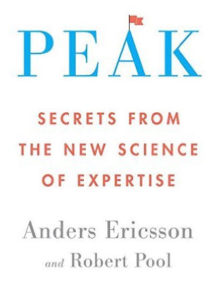
    peakbyandersericssonHow many pushups can you do in a row?

    10, 20? Could you do 100?

    And you’d have to be a freak if you could do 500 in a row, right?

    Well, no.

    You’d just be human.

    In 1980 Minoru Yoshida of Japan did 10,057 pushups nonstop.

    In 1993 Charles Servizio of the good old USA did 46,001 pushups in 21 hours and 21 minutes.

    In 2016 David Escojido of the USA did 2,298 pushup in 1 hour.

    You might think that these folks must be oddities. They must be gifted. They must have some weird thing in their DNA allowing them to do these things.

    But you’d be wrong.

    None of these people were born that way. In fact, what researchers are finding is that most of the folks that we think are prodigies—folks like Mozart, Tiger Woods, chess masters who can play 20 games at once without even looking at a board—the biggest thing that separates them from the rest of us isn’t DNA.

    Anders Ericsson, a researcher at Florida State University, has spent the last 30 years studying what gives experts their edge. And he reveals in Peak: The New Science of Expertise that he and other researchers have found that while there are some physical traits like height and size that definitely make a difference in some physical activities (notice how all the top gymnasts are short), what really sets people apart is how much of a certain type of practice they’ve done.

    Not just practice, but a certain type of practice.

    Practicing “hard” doesn’t do much for you. Putting in a lot of hours doesn’t do much either. Instead, you need to practice in a way that has been shown to lead people to actually improve their performance. You still have to put in a lot of time practicing—there is no shortcut—but only the type of practice he explains in the book seems to lead to the increase of performance.

    Is he saying that anyone can do anything?

    No. When I first looked into his research, one of my big issues was that it seemed he was claiming anyone could do anything with 10,000 hours of practice.
    But he’s not saying that.

    Is he saying genetics has no influence?

    It can, but what he’s found is that it doesn’t have the role we normally think of when we think of top performance. And, most importantly, we place artificial limits on ourselves by thinking people are born to this or that activity.

    There is far too much to post here. What you need to know is that what he shares in this book is fascinating, compelling, and surprising. I’ve been training people for over thirty years. And I found myself enlightened. If you’re at all interested in education, or getting better at some activity (from parenting to golf), or helping your kids get better, you’ll want to read this book. Highly recommended.

    Share
  • Good Stuff! The audio production of Lockwood & Co.

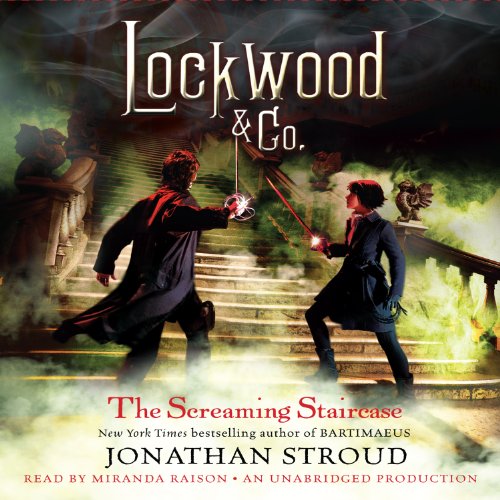
    I’m excited to share the Lockwood & Co. series by Jonathan Stroud. It’s a delightful audiobook experience for the whole family.

    Nellie introduced me to it on our road trip to Yosemite last October.

    And, oh my gosh, how we’ve enjoyed listening.

    They’re young adult paranormal thrillers with a good dose of humor and English charm.

    Yes, Netflix, launched a show based on the books, but Nellie and I tried it, and the Netflix productions don’t hold a candle to the audiobooks.

    It’s not even close.

    If you’re going to do this series, listen to the audiobooks or read them.

    The story is set in England in, I’d say, the 1980s, before cell phones and the internet became a thing. The problem is that ghosts, specters, tommy knockers, etc. are appearing all over the place and causing havoc. Because, in this world, when you’re touched by a visitor from the other side, you can easily become ghost locked, basically put in coma, or die.

    And while the ghosts can touch anyone, children and teens are the only ones who can see them. And so it’s children and teens who must fight them. Of course, large ghost protection agencies are formed, but our story is about Lucy Carlisle, who joins a tiny agency run by a daring young man named Anthony Lockwood.

    There are five books in the series, which translates to about fifty-nine hours of delightful listening. Perfect for the long road trips, cleaning, fixing dinner, walks, etc.

    Miranda Raison is the reader for the first book, Katie Lyons the second, and Emily Bevan for the final three. And they’ve all been a joy to listen to.

    I’m not normally a paranormal kind of guy, but this is making me reconsider. We loved Stroud’s Bartimaeus series. And he brings the same fast action, interesting characters, and wit to these. 

    If you enjoy delightful characters and derring-do leavened with some humor, give these a try. I think you’ll be glad you did.

    Share
  • Stonefather by Orson Scott Card

    stonefather_72dpi“When Runnel was born, he was given a water name even though there had never been a wetwizard in the family.

    In the old days such names were given only to those babies as would be sacrificed to Yeggut, the water god. Later, such names were given to those whould would live to serve as priests to Yeggut. Still later, wetnames went to children of families thath pretended they once had a watermage in their ancestry.

    But now, in the village o Farzibeck, wetnames were given because the mother was fond of a nearby brooklet or because the father had a freind with such a name.”

    So begins Stonefather by Orson Scott Card. It tells the tale of Runnel who is the ninth son and fifteenth child of a farmwife who likes all her children well enough but calls them all “by each other’s names and didn’t know enough numbers to take a census and notice when one or two were missing.”  He’s also the son a man who beats him. Eventually, Runnel leaves home and seeks his fortunes in Mitherhome, the big city far to the south.

    This isn’t a full novel, but a novella of 112 pages. However, the Subterranean Press edition has a glorious cover and ink illustrations inside. More importantly, the story tells a tale that’s full of wonder, humor, and a number of delightful characters. It reminded me of the best of Card’s Hatrack books. But, of course, this world is very different. It’s strange, and I was happy to explore it with Runnel as my guide. Take an hour to read this. You won’t be disappointed. Then you can look forward, as I do, to the first of the Mithermage novels based on this world.

    Share
  • Good Stuff! The Greatest Showman

    I saw the previews of The Greatest Showman, the movie about the circus guy. I rolled my eyes. The circus? Come on.

    But my daughters, one by one, went to see it and came home raving.

    And then my wife went to see it and came home raving.

    And then my youngest was playing some music the other night, and I said, “Ooh, that’s nice. Good beat. Wow. What is that?”

    She said with much affection, “The Greatest Showman, loser.”

    I said to myself, maybe the previews simply stank. I said, I’ve seen movies where the previews were better than the full-length film. Maybe this was the reverse.

    I said, to my fine daughter and wife, “How about a movie night?”

    They were more than game to see it a second time. So we went and saw The Greatest Showman this week.

    Here’s the report.

    Oh. My. Holy. Freaking. Heck!

    This movie is one of the best movies I’ve seen in the last few years. And get this: it was released more than eleven weeks ago, back in December of last year. How many movies do you know that stay in the theaters for eleven weeks straight? When a movie keeps attracting crowds week after week, long after the release night hype has faded, they say it “has legs.”

    Let me tell you, this one has some legs. The music is awesome. The visuals are wonderful. And the story—the story is everything a story should be. I came out of the theater having wept and cheered and bitten my nails and been thrilled with a number of the scenes. I came out of the theater happy, positive, thinking about life, thinking about what really matters.

    Look, if you enjoy musicals, if you enjoy dramas, if you enjoy Hugh Jackman of Wolverine fame, you must drop everything you’re doing right now and run to see this before it leaves the theaters. You’ll be so happy you did.

    And now, I’m going to figure out how I can go see it again.

    Share
  • |

    Radiolab’s “Parasites”

    Radio and TV have incredible power. But until the last decade they were always constrained by time and signal power. You had to listen when the station broadcast it, and you had to listen where you could pick up the signal. 

    Living out in the boonies we don’t get good radio or TV reception (no I don’t subscribe to satellite). Which is why the internet is so wonderful.

    You can listen and watch almost anything when you want from almost any location–yes, even in Laketown, UT, Boonie Central. Millions listen to music, conservative talk, or libral talk (NPR) via the internet. I enjoy all three depending on my mood. But there’s so much more out there than music and blah blah blah, as much as I love it. For example, you can listen to the British BBC. You can listen to the Dutch. See what’s going on in Australia. Doesn’t matter that they are a number time zones away and all asleep when I’m working. I love the internet.  

    One of the best programs I’ve heard in the last six months is the three-part “Parasites” presented by Radiolab. In a fascinating hour they address the following questions:

    • Parasites: are they evil, or are they awesome?
    • Should you get infected with hookworms?
    • Can parasites exercise mind control over their hosts?

    Along the way they tell a number of amazing stories. Listen now. You won’t be able to stop.

    Get zinged, Baby!

    Share

4 Comments

  1. More people need to know this kind of stuff and use it. I don’t like using spreadsheets, and tried out a number of budgeting applications before finally settling on YNAB. It’s the most useful software tool for planning expenses that I’ve found, and it follows all the principles you’ve talked about here. I highly recommend it.

  2. Thanks for posting this. It’s very timely for me. I visited Dave Ramsey’s site after I read your post. I’m ready to start the baby steps. 🙂

Comments are closed.