The Righteous Mind by Jonathan Haidt
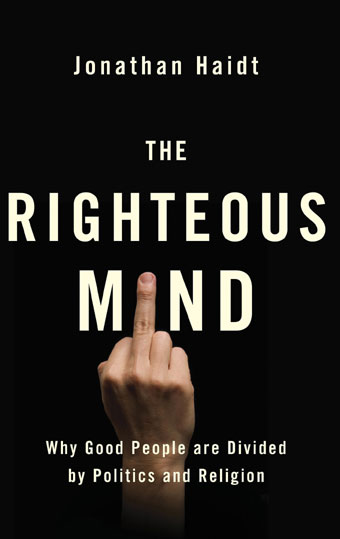
After this year’s presidential election I emailed my sister, a smart, super-competent, true-blue, bleeding-heart, save the weeds and snails liberal, who volunteered to do campaign work for Hilary Clinton in Colorado during the 2008 Democratic primaries and, of course, voted loudly for Obama in this last election.

“Are you kidding me?” I asked. “How can anyone who doesn’t have a carrot for a brain want more of the same? I don’t get it. Obama? How can so many Americans be that gullible? I’m totally baffled.”  And that puzzlement wasn’t rhetorical. I was seriously baffled.

“Are you kidding me?” she replied. “Mitt Romney? How could anyone vote for Mitt Romney?  Talk about baffled.”  She went on a rant listing all of Romney’s supposed deeds and positions of sooper evil and stupidity. Then she questioned how anyone could support that Hitler in his Mormon clothes.

Okay, she didn’t say “Hitler,” but she did claim he was “evil” and “despicable.” And when I think of evil, my first thought is always of folks like Mitt Romney.

Vicente Carrillo Fuentes, leader of the Juarez drug cartel, which is responsible for hundreds of gruesome murders each year and . . . Mitt Romney. Oh, yeah. They’re like brothers. In fact, wasn’t Romney’s dad born in Mexico? And, hey, one of Romney’s sons even knows Spanish. That boy wasn’t on a church mission there. No, he was making connections with the jefe!

Sonia Montoya-Cadena, the one who ran a human trafficking ring in Denver exploiting young girls for sex and . . . Mitt Romney. Yeah, Romney’s just like that. If he could run slave brothels, he’d do it in a minute to make a buck. In fact, doesn’t Bain Capital own a couple of slave brothels in Greenland?

I wanted to unload. I was prepared to destroy her with fiery analysis of the first order.

Thundering analysis.

Mountain crushing logic.

She was so freaking blind.

Except,

She had never actually considered what I had to say in any of my previous emails. It never mattered how powerfully vast my brilliant logic was. She’d demonstrated wax ear time and again. All of my intellectual might never made a dent in her liberal force field. I brought blood and thunder, and it always seemed to bounce off her like bullets made of styrofoam.

Nevertheless! Clinton? Obama? Save the gerbils?

I made a comment that sent Smart Sister into DEFCON 5. Foolish me. Eventually, her liberal ire cooled and she decided to order comrade Putin to stand down and not push the big red button.

Meanwhile, I started to think.

I noted that if things didn’t change, the Republicans wouldn’t be winning the presidency any time soon. If they couldn’t beat Obama when the economy was in the tank, then there really was no hope. Which meant we are going to end up like Greece, with continuing inflation (which is not only an intentional, government-led annual pay cut on the disgustingly rich, filthy rich, and annoyingly rich, but also on the middle class, poor, destitute, and various and sundry hoboes everywhere), huge debt, stupid taxes, ridiculous health care, Soviet-style redistribution, blah, blah, blah.

I asked myself, like all Republicans did, what could we conservatives do differently? Follow Obama’s example and improve our operations to get the vote out? Build up a conservative La Raza? Do the right thing with the children of illegals? Get someone willing to land more blows on the opposition (Romney could have decimated Obama in debates two and three, but he didn’t; he totally failed to define his opponent).

Maybe it was in the messaging. Maybe what we needed to do was develop something that actually changed minds.

At this point a faint ding sounded in the distance in my mind. A small light bulb suddenly flipped on and illuminated a dark cubby of my mind.

Hadn’t I just read about studies showing how a soap opera in Mexico, a radio play in Tanzania, and sitcoms in America actually changed viewer attitudes and behaviors about literacy, HIV, and abortion? Didn’t I already know about the power of concrete and vivid storytelling? Not sermon-telling, but storytelling.

Why, yes. Yes, I did.

Had I not witnessed the use of storytelling on U.S. television for, what, fifteen years by those wanting to build sympathy for homosexuals? (A good thing, even if I disagree with some of the gay agenda.) And the cheapening of sex by others? (A bad thing.) And the clearly conscious promotion of many other attitudes and beliefs via various media programs?

I determined there was something to this.

If people were going to vote for fiscal responsibility in Washington, something like this was going to have to be done. It wasn’t going to happen in flame wars.

About this same time I was browsing through the recent Radio West programs. I saw one called “The Righteous Mind.”  It was an interview of Jonathon Haidt about his new book The Righteous Mind: Why Good People Are Divided by Politics and Religion.

Hey, wasn’t that addressing my question?

The program blurb states: “Monday, our guest is the social psychologist Jonathan Haidt, whose latest book sets out to explain the root causes of the divisions in our society. At the heart of his argument is the idea that the human mind is designed to “do” morality. But when we separate into tribes – say political affiliations or religious denominations – we focus on different moral foundations. Haidt joins us to explain why he says we need the insights of liberals and conservatives to flourish as a nation.”

I listened. And loved the program.

Haidt shared a number of deliciously insightful things about how our mind works and how we choose our affiliations. He shared so many insights that I immediately requested his book at my library. The library ordered a copy for their collection. I, of course, was first in line to read it. I just finished the book.

It’s one of the best books I’ve read all year.

Haidt explains why my sister and I were both baffled by people who voted for the opposition candidate. He explains how human morality works. How our reason does not lead us to make the judgments we do, but instead more often acts like a lawyer to justify our positions to others.

As soon as he explained that I saw how I had done that time and time again. For example, in this election cycle I blamed Obama for the economy. In the Bill Clinton re-election I vigorously argued that the President doesn’t have any effect on the economy and is lying if he takes credit for it. I’m not saying that Obama didn’t do things that might have hampered the recovery, but how did I know his actions exacerbated our problems? What evidence did I really have?

Haidt explains that there are six basic moral bases then points out which ones drive liberals, conservatives, and libertarians, and how we can use that knowledge to disagree more constructively. He provides strong insights into how our reason and intuitions and judgments work, the evolutionary function of our morality, and how our wiring for group affiliation affects it.

I didn’t agree with some of his conclusions. He sometimes takes his points too far. For example, he seems to suggest that people in cities are pre-disposed to be liberal. And that’s why they live there. Um, no. That’s not why they live there. They live in cities because that’s where the jobs are. The agricultural revolution made sure of that, remember? In his effort to explain the smaller biological basis of our beliefs, he also downplays the larger effect our families and groups have. But despite these excesses, he shares so many fresh and exciting ideas that they don’t matter. And he shares them all in such a fun and clear way that I couldn’t help but stay up late a number of nights reading this book.

Do you know how much I wanted to trash Obama to my sister?  That Soviet-style central planner.  That drunken sailor spender.  That choom wagon pot head.

And yet, you and I also know that will never work. I now know better why. Because of Haidt, I think I see a better way. I certainly see how I have done exactly what drives me mad about those who have drunk the opposition candidate’s Kool-aide. I see that I have my own conservative force field that deflects liberal bullets (and perhaps even blinds me to the truth sometimes). And why I need to watch my reason, that cunning lawyer part of my brain, as well as my intuition.

Haidt, a liberal, has given me, a conservative, a great gift. I intend to use it. If you are interested in the two taboo topics of politics or religion, if you enjoyed Malcolm Gladwell’s book Blink or the Heath brother’s Made to Stick, if you want to find a better way to influence than flame wars (as fun as they can sometimes be), then I think you will enjoy the wonders Haidt shares in his fine book.

Don’t just take my word for it. Listen to the Radio West program http://radiowest.kuer.org/post/righteous-mind for a taste of what awaits you.

Share

Similar Posts

  • Gladwell, Dish Cloths, and Higher Technology for Tuna

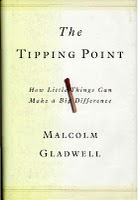
    The Tipping Point by Malcolm Gladwell

    After reading Made to Stick, I decided to read the book that inspired it—The Tipping Point: How Little Things Can Make a Big Difference by Malcolm Gladwell. I’d read Blink and Outliers by the same author and found both fascinating.  I’m happy to report The Tipping Point is just as good. In it, Gladwell examines what conditions cause ideas, behaviors, messages, and products to spread like outbreaks of infectious disease. 

    In the book he shares a number of situations and studies, including the sudden drop in crime in New York city in the 1990’s (which started by attacking graffiti in the subway), the dramatic popularity of the Blue’s Clues TV program with pre-schoolers, Paul Revere’s success in rousing the citizens along his route (versus the almost total failure of the other guy who rode that night), the resurgence of Hush Puppies shoes, syphilis in Baltimore, Columbia Record’s amazingly effective golden box ad campaign, and a dozen other outbreaks.  From all of these, he extrapolates three rules of social epidemics—The Law of the Few, The Stickiness Factor, and The Power of Context.  

    The arguments Gladwell presents are thought-provoking and powerful, but what makes him such a treat to read is how he writes.  Like the best science writers (in fact, I think he IS one of the best), he tells great stories with interesting characters.  He puts the reader on the edge of the seat with mystery, insight, and humor. He makes things that could be incredibly complex seem like first grade math. It’s as if he’s standing right there with you chatting about the subject. Moreover, he does all this from page one.

    Here’s what I mean. I left the book out on the kitchen table one night after reading a few chapters.  The next morning Super Wife came down to quickly eat breakfast and get herself to a meeting.  She made the mistake of opening the book to glance at the first page. Twenty-five minutes later she came up for air and realized she was going to be late and dashed out the door. The writing is pure mind control.  And I loved every minute of it.

    If you’re at all interested in advertising or how fads and movements start, if you want to affect the behavior of customers or local teens, if you just like to read how things work, I think you’ll love this book.

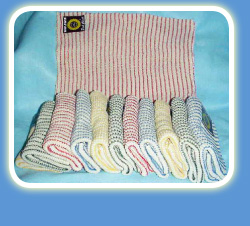
    Sunflower Dish Cloths

    I used to suffer along with subpar dish cloths.  There were the dish cloths with mesh on one side that were so small you had to rinse them after every wiping stroke.  There were the hand cloths made of terri that belonged in a bathroom but were repurposed and were far too big. Then were the cloths that had some slippery crap in the thread that refused to soak up water.  And there were the crocheted things that I think we should have put out of their misery when we first got them. Folks suggested we go to sponges. So we did sponges and had similar results.

    Oh, woe, woe, woe.

    Then a kind and loving friend gave us a set of mystery cloths that were incredible.  They were large enough that we didn’t need to rinse with every wipe.  They had this fantastic weave that was open, yet absorbent, and dried quickly.  And the weave had enough of a texture that you could use it to scrub.  We received those back in 1999.  They lasted us for years and gave us much kitchen cleaning joy.  But, alas, like all of mortality, those brave cloths finally began to give up the ghost. 

    My problem was that I didn’t know who had made those cloths and where I could get more.  We looked all over and couldn’t find them.  And then, at this year’s Garden City Raspberry Days craft fair, we saw them nestled amidst all the kitsch!  We bought as many as we could afford, and went our way rejoicing, fully expecting these to last us until we have grandchildren.  Maybe we’ll pass them down as priceless heirlooms.  Maybe some day they’ll be featured on Antique Roadshow.  Maybe they’ll be resurrected with us and become the official dish cloth of the Millennium when the world is renewed (it could happen).

    If you’re sick and tired of sponges and crappy dish cloths, let me suggest you pick up some Sunflower Dish Cloths made by Sangamon Mill. You can order them in bulk at http://www.sangamonmill.com/ , or in smaller quantities online from places like Amazon.

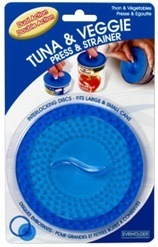
    Everiholder’s Veggie & Tuna Press & Strainer

    Do you eat tuna? If so, you know the biggest pain is draining the can. But you don’t have to suffer along any longer using the lid, which doesn’t do a good job at all anyway.  There’s a better solution, which Super Wife discovered. It’s called the Tuna and Veggies Press and Strainer by Evriholder: http://www.evriholder.com/Tuna-Veggie-Press.asp.  With this little blue piece of higher technology you easily and quickly press all the juices away, and nothing slips out the sides. We love our.  You can order it online, although Super Wife found it at our local evil empire Wal-Mart store.

    That’s it for now.  In the next review, I’m going to reveal two killer recipes over which all who partake will salivate and drool—Chocolate Éclair Cake and Dill Potato Salad.

    Share
  • |

    American Idol Story Elements

    I don’t have time to watch, but I found myself getting sucked in this week. And here’s something I realized as I watched Simon, Paula, Randy, Ryan, & the contenstants–the show is using story principles.

    Idol

    Duh, I know: of course, it is. But it does it so well. It reminds me of a research article I read about sportscasters and audience enjoyment of sports competitions. They found that if they could inject story elements–suspense, rivalry, etc.–people enjoyed the games more. Next time you watch a college football game, notice what the color commentators say to make it a contest. It’s not just about reporting what #45 did out in the flat.

    Anyway, back to Idol. Look at these elements.

    What draws us to characters?

    Beauty, threats, quirkiness, larger-than-life situation or skills, source of viewer wish-fulfillment.

    Humm, let’s look at the cast of performers. Don’t we see all of that? How many of us wouldn’t love to be able to sing like they do? Have a shot at becoming a recording artist? Or just goggle at someone getting this chance?

    What factors generate suspense?

    Threats to characters we like or marvelous opportunities for them, turns in the situation, a prolonged resolution.

    Humm. Our sympathy is engaged because these folks are normal folks, many of them underdogs. Many viewers identify strongly with one or two because of the contestant’s various social groups and because, heck, the auditions are for people like you and me. It could be us up there in front of the world! You’ve got the threat of peformance fright, but also the overriding opportunity to make a dream real. You’ve got a wonderful career, if not millions of dollars, on the line. You’ve got Simon who is honest, but also plays his part. Isn’t that the moment of most suspense with each performance? You’ve even got a little subplot going on between Simon and Seacrest. There’s no villain here. But there are plenty of obstacles. Weekly threats.

    What does Idol give us that Survivor never could?

    It’s all REAL, even if the producers let their selection of performers be influenced by things other than vocal talent. And because it’s real, we believe it. Which means we can more easily feel sympathy and root for the various performers.

    It’s a simple but brilliant concept. And I just wasted 4 hours watching it. And I’m likely to do it again.

    Zing, Baby. Zing!

    Share
  • Good Stuff! Jesus Revolution

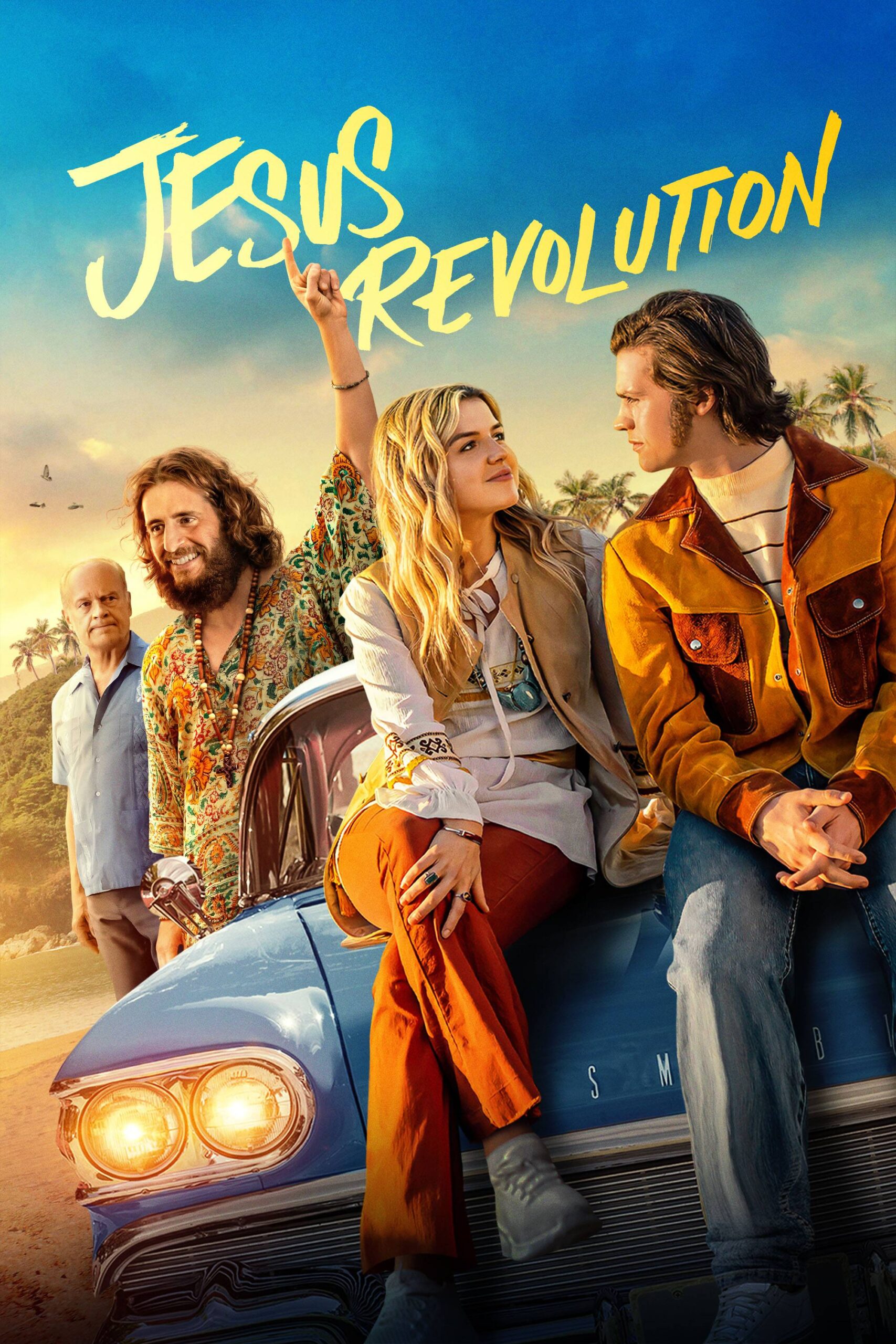
    Jesus Revolution poster

    In 1969, Greg Laurie, was seventeen and going to high school Newport Harbor High School in California. Fourteen miles from Disneyland. Just one mile from the beach.

    Laurie was raised by a single mother who had seven marriages and struggled with alcoholism. They moved often, sometimes to very different locations such as New Jersey and Hawaii. He was not raised in the Christian faith or a church environment.

    He began participating in the hippie movement, doing drugs, dropping out, because it was fun and because maybe this was the way.

    The 1960s and early 1970s was the height of the hippie movement, which sought love, beauty, honesty, freedom, and fun. Hippies felt that “The Man” (the establishment, the authorities, those in charge, Big Brother) had caused huge problems. And they wanted to drop out of that society. Leave it utterly. Find a new way.

    Why? What was the problem?

    The 1960s was the decade of the Vietnam war. It was the decade when we came to the brink of a nuclear World War 3 with the USSR over the Cuban Missile Crisis. It was the decade when a huge portion of the United States strove for equal rights for minorities and women against a lot of opposition. There were riots. Protests. Beatings. This was the decade when Martin Luther King Jr. and John F. Kennedy were assassinated. There were problems galore.

    Now the 1960s was also a terrific decade. We passed civil rights legislation, men landed on the moon, super nerds introduced BASIC computer code which opened the door to the computer revolution. It was a decade of many good things, including the year when Lovely Wife was born. Let’s not forget that.

    But it was certainly a tumultuous decade. And the hippies offered a counterculture. A different path.

    A lot of youth followed that path. For example, in 1969 half a million hippies showed up at the Woodstock festival to protest the war, capitalism, and convention, and celebrate peace, love, and individual freedom.

    This is the world young Greg Laurie was living in. And he was heading down the drug-hippie path.

    But then he met a man named Lonnie Frisbee who looked like a hippie, had been a hippie, right at the epicenter in San Francisco, but was now inviting fellow hippies and youth to a different path.

    A path that featured Christ. But not in the way of many of the churches at the time.

    How was this path different? Did Greg turn around?

    There’s a new movie out that is based on these true events. You can watch it and find out.

    It’s called Jesus Revolution.

    Nellie and I enjoyed the heck out of it. We laughed. We were on the edge of our seats, moved, and inspired. In fact, I enjoyed it so much I want to watch it again.

    It’s a great entertainment for the whole family.

    If you’re looking for a terrific, feel-good show, I think you’ll love Jesus Revolution. Give it a try.

    Share
  • |

    This American Life: Superpowers

    What superpower would you rather have–flight or invisibility? What do others choose? Why? What does it say about you?

    Want to hear about a gal named Zora who, as a teen, made a list of everything that a superhero would have to know how to do, things like flying helicopters and diffusing bombs, and then set out to do it. Zora finished her list, btw. She’s a bounty hunter now.

    You can hear this right now on  This American Life episode 178: Superpowers .

    It’s a fabulous hour-long program.

    Share
  • Other Movies I Enjoyed: 2000 – 2009

    Other Movies I Enjoyed: 2000 – 2009

    Don’t have time to provide the logline and comments for each. But those with an * are movies I especially enjoyed.

    2009

    • Avatar: except for all the moments when I thought the characters were going to break out in Pocohantas songs–“haaave yooooou ever heard the wolf cryyyyyy to the bluuuuuue cooooorn mooooooon…”–I enjoyed it. When I came out I defintely wanted to be a blue dude.
    • Julie & Julia: funny, although did they really need to show the “coarse” Julia?
    • Monsters vs Aliens: I didn’t like the villain or the story, but BOB was hilarious and worth it.
    • Star Trek: Best Star Trek movie. Second is Wrath of Khan.
    • Up

    2008

    • Henry Poole is Here
    • *Iron Man: Wow, I’ve wanted to fly since forever.  This movie was just cool.
    • Madagascar: Escape 2 Africa: The penguins and King Julian.
    • *Slumdog Millionaire (RU)
    • Taken: great concept. Ending fell flat, but I love the concept
    • The Dark Knight: first 30 minutes all I could say was “I want to be Batman, I want to be Batman.” The Joker was amazing. However, something didn’t work for me in this movie. I thought there was only one heroic moment (the convict on the boat). I didn’t feel Batman’s dilemma in the end. The end was poetic, but I didn’t feel the drama. It was still a fun ride.

    2007

    • The Bourne Ultimatum
    • *The Jane Austen Book Club: this one should have been a runner up. I really liked this.

    2006

    • Cars: Mater
    • *Casino Royale (RU)
    • Firewall: a good Harrison Ford film, excellent villain and situation
    • Happy Feet: I thought it was going to be dumb, but I really liked it. The characters were great.
    • Invincible: the story of Vince Papale, a 30-year-old bartender from South Philadelphia who overcame long odds to play for the NFL’s Philadelphia Eagles in 1976.
    • The Devil Wears Prada
    • The Lake House
    • The Pursuit of Happyness

    2005

    • Batman Begins
    • Cinderella Man
    • Coach Carter: Loved the story and Samuel Jackon’s character
    • Hitch
    • *Hoodwinked: really loved the humor
    • Madagascar: Hate the lion and the story but the penguins and King Julian are hilarious. I laugh every time.
    • Serenity
    • *Sky High: fun with Kurt Russell and Bruce Campbell
    • *Walk The Line (RU)

    2004

    • *Collateral: A cab driver finds himself the hostage of an engaging contract killer as he makes his rounds from hit to hit during one night in LA. He must find a way to save both himself and one last victim.
    • Ella Enchanted: goofy, but a lot of fun to watch with my girls
    • I, Robot
    • *Miracle: I hate hockey, but I liked this
    • Napoleon Dynamite: was in shock until Pedro shaved his head, then I couldn’t stop laughing.
    • *Spiderman 2 (#5)
    • The Bourne Supremacy
    • *The Incredibles (#2)
    • The Village: watched it with inlaws and it scared them for days–totally worth it

    2003

    • Elf: syrup
    • Holes: we loved the book and the movie did it justice
    • *Last Samurai (#7)
    • *Luther (RU)
    • *Matchstick Men (RU)
    • *Open Range: best cowboy movie in a looong time–I just love Duvall
    • *Pirates of the Carribean: Curse of the Black Pearl (#9)
    • *Return of the King (#1)
    • Runaway Jury
    • *Saints and Soldiers
    • *Seabiscuit (RU)
    • Secondhand Lions
    • The Italian Job: Yes, I cheered for criminals

    2002

    • About a Boy
    • Drumline
    • *Ice Age (#3)
    • Minority Report
    • Reign of Fire: best dragon movie to come along in a long time
    • Snow Dogs: goofy fun, enjoyable to watch with the kids
    • *The Bourne Identity: really liked the suspense and action
    • The Sum of All Fears
    • *The Two Towers (#1)
    • Treasure Planet: I didn’t think it could work, but it did. Enjoyed the relationship between Jim and Silver
    • Two Week’s Notice: a good romance
    • *We Were Soliders (#6)

    2001

    • *A Beautiful Mind (#10)
    • Behind Enemy Lines
    • Legally Blonde: you didn’t like Witherspoon? Come on, tell the truth.
    • *Lord of the Rings (#1)
    • Monsters Inc
    • Oceans Eleven
    • Recess: School’s Out: I loved watching these on Saturday morning with the kids. The movie was just as good.
    • The Princess Diaries

    2000

    • 28 Days
    • *Cast Away
    • Chicken Run: “Mrs Tweedy, the chickens are revolting…”
    • *Emperor’s New Groove (#4)
    • *Gladiator (#8)
    • *Miss Congeniality: this was excellent fun to watch with the wife
    • O Brother, Where Art Thou?: loved the soundtrack, characters, and story. Hated the abundant profanity
    • Space Cowboys
    • The Perfect Storm
    • The  Kid: Bruce Willis and the kid are great
    • *Unbreakable: really liked this one, great superhero movie
    • X-Men: didn’t like it as much as others, but it rocks for pure super-hero power
    Share

2 Comments

  1. This book has been recommended to me by a lot of friends, all of them left-of-center people, so I dismissed it as their attempt to diagnose me with some malady that explains my political beliefs. Now that I’ve read your review; however, I’ll have to give it a chance. It does sound interesting.

    I was pretty disappointed with the President’s reelection, not because I think he is so terrible as much as because I think Mitt Romney was such a qualified candidate to lead during our present-day economic situation. He probably won’t run again, and I can’t help but feel we missed our opportunity to have a truly decent man with an extraordinary skill set, guide the nation’s course back to prosperity.

  2. I hear you. And, surprise surprise, we’re right back into the same fiscal wrangles we were before Oh, well. I think you’ll like the book.
    Sometimes Haidt didn’t capture me as a conservative as well as I would have liked. It seems he suggests sometimes that harm and fairness don’t matter to me, which they do very much. You read the other issues I had with the book. But the framework he presents, I think, is a good one.

Comments are closed.