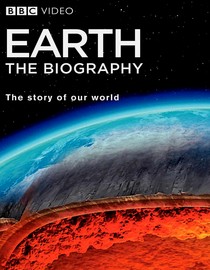
 Earth: The Biography is one of the most interesting documentary series I’ve seen in a long time. It’s produced by National Geographic and the BCC. Dr. Ian Stewart, a Scotsman, hosts the program and tells the life story of our planet, how it works, and what makes it so special.
There are five parts: “Volcano,” “Atmosphere,” “Ice,” “Oceans,” and “Rare Earth.” And while they were all good, the last two blew me away.
For example, I always thought the polar ice caps were a big waste of water. What do they do besides torment penguins and Eskimos?
But the program reveals that the ice caps are critical to all life everywhere on the planet because they power the great ocean conveyer. This conveyer is a slow current that carries surface water away from the equator up to the polar caps then down to the sea floor and back—transporting oxygen, nutrients, and warmth all around the globe.
We can see how critical the ocean conveyer is when it stops. There was a time when this happened. With no replenishment of oxygen, the water turned to poison. The poison was picked up in the clouds and rained down upon the land. And almost every living thing on the planet died a toxic death.
Sniff, sniff–we love you, Polar Ice Caps.
“Oceans” was fascinating, but “Rare Earth” was the kicker. How common is our cozy little situation here on earth?
Well, for life to exist as we know it, we needed to be a certain narrow distance from the center of the galaxy, orbit a certain, less common type of star, be within a certain range of that star, have a big old fat vacuum like Jupiter hanging out in the wings sucking up asteroids and comets so they don’t hit us instead, have an orbiting moon of a certain size, an earth core with just the right amount of iron, a tilt to the earth that would allow polar ice caps, water, an atmosphere to protect us from all sorts of celestial mayhem. Heck, we even had to have that nasty mass extinction caused by the broken ocean conveyer. And there’s more.
So many rare events had to line up just right, that it’s bound to make the atheists among us celebrate their good fortune with illegal-Wyoming-firework abandon and the believers to rise up from their chairs and shout, “Hallelujah and Amen!”
Nellie, the girls, and I all loved this show.
***
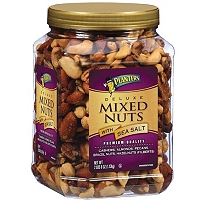 I’m a nut man. Love nuts. Hazelnuts, walnuts, Brazil nuts, pistachio nuts, cashews, pecans. But nuts are expensive. And while peanuts are lovely, I like some variety and grow weary of the mixes where you get about five thousand peanuts and one burnt almond. So when I saw the forty ounce jars of Planter’s Deluxe Nuts (sea salt, NO peanuts) at Sam’s Club in Logan, Utah selling for a mere $10.98, I just about fainted away and died.
Eleven bucks?!
For comparison, please note that a little ten ounce jar of the exact same nuts costs six dollars in the grocery store. Four times the nuts for less than double the price!
The nuts are good. More importantly, they’re a regular item at Sam’s. So with all the reports coming out about how good nuts are for you, reduce heart disease, reduce diabetes, blah, blah, blah, fight aliens, I can now afford to eat them and hopefully extend my stay as a carbon-based life form.
***
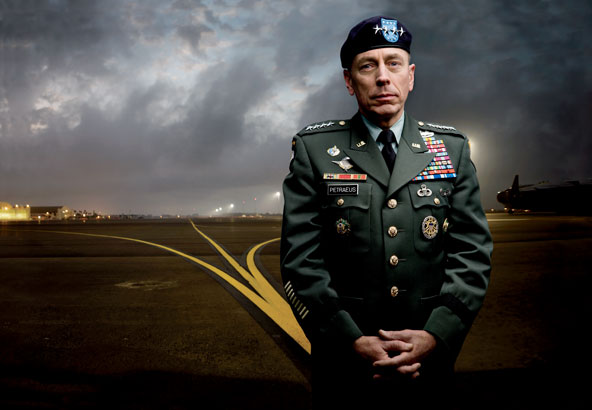
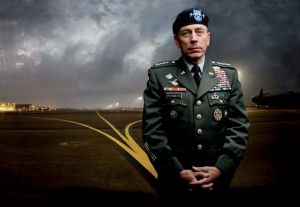 General David Petraeus has revolutionized the way America wages war. It was his strategy that turned the war in Iraq around. It’s his strategy that’s being used in Afghanistan. And it will be his methods that will inform how our soldiers face enemies in years to come.
The key to his thinking is realizing that there are two different terrains that must be won in the types of war we wage now—the geographic and the human. You know what geography is—take that hill, secure that town, remove the threats from that jungle. The human terrain, on the other hand, is made up of the hearts and minds of the people at the site of the struggle and has proven to be equally important.
It’s important because the wars we’re most likely to engage in now are not ones where two big armies square off and blast away. Anyone who tries to stand up to the United States using that method is going to very quickly learn what it means to get stomped, shredded, and served to the dogs. So most of the battles are likely to be engagements in unconventional war, where the enemy hides, and where the local populace will make or break the effort.
In May 2010, Vanity Fair magazine published a fascinating article called “The Professor of War” by Mark Bowden. It summarizes Petraeus’s history, the source of his thinking, and the kind of man he is. With so much at stake, I was grateful to get this well-written glimpse into the general and his approach to war.
While you’re at the site, you might want to also read another Vanity Fair article titled “General McChrystal’s Three Biggest Strategic Errors in Dealing With Rolling Stone” by Bill Bradley, published June, 2010. McChrystal was Petraeus’s right hand man. The contrast between the two men is enlightening.

 I think I must disagree with half of everything Paglia says (I’m a Republican, she’s a Democrat). But when you can write like a kung fu master, you have to be read:



Hi Maja,
So good film and cool sound. Thanks!
Li Tieqiao