Blindingly white and female!

MaryLeonhardt_KeepingKidsReadingThe Guardian just published a report of a survey taken of 34 American book publishers and found that 79% of staff are white and 78% female. Or as The Guardian put it “blindingly white and female” as if it’s some kind of horror show.  The rest of the article bemoans the lack of diversity in publishing and our society in general and quotes the author of the study suggesting that these percentages should be monitored.

Is anyone up in arms about appropriate diversity percentages in the NBA or NFL?

Some might roll their eyes and ask me not to trot out that old chestnut. But it’s not a chestnut. It’s a point–nobody cares, me included. So why care about this? Many industries will be skewed toward one gender or race than another. As long as everyone has free opportunity to compete, who gives a flip?

Maybe that still doesn’t satisfy. Okay, how about this. According to Humanites Indicators, approximately 70% of degrees in English language and literature in America are awarded to…women. And about 82% are awarded to Whites. I’m assuming these percentages are probably pretty good indicators for the gender and race of folks interested in working at publishing companies.

If so, the survey results don’t reflect some white woman conspiracy at these publishing houses. They simply reflect the choices people make in college.

By the way, did you know the United States is still 72% White and European. So it’s not surprising to see roughly that many Whites in these jobs. The numbers might be a little high, but minorities seem to be pursuing other degrees in greater numbers (compare the overall percentages here versus those with ELL degrees).

This is not to say that we don’t want to welcome authors from all different background. We do. But if you want more men and more minorities, then maybe instead of monitoring publishers, you ought to start by seeing if you can attract more men and minorities to ELL degrees.

Or even better yet, how about reaching out to more boys and minorities at an earlier age and helping them learn the delights of reading and writing? Maybe if they like it, more of them will go into it as a career.

The best program I’ve seen for helping kids learn to love reading is the one Mary Leonhardt outlines in Keeping Kids Reading: How to Raise Avid Readers in the Video Age. It’s the culmination of the insights she gained over her thirty-five years teaching high school English and focusing on helping kids learn to LOVE reading. What an excellent book!

Oh, and one other idea. It might be effective to maybe just skip publishers altogether and help folks go directly to readers as indie writers. Amazon’s algorithms are pretty much race- and gender-blind.

Share

Similar Posts

  • |

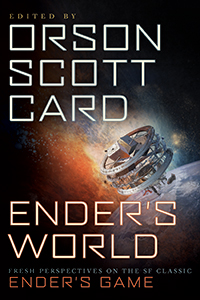
    Ender’s World: Fresh Perspectives on the SF Classic Ender’s Game

    Smart Pop publishes smart, fresh, and engaging articles on the best of pop culture TV, books, and film, with a particular focus on science fiction and fantasy television and literature.

    You want to hear what Scott Westerfield (Uglies, Pretties, etc.) has to say about Buffy?  Go to Smart Pop.

    What about Orson Card’s thoughts on Joss Whedon’s Firefly universe? Smart Pop.

    What about the venerable Lawrence Block on Robert B. Parker’s Spenser series? Um, Smart Pop.

    Strange.  Do you see a pattern emerging? 

    Whether it’s Mad Men, House, Hunger Games, George Martin’s epic fantasies, Halo, True Blood, or Alias, Smart Pop gathers together New York Times bestselling authors, television writers, psychologists, philosophers, and others–folks who love of pop culture and have something worth sharing about it–and asks them to share their insights.   

    Recently, they’ve been putting together just such a collection on Ender’s Game.  It’s called Ender’s World: Fresh Perspectives on the SF Classic Ender’s Game. It’s coming out February 2013.  You can read more about it here.

    I’m announcing this now because The Man was fortunate enough to be invited to contribute.  I love Ender’s Game.  LOVE IT.  How cool is it that I get to write about it in an anthology edited by the folks at Smart Pop and Card himself? And then get to read what everyone else has to say, including military strategists Colonel Tom Ruby and Captain John Schmitt.  As well as the little bits they’ll include on things like why the battle room is the shape it is and why they were recruiting kids.

    But I’m also announcing this because in addition to the essays all we Ender-lovers get to write, Smart Pop is also going to include a series of Q&As with Scott Card, and they are currently soliciting the question from readers. FROM YOU. Right now.

    You ever wonder about a character or part of the setting or event in Ender’s Game?  Ever wanted to know what inspired Card? Ever wanted to ask any question at all about Ender’s Game?  Now’s your chance. Just submit you question here: http://www.smartpopbooks.com/ask-orson-scott-card-a-question-about-enders-game/

    You can see questions already submitted at Smart Pop’s Tumblr.

    From a writer’s pov, I have to tell you that the folks at Smart Pop have been nothing but enjoyable and insightful to work with. I’m looking forward to this book!

    Share
  • Good Stuff: 8 Awesome Movies

    Summer is a great time to catch up on great movies you haven’t seen because sometimes the movies that are released to the theaters during this time are contenders for the dud award.

    I shall leave films such as Transformers: The Franchise Could Have Been So Cool or Pirates of the Caribbean: Johnny Depp Is Now Acting Really Weird nameless.

    Instead of watching duds, try a couple of these fantastic movies, all of which are based on true stories.

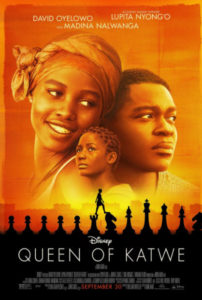
    Queen of Katwe. A tremendous film based on the true story of depicts Phiona Mutesi, a girl growing up in the slums of Katwe, a city in Uganda, who gets a chance to break out of that life with chess. You will come away having laughed and cheered and been touched in a poignant way. Highly recommended.

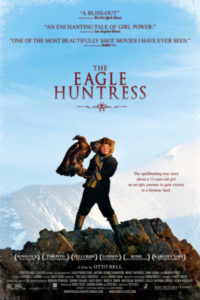
    The Eagle Huntress. A fascinating documentary about the first girl in Mongolia to compete as an eagle hunter—these are folks who capture and train golden eagles to hunt game like fox or rabbit. You’ll be introduced into a new and interesting culture that triggers you to think about your own.

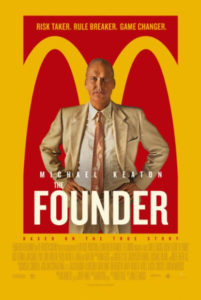
    The Founder. Ever wonder how McDonald’s got started? No, neither had I. Who cares, as long as the food is good, right? Well, if you’re like me, you’re in for an eye-opener. This tells the story of how Ray Kroc started McDonald’s, except, hint, he didn’t. Kroc is played by Michael Keaton. He’s one of my favorite actors, and I loved his performance. This story will fascinate you, and then make you think, and then make you really appreciate folks like Dave Thomas of Wendy’s.

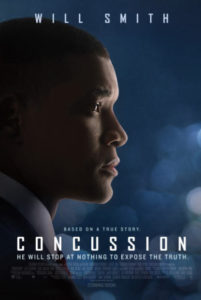
    Concussion. An engrossing, suspenseful film about the true story of Dr. Bennet Omalu and the tie between football and brain degeneration. Omalu was working as a forensic pathologist (one who figures out the cause of death) in Pittsburg, Pennsylvania. In 2002, Omalu performed an autopsy on Mike Webster, a former NFL star who played for the Pittsburg Steelers and is considered by some to be one of the best centers in NFL history. And his worked opened up a can of worms the NFL wanted to quash. I loved this film.

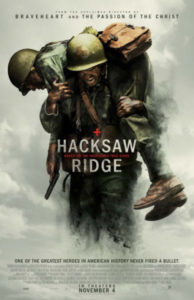
    Hacksaw Ridge. This one is based on the true story of Desmond Doss, a Seventh-day Adventist who did not believe in killing, but wanted to support his country and all those going to war. So he goes into World War 2 as a medic and is sent to the Pacific theater. His first engagement is the Battle of Okinawa. And, oh my holy heck, what he did during that battle is nothing short of amazing. There’s one part of the film in boot camp that seemed out of place. Really, some dude back in the 1940s was going to do pull ups in the barracks naked (nothing but a bum is shown in the film)? But then I recall that growing up in the 70s and 80s that we guys showered in communal showers. And that wasn’t a big deal. And earlier than that, swimming at the swimming hole often meant shucking your clothes and jumping in. So who knows? We have a similar funny scene in Mulan, but for some reason that one felt more organic. This one felt tacked on. It was a gag for humor and then, thankfully, Mel Gibson, who directed this, got on with the awesome story of Doss.

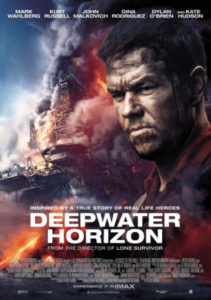
    Deepwater Horizon. This one is based on the true story of the Deepwater Horizon, an oil rig in the Gulf of Mexico that encounters a catastrophe. The details of how such rigs work and the issues involved are fascinating. But what will really get you is the heroism of the captain and crew.

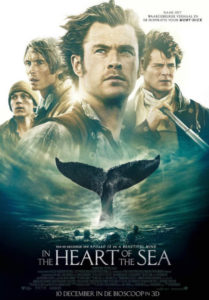
    In the Heart of the Sea. This is based on the true story of the whaleship Essex that was sunk in the Pacific in 1820 by a sperm whale and what the few that survived did to remain alive. Back in the 1700s and early 1800s, sperm whale oil, which was contained in the whale’s large head, was highly prized for lamps because it burned bright and odorless. It was also a great lubricant. Later the oil was replaced with kerosene and other and petroleum-based lubricants, but in those days there was a whole industry dedicated to harvesting it. I watched this with my teenage daughter, and we both found it a powerful tale.

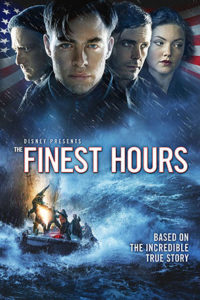
    The Finest Hours. This last one is based the book The Finest Hours: The True Story of the U.S. Coast Guard’s Most Daring Sea Rescue by Michael J. Tougias and Casey Sherman. It chronicles the 1952 United States Coast Guard rescue, in a dinky boat, of the crew of the SS Pendleton, a big tanker, after the ship split apart during a nor’easter off the New England coast. The movie was thrilling and heroic.

    And after you watch all of those, if you want some more great films based on true stories, well, you won’t go wrong with Tom Hanks in Sully or Captain Phillips or Bridge of Spies.

    Share
  • Good Stuff! 4 Delightful Movies

    If you’ve been looking for some good movies to watch, I have four here that I think you’ll enjoy.

    Wives And Daughters CoverThe first is for fans of Downtown Abbey and Pride and Prejudice. It’s a four-episode, BBC TV miniseries called Wives and Daughters, and is based on the novel by Elizabeth Gaskell, who was a popular English novelist in the mid-1800s. Gaskell is the one who also brought us the delightful Cranford and North and South, which all my daughters love.

    Wives and Daughters is about Molly Gibson, the daughter of a country doctor, who suddenly has to deal with a new stepmother and a stepsister who becomes Molly’s good friend but brings a lot of baggage with her, mostly concerning men. It’s also about a man whom Molly falls in love with, but who only thinks of her as a sister.

    But it’s about even more than that. It’s about the enjoyable relationship Molly has with her father and the local Squire and his family, and the issues the Squire has with his own sons. It’s also about how the women in the town and the local gentry deal with Molly.

    Gaskell has a knack for showing both the good and bad about people and still making you love them. She also writes a fabulous ending. I don’t want to spoil anything, but the ending, for me, was just brilliant in so many ways. If you enjoy period romances, you’re going to love this.

    *

    The-Hundred-Foot-JourneyThe next movie is called The Hundred Foot Journey and is a humorous story about a contemporary Indian family down on its luck. The father leads them to England, but things don’t work out. So he takes them on a trip through France looking for the place to set up their restaurant. Except it’s a bit of a hare-brained idea because France doesn’t do Indian food.

    The family’s vehicle breaks down outside a little town, and the father decides this is the place where they will try to build their life again. The problem is the spot he’s chosen is right across the street, the titular hundred feet, from a posh French restaurant. And the battle between the two restaurant owners begins.

    You’ll laugh and fall in love with the characters in this story. And when it’s over, you’ll immediately want to go out and get some Indian food. It’s a great film.

    *

    The_Good_Lie_posterAnother wonderful fish-out-of-water story is The Good Lie, which is about three of The Lost Boys of Sudan, refugees who are resettled in America.

    In 1983-2005 there was a civil war in Sudan, which lies on the southern border of Egypt. During the war, government troops and rebels of the south systematically attacked villages in southern Sudan, killing 2.5 million and displacing a million others. The Lost Boys and The Lost Girls were children who escaped the attacks and traveled by foot in search of safe refuge. For many that was over 1,000 miles across three countries to refugee camps in Ethiopia and Kenya. Over half died along their epic journey, due to starvation, dehydration, sickness and disease and attack by wild animals and enemy soldiers.

    In 2001, as part of a program established by the United States Government and the United Nations, approximately 3,800 Lost Boys were given the chance to leave the camps and resettle in the United States. This film is inspired by their experience. In fact, a few of the actors are actually some of those who were resettled.

    The beginning of the film is about their journey. The rest is about what happens when they come to America. There are many poignant moments in this film, but there is also a good dose of humor and goodness. It’s a wonderful film to watch with the family.

    *

    McFarland,_USA_posterMy last, but certainly not least, recommendation is McFarland, USA, made by Disney and starring Kevin Costner. My family and I simply loved this movie. We loved it so much some of us ended up watching it three times because we couldn’t coordinate our schedules and so watched it again with the family members who weren’t there the first time.

    It’s based, with a little literary license, on a true story about Jim White, a teacher who re-starts a cross country running program in 1980 in McFarland, a small agricultural town at the south end of California’s Central Valley. It’s another fish-out-of-water film with this White coach being introduced to Hispanic culture.

    Now I know what you’re thinking—oh, jeez, another sports film. And, yes, it has many of the same story beats that you find in many sports stories. But this one seemed to make them all fresh again. All I can say is that we loved it. In fact, immediately after the third viewing, two of my daughters were so juiced about running, they went out on a run of their own.

    If you like sports at all, you’ll like this one. But even if you don’t love sports, you’ll like it because it’s not really about sports. It’s about the human spirit and seeing value in the things everyone else overlooks.

    Share
  • The Last Apprentice, Path Finder

    The Last Apprentice

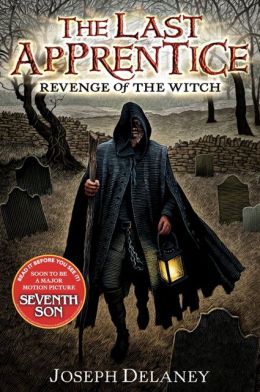
    Revenge of the Witch by Joseph DelaneyMy wife is always telling me I need to write a young adult or middle grade adventure series. One that’s directed at boys.

    Not because we have something against girls. We have four daughters, and my wife is adamantly pro-woman. But she finds very few books for her sixth-, seventh-, and eighth- grade male readers. I haven’t done a count, but I’m pretty sure that most YA is targeted at females. And this isn’t just me. I remember visiting a Barnes & Noble in Arizona with my voracious-reader nieces a few years ago and riding the escalator to the YA section. They told me that they called it the “girl-book section” because they figured that basically 90% of it was indeed for girls.

    Anyway, I think writing such an adventure would be a blast. I can already think of a number of near future or fantasy settings that would rock. But the time constraints I have right now just won’t allow me to start another series. Nevertheless, we sat down the other day and listed out all of the authors and books we knew that had a more male focus.

    For about the twentieth time she told me about Joseph Delaney’s The Last Apprentice series. It’s about a boy who apprenticed to the county Spook who is someone that takes care of witches, ghasts, ghosts, etc.  Her students love the stories. She loves them. She has bought the first ten volumes for her classroom. Why the heck wasn’t I reading them?

    Well, for starters, I just don’t like books about witches. And the first book in the series is called Revenge of the Witch. I don’t know what it is. Witches aren’t as bad a zombies–I am SO bored with zombies; I just don’t get the appeal. But even if they’re better than creatures that make no sense at all to me, I just don’t like spooky horror all that much. I loved to be scared, startled, and filled with dread. But not with witches.

    Witches? The gals with pointy hats?

    No.

    But this was, as I said, like the twentieth time she’d brought it up. We were driving over to Logan (that’s the big city for us), and stopped at the library, and we went over to the YA section. Unfortunately, they didn’t have volume one. But I did see many other volumes on the shelf and figured I needed to see what the competition was doing. So I perused. A few night later we went to her classroom, and there was volume one. The one about the witch.

    I sighed and opened it and began to read. And when I finished chapter one, I realized I kind of liked it. It was like the old Life cereal commercials—hey, Mikey!—and I wanted to read more. And so I took it home, read the whole book, and was delighted with the story. I liked it so much I promptly borrowed volume two, Curse of the Bane, from my wife’s classroom and read it as well. And I liked that one so much I checked out the third.

    The story is about Thomas Ward, the aforementioned apprentice. In book one, he is forced to face down some witches. But it’s Alice, the girl with pointy shoes, who made the story for me. Adding her as a character transformed it from a run-of-the-mill booger man story, into something special. No, I’m not going to give you a peek at the plot. Just know that this is the book where Thomas starts his apprentice, has to deal with that new life (and I thought Delaney captured that so well), and makes some apprentice mistakes that he then has to fix.

    In book two, we get to meet Alice and Thomas again, but this time they have to face down a different creature. And again, while the adventure is all cool, it’s the interactions with Alice that put it over the top.

    Having praised the books, I will say that I think Delaney has something against priests and religion in general because he paints it all with a negative broad brush. It’s too bad. Not only is such a view inaccurate, but showing the good and bad could add so many delicious dimensions to the tale. Maybe we’ll see that in later books. But even if we don’t, book two was still a great read.

    I’m looking forward to book three. If you’re in the mood to try something new, something about a young man and young girl that doesn’t revolve around romantic smoldering, something that a guy would like to read, let me recommend you join me in reading the volumes of The Last Apprentice.

    Pathfinder
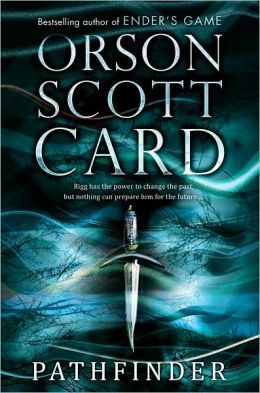
    Pathfinder by Orson Scott CardI was once in a discussion about religion with a friend who happens to be an atheist and fellow science fiction and fantasy writer. He’s a great guy. The blog posts he wrote about the passing of the woman he loved who was lost to cancer were poignant and wonderful–full of beauty. I read them and wanted to be a better man. Still, he and I disagree about God.

    I remember telling him that science fiction is the one genre that makes God more plausible than any other. At least, it makes my view of God more plausible.  Now, I do not want to talk religion in this essay. But it’s just hard for science fiction to leave the idea of creation and Adam and Eve alone. Witness the many stories over the years about these very things.

    Heck, even the recent movie Oblivion has references—are not Jack and Victoria much like Adam and Eve? Just think about it. Their paradise together as a team, the knowledge, the fall. The echoes are simply marvelous.

    Well, I just read another science fiction tale that provided a wonderful opportunity to think about these things. It’s Orson Scott Card’s novel Pathfinder. Now, the story isn’t about God. It’s not a biblical allegory. It’s not dressed-up doctrine. It’s a tale about a boy named Rigg with special abilities on a quest to find his real family and who he is. Along the way we meet some interesting people, especially one character named Loaf who leavened the whole tale. So there’s an interesting adventure and speculations about faster-than-light travel. But one of the chief delights for me was the questions and ideas this story raised in my mind about the creation of our own world—“Garden,” the name of the world, just begged for it.

    For example, a long-time staple of science fiction is the idea of terraforming—changing face of the flora, fauna, atmosphere, and climate of the planet to be hospitable to your species. If you believe in a God that is more a being of advanced technology than one of unknowable fantasy, doesn’t that present a new and interesting way of viewing the creation story? It does for me, and Pathfinder sparked ideas about this.

    The book also led me to think about life. First, Card has these characters called “Expendables.” They’re robots, but not really. They’re artificial intelligence. But not really. The way Card presents the expendables, you don’t think of silicon and steel and gears. You think of biology.

    You think of mosquitoes.

    You think about the fact that if we humans use intelligent machines, surely God must use intelligent machinery. So what kind of intelligent machinery does God employ? (Dude, that idea is just pregnant with stories!)

    Are viruses and bacteria machines? Are mosquitoes and beetles (please, let there be no mosquitoes in heaven)?

    The book prompts me to wonder. It prompts me to look at the life about me on our wonderful world with new eyes. It prompts me to think differently about some of my core definitions. In fact, there are some exchanges between a character and an expendable where they talk about the difference between humans and expendables and the definition of what it means to be human, especially given evolution.

    This is a book about an adventure, but also a book about ideas, which is as it should be. Science fiction is the one genre, more than any other, that marries character and plot with exploration of ideas. If you’re looking for an interesting tale that will make you think about our world differently, give Pathfinder a try.
    Share
  • Monster Hunter International by Larry Correia

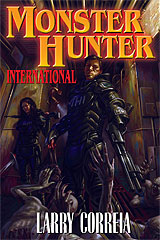
    MonsterHunterInternational_LarryCorreiaThere’s a joke that all horror movies would be over in two minutes if you just made the hero smart and gave him a gun.

    Well, Correia gives his likeable hero a gun, but not just any old thing. If you’re going to kill a vampire, why not use a rocket propelled grenade or a flame thrower? In fact, if there were enough monster outbreaks, you might have a government agency. You might also find that agency was willing to outsource some of the monster hunting to private contractors (ala Blackwater). And you can bet they won’t be hunting with pea shooters. They’ll be doing it right, with brains and firepower. Correia, someone who loves guns (used to own a gun shop and shoot competitively in rifle, shotgun, and pistol) and monsters, wrote a story that does just that.

    The idea of Larry Correia’s Monster Hunter International might remind you a bit of X-Files or Men in Black, but it’s neither. However, it is as  good as or better than both. Correia tells the story of Owen Pitt, a big lug of an accountant, who, as he was working late one evening, gets called into the office of his boss. No big deal, right? Except the fat man is naked, transforming into a werewolf, and vows to eat Pitt’s heart. It’s not quite how you want to end your day tallying debits and credits. Pitt almost dies in the encounter, but manages to “live the American dream” and throw his incompetent jerk of a boss from the fourteenth-story window and splatter him on a double-parked Lincoln Navigator below.

    Good work for a bean counter. When Pitt finally recovers, he gets an offer he can’t refuse (mostly because of the alluring agent that comes to recruit him), and he joins Monster Hunter International (MHI), the private contractor who sends out special force teams to use any means at their disposal to kill monsters. Unlucikly for Pitt, one of the baddest monsters around is just about to ruin the world forever, and Pitt finds himself in the middle of the fight.

    Correia fills the book with enough action for any red-blooded male, a variety of bad mamba jamba monsters, and wonderful characters. There’s romance and heroism (I got a lump in my throat at one part toward the end), but his signature is his humor. I laughed again and again.

    Part of that humor stems from the fact that Correia has an ear for good lines. Part stems from his delight in taking common tropes and stereotypes and twisting them. And this is another one of the things that I enjoyed immensely about the book. For example, the team of newbie hunters that Pitt joins is not made up of square-jawed males and females with Navy SEAL backgrounds, although some in the company do have that. Nope, Correia puts together an accountant, librarian, school teacher, and stripper (all people who faced some kind of monster and are ready for payback), and he makes them believable hunters. 

    This tongue-in-cheek tweaking is everywhere. There are elves in this book unlike any you have ever seen. But he also makes it personal. Owen is not your typical accountant. Even a number of the minor characters get this treatment. For example, one of the people on the team is a Black guy with Rasta hair. But Correia doesn’t choose from what Correia calls one of the four Hollywood stereotypes. Nope, this guy plays against those types. He isn’t the comic relief, the gangsta, the sports dude, or scary male. He’s his own man, a shy virgin with a good heart. Correia also gives his characters interesting backstories. And one of the delights is discovering them.

    I encountered a few minor flaws in the presentation, but these are easily overlooked. Easily. There’s also quite a bit of profanity (and so those who wish to avoid it are forewarned). However, when I turned the last page Friday night, I looked up at Larry who was lying on his bed in our La Quinta hotel room in Denver, his concealed .45 and 9mm guns on the floor beside him, and said, “Wow. WOW.” And then I think I said, “Dude, what a marvelous read” or maybe it was “Oh, great lord of zombie destruction tales do not smite me,” but I’m not sure because I was still thinking about the perfect last line of the perfect last scene of the last chapter.

    Now, those exclamations of satisfaction and delight had nothing to do with the guns on the floor, that Larry’s a deadly shot, or that he’s a big 6’3″ Portugese. It has nothing to do with the fact that he and I were on a book tour together. I don’t read books that don’t grab me. End of story. I stopped doing that long ago. I don’t care who wrote them. And I don’t give false praise. False praise irks me to no end and does nobody any good, especially not the receiver. The truth is that Larry’s book was simply too good to put down. It pulled me in with the opening quote and kept delivering the goods until the end. And if you don’t believe me, you read the quote that both inspiried and opens the book and tell me you don’t want to turn the next page.

    “You know what the difference between me and you really is? You look out there and see a horde of evil, brain-eating zombines. I look out there and see a target-rich environment.” ~Dillis D. Freeman Jr.

    Yeah, it got ya, didn’t it. The ride is waiting folks. Just go on over to Amazon. Correia is going to be a writer to watch.

    Share
  • Good Stuff! Jesus Revolution

    Jesus Revolution poster

    In 1969, Greg Laurie, was seventeen and going to high school Newport Harbor High School in California. Fourteen miles from Disneyland. Just one mile from the beach.

    Laurie was raised by a single mother who had seven marriages and struggled with alcoholism. They moved often, sometimes to very different locations such as New Jersey and Hawaii. He was not raised in the Christian faith or a church environment.

    He began participating in the hippie movement, doing drugs, dropping out, because it was fun and because maybe this was the way.

    The 1960s and early 1970s was the height of the hippie movement, which sought love, beauty, honesty, freedom, and fun. Hippies felt that “The Man” (the establishment, the authorities, those in charge, Big Brother) had caused huge problems. And they wanted to drop out of that society. Leave it utterly. Find a new way.

    Why? What was the problem?

    The 1960s was the decade of the Vietnam war. It was the decade when we came to the brink of a nuclear World War 3 with the USSR over the Cuban Missile Crisis. It was the decade when a huge portion of the United States strove for equal rights for minorities and women against a lot of opposition. There were riots. Protests. Beatings. This was the decade when Martin Luther King Jr. and John F. Kennedy were assassinated. There were problems galore.

    Now the 1960s was also a terrific decade. We passed civil rights legislation, men landed on the moon, super nerds introduced BASIC computer code which opened the door to the computer revolution. It was a decade of many good things, including the year when Lovely Wife was born. Let’s not forget that.

    But it was certainly a tumultuous decade. And the hippies offered a counterculture. A different path.

    A lot of youth followed that path. For example, in 1969 half a million hippies showed up at the Woodstock festival to protest the war, capitalism, and convention, and celebrate peace, love, and individual freedom.

    This is the world young Greg Laurie was living in. And he was heading down the drug-hippie path.

    But then he met a man named Lonnie Frisbee who looked like a hippie, had been a hippie, right at the epicenter in San Francisco, but was now inviting fellow hippies and youth to a different path.

    A path that featured Christ. But not in the way of many of the churches at the time.

    How was this path different? Did Greg turn around?

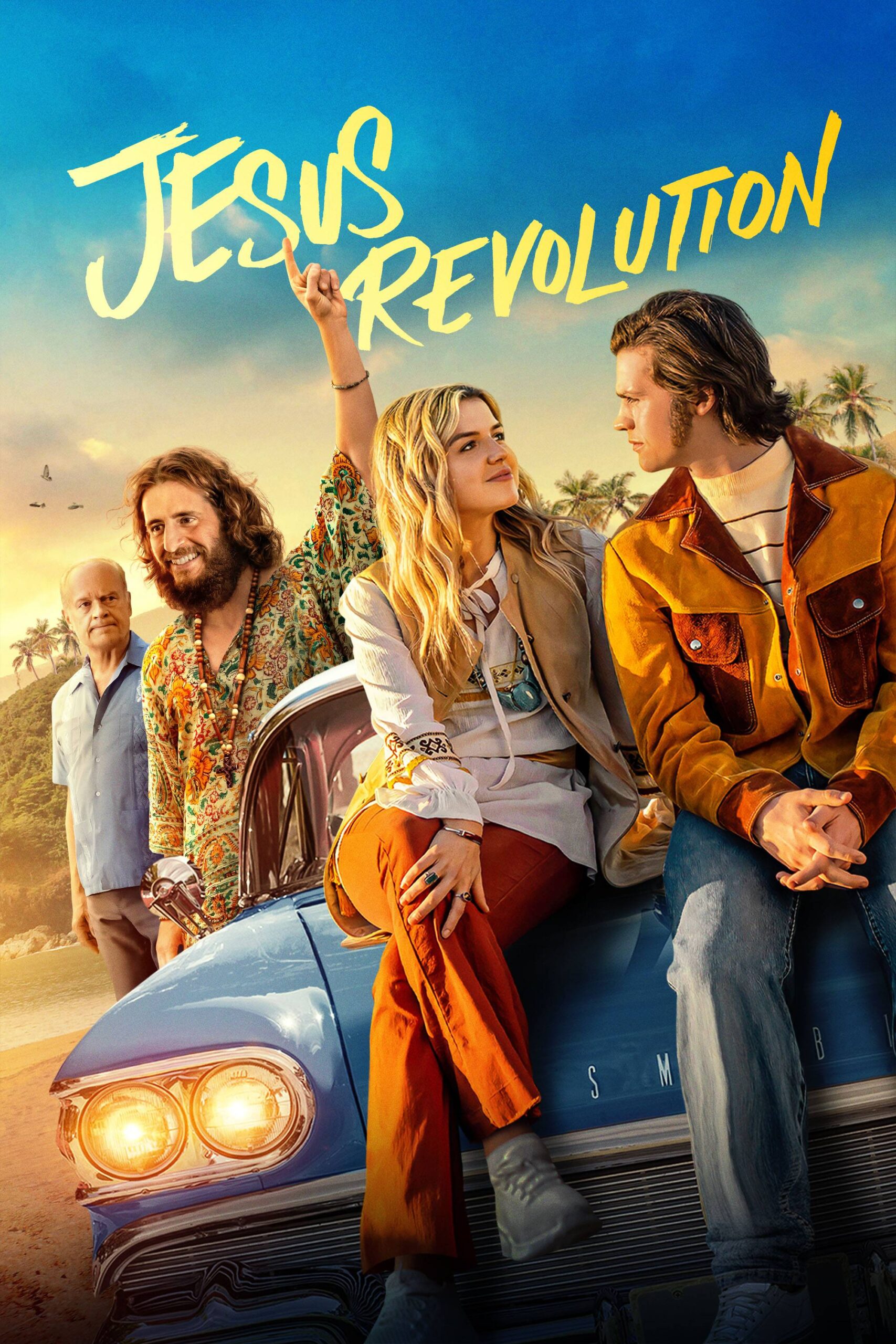
    There’s a new movie out that is based on these true events. You can watch it and find out.

    It’s called Jesus Revolution.

    Nellie and I enjoyed the heck out of it. We laughed. We were on the edge of our seats, moved, and inspired. In fact, I enjoyed it so much I want to watch it again.

    It’s a great entertainment for the whole family.

    If you’re looking for a terrific, feel-good show, I think you’ll love Jesus Revolution. Give it a try.

    Share