Good Stuff! A great place to eat

huhot-fb-defaultNellie and I recently celebrated our anniversary and enjoyed a delicious meal at HuHot Mongolian Grill in Logan, Utah.

If you’ve never been to a Mongolian grill, here’s how it works. You take a plate, pile it with your desired selection of fresh meats and veggies, douse it with sauces, then hand the plate to the chef. He then spreads it on his gigantic, circular Mongolian grill and cooks it before your eyes, then hands your hot meal back to you. You take it to your table and enjoy a fine, fresh stir fry of your own making.

If you want more, or want to try something different, when you’re finished, you go back because it’s an all-you-can-eat grill. I can happily report that Nellie and I did go back. We wanted to go back a third time but were stuffed.

The food was excellent. The service was friendly. If you’re looking for something different, I think you’ll want to give HuHot a try.

Share

Similar Posts

  • The Rocket Science of Overspending

    In July, I blogged some spending 101 for Congress and the President, including contigency planning for alien invasions.  I thought I made some good points.  However, through the whole spending debate that occured this last spring nobody in the media or elsewhere was able to make clear what is going on with the US government. Nobody except Dave Ramsey. He explained it on Fox and then on his website. If you take the big federal numbers and translate them to a size we can understand, here’s the situation:

    – Joe and Susie (the Federal government) make $55,000 a year
    – They spend $96,000 a year
    – At the same time, they have $366,000 in credit card debt

    Look at those numbers again. Every year those clowns in Washington are adding $41,000 a year to that massive debt total. Soon enough, our overspending will kill our ability to do anything else except pay the interest on that debt.  150 years after America abolishes slavery, we decide that debt slavery really is a good idea. Yea! Give us shackles! Give us shackles!

    No wonder our credit score as a nation (our bond rating) was reduced.

    So what did the government do this last Spring? They agreed to find some way to cut spending from $96,000 to $78,000. Meaning they’re still adding $28,000 dollars a year to the government’s massive credit card debt total. Which we have to pay!

    If the US Government was a family, they would be making $55,000 a year, they spend $96,500 a year, & are $366,000 in credit card debt. What’s the first step to get out of debt? Stop overspending! But that means a family that is used to spending $96,500 a year has to learn how to live on $55,000. That’s a tough pill to swallow. It works the same way for the government. You can’t borrow your way out of debt, whether you’re a typical American family or the entire U.S. government. At some point, you’ve got to say, “Enough is enough!” and make the hard cuts necessary to win over the long haul. – Dave Ramsey

    The answer is NOT to print more money.

    If you do that, you reduce the value of each dollar. It’s called inflation. As Ron Paul rightly points out, it acts effectively as a tax. Or as I like to put it–a PAY CUT. How many of you would like to get a nice fat 10% or 20% pay cut this year? Furthermore, instead of fixing the problem, the overspending continues, which means more pay cuts in the future. More fun!

    No, the thing we have to do is STOP SPENDING MORE THAN WE MAKE.  Here’s what has to happen.

    1. We must write into law that Congress balance its budget every year–they must not be able to spend more than they take in except in rare emergencies. This means they might need to build up a rainy-day fund.
    2. We must cut our spending. Now. I linked to an idea Ron Paul has for this in my 101 post where we just go back to 2007 levels of spending.
    3. We must work to increase our revenues. Not through hiking taxes to monstrous levels, but by providing optiomal regulatory conditions for economic growth. See my 101 post. 
    4. We need to make sure the taxes are visible, so the American people can easily see what’s going on. Congress has mandated that lenders provide clients an APR so they can clearly see the rate they will pay on a mortgage. Why shouldn’t we mandate that the IRS send out an ATR–annual tax rate (or maybe Annual Grab Rate or Annual Tax Burden or you come up with the name)–which includes all Federal taxes translated into one total rate?  
    5. We need to give everyone the opportunity to pay for the soldiers that defend them and the roads they drive on, even if it’s just $50-100 a year for the very poor.
    6. We must send people to the White House and Congress who are willing to do what it takes RIGHT NOW.

    I mentioned Ron Paul a number of times above. He’s not my choice for president. But he has added a number of good things to this discussion. Here are the Ramsey links:

    EDIT: Mark Holt makes an excellent point in the comments. Inflation isn’t just a pay cut. It’s a savings cut, a retirement cut, a 401k cut, a house value cut, an everything cut. Using that backdoor method, the DC Connivers institute a tax of everything, something they’d never be able to pass out in the open.


    Share
  • Basic Economics, Avatar: the Last Airbender

    How to not be duped by political blarney

    Karl Marx was not a scientist. Nor was Adam Smith before him. They were philosophers. Theorists. Idea men. That’s what all economists in those days were. They had little tested knowledge, and so which economic system was best was all a matter of opinion.

    But things are now much different. Nations and local governments tried the various theories. And we’ve seen the results. We now have a whole century of data. Furthermore, economists now are scientists. They use scientific methods and deal with tested knowledge. Sure, there are still controversies, just as there are in any science, but the basic principles of economics today are NOT matters of opinion.

    For example, we know what happens when governments impose price controls in all their many varieties—rent caps, minimum wages, laws against price gouging, and medical care cost limits. These last few years we’ve seen a dramatic demonstration of what happens when they meddle with the prices of home loans. We know what happens when they impose tariffs or give subsidies to special groups like farmers or steel producers. We know what happens when they create barriers to people entering a market to compete, like they’ve done with immigrants. We know what taxes do.

    The unfortunate thing is that many of these principles seem to be ignored by our politicians. And by those who vote them in. And so we can have a Congress pass massive health care legislation that will cause health care shortages just as similar laws caused shortages in other countries. This is how we have a president who in a recent speech to the U.S. Chamber of Commerce suggested, in good Marxist fashion, that it was business owners who kept the American workers down by hoarding all the profits. Has he not looked at the data which shows that huge profits invite more competition, which tries to get ahead of the leader by cutting prices, which allows the American workers to get more for less, thus raising their standard of living?

    In the 1980’s and 1990’s India and China began to make fundamental changes to their economic policies, doing the things that have been proven to work. Suddenly, the economies of those nations started to grow. It’s estimated that 20 million people in India rose out of poverty in a decade. In China, more than a million people rose out of poverty EACH MONTH.

    But this seems lost on a number of politicians. Don’t let it be lost on you. We have critical elections coming up. One of the best things we can do is educate ourselves about these basic economic principles so we can cut through all the political blarney. I haven’t found a better, more enjoyable book on the subject than Basic Economic Principles: A Common Sense Guide to the Economy by Thomas Sowell. Sowell is an economist and Senior Fellow on Public Policy at the Hoover Institution at Stanford University. His book is written for the general public and so foregoes dry charts and theoretical ho-hum for lots of real-life examples and straight-forward explanations. There are times when I wish he would have gone into more detail on a few subjects, but what he lacks in depth in a handful of areas, he makes up with breadth. Furthermore, the way he presents the topic was interesting enough to make me stay up late a number of nights well past my bedtime. 

    Great family entertainment

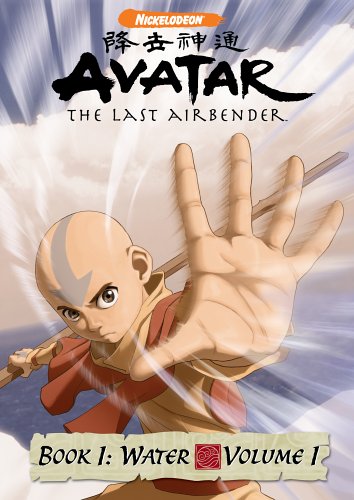
    Do you want some fun family entertainment that includes laughs, wonder, and moments of poignancy? Something you can watch and enjoy with the kids? Then let me recommend the animated TV series Avatar: The Last Airbender. This is NOT the movie Avatar by James Cameron with all the big blue people Nor is it the movie The Last Airbender, based on the TV series, which many fans disliked. This is the original. The one that millions love.

    Through the miracle of Netflix, I started watching it with my girls a few months ago. And we’ve all been sucked in. It’s unlike any “cartoon” I’ve seen. In fact, you can’t call it a cartoon just as you can’t call The Incredibles or Lion King cartoons. This is great story telling. Furthermore, instead of it being a bunch of unconnected episodes, this series is telling a long story. It ran for three years on Nickelodeon and includes more than sixty 22-minute episodes.

    The series follows the adventures of the main protagonist Aang and his friends, who must save the world by ending the destructive war with the Fire Nation. Aang’s world is divided up into four nations—Air, Earth, Water, and Fire. In each nation are “benders” who can powers with the element of that nation. So Air Benders can fly and create huge winds; Fire Benders can generate and throw fire; Water Benders can create ice and waves.

    So it’s fantasy, and all of that is cool, but it’s the characters that we enjoy the most. We quote and laugh at some of their lines. And then there are the episodes with true dramatic moments.

    Avatar has been nominated for and won many awards, including the Annual Annie Awards, the Genesis Awards, the primetime Emmy awards and a Peabody Award. It’s excellent entertainment.

    Share
  • Good Stuff: The Free State of Jones

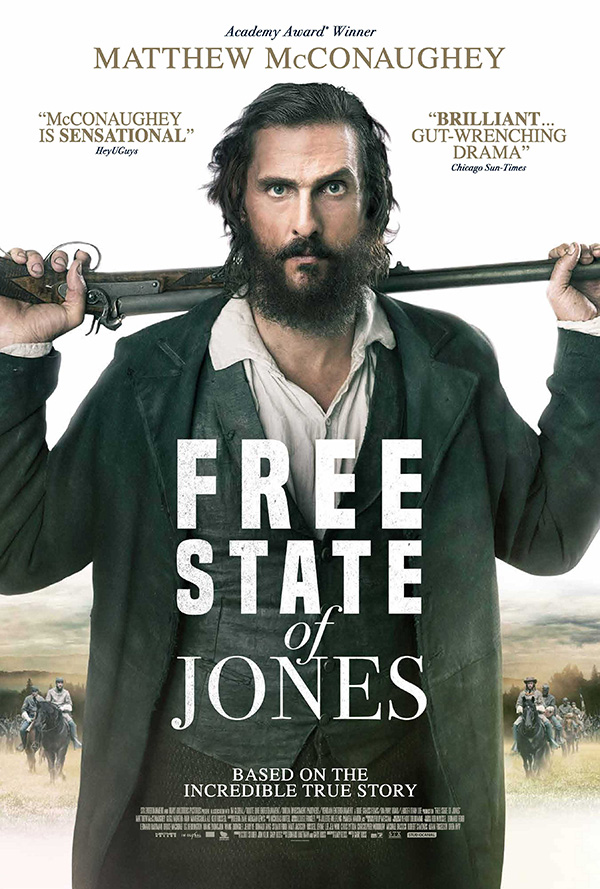
    I recently watched a moving and surprising film called The Free State of Jones, starring Matthew McConaughey. It’s about Newton Knight and how he led three counties in Mississippi to break away from the Confederacy during the Civil War.

    Think of that. On January 9, 1861, Mississippi declared it’s independence from the United States over the issue of slavery. They were the second state to do so. South Carolina was the first. On reflection, it makes sense these two states seceded first because they had the highest portion of the population as slaves. South Carolina’s population was 57% slave. Mississippi’s was 55%.

    Mississippi’s declaration of independence from the Unites States starts with this paragraph.

    “Our position is thoroughly identified with the institution of slavery—the greatest material interest of the world. Its labor supplies the product which constitutes by far the largest and most important portions of commerce of the earth. These products are peculiar to the climate verging on the tropical regions, and by an imperious law of nature, none but the black race can bear exposure to the tropical sun. These products have become necessities of the world, and a blow at slavery is a blow at commerce and civilization. That blow has been long aimed at the institution, and was at the point of reaching its consummation. There was no choice left us but submission to the mandates of abolition, or a dissolution of the Union, whose principles had been subverted to work out our ruin.”

    The rest of the declaration simply elaborates on that theme. However, not everyone in Mississippi agreed. The folks in Jones County, way down in the southeastern part, were mostly non-slave holders and cattle herders and had little use for a war over a state’s right to maintain the institution of slavery.

    Led by Knight, on October 13, 1863, with the war still raging, folks in Jones County and adjacent counties formed a separate government known as the “Free State of Jones”. They fought at least fourteen skirmishes with Confederate forces and went so far as to raise an American flag over the courthouse in Ellisville and send a letter to Union General William T. Sherman declaring Jones County’s independence from the Confederacy and asking for support.

    This movie is based on those events and, importantly, some that occurred after the war ended.

    The film is rated R for a scene with some Civil War battle injuries. And perhaps because of the use of the n-word. What it delivers is a powerful depiction of the issues of the time and the courage of one man who’d had enough. If you like history and action, I think you’ll enjoy this movie.

    Share
  • Awakening by Christy Dorrity

    Art is a huge part of what draws me to science fiction and fantasy. I still have the Hildebrant LOTR calendars I got back in the early eighties.

    On the web you can browse awesome work on DeviantArt.com and CGHub.com. But something that’s been around for much longer is Spectrum: The Best in Contemporary Fantastic Art. It’s an art annual released each year that highlights the best art produced that year in Fantasy, Science Fiction, Horror, and the Surreal.

    This year will mark the 21st year of publication.  Spectrum has become the broadest distributed art annual in the world. Having art included in Spectrum is top honors for artists around the globe.

    So why am I telling you this?

    Well, Devon Dorrity, the guy who helped me pull together my covers,  not only had his sculpture “Queen of the Seas” included in a past annual, but he’s just won a spot in this year’s annual with the cover he created for his wife’s book, Awakening. It’s a big honor.

    Here’s the description of how he put it together.

    For the book cover for Awakening by Christy Dorrity, Devon Dorrity selected the cover model, Shelbilee Lee, from hundreds of local models.  Jason Morrison, a photographer friend, was hired to do the photoshoot.  Devon purchased the wig, fingernails, and props from Amazon. Then Dennis Dorrity, Devon’s brother, did an illustration of the photo selected from the photoshoot.  Devon then composited the illustration and the photo together blending the two to emphasize the best of both pieces.  After applying various effects and custom color, the piece was finished.

    After the book’s publication, Devon submitted the cover to Spectrum with Dennis Dorrity listed as the Artist.  Dennis did the illustration that plays such a heavy role in the finished piece.  Devon was listed as the Art Director/Designer.  Spectrum announced in the end of March that the Awakening book cover was selected for inclusion in The annual.  Spectrum 21 will be released in November 2014.

    Awakening: Book One of The Geis is itself a clean young adult fantasy filled with Celtic mythology, magic, romance, and mystery. And it’s been getting great reviews.

    “Dorrity invites her readers to a céilí that will quicken the pulse of anyone with Ireland in their blood! AWAKENING will draw you deep into the mysteries of the Celtic worldview—and leave you wanting more of McKayla and her fascinating Aunt Avril!”
    – KERSTEN HAMILTON, author of Tyger Tyger and the Goblin Wars books

    “I thoroughly enjoyed AWAKENING, a captivating and unique debut novel that creatively integrates Irish dance.”
    – CHRIS NAISH, Riverdance member and Creative Director of Fusion Fighters Irish dancers.

    5 Stars! “AWAKENING is an exciting mashup of fantasy, action-adventure, and mystery, with a touch of romance thrown in for good measure.”
    – KATE MCCURRY, top 100 Amazon reviewer

    How many authors do you know who have unlocked the achievement of having someone from Riverdance plug your book? Awakening right now is free. If you like YA fantasy with a bit of romance, this is the perfect time to give this new author a go.

    Share
  • The Profiler, Almond Milk, and Uncle Sam

    Real crime 

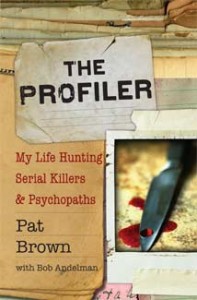
    It’s 1990. You’re a housewife, homeschooling your children, and renting a room upstairs to a young man to make ends meet. There are a few odd things about the young man, but you overlook them. Then one day a woman is strangled on a jogging path near your home, and your first thought is that the young man living in your house has something to do with it.

    What do you do?

    Pat Brown found herself in this exact situation. She voiced her suspicions to her husband, but it was all too farfetched. However, the nagging thought wouldn’t let her go, and she soon uncovered evidence that made the young man a strong suspect.

    She took the evidence to the police, but they dismissed her as a bored housewife with an overactive imagination. She evicted the young man, but it would be six years before the authorities would finally bring him in for questioning.

    Dismayed and frustrated, Brown started down a path that would lead to her become a professional criminal profiler, assisting police departments and victims’ families by analyzing both physical and behavioral evidence to make the most scientific determination possible about who committed a crime.

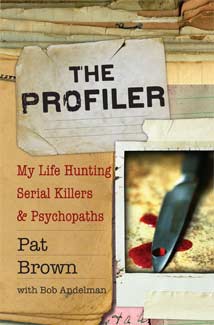
    In The Profiler: My Life Hunting Serial Killers and Psychopaths Brown tells about what happened with that young man and her journey to becoming a profiler, then she opens a number of other cases she’s worked on, giving the reader a behind-the-scenes look at how profilers work, and how their methods bring new investigative avenues to light. She also brings home very clearly just how many murders go unsolved. It’s an absolutely fascinating read.

    Milk that doesn’t moo
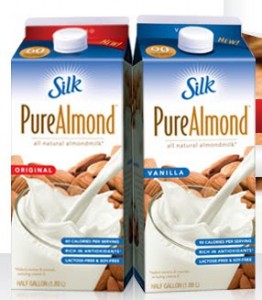
    I used to think soy milk was either for the lactose intolerant or hippies. And so I always avoided that milk section of the grocery store. But, having embarked on a new way of eating that I’ll explain in another column, I was induced to approach the alternative milk shelves. I purchased a carton of soy milk, but then I saw cartons of something even more strange: almond milk.

    Puzzling. I knew, of course, that almonds did not have udders. So nobody was out there hooking them up to tiny milking machines. And they were nuts, so it’s not like you can squeeze them to make them release their tasty juices. Instead, I learned that almond milk is made by finely grinding almonds together with water. I thought this was something new, invented perhaps by a Californian who’d had too much weed, but it appears many Medieval European recipes called for almond milk, and it has always been a popular beverage in the Middle East. So almond milk has been around for some time.

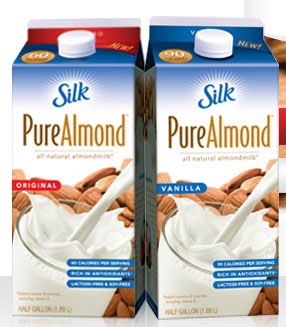
    But I didn’t know any of this. I just knew I loved almonds and that they provide all sorts of goodies for the human body. Besides, I have a hard time resisting adventures. So along with the soy, I picked up a carton of Silk’s PureAlmond regular, vanilla, and chocolate milk.

    The soy was okay, but it left a weird zingy taste in my mouth. Furthermore, soy contains estrogen. I’m sure it’s a fine product, but I live with four daughters and don’t need any more estrogen. And I certainly don’t need it mutating me in any, um, feminine ways. So I put the soy aside and gave the almond milk a go.

    It was delicious. I love the vanilla and regular flavors the best. In fact, I like it so much I only drink cow’s milk when the last drop of almond milk is gone, and I try to make sure that never happens. Some might worry that I’ll deplete my calcium stores, but not so. Almond milk actually has MORE calcium than cow’s milk along with vitamin D that allows the body to absorb the mineral. It also has 50% of the RDA of vitamin E, of which cow’s milk has none. But that’s all technical vitaminy stuff. It wouldn’t matter if the milk itself didn’t taste so dang good.

    The American breakfast
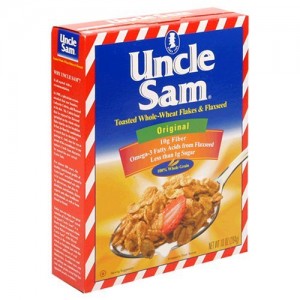
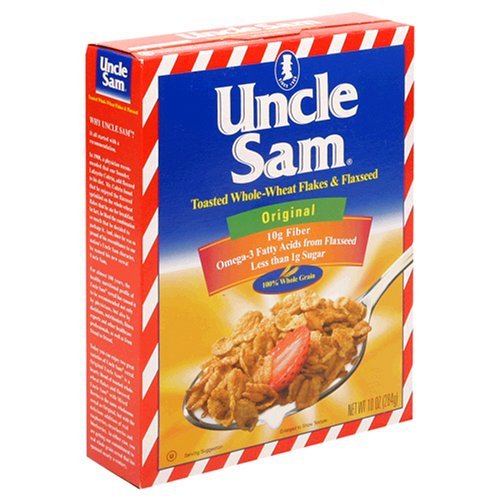
    I love cereal. We have our standard favorites as a family, but I also like to get a box of something new when we shop. I recently saw, perched up on the top shelf at Wal-Mart, boxes of  Uncle Sam.

    What the heck? Was this a Tea Party product? I know Utah is conservative, but come on. And what kind of nut sings “The Stars and Stripes” for breakfast?

    Well, I might.

    So I promptly snagged a box and read that it’s been around since 1908, thus making it politically neutral. Then I read the ingredients. It’s a simple cereal made of wheat berries that are steamed, rolled, and toasted to provide killer whole grain nutrition. Those wheat flakes are then mixed with flax seeds (omega 3’s anyone?). That’s it.

    I purchased a box, felt patriotic, and then gave it a try when we got home. I’ve been buying it regularly ever since. It’s slammed with 10 grams of fiber and 7 grams of protein, and goes great with Silk’s vanilla almond milk and a piece of fruit.

    Share
  • Good Stuff! Mike Loades on Swords and Bows

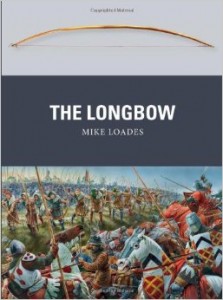
    Mike Loades is an expert on medieval fighting. He brings energy and, not just bookish learning, but insights from hands-on use. I loved the five-part Weapons That Made Britain television series for which he was the host and chief consultant. And so I looked to see if there was anything else he’d done. I found he’d written two books, which I am so happy to have read.

    The Longbow is not just a book about the longbow. It’s about its construction and how it impacted the development of armor, and types of armor, and the wood used for the bow, and how to make arrows, and what the various points were for, and how people trained, and then cared for the bows, and how it was used in war. And, again, the insights are not just bookish ones. He’s walked the battlefields. He’s used bows for years. He’s performed tests with them. It is a 80-page book that carries a monstrous bang for the buck and one of the best purchases I’ve made for my library. I loved it.

    MikeLoades_TheLongBow

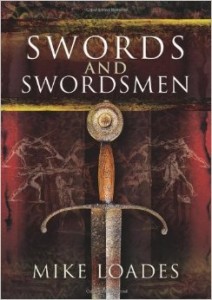
    Of course, after that experience, I had to get his Swords & Swordsmen. This book is almost 500 pages long, and I was rapt reading each page of it. Instead of focusing on one version of this weapon, Loades discusses exemplars of various types of swords through time, starting with the sword of Tutankhamun in Egypt all the way through the swords of J.E.B. Stuart and G.A. Custer in the American Civil War. There are 15 chapters all discussing different eras and swords that provide a mountain of insight. The love Loades has for and the practical experience he has with the topic shines through on every page. Just as with The Longbow, you’ll learn about use, construction, the interplay with armor, and much more. Heck, I got the ideas for at least three novels reading this book. I loved it as much as I loved the first.

    MikeLoades_SwordsAndSwordsmen

    If you enjoy military history and arms and armor, you will love these books. Guaranteed.

    While you’re waiting for them to arrive in the mail, treat yourself to five hours of fascinating video below.

    Weapons That Made Britain E01 – The Sword

    Weapons That Made Britain E02 – The Longbow

    Weapons That Made Britain E03 – The Lance

    Weapons That Made Britain E04 – The Shield

    Weapons That Made Britain E05 – Armour

    Share