Good Stuff! Extinct, RadioWest, and Ruca’s

I’ve been looking forward to watching Extinct, a brand-new TV series. I watched the pilot with my wife and teenage daughter, and we enjoyed it. I watched the next episode, and then a few days later couldn’t help but binge-watch three more. And I’m happy to report it’s full of good stuff and interesting stories.

First of all, it starts with a killer concept. Aliens invade earth and wipe us out, but that’s been done to death. This story doesn’t start there. This story is set four hundred years in the future after the extinction of the human race, when a small group of humans is revived by an alien civilization.

But this isn’t Star Wars, Star Trek, Blade Runner, Battlestar Glactica or anything like that. It feels more like the TV series Lost or The Maze Runner. The heroes are three humans who have been brought back and are trying to figure out what’s happening and how to survive in a place that’s low tech and is the home to a dangerous band of other humans that were also brought back. They’re dangerous, by the way, because they have been taken over by spores that latch other their nervous system and use their bodies as a host.

This series transports you to a world of cool tech and alien stuff like the sparks that regenerate the humans in pools of water, two interesting drones, and alien ruins and glyphs. But the best part about this isn’t the spectacle of the technology. It’s the stories. There’s suspense and action, but also mystery and a lot of stuff that’s human and warm and, surprisingly enough, thought-provoking.

We try to hold a family night once a week to have fun together and discuss important topics. And I can see us easily watching one of these episodes and finding ourselves in a deep discussion about free will, or the creation, or whether Duncan, one of the skin riders, looks like someone right out of The Hobbit.

I liked episodes one and two, but it was episode three that kicked it into high gear for me. If you liked Lost or The Maze Runner or the series Once Upon a Time, I think you’ll really enjoy this. Right now you can stream the first eight episodes for free from byutv.org/extinct or extinct.tv.

EDIT: I just finished episode 8. I really like this series.

#

Do you like listening to interesting ideas? If so, you will love tuning into RadioWest. It’s a daily program from KUER in Salt Lake City that features hour-long interviews of folks who are experts on some of the most interesting things or have an interesting story to tell.

Doug Fabrizio is the host and has to be the best interviewer on the planet. I love his voice, but it’s his skill in drawing out the fascinating meat of the topic from his guests is what sets him apart. And unlike some interviewers who don’t even read the books they’re talking about, you can see that Fabrizio has done his homework. He’s really thought about what they have to say.

For example, just this last week, I got to listen to compelling interviews of (1) Tom Christofferson, the gay brother of Elder Todd Christofferson, a Mormon apostle, (2) Ben Shapiro, an orthodox Jew who is an up and coming voice on the Right and was recently protested at Berkeley and the University of Utah, and (3) science writer Ben Mezrich who has written a book about the scientists and researchers who are trying to bring back the wooly mammoth.

Week after week, Fabrizio brings amazing people and ideas into my car and home. You can listen to his interviews every morning at 11 a.m. and 8 p.m. on the radio at FM 90.1 (Salt Lake Area), FM 90.5 (Logan and Bear Lake), and FM 88.3 (Randolph and Woodruff). Or you can listen live online at radiowest.kuer.org, which is also where they keep all the recordings so you can catch up on any you miss.

#

New restaurants come and go all the time in Garden City, Utah. Most of them don’t last more than a few seasons. Often this is because they charge lots of money for food that’s really not worth it. So it’s with great delight that I tell you about Ruca’s, a little spot on the block between the city park and Bear Lake Pizza on the main drag.

Not only are the prices reasonable, but the food is delicious. They have sandwiches and other stuff, but we have gone back multiple times for their ebleskivers (AY-bill SKEE-vurs). These are Danish pancakes in the shape of a ball that can be filled with all sorts of stuff. My wife and daughter love the ones filled with peaches and the others filled with Nutella and strawberries. I like the savory ones filled with bacon and cheese with eggs on top.

They’re going to be closing up for the winter, so if you want some great food for a great price, get over there now and enjoy a new delight.

Share

Similar Posts

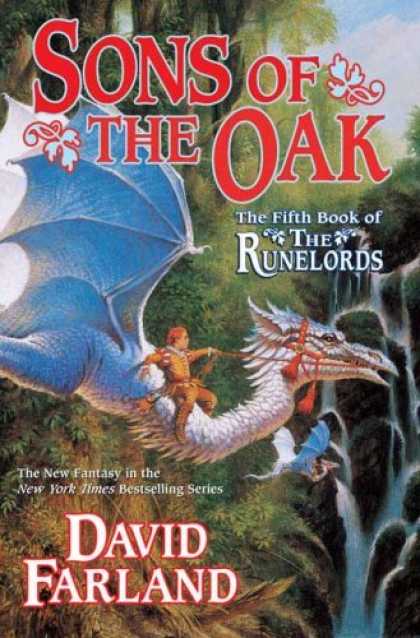
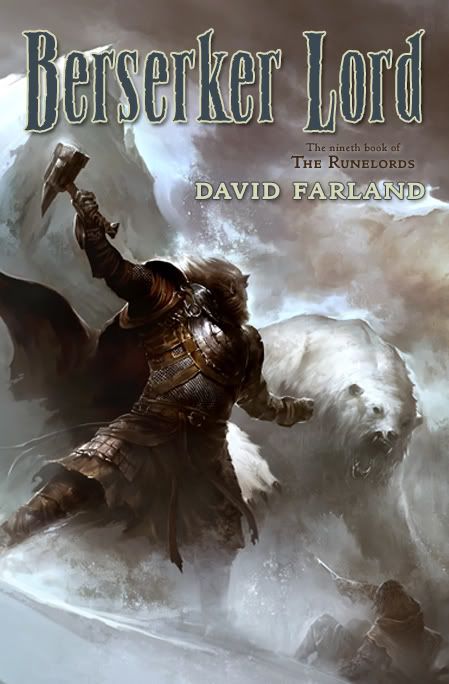
  • Check out Dave Farland’s new cover

    Isaac Stewart pointed this out to me. Wow. And what a change. Farland’s got a whole new look and feel. I don’t know much about cover art/marketing and how well various colors and styles do in the book store (will buyers gloss over this because of its dark color?–I hope not). But however this performs on the shelf, it’s a great illustration.

    See more images on Irene Gallo’s blog about it. Compare with the old style.

    david-farlands-sons-of-the-oak

    Share
  • The Sing-Off, Sam’s Salmon, The Englishman Who Went Up A Hill

    One of the best TV programs this fall

    American Idol was good until the judges became irrelevant and annoying. Or maybe I was just tired of the format. I didn’t think I’d watch another singing show. But I tuned into the opener for The Sing-Off on NBC last week, and holy harmonies, Batman–it was wonderful.

    Ten of the best a’capella groups in the country compete for a $100,000 prize and a recording contract with Sony Music. Unlike American Idol, the groups represent a wide range of ages—from kids in high school to older adults—and backgrounds. They don’t use any instruments, just their voices, to sing incredible arrangements of modern songs with percussion, bass, and lovely vocals. This ain’t no choir music. And unlike American Idol, the judges actually have interesting and useful things to say. Also unlike American Idol, the judges eliminate the groups until three are left. Only then do the rest of get to call in and vote.

    We were glued to the TV watching each episode. The programs are all two hours long, but move like lightening. Our favorite groups at this point are Committed and The Backbeats.

    This whole show runs a total of three weeks, one episode each on Monday and Wednesday. It started last week, continues this, and finishes next week. Some of you might be depressed, feeling you’ve already missed it.

    Not so! You can watch all of the full episodes online at www.nbc.com/sing-off/ (with fewer commercials). Then tune in for the grand finale. I can’t wait. 

    Are you kidding? From a can?

    Canned tuna fish is one of those un-meats. It doesn’t taste like fish. It doesn’t taste like chicken. I guess the all-white albacore is okay. But tuna’s not one of those spectacular foods I crave.

    So you’d think, as I strolled the isles of Sam’s Club, that I would have passed up the canned Member’s Mark Atlantic Salmon. But one of my wild culinary urges, the ones that rarely pan out, overtook me.

    I purchased a pack of five, seven-ounce cans for $11.88. I brought the pack home put it on the shelf and didn’t dare open it. What was I thinking?

    Canned salmon? Canned meat?! When was the last time you had a steak out of a can?

    It couldn’t be good.

    Of course, my sensible hesitations only last so long. I broke down one afternoon when the cupboards were bare. I saw the salmon and thought that it might go well with a salad and baked potato.

    I opened the can. It was pink, like the trout I used to catch and immediately fry when I went camping as a boy. I tasted it. And it tasted like .  .  . fish. Real fish. The light delicious taste of those trout I caught so many years ago.

    I enjoyed a wonderful meal that day and have had several repeats since. Boneless, skinless filets in water, packed with omega-3 fats, all grown on fish farms in Chile. 

    Great movie set in Wales

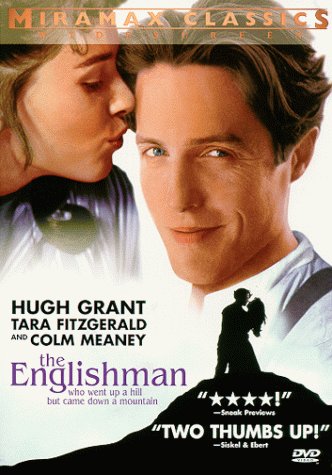
    I enjoy Hugh Grant as an actor. I loved him in Sense & Sensibility with Emma Thompson, one of my most favorite movies ever. And so I was curious about another movie with Grant that received two thumbs up from Siskel and Ebert. It’s called The Englishman Who Went Up A Hill And Came Down A Mountain.

    The setup is unusual. In 1917, with the war still raging in Europe, two English cartographers visit the small South Wales village to measure what is claimed to be the “first mountain inside of Wales.” The villagers are proud of their “mountain,” but become alarmed when the Englishmen measure it and find it’s not a mountain but a hill. The villagers are determined not to lose their status. Especially not to two Englishmen. What follows is good humor, drama, and a bit of romantic comedy. I think you’ll fall in love with the characters. It’s a wonderful tale. And it’s on DVD.

    As a little bonus, here are the opening lines, given to us by two narrators.

    “Narrator: For some odd reason, lost in the mists of time, there’s an extraordinary shortage of last names in Wales. Almost everyone seems to be a Williams, a Jones, or an Evans. To avoid widespread confusion, Welsh people often add an occupation to a name. For example, there was Williams the Petroleum, and Williams the Death. There was Jones the Bottle, and Jones the Prize Cabbage… which described his hobby and his personality. Evans the Bacon, and Evans the End of the World. But one man’s name was a puzzle, and it wasn’t until I was 10 years old that I asked my grandfather about the man with the longest and most enigmatic name of all.

    “Grandfather: The Englishman Who Went Up a Hill but Came Down a Mountain? Now there’s a long name for you. And a long story. You are not going to fidget, are you? For this is a story… an epic story. Yes, epic.”

    Share
  • Blindingly white and female!

    MaryLeonhardt_KeepingKidsReadingThe Guardian just published a report of a survey taken of 34 American book publishers and found that 79% of staff are white and 78% female. Or as The Guardian put it “blindingly white and female” as if it’s some kind of horror show.  The rest of the article bemoans the lack of diversity in publishing and our society in general and quotes the author of the study suggesting that these percentages should be monitored.

    Is anyone up in arms about appropriate diversity percentages in the NBA or NFL?

    Some might roll their eyes and ask me not to trot out that old chestnut. But it’s not a chestnut. It’s a point–nobody cares, me included. So why care about this? Many industries will be skewed toward one gender or race than another. As long as everyone has free opportunity to compete, who gives a flip?

    Maybe that still doesn’t satisfy. Okay, how about this. According to Humanites Indicators, approximately 70% of degrees in English language and literature in America are awarded to…women. And about 82% are awarded to Whites. I’m assuming these percentages are probably pretty good indicators for the gender and race of folks interested in working at publishing companies.

    If so, the survey results don’t reflect some white woman conspiracy at these publishing houses. They simply reflect the choices people make in college.

    By the way, did you know the United States is still 72% White and European. So it’s not surprising to see roughly that many Whites in these jobs. The numbers might be a little high, but minorities seem to be pursuing other degrees in greater numbers (compare the overall percentages here versus those with ELL degrees).

    This is not to say that we don’t want to welcome authors from all different background. We do. But if you want more men and more minorities, then maybe instead of monitoring publishers, you ought to start by seeing if you can attract more men and minorities to ELL degrees.

    Or even better yet, how about reaching out to more boys and minorities at an earlier age and helping them learn the delights of reading and writing? Maybe if they like it, more of them will go into it as a career.

    The best program I’ve seen for helping kids learn to love reading is the one Mary Leonhardt outlines in Keeping Kids Reading: How to Raise Avid Readers in the Video Age. It’s the culmination of the insights she gained over her thirty-five years teaching high school English and focusing on helping kids learn to LOVE reading. What an excellent book!

    Oh, and one other idea. It might be effective to maybe just skip publishers altogether and help folks go directly to readers as indie writers. Amazon’s algorithms are pretty much race- and gender-blind.

    Share
  • Black Hawk Down, Pete Blaber, Not Waving But Drowning

    A Ferocious Battle

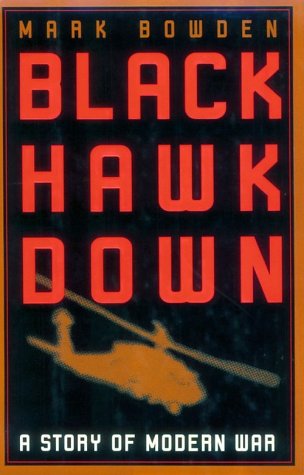
     I just finished reading Black Hawk Down by Mark Bowden. It is the most gripping account of any battle I have ever read.

    In 1992 a Somali warlord attacked and killed U.N. peacekeeping forces. As a result, the US put a $25,000 bounty on his head and attempted to arrest and try him for war crimes. On October 3, 1993, by the order of President Bill Clinton, a force of United States Army Rangers and Delta Force operators, the Army’s most elite warriors, set out to capture several lieutenants of the warlord’s militia in an area of the Somali capital city of Mogadishu that was controlled by the warlord.

    The force of about a hundred U.S. soldiers helicoptered in during broad daylight. They roped down to the streets surrounding the target building. It was supposed to take them no more than an hour. They would bag the warlord’s lieutenants, put them on a convoy of Army trucks that had barreled into the city and were waiting right around the corner, and get out.

    But the citizenry, loyal to the warlord, weren’t going to take it lying down. They began to swarm with guns and rocket propelled grenades. They attacked, almost heedless of the danger. One Somali with an AK-47 rode a cow out in a strange charge, a number of other Somali’s taking cover behind (yeah, he and the cow died). But the Americans were overconfident of their Black Hawk helicopters. They didn’t think the types of weapons the Somalis had could bring them down.

    One chopper was hit and crashed. Then another. A third and then a fourth were damaged and barely made it back to safety before they crash landed. As for the Rangers and D-boys, they were in for the fight of their life.

    The book tells the story of their courage, but it also brings in the point of view of a number of actual Somalis who fought and were injured. In the process, we get a view of the battle that is both thrilling and poignant.

    Bowden did an excellent job researching and writing this. I could not put it down. It does include some military grade profanity, but it wasn’t there to titillate or shock. I’ve talked to those who saw the movie based on this book, and I could tell the book is, per usual, better than the movie. If you’re at all interested in the military and the military operations we conduct overseas, let me recommend that you read this book. 

    Delta Force Commander Shares Insights

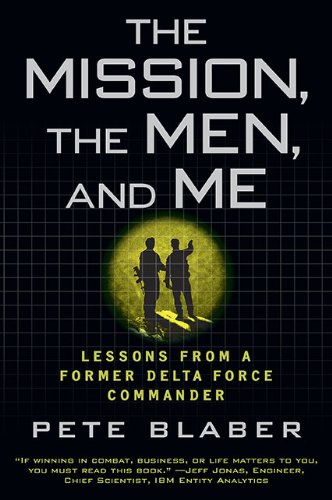
    Delta Force is the world’s most elite counterterrorist fighting force. Pete Blaber was a Delta Force operator that worked his way up to become a Delta Force commander and took part in some of the most dangerous, controversial, and significant military and political events of our time.

    During his time in uniform, he learned a number of lessons about life, about how we make decisions and act on them. In The Mission, The Men, and Me, Blaber writes about a number of the missions he conducted and the lessons he learned from them.

    The missions were conducted in Montana, Iraq, Bosnia, and Afghanistan. One featured a commander stupidly ordering Blaber to take his men into sure destruction. Another featured some of the first plans to capture Osama Bin Laden, before 9/11. Another included a man in a gorilla suit.

    The lessons Blaber draws from these experiences are fascinating and apply to more than military operations. For example, the lesson he drew from the operation featuring the gorilla suit is something I use every day with my writing. Anyone who leads or manages or works in groups will find other critical lessons. This was another book I couldn’t put down. Anyone interested in special forces will love this book.

    Not Waving But Drowning

    “Not Waving but Drowning” is a poem by female British poet Stevie Smith. It was published in 1957 as part of a collection with the same title. The work is her most famous poem and describes a man whose distressed thrashing in the sea causes onlookers to believe that he is waving to them, not drowning

    I hadn’t thought about this poem since I was a student at BYU. Then a local poet read it as part of his remarks at a conference I recently attended. The image and message lingered with me for hours. I thought about it off and on over the following weeks. This is, for me, an incredibly powerful poem. It needs to be read aloud, I think, to be appreciated. Not in some silly way, but with the appropriate feeling. I’m going to record a reading for my website, but you can read it aloud for yourself. Or have someone else do it for you. Then read it again.

    Nobody heard him, the dead man,
    But still he lay moaning:
    I was much further out than you thought
    And not waving but drowning.

    Poor chap, he always loved larking
    And now he’s dead
    It must have been too cold for him his heart gave way,
    They said.

    Oh, no no no, it was too cold always
    (Still the dead one lay moaning)
    I was much too far out all my life
    And not waving but drowning.

    How often does this happen? Those onlookers, caring only superficially, thinking it was too cold, thinking he was funning. But it wasn’t too cold. And his heart didn’t give out. He was struggling for his life, and they were too preoccupied to see it.

    Too preoccupied to really see. 

    I wonder. Is there someone around me, that if I just looked, just paused from my rush, I’d see they were much too far out, and not waving, but drowning.

    Share
  • Good Stuff! Lindybeige Rocks!

    I’ve been watching Lindybeige videos for a few years now. Lindybeige is the online name for Nikolas Lloyd, a smart, funny geek of the re-enactement, fencing, and RPG line. He’s got a youtube channel that is chock full of videos in which he makes witty and insightful points about ancient and medieval warfare, archaeology, dance, and anything else that takes his fancy.

    For example, have you ever seen folks pushing each other about with swords? Is that realistic?

    Interesting, what about pushing in a shieldwall?

    Food for thought, isn’t it? It makes me want to go read up on shieldwalls. Were they really as he concludes they were? But enough about history and conjecture. What about the truth? What about science? For example, if you believe in science, must you also believe in a certain approved list of theories?

    But surely that doesn’t apply to Global Warming Theory, which is now called Man-made Climate Change because the warming bit never panned out. No?

    Wow, and he even accepts the data on the warming. Okay, enough about the truth. Back to fantasy geekiness and weapons in fantasy worlds that make sense.

    I love this guy. If you’re a fantasy geek and haven’t yet begun to watch Lindybeige, you’ve got a lot of enjoyment ahead of you.

    Share