
Similar Posts
Raveler Update: The Cover!
Back in July, I contacted the talented Victor Minguez again to do this cover. I sent him a creative brief with three scenes that I thought would work well. Victor read the passages, then came back with some sketches.
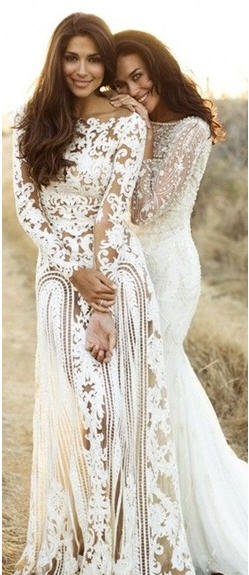
One of the scenes was of Sugar, battling howlers in the world of soul. Two parts of the reference I gave were the following. The first suggested an interesting lace pattern that fit my image of Sugar’s skenning. The second was a dead ringer for a howler. It’s actually “Lion,” made of used tires and steel by Yong Ho Ji. Okay I found it on Pinterest. But it’s absolutely gorgeous. I really thought this scene with Sugar would be the one.


Victor’s sketch is below. You can see the howlers in the foreground about to attack.

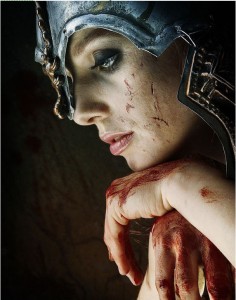
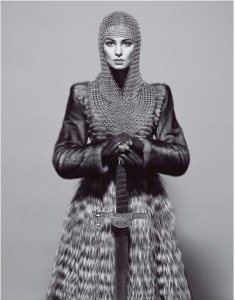
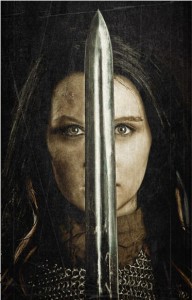
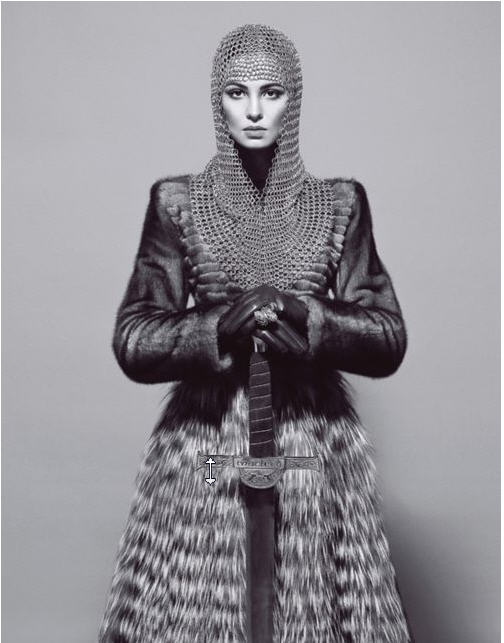
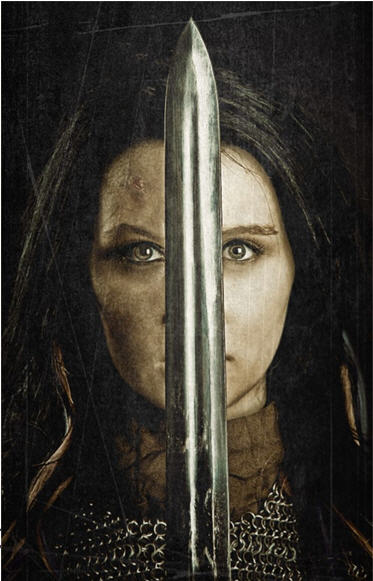
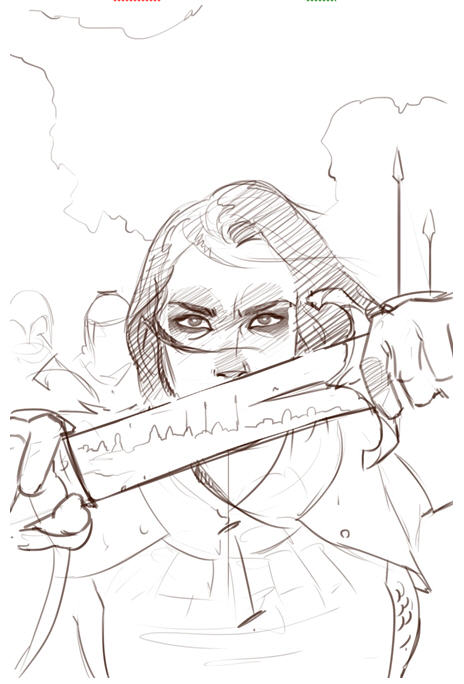
The second and third scenes were of Argoth facing down Mokad’s Guardian and Matiga and her fell-maidens in the final battle. The fell-maidens are women you don’t want to mess with. Some of the reference included these. BTW, if you’re interested in other images I’ve captured, feel free to browse my Pinterest collections.

This is the sketch he came back with. His notes explained that the enemy line would be reflected in the sword.
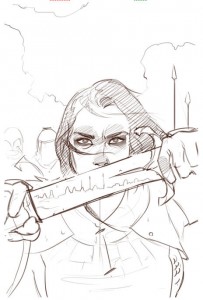
I love the idea of Sugar and those howlers. I can see the image in my mind, and it’s awesome. But we felt this would make a more appealing cover. Maybe someday we’ll pay for someone to do that Sugar illustration just for the heck of it.
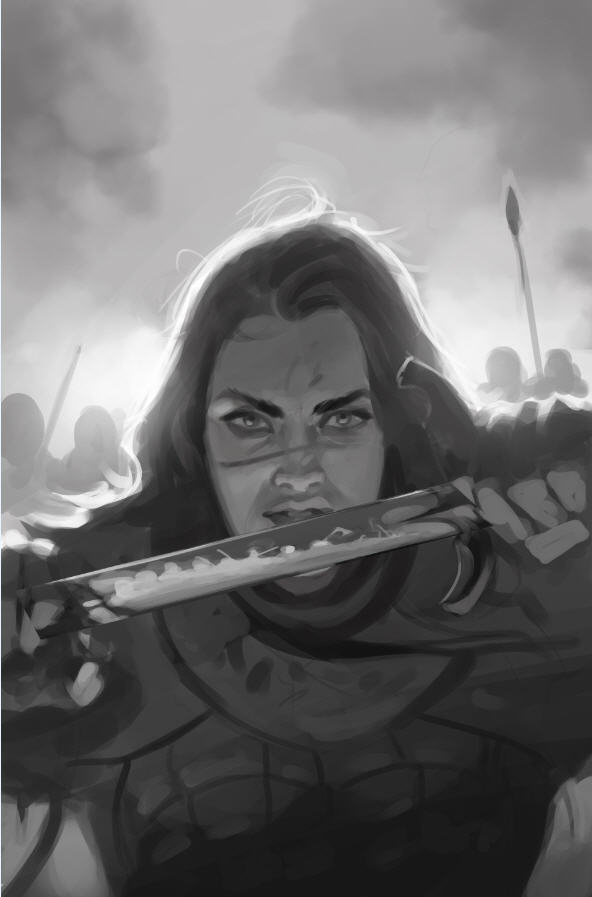
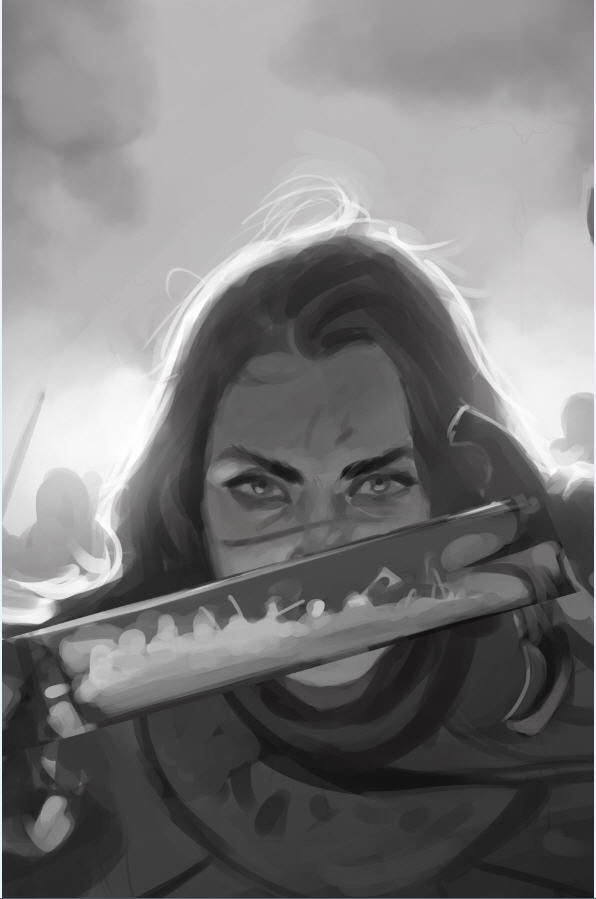
The next step was to do a value study. This was the first.

I wanted to see what a couple of variations might look like.
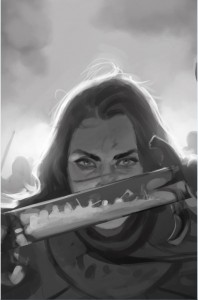
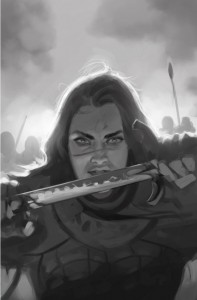
Ultimately, I thought all three of these were powerful. The first two really draw attention to her eyes and give a great focal point and hierarchy. In fact, I still go back and forth even now. But I did like seeing more of her face. I think anyone of them could have been great, but we ended up going with the third. A little magic from the artist, and Shazam!
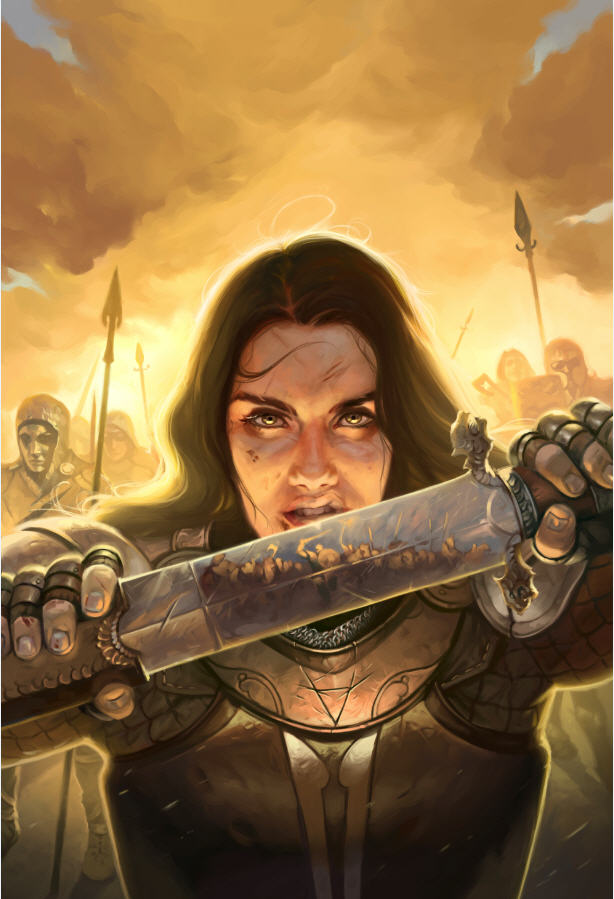
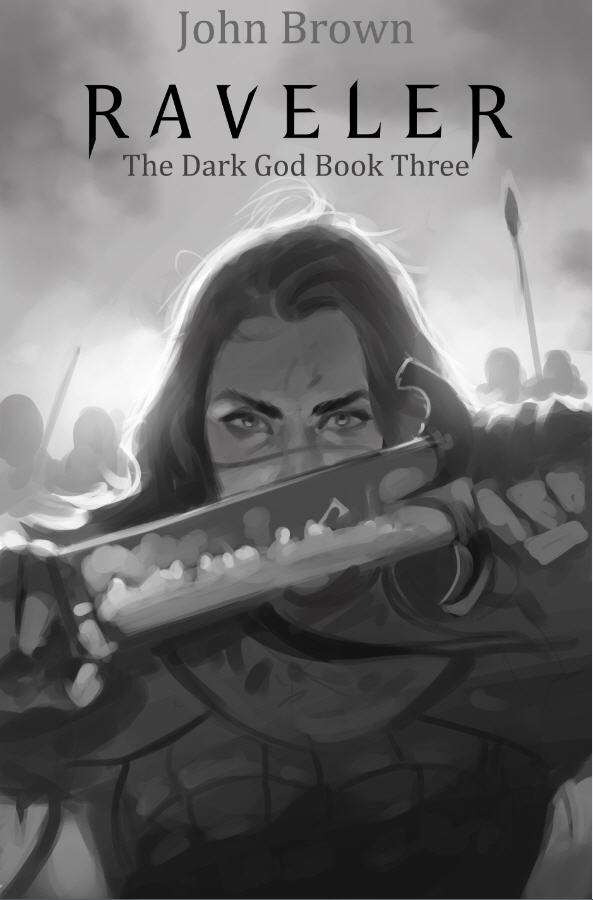
There are a lot of things to love about this. Victor’s gorgeous backlighting and halo effects. The part of the story told in the reflection in the sword. And the fact that this woman is not some fluff bunny, running around in ridiculous bikini wear. She’s even got a bit of sneer or growl going on. My friends, this is a freaking fell-maiden. I also like that Victor etched an important symbol into the armor.
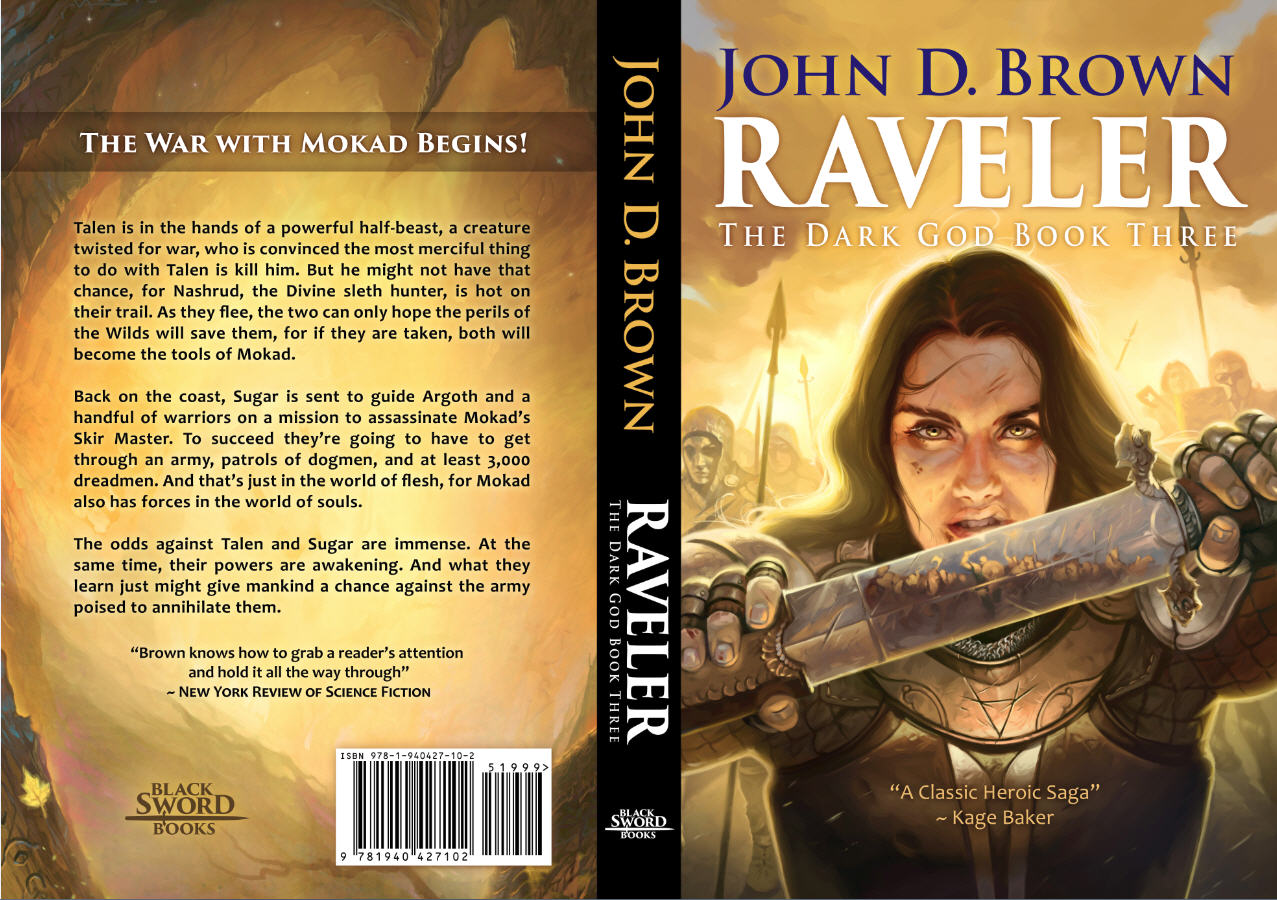
Here’s the illustration in the cover.
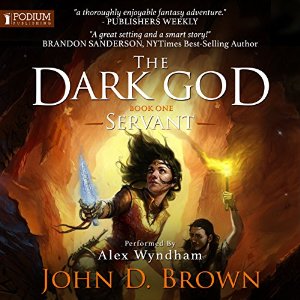
Audio version of Servant available Aug 2nd!
August 2nd is the date! The listing is up on Audible now. It appears the preview will be available until it goes live. Very excited about this.
John guests on Writing Excuses season 3 episode 19
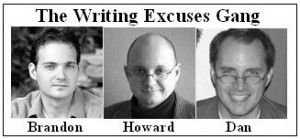
Here’s the third episode I recorded with the Writing Excuses guys.
In the first podcast we talked about putting and not putting ourselves in our writing and making characters who don’t all sound like the author. In the second, we talked about how to not repeat yourself as an author. In this one, I shared some basics about generating emotion in readers and dealing with negative emotions writers face when they encounter rejection, compare their career with others, hit writer’s block, or hear someone didn’t like their story.
As usual, the guys had some great insights. Check it out: Emotion in Fiction.
New Workshop: How to Write a Story that Rocks
 Folks, the first tentative schedule for Life, The Universe, & Everything (LTUE) has been set. For the past few years I’ve been teaching a 2-3 hour workshop called “The 3 Things You Must Learn To Write Killer Stories.” I think I must have taught it over 15 times in different venues. Hundreds have attended and said they loved it.
However, this year I’m going to be doing something different. I’m developing a new two-hour workshop called “How to Write a Story that Rocks.”
I’ll be teaching it Thursday evening, February 11th from 5 PM – 7 PM at LTUE at BYU. It’s FREE and open to all.
What I found was that a lot of new aspiring authors get lost in mountains of rules. But great storytelling isn’t about rules. They try to form stories with word counts, chapters, and weird plot diagrams. But stories aren’t about those things. They have a hard time knowing what to write next because they don’t understand how story works. In fact, some don’t know how to start at all. They just flounder in their piles of zing. Finally, even if they can get a bullet outline, they have a hard time turning that into a scene.
So what we’re going to do in this workshop is this.
- I’m going to bring in some ideas for character, setting, and problem. We’re not going to generate from scratch as we’ve done in the past because I want to get to the next steps.
- Then I’m going to teach you how to go from idea to outline–we’re going to do it together, and you’re going to learn exactly how to know what comes next
- Then we’ll go from outline step to scene sketch.
- Then from scene sketch to draft.
- At every step I’ll be pointing out key story development concepts and principles
When we finish, you should be able to:
- Identify the essential story objectives and story development questions–get these right and the rest doesn’t really matter. This will include the HANDFUL of key things you need to worry about and develop with character and plot.
- Develop more likeable and interesting characters
- Develop more powerful story concepts (call it premise, problem, situation, whatever). Once you get this the story writes a lot of itself.
- Explain the real Story Cycle. Not Campbell’s mumbo-jumbo hero’s journey. Not the three, five, seven, nine acts. Not Freytag’s diagram. Story.
- Explain what it means to “move a story forward,” “increase the stakes and tension,” “complicate the plot,” “complicate the motive” and how that’s done using surprise, conflict, motive, and problem. Included in this are “turns,” “rugpulls,” and “reversals.”
- Use the Story Cycle concepts to generate a story bullet outline and take a bullet step idea and turn it into a scene.
- Explain the creative principles that help you generate stories more easily.
Larry Correia will be there as well. So I’m expecting this to be a very helpful workshop. I’m going to do all I can to make it as good or better than the first.
The Tor catalog
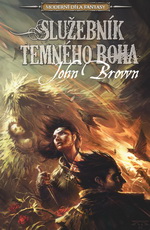
Check out Tor’s 2009 fall catalog. Lots of great titles coming up including one of particular interest.



2 Comments
Comments are closed.
“final battle” Is that a spoiler? 🙂
I look forward to seeing the cover!
What? You thought one of my books would end with the characters sitting around having tea? (grin)