Two Jillian Workouts & Gottman’s Seven Marriage Principles
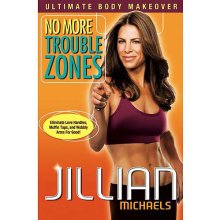
Jillian Michaels is, in the words of my brother-in-law, “the woman who chases the fat people around.” And indeed, as one of the main trainers on the TV series Biggest Loser, she gets those folks moving. But I didn’t know anything about her or the show earlier this year when a friend recommended her 30-Day Shred DVD workout (thank you, Mr. Dayton).

I’m a cave dweller. I sit in my little basement office and do my thing. And I have to make sure I get some type of exercise lest I turn into a great jelly. So I’m always on the lookout for a good workout. But it’s got to meet certain standards. I don’t want anything that’s Mickey Mouse. And I don’t want any froo-froo.

So I asked this friend if these workouts featured a bunch of women dancing around in fruity outfits, because I can tell you right now, as open to new experiences as I am, I wasn’t going to buy a leotard and tip toe through the tulips with them. My friend assured me it was froo-froo free. And boy was he right.

Jillian shows up with two other gals, gives you a two-minute warm up, and then proceeds to bust your hiney with three circuits of strength, aerobic calisthenics, and ab exercises. The strength exercises include things like push-ups and squats with dumbbell military presses or curls. The aerobic segments have you doing jumping jacks and jump rope. The ab portions run you through all manner of crunches and lower ab exercises. The three circuits take twenty minutes to complete. And there are three different levels of workouts on the DVD.

I walk or hike three miles a day four days a week, and so I thought I was in reasonably okay condition. Jillian disabused me of that silly notion. I couldn’t keep up. Heck, the first dozen times through the workout I think I spent half the time either catching my breath or trying not to faint.

But I kept with it and got stronger. And then I found Jillian’s No More Trouble Zones. This is a forty-minute workout. And I defy any of you he-men out there to try it and tell me you can keep up with this broad in this DVD. I still pant like a dog and have to take breaks when I do the workout. My only consolation is that Jillian and her two smiling evil pals work out with three-pound dumbbells while I work out with seven, fifteen, and twenty-five pounders.

Like the shred workout, this forty-minute workout is comprised of circuits. But in the trouble zones workout there is no jumping about. It all double-whammy exercises that have you working both your upper and lower body at the same time or doing some killer ab maneuver. You’ll do pushups, squats, curls, a vicious plank circuit, and a dozen other exercises. You’ll work your triceps, biceps, shoulders, back, abs, and legs multiple times. This workout is no joke. 

If you’re looking for an intense workout that doesn’t waste your time, I think you’ll enjoy either of these Jillian DVDs. All you need are a few dumbbells, a mat if you’re working on a hard surface, and prayer beads for those moments when you suspect you’re about to give up the ghost in a muscle-burning cardiac arrest.

*
Back in April of this year, Dr. Liz Hale, a licensed clinical psychologist, started her remarks to a local audience of more than 100 mental health professionals by saying, “Dear fellow colleagues, you are in danger of having an affair.”

Her point was that every marriage, even those of the marriage gurus, is vulnerable to infidelity–be it sexual or emotional. Individuals have to actively curb all the subtle and often innocent beginnings that lead to unfaithfulness.

“We make the mistake of thinking (marital) vows will keep us safe; and they don’t,” she said. She went on to say that couples cannot depend on love or similarities to keep their marriage intact. It’s not enough.

Emotional or sexual infidelity isn’t as rare as we might think. But even if we don’t stray into some type of unfaithfulness, that doesn’t mean a marriage will stay together. Like anything worth having, a good relationship takes work.

But what kind of work? What are the key principles for making a marriage last?

For many years the prescriptions of marriage gurus were based on anecdotal evidence and rules of thumb—on opinion. Because the opinions weren’t tested, they led to all sorts of errors. For example, many yet believe that the road to marital bliss is through communication, specifically through successful conflict resolution. According to this idea, happy couples are those that have learned to resolve all their conflicts in a nice manner. The problem is that when conflict resolution was put to the test, the studies showed it didn’t work. Marriage therapies based on conflict resolution share a very low success rate—over the long haul they only work about 20% of the time.

So what does work?

John Gottman is a marriage counselor who took a different approach and started to collect rigorous scientific evidence on over 650 couples, tracking the fate of their marriages for up to fourteen years. The results of his work are startling.

He uncovered a number of relationship myths, including the one about communication. He found that happy marriages were never perfect unions. These satisfied couples often had differences in temperament, interests, and family values. They argued over money, kids, and housekeeping, just like unhappy couples did. They had problems and faced issues. However, all these satisfied couples also practiced seven principles, even if they didn’t know it, which helped them navigate their way through all the difficulties and keep their marriages happy and stable.

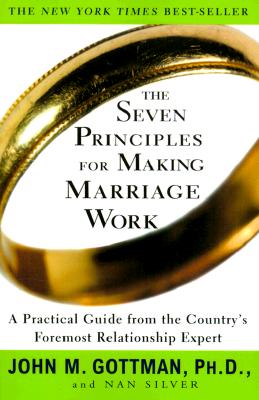
And it’s not just opinion. The success rate for the type of marital therapy based on his research is 80%. He knows what makes marriages work and has written it up in a fabulous book called The Seven Principles For Making A Marriage Work.

Every marriage is vulnerable to failure. It takes work to enjoy a satisfying relationship with a spouse. But it’s so much easier to improve and maintain a relationship when you’re working on the things that actually make a difference. If you want to improve your marriage, give Gottman’s book a read.


Share

Similar Posts

  • Good Stuff: For All Eternity

    This year I was introduced to a little gem of a book that has had a significant and pleasant impact on Nellie’s and my marriage.

    We heard about it from my newlywed daughter and her husband. Now you’d think that two people who, in just a few months, will have been married for twenty-nine years would know all the ropes of this marriage thing. You’d think they wouldn’t come across any real new ideas. But this little book proved that idea wrong.

    This book is For All Eternity by Dr. John L. Lund. At the time of its writing Lund had over forty years of experience as a counselor, college professor, and marriage educator. His focus is in interpersonal communication, and part of his background was working with John Gottman, one of the best marriage researchers of the last few decades.

    In this book, Lund shares what he’s learned with lots of humor and stories. Some of it will be familiar to you, but some of it will be refreshing and new. For example, one belief we frequently cherish is the idea that if someone really loves us, they will know our wants and needs. Their love will somehow endow them with superpowers so that we will never have to communicate our wants. Our loving spouses, if they have any love in them, will be able to discern our wants from the most subtle signs. A nod, a sigh, the wiggle of a nose. And if that doesn’t do it, then surely we will never need to drop more than the merest hint.

    Yeah, wrong.

    Lund explains why the whole notion of “If you have to ask, it doesn’t count” is not only unrealistic, it’s damaging. And that’s just one insight. There are many more. I will let you discover them. But I can tell you that I have found this book so useful and delightful that it will now be one of the two standard books I buy and give as gifts to those who are newly married. I wish I’d had these insights right from the beginning, but better late than never. I’m so happy to have them now.

    A little note. For those who are not members of the Mormon church, Lund is directing his teaching at that crowd. So you will find a sprinkling of quotes in here from church leaders that support what he’s learned in his practice and research. Don’t let that stop you. Mormon or non-Mormon, if you want to improve your marriage, you don’t want to miss this book.

    Share
  • Good Stuff: Books Worth Multiple Readings Part 2

    What’s your typical response when someone shares a frustration, problem, or issue with you? Or when they state an opinion or desire you disagree with?

    Sometimes we get impatient, exasperated, or annoyed with them and simply don’t want to hear it.

    Sometimes we get mad. Or defensive. And want to line them out.

    Sometimes, however, we want to help.

    And wouldn’t you know it, but we sometimes cause as many problems with that last reaction as the first two.

    How can this be?

    Your teenage daughter comes home and expresses disappointment about something that happened at school, and you want to help. How in the world could that be wrong?

    Your spouse shares a frustration about something that happened with a friend, and you don’t want him or her to be sad. This is a bad thing?

    Your coworker expresses annoyance with a program management is trying to implement, and you know exactly what will fix the problem and want to share it. This is going to cause problems?

    In their fabulous book, I Don’t Have to Make Everything All Better: Six Practical Principles that Empower Others to Solve Their Own Problems While Enriching Your Relationships, Gary and Joy Lundberg show two different ways of acting on the desire to help others that have dramatically different results. If we try to help using the first method, we actually create more issues. We will make the person less willing to talk to us, introduce strain into the relationship, and create a lot of stress for ourselves. On the other hand, if we try to help using the second method, we’ll find the person more willing to talk. There will be more friendliness in the relationship. And our own stress will go way down. Furthermore, we’ll end up helping the person far more than we ever could with the first method.

    Gary is a licensed marriage and family therapist. His wife Joy is a writer and lyricist, and they have held marriage retreats, firesides, and seminars throughout the country. And the six principles they share in the book for using the second method all revolve around accepting this one statement: “I do not have the power to make anything all better for anyone else. I can offer my help, but I cannot make it all better.”

    Accepting this view has a dramatic impact on how we approach helping others.

    So when the teenage daughter comes in and expresses disappointment, instead of trying get her to buck up or tell her she just needs to do xyz with her friends, or do 123 in sports practice, we listen, validate her emotions, leave the responsibility for the problem where it belongs—with her!—and then, when it’s all out, offer to help in a way that empowers her, not have us take over.

    When the spouse shares frustration, it’s the same. When the coworker expresses annoyance, the same. When someone comes in to complain to us, it’s the same.

    What the Lungbergs do in this book is show exactly what this looks like with tons and tons of examples. They even have a whole chapter (a short one) which gives a list of validating phrases and questions. The first six chapters of the book explain the principles. The last eight each apply them to a different group: young children, teenagers, adult children, spouses, parents and parents-in-law, friends, and coworkers.

    Folks, this book is a gem. It’s loaded with wisdom and insight. Every time I practice what’s in here, my interactions go better. This stuff produces immediate results. I just wished I’d studied and practiced it more. But it’s never too late. And that’s why I’m rereading it now.

    And why I wanted to share it here. If you want to improve your interactions with others and enrich your relationships, do yourself a favor and immediately go get this book.

    Share
  • The Avengers & The Paris Grill

    Edit: I wrote this like a month ago and thought I posted it. But there is was in my drafts. Somebody give me some Ginko extract.

    The Avengers

    The Avengers is Marvel’s latest installment of the films in the Avenger world—Iron Man (2008), The Incredible Hulk (2008), Iron Man 2 (2010), Thor (2011), and Captain America: The First Avenger (2011). 

    Iron Man is, by far, the BEST of all of them.  I thought Captain America might be just as good, but the movie lost its way about half way through.  The others are okay, not anything to jump up and down on the couch about. So while I was looking forward to seeing The Avengers, I wasn’t expecting anything special. I’m happy to tell you that The Avengers is good. Not as good as Iron Man, but much better than all the others.  And certainly well-worth the price of admission.

    The earth is in possession of an artifact of immense power called the Tesseract, which isn’t a made-up name. In geometry a tesseract is a cubic prism—some four-dimensional thing which boggles the mind. But in this movie and Captain America, the tesseract is a blue cube that can open portals to different parts of the universe or run Nazi war machines.  The problem is that there are other beings in the universe.  Some of these would like to be able to run their own Nazi machines and subjugate all species on every planet.  So they get Loki, Thor’s adopted brother, to lead an army to raze the earth and retrieve the artifact.   

    Of course, earth’s forces aren’t strong enough to repel this alien force. That is, unless you call upon the Avengers—Iron Man, Thor, Hulk, and Captain America. As well as Avengers who haven’t had their own movies yet like Black Widow, Hawk, and Nick Fury.

    It all sounds a bit much, and in the hands of a lesser writer it might have been. But Joss Whedon (Serenity, Firefly, Buffy the Vampire Slayer) wrote the script and directed the movie. And he did a fantastic job. Instead of thinking we came for a barrage of special effects, he takes time to build the characters and relationships so we care about the action when it arrives. He does use the idiot chaos cinema technique for some of the action, but not nearly as much as was in Hunger Games. More importantly, he makes up for the error of his ways with a number of laugh-out-loud moments. Hilarious moments.  In fact, the humor is one of the main reasons why this movie was so good.

    If you like super hero movies, you’ll love The Avengers. Maybe not as much as you like Iron Man or Spider Man 2 or the Nolan Batman series. But close enough to have a great night out.

    The Paris Grill

    The Paris (Idaho) Grill has opened another restaurant in what used to be the Bear Lake Motor Lodge Cafe.  The cafe was okay. Nothing to write home about.  So I didn’t know what to expect with the new grill.  However, I took two of my daughters out last night for dinner.

    The Paris Grill has four menus. I don’t know why they keep them separate, but they do. One for breakfast, lunch, dinner, and another for their pizzas.  We opted for the “Burgers n Pastas n Salads” menu which I guess is the lunch menu, but was what we ordered our dinner off of.

    Confused yet?

    Luckily, the food’s good enough that the menu business doesn’t matter. The lunch menu features a number of regular sandwiches—BLT, chicken cordon bleu, French dip.  But it also offers some signature sandwiches like a kielbasa and pepper sandwich, something called the Hobo Deli (which is tasty sounding combo of sour dough bread with pepper cheese, roasted turkey, bacon, grilled tomatoes, and cilantro dressing), as well as the Monster Grill—roast beef topped with caramelized onions and peppers, mushrooms, and provolone cheese.  I opted for the Monster Grill. My girls skipped the salads and ordered a hamburger and the chicken cordon bleu with mashed potatoes.

    The first words out of my daughters’ mouth when eating the mashed potatoes were “ooh” and “yum.”  That was followed by another “ooh” and “yum.”  The potatoes were good.  And they were made from scratch.  The sandwiches were tasty as well.  Good enough that I’m going to go back to the grill to try their dinner menu with my wife.  

    We topped the dinner off by splitting one of the grill’s big, hot cinnamon rolls.  The prices for the lunch items were reasonable—around seven or eight bucks—and they were big enough that the girls took half their meal home.  

    If you’re in Garden City, Utah and looking for something besides burgers and shakes, try the grill.  I think you’ll be quite satisfied when you walk out the door.

    Share
  • | |

    Building Expertise by Ruth Colvin Clark

    When we find a great teacher, we prize them not only because what we learn improves our lives but also because good learning can be one of the most exhilirating things we experience. Unfortunately, a lot of teaching stinks. It’s boring, rambling, forgettable.

    I’ve made a study of teaching. I’ve had to. For almost 20 years I’ve taught and designed courses in the private sector. And for many of those years my work has been in a revenue generating department. What that means is that if my classes are ineffective and dull, nobody signs up, revenue falls, and a lot of folks will stand around and wonder if it might not be better to just replace me with a potted plant. At least a plant would be something pleasant to look at, plus it would also clean the air.

    Now not everything I do is stellar (I wish that were so). Sometimes in the quality, cost, speed triangle, quality is the thing that takes the hit. But the point is I have to be alert and try to miminize the schlock. But how do you do that? How do you develop and deliver effective and interesting education?

    Luckily, the field of instructional technology (I’m not talking about computers, but principles of instruction) has come a long way in identifying what works and what doesn’t. This is important because teaching theories of the past (many of which are still used today) often relied on rules of thumb and anecdotal evidence. Their precriptions were often ineffective and sometimes counterproductive. What’s exciting is that in the last few decades researchers in this area have put techniques and principles to the test. We know better now than ever before how to structure learning that is effective and interesting. And I have yet to find a better explanation of the proven techniques and principles than Ruth Colvin Clark’s Building Expertise: Cognitive Methods for Training and Performance Improvement, 3rd Edition.  

    Don’t let the “training” part fool you. We often associate “training” with learning procedures and simple tasks (which is what leads to the “we want to provide sex education, not sex training” obfuscation). But Clark isn’t using the term that way. Training here includes all types of learning.

    What Clark does is not only share the techniques that build expertise, but also the psychological reasons and research-based evidence for those techniques. This isn’t nonsense based on personality or political correctness. It’s practical and proven.

    Among other things, you’ll learn:

    • Why working memory is key to instruction and how to overcome its limits
    • How to motivate learners
    • How to structure learning
    • When to use lecture and when to put learners into action
    • What methods work best

    You’ll learn when taking notes can actually be counterproductive and what you can do about it. Or how making your delivery more personable (and what that means) can actually improve attention. You’ll see why lots of practice isn’t always the best answer–sometimes your child will learn more if you do half of their homework questions for them.

    You’ll find that there “Is no Yellow Brick road” in teaching. Instead, you’ll see that the effectiveness of any method depends on whether it’s suited to the specific situation. And Clark will explain what the key factors in any situation are so you know which methods to apply and the trade-offs you’ll make when you do.

    If you’re a teacher in any setting–family, job, church, school, or recreation–or if you’re trying to teach yourself, this book (specifically the 3rd edition) will be a goldmine for you. I can’t recommend it highly enough.

    Share
  • Thai Crystal, Rothfuss, Daily Life in the Middle Ages, Perot Charts

    Thai Crystal Stick - Large, 4.2 ozI don’t like anti-perspirants because they gob up in the underarms of my undershirts. Which means I eventually go walking about with pebbles in my pits. And, yes, we do have a washing machine and use it regularly. There’s something in there that defies anything less than hydro-chloric acid.

    I don’t like deodorants because they wimp out on me. I’ll put on my bracing Speedstick in the morning and be sniffing myself by lunch. And if I put some industrial perfume on it only leads to rashes.

    Someone might be saying that I should just be a real man and smell like a real man smells. But how about I be a real, smart man. See, if you’ve got dog poo in your carpet, you wouldn’t spray it with cologne, hoping to deal with the smell. No, you go to the source. Clean up the stuff and forego all the scents. In fact, if you keep the dog from pooping in the first place, you’re ahead of the game. So why not do the same with underarm odors? Just get rid of the stinkers.

    Well, that’s what I did. Many years ago I found out that natural mineral salts kill underarm bacteria. If the underarm bacteria can’t exist, let alone breed and excrete, then you don’t get underarm odor. What’s more, you can get those mineral salts in “rock” form. Just wet and wipe under your arms and you’re done. It works just like regular anti-perspirant and deodorant, it’s just that you’re delivery bacteria killers instead of perfumes.

    Another good thing about mineral salt deodrant rocks is that they last a LONG time. And I mean looooong. My last rock took about 4 years to use up (heads up all you one-year’s supply people). The problem with them is that you can’t find the rocks in the grocery store next to the big brands. But you CAN find them in health stories. I got my latest from Shangri-lah in Logan. The brand is Thai Crystal (named after the location where the US companies discovered this method of deodorizing).

    Folks, it’s 3:09 PM. I just did the sniff test–aah, the sweet smell of nothing!

    *

    The Name of the Wind (The Kingkiller Chronicle, Day 1)I heard all the hype about Rothfuss and picked up his The Name of the Wind  in a Hastings book shop. The first few pages didn’t grab me and so I put it back. But then I kept hearing the hype. I finally decided, okay, okay, I’ll give it a go.

    By “go” I mean something like five pages. See, I’m impatient with books. If you can’t grab me by the bottom of page one, I’m outta there. I read too many stories in my undergrad program that bored me to the very last page. Sometime after I graduated (why did I wait so long?) I realized that I could increase the odds of reading something interesting me if I only read things that interested me. (You only arrive at this level of brilliance after many years in college.)

    I’m not going to overview the plot here. Just know it’s a fabulous read. For you writers, note that what drives the reader’s suspense is not an overarching plot, but his situation of being alone and destitute. So while there are villains, that really isn’t what keeps the reader going. It’s the wonder of a new place and our hope for this kid.

    *

    Daily Life in the Middle AgesI read more non-fiction than I do fiction each year. I need to so that I have something to say in my writing. And I will tell you that I haven’t found a finer source of cool ideas to huck into stories than Paul Newman’s (no, not the actor cum cookie man) Daily Life in the Middle Ages.

    He breaks up medieval life into topics like Eating and Cooking, Building and Housing, Clothing and Dressing, etc. It’s full of wonderful stuff.

    Did you know that they played football back in old England? Not sissy European style, but hog style, like rugby or American football. Except it was often between two towns and the playing field was miles long.

    Did you know that respectable women wore hats? Those who let their hair go free were young girls and prostitutes. And that if a man knocked a woman’s headdress off it was tantamount to accusing her of prostitution and might result in the woman’s husband or family taking the man to court to exhonorate her. 

    Did you know that the word “curfew” came from the old French “covre feu,” meaning “cover the fire.” Since open flames were such a fire hazard in the old cities, many towns had regulations that required people to douse their lights and carefully bank their fires at a certain time in the evening which was often marked by the tolling of bells.

    I pulled these beauties out just randomly flipping through the pages. The book is full of such delights and you can be sure many of these will be finding their way into my stories.

    *

    I didn’t vote for Ross Perot the first time. I certainly wouldn’t vote for him now. But James Maxey just pointed me to an excellent on-line explanation of the current government budget. It’s worth your time to check this out to be able to understand what folks are talking about when it comes to our money and how Congress spends it. The charts are narrated, compelling, non-partisan, and incredibly easy to follow. Here are more Perot Chart presentations.  

    Share
  • Audio book is on the way

    This last week I listened to the reading of Bad Penny by Mikael Naramore on our trip down and back to Panguitch (and the forest fire from hell) and then later here at the house and was so happy I hooked up with Naramore. He’s done a wonderful job. He nailed the voices of Frank, Sam, Pinto, Carmen, Ed (ye slimy villain), and all the rest and delivered excellent sound. And the process was so easy.

    Right now ACX is doing its quality control on the production. When they clear it, it will be posted for sale on Audible, iTunes, and Amazon.

    I’m very excited to bring Frank to the audio market. I think he and Naramore are going to please a lot of listeners.

    Here’s the final cover for the audio book.


    Share

2 Comments

  1. I really need to get back on the Jillian exercises again. My wife and I, after talking with my doctor and getting a very very enthusiastic approval, have actually gone vegan. That’s right, no animal products. I thought it would be terrible, but after a couple of months the only things I really still crave are cheese and the occasional donut. Don’t get me wrong, it’s not because I love fluffy bunnies and can’t stand to see a delicious steak or two. No, it’s because I’ve lost and kept off something like 25 lbs for a few months now, and my blood pressure is normal and my blood sugar looks pretty darned good, too. Now I’ve just got to get back into my exercise routine….and now I want a donut. Stupid comments!

Comments are closed.