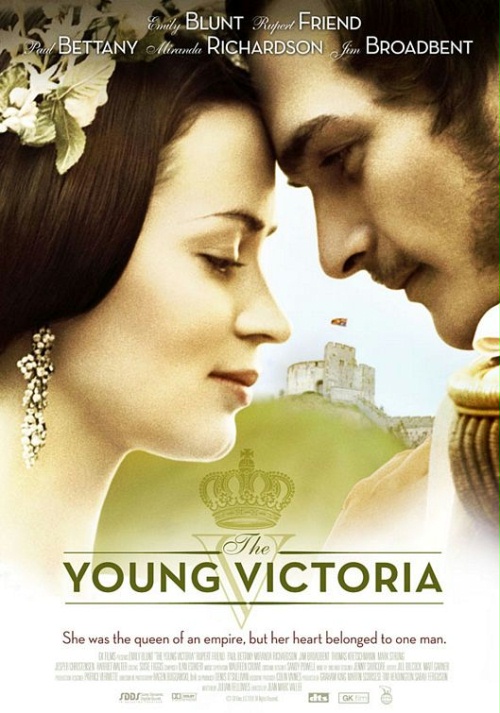
Being a crass American I have always considered the current British royalty as nothing more than very expensive mascots. What function do they really serve besides acting as some kind of high-society-reality-show soap opera?
Not that this is bad. If the British want to spend their money on queens, princes, and princesses, who am I to oppose them? After all, we Americans have kept the stellar Survivor series going for ten seasons. And when it finally ends, we’ll probably replace it with something else of supreme value like World’s Biggest Belchers or Kids Who Eat Boogers. At least the Royal Family has some modicum of class. Still, the point is that I’m not disposed to feel much sympathy for state-supported rich folk. So when I tell you I just watched and loved The Young Victoria, it should tell you something.
The movie was sublime. A large part of it was because the story left me edified, left me wanting to be a husband–a friend to my wife–as good as the Albert portrayed in that film. Compare this to Killers which could have been so good, but devolved into dumb sex jokes and dumber action, which then only got worse. When that one ended, I staggered out of the theater having lost half my brain. The Young Victoria, on the other hand, enlarged my soul.
The movie is a romantic dramatization of some of the events preceding and following the coronation of Alexandrina Victoria (Queen Victoria), focusing on her early reign and romance with Price Albert in the 1830s. She was only 18 when her uncle, the King, died and the crown fell to her. Some suggested she was too young and should sign her powers over to a regent. Others wanted to use her as a puppet. The question was: would she fall prey to the political aspirations of others? I will let you watch the movie to find out.
Emily Blunt does a wonderful job as Victoria. I loved her in the Jane Austen Book Club as well. She’s supported by a great cast, including Rupert Friend as Prince Albert, Mark Strong (the villain in the recent Sherlock Holmes and Robin Hood) as the domineering Sir John Conroy, and Paul Bettany as the dubious Lord Melbourne.
When recently compiling my list of favorite movies of the decade, I lamented the dearth of good love stories. Well, I just found one. This movie was golden. If you love Jane Austen, you’re going to love this show.
(BTW, the Royals actually do perform a number of worthwhile tasks. Read this wiki on the British Royal Family. You may also want to read this on Victoria after you watch the movie.)
Edit: I wrote this like a month ago and thought I posted it. But there is was in my drafts. Somebody give me some Ginko extract.
The Avengers
The Avengers is Marvel’s latest installment of the films in the Avenger world—Iron Man (2008), The Incredible Hulk (2008), Iron Man 2 (2010), Thor (2011), and Captain America: The First Avenger (2011).
Iron Man is, by far, the BEST of all of them. I thought Captain America might be just as good, but the movie lost its way about half way through. The others are okay, not anything to jump up and down on the couch about. So while I was looking forward to seeing The Avengers, I wasn’t expecting anything special. I’m happy to tell you that The Avengers is good. Not as good as Iron Man, but much better than all the others. And certainly well-worth the price of admission.
The earth is in possession of an artifact of immense power called the Tesseract, which isn’t a made-up name. In geometry a tesseract is a cubic prism—some four-dimensional thing which boggles the mind. But in this movie and Captain America, the tesseract is a blue cube that can open portals to different parts of the universe or run Nazi war machines. The problem is that there are other beings in the universe. Some of these would like to be able to run their own Nazi machines and subjugate all species on every planet. So they get Loki, Thor’s adopted brother, to lead an army to raze the earth and retrieve the artifact.
Of course, earth’s forces aren’t strong enough to repel this alien force. That is, unless you call upon the Avengers—Iron Man, Thor, Hulk, and Captain America. As well as Avengers who haven’t had their own movies yet like Black Widow, Hawk, and Nick Fury.
It all sounds a bit much, and in the hands of a lesser writer it might have been. But Joss Whedon (Serenity, Firefly, Buffy the Vampire Slayer) wrote the script and directed the movie. And he did a fantastic job. Instead of thinking we came for a barrage of special effects, he takes time to build the characters and relationships so we care about the action when it arrives. He does use the idiot chaos cinema technique for some of the action, but not nearly as much as was in Hunger Games. More importantly, he makes up for the error of his ways with a number of laugh-out-loud moments. Hilarious moments. In fact, the humor is one of the main reasons why this movie was so good.
If you like super hero movies, you’ll love The Avengers. Maybe not as much as you like Iron Man or Spider Man 2 or the Nolan Batman series. But close enough to have a great night out.
The Paris Grill
The Paris (Idaho) Grill has opened another restaurant in what used to be the Bear Lake Motor Lodge Cafe. The cafe was okay. Nothing to write home about. So I didn’t know what to expect with the new grill. However, I took two of my daughters out last night for dinner.
The Paris Grill has four menus. I don’t know why they keep them separate, but they do. One for breakfast, lunch, dinner, and another for their pizzas. We opted for the “Burgers n Pastas n Salads” menu which I guess is the lunch menu, but was what we ordered our dinner off of.
Confused yet?
Luckily, the food’s good enough that the menu business doesn’t matter. The lunch menu features a number of regular sandwiches—BLT, chicken cordon bleu, French dip. But it also offers some signature sandwiches like a kielbasa and pepper sandwich, something called the Hobo Deli (which is tasty sounding combo of sour dough bread with pepper cheese, roasted turkey, bacon, grilled tomatoes, and cilantro dressing), as well as the Monster Grill—roast beef topped with caramelized onions and peppers, mushrooms, and provolone cheese. I opted for the Monster Grill. My girls skipped the salads and ordered a hamburger and the chicken cordon bleu with mashed potatoes.
The first words out of my daughters’ mouth when eating the mashed potatoes were “ooh” and “yum.” That was followed by another “ooh” and “yum.” The potatoes were good. And they were made from scratch. The sandwiches were tasty as well. Good enough that I’m going to go back to the grill to try their dinner menu with my wife.
We topped the dinner off by splitting one of the grill’s big, hot cinnamon rolls. The prices for the lunch items were reasonable—around seven or eight bucks—and they were big enough that the girls took half their meal home.
If you’re in Garden City, Utah and looking for something besides burgers and shakes, try the grill. I think you’ll be quite satisfied when you walk out the door.
We’re told that a key is to write “SMART” goals. Make them specific, measurable, realistic, and focused on results. Give them a deadline. And, for heaven’s sake, put them to paper because “a goal that is not written down is just a wish.”
We’re told a key is to dream, that “whatever the mind can believe, it can achieve.”
We’re told that the key to changing our life is changing our habits, and that they way to change our habits is to stick with something for twenty-one days.
Except, well, how many habits have you been successful in establishing?
How many of those lofty goals have you achieved?
How many New Year’s resolutions have you really followed through with?
The problem is that all of the good advice on goals and habits seems to only work for other people. And I grant that there might be some AAA+++ personalities out there with megawatts of motivation who seem to be able to do whatever they set their mind to.
But that triple A plus personality passed me by. It passed a lot of us by.
So are we doomed?
B.J. Fogg, a Stanford researcher, says no. There’s hope for all of us. Because the key is not in having megawatts of motivation.
It’s not that we disregard the power of motivation. It’s just that motivation, Fogg has found, is never constant. It comes in waves. And while we certainly want to take advantage of it when it comes and do things that increase it, a much more effective way to grow habits and meet goals and change our lives is to focus on the other things that drive behavior.
Fogg has spent his career studying persuasion and habit. He works with companies to help them create products that are habit-forming. Think about Facebook, Twitter, or Candy Crush, and the habits those products form. These and similar companies have implemented the principles of habit so well that their products have become, for some, something of an addiction.
So what’s the secret?
Fogg has identified three things that must be present if we’re going to do something:
The motivation to do it
The ability to do it
Atrigger to remind us to do it
When those three things are present, we act. And we often do so without thinking. If one of those three elements is missing, we don’t act. So if we want to start a new habit, we need to focus on these three things.
But if motivation goes up and down, then we don’t want to rely on that part of the equation. Fogg’s insight is that it’s much easier and more effective to focus on the ability and the trigger parts.
When we focus on the ability, we make the habit we want to form so tiny and small that it’s super easy to do. Such tiny behaviors require only the smallest levels of motivation. And if we’ve planted them in good ground (at a time of day where they can expand and linked to a good trigger), those tiny habits eventually grow into the full blown big habit we wanted all along.
Does this work?
Well, I started Fogg’s Tiny Habits back at the beginning of December. And I’m happy to report that starting new habits using this approach has been easy.
Like falling off a log easy.
For example, because I work on the computer, I know that to increase my health, I need to get at least forty minutes of good, heart-pumping activity each day. But did I start there? No.
Did I start at twenty minutes?
No.
Ten minutes?
No.
Five? Surely, I started at five minutes.
No.
The Tiny Habits approach suggests starting much smaller. I started with doing one push up after I used the restroom. And it was an incline pushup on the stairs, which my daughter found hilarious.
Yes, that’s how tiny you start them. Something that takes less than 30 seconds.
That tiny habit grew. And I am now doing 60 regular floor pushups each day, plus 75 curls, 75 flies, 75 squats, and 75 bicycle crunches. It’s about 25 minutes of good activity. And it’s only going to grow. Come April, I’m pretty sure I’ll be around 100 pushups every day.
And there was no twenty-one day business. Fogg has found that’s not the secret. Habits can form in just a few days.
I started the delicious habit of kissing my wife for at least five seconds each day. Along with a five-second hug. And then a little more kissing, and little more hugging, and a little more kissing (when I can steal it). Did I mention it was delicious? This is a highly-recommend habit.
I started the habit of daily morning scripture reading. I have tried to be consistent for years and couldn’t do it. But with this new approach, I think I’ve missed three times in the last two months.
I started the habit of beginning the day with a positive thought, the habit of turning off my wireless mouse when I’m done at my desk, and I’ve also made great headway against the mother of all habits for me—going to bed by 10 PM.
I can easily stay up until one a.m. reading, “researching” on the internet, wasting time watching political videos, or Facebooking. Or a million other things. This bad habit is so ingrained it is almost like someone else is controlling me. All day long I say I’ll go to bed only to find myself, yet again well past dark, screwing up my life plans. It’s like some evil villain has me on remote. I can’t tell you how many times I’ve tried to “motivate” myself to change this. All to no avail.
But with the tiny habits approach, I finally figured out the triggers that were driving it. Then I engineered other triggers and tiny habits to replace them. And now my computer is off and behind a closed door most of the time in the evenings. I’m actually getting to bed. It’s huge progress. There are still some kinks to work out, but it’s only going to grow.
I found the Tiny Habits program through my insurance provider. They had an annual wellness check in November, and on their website they had a link to Tiny Habits. I clicked, signed up for their tiny program, and I’m so happy I did.
I’m hooked on tiny habits.
And the cool thing is that you can begin learning and developing your ability to plant and grow tiny habits too. For free.
If you want to change your life, I think you will love their free five-day, three-habit program. It’s there to teach you how to create tiny habits, triggers, and celebrate.
Let me also recommend a few videos. Here’s the best video I’ve found that explains Fogg’s model of behavior and why tiny habits work.
And here’s the best video that explains the pitfalls of relying mostly on motivation instead of bringing in the other two Musketeers.
Researchers say that between 40-70% of all we do each day is driven by habit and external triggers. We think we’re exercising our agency all day long, but it’s an illusion. We’re not. Most of the day we’re running on auto pilot and responding to triggers. But we can change those routines. That’s the promise of tiny habits. And so far, the results for me have been promising. Give it a try. I think you’ll be happy you did.
Notes
SMART stands for specific, measurable, achievable, results-focused, and time-bound. SMART goals are helpful. But the key, Fogg has found, is in not trying to eat the whole SMART whale in one bite. Instead, you start with the tiniest part of the very first step. And then watch as the habit grows.
I reviewed The Power of Habit by Charles Duhigg back in 2012. It provided great insight about habits, but not a tested program to actually change them. In fact, the author states himself that his book doesn’t provide a program, just a way of thinking about habits. Duhigg isn’t a behavioral scientist; he’s a reporter, trying to share what he’s found. The book was great. However, I tried to apply his insights, and, as expected, wasn’t very successful in changing things. But Fogg and his Tiny Habits fills that gap in a spectacular way. Fogg is a behavioral scientist and has taught thousands how to form habits. So read Duhigg for great stories and insights about habits in general. But go to Fogg for a tested program that will guide you step by step.
I did lots of customer discovery last August in an effort to see if book ratings is a problem worth solving, i.e., are there lots of avid readers who would love content ratings and sign up? All my interviews were very positive, but I didn’t finish validating our ideas because I had to stop to get books out and because we discovered some things that made us change some of our assumptions. I started up again a few weeks ago, this time with a team.
To continue the project, we need to interview 20-40 avid cleaner romance readers. Folks who probably read just such a book last month.
Why?
The biggest problem startups like this have is assuming they know what the customer values, being wrong, and building something nobody wants. So before we build anything, we need to first understand exactly what readers are doing today to solve this problem and where (and if) they are struggling. If we can validate the need, I think a lot of folks will be very happy having popular clean reads delivered to their email every week.
If you know someone who fits the bill, please send this post to them. They can shoot me an email by clicking the contact link in the menu bar.
If you fit the bill, please contact me.
It would be incredibly helpful to me to hear about how you approach this and ask you a few questions. It won’t take more than 20 minutes, and there’s no need to prepare in advance.
Two weeks ago I published the top 200 novels and authors of YA fiction. As I stated then, looking at bestselling novels only gives one view into what readers are enjoying. Looking at library circulation gives another view that complements sales. These rankings are based on the circulation (number of times the book was checked out) at the Logan Utah Libarary which serves a community of over 100,000 residents.
This week I present to you the top 200 Juvenile (these are mostly middle grade) novels of 2010. These are from the 5,377 different titles that were checked out. I can’t claim these lists show what’s most popular nationally. I’m confident the libraries in each region of the nation will have lists that vary a little or a lot from these. However, this does show what’s being read in this neck of the woods. Furthermore, all of these should be great reads for middle graders, teens, and adults.
As before, the list features a lot of authors who live in Utah or have ties to Utah. The number of titles are in ( ).
Obert Skye (8)
Brandon Mull (6)
James Dashner (3)
J. Scott Savage (2)
Matthew Buckley (1)
I’m surprise at just how much these folks dominate this list. They’re rock stars! If I’ve missed anyone, let me know. For the previous lists, see these links:
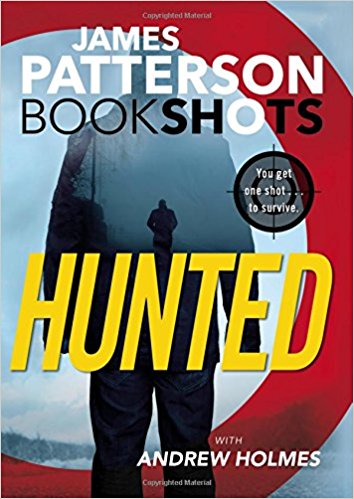
I listened to this last year on my 550 mile drive to Vegas for two days of serious self-defense training. Loved it. I just read it again, and enjoyed it just as much the second time. It’s an action-packed page-turner with great characters. A fun riff on the classic “The Most Dangerous Game.”
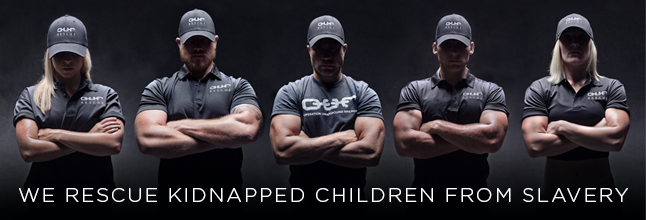
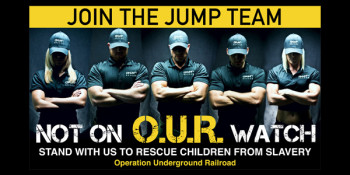
On February 28th, Operation Underground Railroad freed 20 kids from slavery and brought 5 slavers to justice. They are continually running operations.
Oskar Schindler didn’t stop the killing of all Jews. But he did what he could. One of the most poignant moments of Schindler’s List was when he pulled out his pen and realized he could have saved someone with his pen. We all have a pen opportunity in front of us. Join me and my family. Become an abolitionist.
We’ve set up a monthly amount, but even a one-time donation puts you on the team.
I know you want more information. Here’s an awesome video where the founder explains what’s happening and what they’re doing.
In this one, Glenn Beck interviews Cliff Graham about the organization. It’s a must-see interview.
 Being a crass American I have always considered the current British royalty as nothing more than very expensive mascots. What function do they really serve besides acting as some kind of high-society-reality-show soap opera?